エピソード

  • Can’t Meditate? Why Calm Can Feel Out of Reach
    2026/10/20

    You sit down to meditate, close your eyes, and your mind gets busier. Soon you’re wondering why relaxing feels like another job.

    Guy Odishaw and Fran Bieganek explore why meditation can feel difficult and how to find a more approachable starting point. Through personal stories, they discuss different meditation styles, breathing, HRV biofeedback, and brain training—with practical ways to begin without putting more pressure on yourself.

    続きを読む 一部表示
    22 分
  • The Perimenopause Brain
    2026/09/25

    Perimenopause can change more than hormones. It can affect memory, focus, sleep, mood, brain energy, anxiety, and confidence in ways that many women are never fully warned about.

    In this episode, Bhakti Brain Health Clinic explores why brain fog during perimenopause is real, how estrogen and progesterone interact with the brain, and why this stage can feel like a major nervous system transition. We also look at supportive approaches including sleep, nutrition, movement, stress regulation, hormone care, photobiomodulation, audiovisual entrainment, HRV training, neurostimulation, and neurofeedback.

    This episode is for educational purposes only and is not a substitute for medical diagnosis or treatment. Please consult a qualified healthcare professional for personal medical guidance.

    続きを読む 一部表示
    20 分
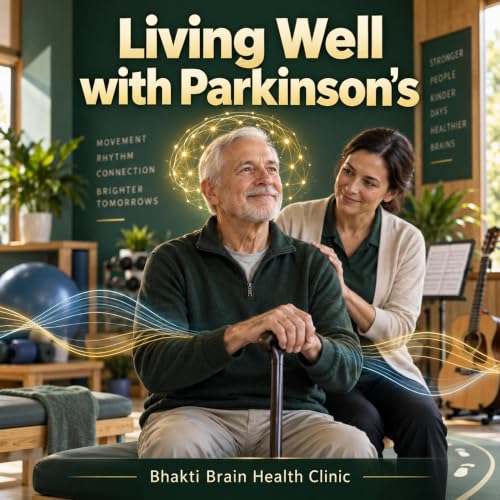
  • Living Well with Parkinson’s
    2026/09/24

    Parkinson’s is often recognized by movement symptoms like tremor, stiffness, slowed movement, and changes in balance. But living well with Parkinson’s requires looking at the whole person.

    In this episode, Bhakti Brain Health Clinic explores Parkinson’s through a broader brain-body lens, including the gut-brain connection, vagus nerve, autonomic regulation, sleep, brain rhythms, noninvasive supportive therapies, quality of life, and caregiver support. The conversation looks beyond dopamine alone and considers how nervous system flexibility, cellular energy, rhythm, movement, sleep, and emotional resilience can influence daily function.

    This episode is for individuals living with Parkinson’s, families, caregivers, and anyone looking for a more compassionate and comprehensive way to understand support.

    Topics include:

    • Parkinson’s beyond movement symptoms
    • Gut-brain connection and digestive symptoms
    • Vagus nerve and autonomic regulation
    • Sleep, recovery, and brain health
    • Brain rhythms, beta activity, and motor rigidity
    • Photobiomodulation and red-light therapy
    • Music-based gait support and rhythmic auditory stimulation
    • Audiovisual entrainment, tACS, neurofeedback, and HRV biofeedback
    • Building a sustainable Parkinson’s support plan
    • Caregiver burnout, respite, and family support

    Educational content only. This episode is not medical advice and does not replace care from a qualified healthcare professional.

    続きを読む 一部表示
    19 分
  • Training the Aging Brain
    2026/09/24

    Cognitive decline is not the only story of aging. The brain remains capable of learning, adapting, and responding to supportive practices throughout life.

    In this episode, Bhakti Brain Health Clinic explores cognitive resilience through the lens of Tibetan Buddhist monks, meditation, lifelong learning, stress regulation, and modern neurotechnology. The conversation looks at why some aging brains may remain strong despite risk factors, how meditation may quiet unnecessary brain activity, and how tools like brain mapping, neurofeedback, biofeedback, audiovisual entrainment, photobiomodulation, and HRV training can support brain and nervous system regulation.

    This episode brings together traditional contemplative wisdom and modern neuroscience to explore how we can build a more resilient aging brain.

    Topics include:

    • Cognitive aging and brain resilience
    • Lessons from Tibetan Buddhist monks
    • Lifelong learning, debate, purpose, and community
    • Stress, the brain’s “body budget,” and cognitive energy
    • Meditation, rumination, and the default mode network
    • Compassion, mantras, and reframing
    • Audiovisual entrainment and photobiomodulation
    • Brain mapping and neurofeedback
    • HRV biofeedback and nervous system balance

    Educational content only. This episode is not medical advice and does not replace care from a qualified healthcare professional.

    続きを読む 一部表示
    18 分
  • Beyond “Go” Mode
    2026/09/24

    Some people are trained to run toward crisis. The problem begins when the body never fully learns how to stand down.

    In this episode, Bhakti Brain Health Clinic explores chronic stress, trauma, and nervous system dysregulation in first responders, healthcare workers, dispatchers, caregivers, leaders, and high-stress professionals. The conversation reframes trauma as an injury to the brain and nervous system, not a character flaw, and explains why people can look “fine” on the outside while feeling exhausted, irritable, numb, disconnected, or stuck in survival mode.

    This episode also explores practical recovery tools, including sleep routines, breathwork, downshift rituals, boundaries, QEEG brain mapping, HRV training, audio-visual entrainment, neurofeedback, and red light therapy.

    Topics include:

    • Living in constant “go” mode
    • The adrenaline loop and nervous system high alert
    • Why trauma is not just mental
    • Sleep disruption, irritability, burnout, and family impact
    • The gas pedal and brakes of the autonomic nervous system
    • Transition rituals from work to home
    • QEEG brain mapping and trauma-related dysregulation
    • HRV and nervous system flexibility
    • Neurofeedback, AVE, and red light therapy
    • Building a practical daily recovery plan

    Educational content only. This episode is not medical advice and does not replace care from a qualified healthcare professional.

    続きを読む 一部表示
    19 分
  • More Than a Head Injury
    2026/09/24

    Post-concussion fatigue is more than feeling tired. It can feel like the brain runs out of energy too quickly.

    In this episode, Bhakti Brain Health Clinic explores why concussion recovery can be confusing, invisible, and different for every person. The conversation looks at why standard scans can appear normal while symptoms continue, how the brain can become less efficient after injury, and why fatigue, brain fog, headaches, visual overload, dizziness, sleep issues, and the “still not me” feeling deserve to be taken seriously.

    This episode also explains how vision, vestibular balance, neck input, autonomic regulation, functional testing, QEEG brain mapping, neurofeedback, neurostimulation, photobiomodulation, pacing, and at-home nervous system tools can support a more individualized recovery path.

    Topics include:

    • Why concussion is more than a head injury
    • Post-concussion fatigue and the “battery capacity” problem
    • Why symptoms can worsen later in the day
    • Brain fog, headaches, and mental exhaustion
    • Vision, vestibular, and neck systems after concussion
    • Why screens, reading, and busy environments can feel draining
    • Functional testing and QEEG brain mapping
    • Autonomic dysregulation and low HRV
    • Neurofeedback, neurostimulation, and photobiomodulation
    • At-home regulation tools like HRV breathing, humming, pacing, and gentle cold cues

    Educational content only. This episode is not medical advice and does not replace care from a qualified healthcare professional.

    続きを読む 一部表示
    18 分
  • Coming Home to Your Body
    2026/09/24

    Healing is not always about forcing the body to change. Sometimes, it begins with learning how to listen.

    In this episode, Bhakti Brain Health Clinic explores Long COVID, ME/CFS, chronic fatigue, nervous system dysregulation, central sensitization, and the experience of living with complex invisible illness. The conversation introduces a compassionate “tending” framework for moving from fear and frustration toward body awareness, regulation, support, and agency.

    Rather than promising a quick fix, this episode offers a whole-person perspective on healing: understanding symptoms as communication, pacing energy, supporting the nervous system, nourishing recovery, building a care team, and reconnecting with the body in a more compassionate way.

    Topics include:

    • Long COVID, ME/CFS, and post-viral illness
    • Nervous system survival mode
    • Dysautonomia, hypervigilance, and chronic activation
    • Symptoms as signals from the body
    • Energy limits, pacing, and the 20% rule
    • Central sensitization and system overload
    • Trauma-informed nervous system regulation
    • Building a healing ecosystem and care team
    • Moving from surviving to tending

    Educational content only. This episode is not medical advice and does not replace care from a qualified healthcare professional.

    続きを読む 一部表示
    21 分
  • Charge Up and Go
    2026/09/24

    Executive performance is really a brain question.

    In this episode, Bhakti Brain Health Clinic explores a proactive approach to brain optimization for executives, leaders, and high-performing professionals. Rather than waiting for burnout, brain fog, poor sleep, or decision fatigue to become impossible to ignore, this conversation looks at how neurotechnology can support clarity, calm, recovery, focus, and long-term cognitive resilience.

    The episode introduces the “Brain Spa” philosophy and explains how tools like tACS, audiovisual entrainment, photobiomodulation, and PEMF can work together to help the brain shift states, recover more effectively, and sustain performance under pressure.

    Topics include:

    • The executive brain under pressure
    • Decision fatigue, cognitive friction, and burnout
    • Brainwaves and performance states
    • The Brain Spa philosophy
    • tACS for brainwave support
    • Audiovisual entrainment for rapid state shifting
    • Photobiomodulation and brain energy
    • PEMF and whole-brain synchronization
    • Building a sustainable brain optimization routine

    Educational content only. This episode is not medical advice and does not replace care from a qualified healthcare professional.

    続きを読む 一部表示
    19 分