エピソード

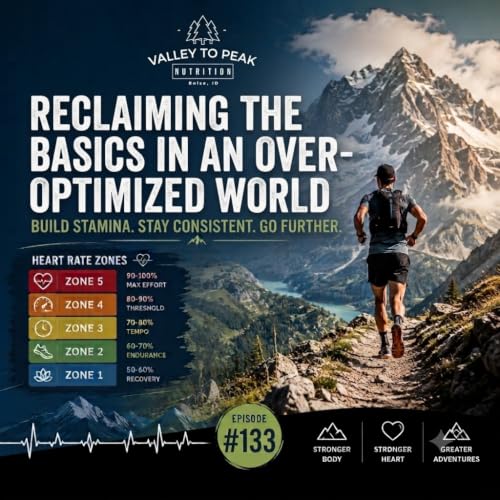
  • Zone 2: Reclaiming the Basics in an Over-Optimized World (W/ Chantelle R. from Uphill Athlete and CC).
    2026/07/08

    Welcome back to the Valley to Peak Nutrition Podcast.

    In this episode, we are thrilled to welcome back a crowd favorite for her fourth appearance on the show: endurance coach and writer, Chantelle Robitaille. If you’ve been a long-time listener, you know Chantelle's previous episode on Zone 2 training remains our most downloaded and listened-to episode of all time.

    Today, we dive into a topic that might ruffle a few feathers in the data-obsessed endurance community. Inspired by Chantel’s recent writings on her blog, Coach's Confidential, we unpack the controversial idea that your actual heart rate data might not matter as much as you think, and why it's time to stop being married to your watch.

    We cut through the noise, strip away the over-complication, and get right down to the nuts and bolts of what you actually need to know to build a stronger body and mind.

    Key Topics Covered in This Episode:
    • The Problem with Over-Optimization: Why obsessing over every minor metric on your watch might actually be hindering your progress.

    • Why Your Heart Rate Doesn't Matter (The Context): Unpacking the controversial take on why data is just one piece of a much larger puzzle.

    • Back to the Nuts and Bolts: Breaking down Chantelle's latest three articles that focus on simple, actionable training basics.

    • Training vs. Science

    Resources & Links Mentioned:
    • Read Chantelle's Blog: Coach Confidential

    • Chantel’s Past Episodes:

      • Episode: Mastering Zone 2 Training

      • Episode: High Altitude Training Strategies

      • Episode: Goal Setting for the New Year

    • Connect with Valley to Peak Nutrition: Visit V2PNutrition.com

    Connect With Us!

    Have a question you want us to cover or a nerdy science topic you want us to break down? Drop us an email at info@v2pnutrition.com—we would love to hear from you and answer your questions on an upcoming episode!

    Enjoyed the show? Since we don't run any outside advertisements, we rely entirely on word of mouth to get good info into the hands of endurance athletes who need it. You can help us a ton by:

    1. Rating and reviewing the show on your favorite podcast app.

    2. Sharing this episode with a running buddy or friend who needs to reclaim the basics!

    続きを読む 一部表示
    47 分
  • Am I Wasting My Time? Four Things To Minimize Muscle Loss After 40 (Bonus!)
    2026/06/29

    Between the ages of 30 and 60, biology dictates that we naturally lose anywhere from 3% to 8% of our muscle mass per decade—a number that accelerates even faster once we cross the age of 60. But does that mean trying to improve your performance or build strength in your 30, 40s, 50s, or 60s is a waste of time?

    Spoiler: Nope!

    In this special bonus episode of the Valley to Peak Nutrition podcast, we address the common anxieties surrounding age-related muscle decline. We break down the unique advantage of "newbie gains" for late-bloomers or returning lifters , and lay out the exact 4-variable blueprint required to minimize muscle loss and put yourself in the best physiological position possible as you age. Plus, we dive deep into the truths and myths of protein sourcing, the power of leucine, and why you might be "splitting hairs" over animal vs. plant-based proteins.

    Head over to our website and check out our 100% Free 8-Week Challenge, alongside our self-guided courses and nutrition guides. Click the link in our show notes to get started today!

    Keywords: Age-related muscle loss, how to build muscle after 40, sarcopenia prevention, resistance training for seniors, muscle hypertrophy over 30. Leucine protein synthesis, bioavailability of plant protein, whey vs meat protein, valley to peak nutrition, minimum effective dose strength training, newbie gains over 40.

    続きを読む 一部表示
    21 分
  • Beyond the App: Backpacking Dehydration & Non-Tracking Nutrition Strategies (FAQ + More..)
    2026/06/17

    This episode is a comprehensive nutrition Q&A designed to help hikers, hunters, backpackers, and outdoor enthusiasts optimize their fuel and achieve their fitness goals.

    In the first half of the episode, we address specific listener struggles and do a deep-dive into the logistics of DIY trail food dehydration, navigating weight loss within family-style dinners, and smart workarounds for tight meal-prep spaces.

    The second half introduces the "Non-Tracking Framework"—a set of practical "bumpers" for busy days, vacations, or high-stress periods when logging food into an app isn't feasible, ensuring listeners can still maintain boundaries and progress toward their fitness goals without burning out.

    Key Topics Covered
    • Deep Dive: The DIY Dehydration Guide for Backpacking

      • Round vs. Square Dehydrators:The pros, cons, fan placement, price points, and space considerations for each.

      • Trail Logistics:How to package, break up, and rehydrate your meals (the golden 1:1 water ratio).

      • Safe Cooking:Choosing between mylar bags, boil-safe Ziplocs, or just cooking straight in your Jetboil.

      • Pescatarian on the Trail:Creative ideas using canned tuna, shrimp, and high-recovery vegetarian grain/legume combos.

    • Weight Loss & Cultural Family-Style Meals

      • Why you don'tneed to isolate yourself or quit eating traditional family meals to lose weight.

      • How to create a caloric deficit by auditing your day, managing portions, and making micro-adjustments to cooking fats (oil, butter, coconut milk).

      • Using tracking as a tool for awareness, not restriction.

    • Meal Prepping with Minimal Freezer Space

      • 4 practical workarounds for tiny kitchens: shorter 2-3 day prep cycles, component-only shopping, non-frozen convenience foods (rotisserie chicken + salad bags), and creating a healthy local restaurant "hybrid" rotation.

    • The Non-Tracking Framework: Nutritional "Bumpers"

      • What to do when life gets too busy to log your food.

      • The Plate Compartment Rule:Balancing your macros visually (Protein, Fiber/Veggies, and Carbs) to protect your training energy.

      • Time Blocking:Setting intentional eating windows to eliminate mindless snacking, fancy coffee drinks, and liquid calories.

      • Managing Highly Palatable Foods:The science of why it’s easy to overeat Oreos or trail mix, but hard to overeat chicken and rice.

      • The "No Doubling Up" Rule:Avoiding overlapping macros in a single meal (e.g., picking one starch, not three).

    • Final Takeaways: Intentionality vs. Autopilot

      • Matching your nutrition Strategy to your current bandwidth (The 1-to-5 Motivation Scale) so you never default to the drive-thru.

    Resources Mentioned in this Episode
    • Valley to Peak DIY Dehydration Guide

    • Valley to Peak Non-Tracking Cheat Sheet

    Connect with Us!
    • Got a question for the next Q&A? Reach out here!

    • If you enjoyed this episode, please leave us a review and share it with your hiking crew! See you in two weeks.

    続きを読む 一部表示
    31 分
  • Zone 2 Training & Fat as Fuel: Should You Eat More Fat to Perform Better?
    2026/06/01

    Zone 2 training is often labeled as “fat burning,” but what does that actually mean in real-world performance? Should athletes, hunters, and endurance enthusiasts be eating more fat during long efforts? Or is the body primarily relying on stored energy systems regardless of what you eat?

    In this episode of the Valley to Peak Nutrition Podcast, we break down one of the most misunderstood concepts in endurance nutrition: fat as fuel. We explore whether the body is using dietary fat or stored body fat during low-intensity exercise, how carbohydrates still play a critical role, and why it’s never as simple as “fat vs carbs.”

    You’ll learn how energy systems actually interact during Zone 2 training, multi-day efforts, and long-duration mountain objectives—and why relying on a single fuel source can limit performance.

    If you’ve ever wondered how to properly fuel Zone 2 training, ultras, backcountry hunts, or long mountain days, this episode will give you the clarity you need.

    Download the cheat sheet

    Check out Valley to Peak and other Resources.

    In this episode:
    • What “fat as fuel” actually means in Zone 2 training

    • The difference between stored body fat and dietary fat

    • How the body actually breaks down and uses fat for energy

    • Why fat and carbohydrates are always used together (not separately)

    • The role of intramuscular triglycerides in endurance performance

    • Why muscle glycogen still matters—even at low intensities

    • The real timeline for dietary fat to become usable energy

    • Why higher intensity changes everything about fuel usage

    • How carbohydrate supports fat metabolism (“fat burns in a carbohydrate flame”)

    • Why calorie balance—not macronutrient manipulation—drives fat loss

    Key Takeaways:
    • Zone 2 training is not 100% fat-burning—it’s a blend of fat and carbohydrate use

    • Most fat used during exercise comes from stored body fat, not what you just ate

    • Dietary fat takes hours to become usable fuel during activity

    • Carbohydrates are essential for higher intensity and mental performance

    • Fat and carbs work as a system—not competing fuel sources

    Great listen for those interested in:
    • Endurance athletes

    • Trail runners & ultrarunners

    • Backcountry hunters and hikers

    • Cyclists and hybrid athletes

    • Anyone training in Zone 2 or long-duration efforts

    続きを読む 一部表示
    22 分
  • 50K to the Stage: Marshal Whitaker on Teachability, losing 30lb, and changing his life
    2026/05/15

    In this episode, Kyle sits down with Marshal Whitaker of Argali Outdoors. Marshal’s story is a fascinating look at what happens when elite endurance goals meet a newfound dedication to metabolic science. Having recently conquered a 50K ultra marathon while losing 30lbs, Marshal is now shifting his sights to the bodybuilding stage.

    Episode Highlights
    • The "Busy" Factor: Why staying active is Marshal’s #1 tool for managing hunger in a deficit.

    • The Power of Coachability: Marshal discusses "swallowing his pride" and moving away from a restricted "chicken and broccoli" mindset to a flexible, macro-based approach.

    • Performance vs. Weight Loss: How Marshal successfully increased his running mileage while simultaneously shedding weight—disproving the myth that you can’t do both.

    • Volume Eating: The "magic" of frozen Potatoes O’Brien and how to eat full plates of food while staying in a caloric deficit.

    • The Support System: How Marshal’s transformation sparked a fitness journey for his wife, turning their home gym into a hub of mutual accountability.

    • Training in Quarters: Kyle breaks down the philosophy of dividing the year into four distinct focuses to prevent burnout and "wanting it all at once."

    Key Takeaways

    "I thought I would always feel fatigued and hungry... but I’m eating sandwiches with grilled onions and fitting it into my macros. My understanding of food has completely changed." — Marshal Whitaker

    Resources & Links Mentioned
    • Argali Outdoors: argalioutdoors.com – High-performance gear for backpack hunters.

    • Marshal on IG
    • Valley to Peak Nutrition: Valley to Peak Nutrition – Search the full archive of episodes from #1 to the present and all of our resources.

    Connect with the Show
    • Follow Kyle on Instagram: [@V2pnutrition]

    • Subscribe on Spotify & Apple Podcasts: Search "Valley to Peak Nutrition" (Note: On Spotify, episodes currently start at #20, but the full library is available on the website!)

    続きを読む 一部表示
    42 分
  • FAQ: Fasted cardio, nutrition for longevity, and the Fiber "Cocklebur" Effect (W/ Lindsay)
    2026/05/02

    Why does weight loss stall even when you count your drinks? Plus, the truth about fasted cardio and staying active in your 70s. Let’s dive in!

    Episode Summary: In this listener Q&A episode, we tackle the nuance of nutrition that goes beyond simple "calories in vs. calories out." We discuss why alcohol can halt weight loss despite a calorie deficit , whether fasted cardio actually burns more fat , and how to adjust your diet as you enter your 50s, 60s, and 70s. We wrap up with a masterclass on fiber—explaining why it’s the most overlooked tool for heart health and cancer prevention.

    Key Takeaways:

    • The Alcohol Variable: Why the body prioritizes alcohol metabolism and how cellular inflammation causes water retention
    • Fasted Cardio Debunked: Why training on empty might actually be hindering your performance and metabolic flexibility.
    • Nutrition for Longevity: Addressing the "Front Porch" phase—how to maintain muscle mass and energy in your 70s.
    • Fiber 101: The difference between soluble and insoluble fiber and why "Keto-friendly" high-fiber wraps might be ruining your digestion.
    Podcast Chapters (Timestamps)

    00:00 – Welcome & Show Season Recap

    04:30 – Does Alcohol Stop Weight Loss? (Beyond the Calories) 07:15– The Difficulty of Measuring Liquid Calories

    10:45 – Fasted Cardio: Weight Loss Benefit or Performance Hindrance? 15:20 – Teaching Your Body to Use Fat as Fuel

    18:50 – Nutrition for the 70+ Athlete: Staying Overlooked No More

    22:15 – Why Energy Levels Drop: Hormones vs. Activity

    26:40 – The Three Pillars of Aging: Energy, Health Markers, and Strength

    31:10 – Fiber Intake: Are You Falling Short?

    34:50 – The "Cocklebur" Effect: How Fiber Cleans Your System

    38:20 – Soluble vs. Insoluble: Which Foods Do You Actually Need?

    41:05– The Danger of Overdoing Fiber: Avoiding the "Keto Wrap" Trap

    44:00 – Closing Thoughts & How to Submit Your Questions

    Guest & Resource Links:

    • Submit Your Questions: info@v2pnutrition.com

    • Follow Valley to Peak: Valley to Peak Nutrition

    • Related Episode: When is too much meat too much?

    続きを読む 一部表示
    33 分
  • Testosterone & TRT: Separating fact from fiction (W/ Dylon Sanford)
    2026/04/17

    In a world where "optimization" is the new standard, where is the line between healthy hormones and chasing a number? In this episode, we sit down with Dyllon Sanford of Henderson Family Medicine to break down the state of men’s health in 2026.

    We explore why testosterone levels are dropping in younger men, how to accurately read your lab results (Total vs. Free T), and the critical difference between medical intervention and natural optimization. From "gas station taquito" lifestyle traps to the long-term implications of TRT dependency, this is a no-nonsense guide for any man looking to reclaim his vitality without sacrificing his long-term health.

    Valley to Peak 8-Week Challenge GLP-1 Podcast
    続きを読む 一部表示
    1 時間 9 分
  • Trail Q&A: lower protein intakes, not bonking on 9-day expeditions and hunts, plus stable protein ideas for the trail and hiking
    2026/04/01

    Check out more from Valley to Peak Nutrition here!

    - - - - -

    "If today’s deep dive into mastering your 'Trail Q&A'—from navigating lower protein intakes to staying fueled for those grueling nine-day expeditions—helped you rethink your backcountry strategy, we’d love to stay connected. Head over to our search page for our a full list of options and reviews to learn more. If you’re finding value in these trail-tested tips, please take a moment to leave us a review on Apple Podcasts or Spotify. Your feedback is the fuel that helps us grow and ensures other mountain athletes and hunters can find their way from the valley to the peak."

    続きを読む 一部表示
    27 分