エピソード

  • How to Fix Your Gut to LOWER Blood Sugar
    2026/10/06

    Ready to improve insulin sensitivity and support healthier blood sugar from the inside out?

    👉 Learn About the Mastering Diabetes Fall Retreat:
    https://www.masteringdiabetes.org/retreat-fall-2026/

    ▶️ Watch the Full Video Version on YouTube:
    https://www.youtube.com/watch?v=SWzhvXFHQ1A

    🎁 Get Your Free GUIDE:
    https://go.masteringdiabetes.org/optin-recipe-guide

    What if insulin resistance doesn't just start with the food on your plate, but also with what's happening inside your gut?

    In this episode, Robby Barbaro explores the connection between your gut microbiome, inflammation, and blood sugar control, and explains why the bacteria living inside your digestive system may play an important role in insulin sensitivity.

    You'll also learn why probiotic supplements, despite all the attention they receive, may not be the most reliable way to improve gut health, and why the more powerful strategy may already be sitting in your kitchen.

    In this episode, you'll learn:

    • How the gut microbiome may be connected to type 2 diabetes
    • Why people with type 2 diabetes often have lower levels of certain beneficial bacteria
    • How gut bacteria that produce butyrate may help support a healthier intestinal lining
    • How an imbalance in gut bacteria may contribute to inflammation and insulin resistance
    • Why chronic inflammation can interfere with insulin signaling
    • What the research shows about probiotics and blood sugar control
    • Why probiotic supplements sometimes produce only modest or inconsistent results
    • Why many probiotic bacteria may not survive the acidic environment of the stomach
    • How fiber feeds the beneficial bacteria already living in your gut
    • Why beans, lentils, whole grains, vegetables, and fruit can support a healthier microbiome
    • How gut bacteria convert fiber into short-chain fatty acids like butyrate and acetate
    • Why these compounds may help support insulin sensitivity and glucose metabolism
    • How even simple dietary changes can begin shifting the gut microbiome
    • Why resistant starch from beans, lentils, and cooked-and-cooled potatoes, rice, and pasta can help feed beneficial bacteria

    The key takeaway isn't that you need to find the perfect probiotic supplement.

    It's that you can create a healthier environment for the beneficial bacteria you already have.

    Fiber-rich whole plant foods provide the fuel those bacteria need to produce compounds that support gut health, reduce inflammation, and help your body respond to insulin more effectively.

    Rather than trying to manage your microbiome from the outside in, this episode shows you how to support it from the inside out with the foods you eat every day.

    👉 Learn more about the Mastering Diabetes Fall Retreat:
    https://www.masteringdiabetes.org/retreat-fall-2026/

    The next retreat takes place October 29 through November 2, 2026 in Miami, Florida. Attendance is limited to just 12 people and includes prepared meals, guided movement, personalized coaching, and a supportive community.

    🎁 Get Your Free GUIDE:
    https://go.masteringdiabetes.org/optin-recipe-guide

    Keep your carbs high and your A1C low.

    続きを読む 一部表示
    10 分
  • Eat Bread, Pasta, and Rice Without Spiking Your Blood Sugar
    2026/09/27

    Want to eat foods like rice, bread, and pasta without sending your blood sugar soaring?

    👉 Learn About the Mastering Diabetes Fall Retreat:
    https://www.masteringdiabetes.org/retreat-fall-2026/

    ▶️ Watch the Full Video Version on YouTube:
    https://www.youtube.com/watch?v=WDaM_IxJ68s&t=1s

    🎁 Get Your Free GUIDE:
    https://go.masteringdiabetes.org/optin-recipe-guide

    What if you could eat the exact same bowl of rice, piece of bread, or serving of pasta—but get a dramatically different blood sugar response simply by changing how you prepare it, what you eat with it, and what you do afterward?

    In this episode, Robby Barbaro breaks down four practical tools that can help reduce post-meal blood sugar spikes without eliminating carbohydrate-rich foods from your diet. But more importantly, he explains why these strategies are only supportive tools—the ultimate goal is to improve insulin sensitivity so your body can process carbohydrates more effectively in the first place.

    In this episode, you'll learn:

    • Why two people can eat the exact same plate of pasta and experience completely different blood sugar responses
    • How insulin sensitivity influences what happens after you eat carbohydrates
    • How cooking and cooling rice, potatoes, or pasta can increase resistant starch
    • Why beans, lentils, chickpeas, and split peas naturally contain resistant starch
    • How resistant starch may help slow digestion and support healthier glucose and insulin responses
    • Why the order you eat your food can change your post-meal blood sugar response
    • How starting with vegetables and plant protein before eating starch may help reduce glucose spikes
    • Why even a short 5–10 minute walk after eating can help your muscles clear glucose from your bloodstream
    • How muscle contraction activates GLUT4 transporters and allows glucose uptake with less dependence on insulin
    • Why simple movements like wall sits, squats, or calf raises can also be useful after meals
    • How barley and oats use beta-glucan fiber to form a natural gel that slows digestion
    • How combining several of these strategies in the same meal may create a greater effect than relying on one alone

    One example might look like this:

    Cook and cool your starch, add lentils or beans, start your meal with vegetables, include barley or oat groats, and then take a short walk afterward.

    Each strategy targets a different part of the glucose response—from digestion and absorption all the way to how quickly your muscles remove glucose from your bloodstream.

    But there's an important distinction.

    These tools can make individual meals easier to manage, but they don't replace the bigger goal: improving insulin sensitivity at the root.

    Robby explains how following a low-fat, whole-food, plant-based approach over time can help reduce the accumulation of fat inside muscle and liver cells, allowing insulin signaling to work more effectively. As insulin sensitivity improves, you may find that you need fewer of these meal-by-meal strategies because your body becomes better at processing carbohydrate-rich foods on its own.

    And instead of treating your glucose meter like a report card, use it as feedback. Track your fasting glucose and your response after meals, experiment with these strategies, and watch for trends over time.

    The goal isn't to fear bread, rice, pasta, potatoes, or other carbohydrate-rich foods.

    It's to create a body that can process them more effectively.

    👉 Learn more about the Mastering Diabetes Retreat:
    https://www.masteringdiabetes.org/retreat-fall-2026/

    The next retreat takes place October 29 through November 2, 2026 in Miami, Florida and is intentionally limited to just 12 attendees, with meals, guided movement, personalized coaching, and community built into the experience.

    🎁 Get Your Free GUIDE:
    https://go.masteringdiabetes.org/optin-recipe-guide

    Keep your carbs high and your A1C low.

    続きを読む 一部表示
    20 分
  • From A1C 12.0 to 5.0: Karen's Type 2 Diabetes Transformation
    2026/09/16

    Ready to improve insulin sensitivity and lower your blood sugar naturally?

    👉 Learn About the Mastering Diabetes Fall Retreat: https://www.masteringdiabetes.org/retreat-fall-2026/

    ▶️ Watch Karen's Full Story on YouTube: https://www.youtube.com/watch?v=5fnTBGRENRg

    🎁 Get Your Free GUIDE: https://go.masteringdiabetes.org/optin-recipe-guide

    👉 Read Karen's Full Mastering Diabetes Story: https://www.masteringdiabetes.org/health-reset-retreat/

    What happens when you already know what to do for your health but old habits start creeping back in and you need a reset?

    In this episode, you'll hear Karen's story after living with type 2 diabetes for more than 20 years. When she was first diagnosed, she says she was given a glucometer and told to monitor her blood sugar, but received very little guidance about the role lifestyle could play.

    Over the years, as her medications continued to increase, Karen began searching for another approach. Eventually, she discovered Mastering Diabetes and experienced significant improvements in her health including bringing her A1c from 12.0 down into the 6s and, at one point, maintaining an A1c between 5.0 and 5.2 for an entire year.

    But Karen came to the Mastering Diabetes Retreat realizing that even when you know the principles, sometimes you need support, community, and a fresh perspective to get back on track.

    In this episode, you'll learn:

    • How Karen went from an A1c of 12.0 to as low as 5.0
    • Why she came to the retreat even after years of experience with the Mastering Diabetes Method
    • The habits she realized needed some "tweaking"
    • Why she learned she needed to eat more not less to properly fuel herself
    • How increasing exercise became one of her biggest takeaways
    • Why her short post-meal walks needed to evolve into a more complete movement routine
    • How the coaching team helped her identify areas she could improve
    • Why eating larger, more satisfying meals earlier in the day helped reduce the urge to snack
    • How she lost two pounds during the retreat while feeling stronger and more energized
    • Why she was nervous about the exercise sessions and how the coaches made them approachable
    • What she learned from the retreat lectures, including health topics beyond diabetes
    • How the retreat community helped her feel supported and less alone
    • Why her doctor reduced her blood pressure medication by half during this period
    • How just a few focused days helped Karen leave feeling motivated to continue the work at home

    Karen didn't come to the retreat because she was starting from scratch.

    She came because she wanted a reset.

    And what she discovered was that knowing what to do and consistently doing it are two different things. Sometimes a supportive environment, personalized coaching, structured exercise, abundant whole foods, and a community working toward similar goals can help you see the small changes that are difficult to recognize on your own.

    As Karen put it, the retreat gave her the "jumping board" she needed to take what she already knew and put it into action again.

    Our next Mastering Diabetes Retreat is October 29 through November 2. Attendance is intentionally kept extremely small, with only 12 attendees total.

    👉 Learn more about the Fall Retreat here: https://www.masteringdiabetes.org/retreat-fall-2026/

    And if you want a simple framework for building meals designed to support insulin sensitivity and healthier blood sugar, grab our free Mastering Diabetes Meal Guide.

    🎁 Get Your Free GUIDE: https://go.masteringdiabetes.org/optin-recipe-guide

    Keep your carbs high and your A1c low.

    続きを読む 一部表示
    9 分
  • Does Keto Actually Reverse Type 2 Diabetes?
    2026/09/09
    Ready to reverse insulin resistance and lower your blood sugar naturally? 👉 Book a free call with our team: https://www.masteringdiabetes.org/apply ▶️ Watch the full video version on YouTube: https://www.youtube.com/watch?v=lH0erwb__OA 🎁 Get Your Free GUIDE: https://go.masteringdiabetes.org/optin-recipe-guide 👉 See Real Mastering Diabetes Success Stories: https://www.masteringdiabetes.org/case-studies/ What if lowering your blood sugar by removing carbohydrates isn't the same thing as actually reversing insulin resistance? In this episode, Robby Barbaro takes a closer look at one of the biggest debates in diabetes nutrition: whether keto, carnivore, and low-carbohydrate diets actually address the underlying cause of insulin resistance—or simply lower blood glucose by removing the foods that reveal the problem. You'll learn why a lower A1C is absolutely meaningful, but doesn't necessarily tell you whether your muscle and liver cells have become more sensitive to insulin. Robby also breaks down research comparing ketogenic diets with low-fat, whole-food approaches and explains why weight loss can make the results of low-carb studies more complicated than they initially appear. You'll also hear the remarkable story of T, who started with an A1C of 15.5 and was prescribed insulin before every meal plus once daily. Within three months, she was off insulin, her A1C fell to 7.8 and later reached 6.5—all while eating carbohydrate-rich whole foods like bananas, blueberries, and potatoes. In this episode, you'll learn: Why lowering blood sugar by restricting carbohydrates isn't necessarily the same as improving insulin sensitivityWhy A1C tells you how much glucose has been in your blood—but not necessarily why it went downThe important difference between clinical diabetes remission and restoring carbohydrate toleranceHow insulin resistance affects your muscles, liver, and fat tissueWhy excess fat inside muscle and liver cells can interfere with insulin signalingHow weight loss may explain some of the improvements seen on ketogenic diets What happened when researchers tested ketogenic diets while keeping body weight stableWhy a quiet glucose meter on a very-low-carbohydrate diet doesn't automatically prove insulin resistance has been resolved What the research on carnivore diets can—and cannot—tell usWhy saturated fat may have a different effect on insulin sensitivity than other types of dietary fatWhat the Keto-Med Trial found when comparing a ketogenic diet with a Mediterranean-style, low-glycemic dietHow low-fat, whole-food, plant-based diets have been shown to reduce fat stored inside the liver and musclesWhy reducing intracellular fat can help improve insulin signalingHow people eating a low-fat plant-based diet consumed fewer calories naturally in a tightly controlled NIH studyHow dietary fiber and the gut microbiome may contribute to better blood glucose controlHow T went from an A1C of 15.5 and multiple daily insulin injections to eating fruit and potatoes without insulinWhy the ultimate question isn't simply how low your glucose is—but how effectively your body can process carbohydrate-rich whole foods The goal isn't to build a smaller and smaller food cage just to keep your glucose meter quiet. It's to improve the underlying insulin resistance so your body becomes better at processing the carbohydrate-rich whole foods it was designed to use. By reducing dietary fat, keeping saturated fat low, eating fiber-rich whole plant foods, and reducing excess fat stored inside the liver and muscles, you can create an environment that supports greater insulin sensitivity and healthier glucose metabolism. If you're following keto, carnivore, or a low-carbohydrate diet and wondering whether better blood sugar numbers mean your insulin resistance has actually improved, this episode will help you understand the important difference between controlling glucose and changing the underlying metabolic environment. And remember: never change your diabetes medications on your own. Work with your healthcare provider, because medication needs can change quickly as blood glucose improves. Keep your carbs high and your A1C low.

    続きを読む 一部表示
    18 分
  • 3 Things That Lower Insulin Resistance Faster Than Cutting Carbs
    2026/09/01

    Ready to reverse insulin resistance and lower your blood sugar naturally?

    👉 Book a free call with our team: https://www.masteringdiabetes.org/apply

    ▶️ Watch the full video version on YouTube: https://www.youtube.com/watch?v=6dbC7O6RBfk

    🎁 Get Your Free GUIDE: https://go.masteringdiabetes.org/optin-recipe-guide

    👉 See Real Mastering Diabetes Success Stories: https://www.masteringdiabetes.org/case-studies/

    What if the key to improving type 2 diabetes isn't cutting carbohydrates—but giving your pancreas the conditions it needs to work more effectively?

    In this episode, Robby Barbaro explains what's happening inside your pancreas, muscles, and liver when insulin resistance develops—and breaks down three practical shifts designed to improve insulin sensitivity and reduce the burden on your beta cells.

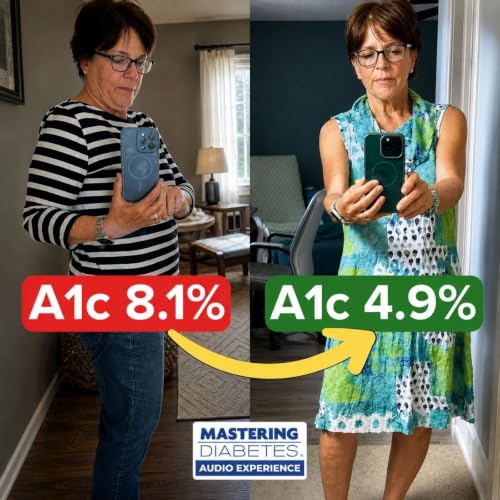
    You'll also hear the remarkable story of Susan, who started with an A1C of 8.1 and, after six months of applying the Mastering Diabetes Method, reduced it to 4.9 while losing 29 pounds.

    In this episode, you'll learn:

    • Why type 2 diabetes is fundamentally connected to insulin resistance—not simply high blood sugar
    • How excess fat inside muscle and liver cells can interfere with insulin signaling
    • Why lowering dietary fat can improve your body's ability to process carbohydrate-rich whole foods
    • Which fruits, vegetables, legumes, whole grains, and starches can form the foundation of an insulin-sensitizing diet

    • Why foods like potatoes, beans, rice, oats, and fruit don't need to be feared
    • How intermittent fasting may help reduce stored fat inside the liver and muscles
    • Why the dawn phenomenon can cause elevated fasting blood sugar even when you haven't eaten
    • How a 16:8 eating schedule can be used to support insulin sensitivity
    • Why eating earlier in the day may be more beneficial than eating late at night
    • How contracting muscles can take up glucose through an insulin-independent pathway
    • Why a simple 10–15 minute walk after meals can make a meaningful difference
    • How dietary changes, fasting, and movement work together to reduce the workload placed on your pancreas
    • How Susan reduced her A1C from 8.1 to 4.9
    • How Lenny reduced her A1C from 6.4 to 5.3 while losing 96 pounds

    The goal isn't to fear carbohydrates or spend the rest of your life trying to manage blood sugar spikes.

    It's to improve the underlying insulin resistance so your body becomes better at processing carbohydrate-rich whole foods.

    By reducing dietary fat, creating periods of negative energy balance, and consistently activating your muscles, you can create an environment that supports greater insulin sensitivity and healthier glucose metabolism.

    If you're struggling with elevated A1C, high fasting glucose, insulin resistance, or type 2 diabetes, this episode will help you understand what may be happening beneath the surface—and the lifestyle strategies you can start using to address it.

    Keep your carbs high and your A1C low.

    続きを読む 一部表示
    19 分
  • He Lowered His A1c from 7.1 to 5.9 in Just 10 Weeks
    2026/07/30

    Ready to reverse insulin resistance and lower your blood sugar naturally?

    👉 Book a free call with our team: https://www.masteringdiabetes.org/apply

    ▶️ Watch the full video version on YouTube: https://www.youtube.com/watch?v=CFaQ2zdqClA

    🎁 Get Your Free GUIDE: https://go.masteringdiabetes.org/optin-recipe-guide

    👉 Mastering Diabetes Case Studies: https://www.masteringdiabetes.org/case-studies/

    What happens when a type 2 diabetes diagnosis becomes the wake-up call that changes everything?

    In this inspiring episode, you'll hear the story of a man who lowered his A1c from 7.1% to 5.9% in less than two and a half months while losing more than 20 pounds, regaining his energy, and rediscovering the confidence to dream bigger than he had in years.

    After years of chronic pain, weight gain, declining health, and eventually a type 2 diabetes diagnosis, he realized he couldn't do it alone. Through personalized coaching, daily accountability, and a whole-food, plant-based lifestyle, he transformed not only his blood sugar but also the way he viewed himself and his future.

    In this episode, you'll learn:

    • How he lowered his A1c from 7.1% to 5.9% in less than 10 weeks
    • Why losing more than 20 pounds was only part of his transformation
    • How personalized coaching and accountability became the biggest keys to his success
    • Why he believes type 2 diabetes doesn't have to define your future
    • How he regained the energy to run again and even started thinking about running his first marathon
    • The mindset shift that helped him stay consistent one minute at a time
    • Why hope can be one of the most powerful tools in reversing insulin resistance
    • How a whole-food, plant-based lifestyle helped him feel stronger, lighter, and more energized than he had in years

    This episode isn't just about lowering your A1c.

    It's about rebuilding confidence, finding hope after a difficult diagnosis, and discovering that lasting change comes from consistent daily habits, supportive coaching, and believing that your health can improve—one minute at a time.

    Keep your carbs high and your A1c low.

    続きを読む 一部表示
    10 分
  • What METFORMIN Actually Does Inside Your Body (And What It Doesn't Fix)
    2026/07/21

    Ready to reverse insulin resistance and lower your blood sugar naturally?

    👉 Book a free call with our team: https://www.masteringdiabetes.org/apply

    🎁 Get Your Free GUIDE: https://go.masteringdiabetes.org/optin-recipe-guide

    ▶️ Watch the full video version on YouTube: https://youtu.be/uwA-8--3Pys?si=8Fhz_IHAqXudfvke

    👉 Mastering Diabetes Case Studies: https://www.masteringdiabetes.org/case-studies/

    If you've been prescribed metformin, you deserve to understand exactly what it's doing inside your body.

    In this episode, Robby Barbaro explains the science behind metformin, why it primarily lowers blood sugar by reducing glucose production from the liver, and why lowering blood sugar is not the same as reversing insulin resistance. You'll learn how metformin fits into diabetes care, what it can and cannot do, and why addressing the root cause of insulin resistance is essential for long-term health.

    You'll also hear the latest research comparing metformin with intensive lifestyle intervention, learn why vitamin B12 monitoring matters for anyone taking metformin long term, and discover inspiring stories of people who dramatically improved their A1C through nutrition, movement, and medically supervised care.

    In this episode, you'll learn:

    • How metformin lowers blood sugar by reducing glucose production in the liver
    • Why lowering blood sugar is different from reversing insulin resistance
    • The three root causes of insulin resistance and which one metformin actually addresses
    • Why fat inside your muscle and liver cells plays a central role in insulin resistance
    • What research says about metformin compared with intensive lifestyle intervention
    • Why lifestyle change was nearly twice as effective as metformin in the Diabetes Prevention Program
    • The importance of monitoring vitamin B12 levels during long-term metformin use
    • How walking for just 10 to 15 minutes after meals can significantly improve blood sugar
    • How Rhonda lowered her A1C from 10.9% to 5.5% while working with her healthcare team
    • How cardiologist Dr. Ace Yunis lowered his A1C from 10.8% to 5.9% and safely discontinued metformin under medical supervision

    This episode isn't about choosing medication or lifestyle.

    It's about understanding what metformin does, what it doesn't do, and why addressing the root cause of insulin resistance gives you the greatest opportunity to improve your health. Whether you're newly diagnosed or have been taking metformin for years, this episode will help you better understand your options and have more informed conversations with your healthcare team.

    Keep your carbs high and your A1C low.

    続きを読む 一部表示
    18 分
  • She Lost 29 lbs and Reversed Type 2 Diabetes Without Cutting Carbs
    2026/07/13

    Ready to reverse insulin resistance and lower your blood sugar naturally?

    👉 Book a free call with our team: https://www.masteringdiabetes.org/apply

    📖 Read Susan's full transformation story: https://www.masteringdiabetes.org/reversed-type-2-diabetes-at-77/

    ▶️ Watch Susan's full transformation video: https://www.youtube.com/watch?v=jYIAvpwXtQc

    📘 Get the Mastering Diabetes Book: https://amzn.to/4aOoI0F

    🎁 Get Your Free GUIDE: https://go.masteringdiabetes.org/optin-recipe-guide

    👉 Mastering Diabetes Case Studies: https://www.masteringdiabetes.org/case-studies/

    Can you reverse type 2 diabetes in your 70s?

    Susan did.

    In this inspiring episode, you'll hear how Susan lowered her A1C from 8.1% to 4.9% in just six months at 77 years old. Along the way, she lost more than 25 pounds, lowered her cholesterol, regained her energy, and completely came off metformin.

    Susan had been trying to eat a plant-based diet for years, but like many people, she wasn't sure how to do it in a way that truly improved insulin sensitivity. After receiving her type 2 diabetes diagnosis, she committed to learning a sustainable, whole-food, plant-based approach that transformed her health and gave her confidence for the future.

    In this episode, you'll learn:

    • How Susan lowered her A1C from 8.1% to 4.9% in just six months
    • Why being 77 years old wasn't a barrier to reversing type 2 diabetes
    • The common mistakes she made when first trying to eat plant-based
    • How she lost more than 25 pounds without feeling deprived
    • Why she chose whole-food carbohydrates instead of following low-carb advice
    • How she worked with her physician to safely come off metformin
    • The mindset that helped her stay consistent even when progress was slow
    • Her favorite Mastering Diabetes recipes that made the lifestyle enjoyable
    • Why she believes it's never too late to improve your health and quality of life

    This episode isn't just about lowering blood sugar.

    It's about proving that meaningful health transformation is possible at any age. Susan's story is a powerful reminder that with the right nutrition, guidance, and consistency, you can improve your health, regain your energy, and continue doing the things you love for years to come.

    Keep your carbs high and your A1C low.

    続きを読む 一部表示
    9 分