エピソード

  • Reclaiming Agency In An Age Of AI Boosterism - Aubrey Blanche On Where To Start, What To Do And Valuing Dignity
    2026/10/20

    This week on the show is Aubrey Blanche. Aubrey is somewhat of a professional enigma - she’s lived multiple careers already, from time inside big tech and early stage investing, and now she’s at the Ethics Centre, while she’s an expert in human resources, diversity and inclusion and ethical AI. Aubrey has also established one of Australia’s largest regular AI newsletters and her writing has been featured in publications like Wired, The Wall Street Journal and Australian Financial Review.

    I wanted to get Aubrey on the show to chat about her myriad professional and personal experiences, to try and chart a course to understand the thread that runs through the life of someone with such diverse perspectives and experiences, but also to chat about her work in recent years in advising organisations with their own artificial intelligence deployment and implementation. If any organisation in Australia who may have a clue how to do this - and not focussing on the false flag of productivity and hooked by the marketing spin of large language model AI - it’d be The Ethics Centre, an organisation I have a huge regard for. Aubrey’s work there, and her background more broadly, struck me as resonate considering it was framed as requiring design with the affected people, to question its value and understand how it could be useful, but also that conscientious objection and the right to opt out is a legitimate option too.

    So this is a conversation that I hope does justice to Aubrey’s personality and spirit - it traverses everything from pain and trauma to healthy relationships and the need to undertake ongoing honest self appraisal, this moment of deranged LLM AI tech bro bubblemaxxing and how organisations fixated on using it for short term productivitymaxxing benefits are likely in for a rocky future. Fundamentally though, this is a conversation about values and what we value - from ourselves in this moment of job uncertainty to how we uphold the dignity of humanity to reprise a spirit of custodianship and responsibility for life more broadly.


    Some extra reading relevant to this episode from our friends at Altiorem.

    AI systems at work: A changing psychosocial work environment

    AI-driven productivity gains enable more CO₂ emissions than they avoid in a global energy–economy model

    Top 10 principles for ethical artificial intelligence


    Welcome to Drinking Country To Save Country. Check out Dharawal Spirits, and grab yourself something - drink responsibly!!!


    Check out our upcoming events, get all the info and grab your tickets.

    Events

    Send me a message

    Thanks for listening. Follow Finding Nature on Instagram

    続きを読む 一部表示
    1 時間 36 分
  • Impermanence And Uncertainty - Geoff Mann On Anticipating Futures
    2026/10/13

    Today’s guest is Geoff Mann. Geoff is a Canadian political economist who was recently in town and I loved having the opportunity to not only sit down and record this conversation, but to indulge in the breadth and depth of his unique background. His research, teaching and books have intersected around political economy, political theory and the history of ideas, with much of his writings in recent years delving into climate change, macroeconomic crisis, the far right and fascist politics, as well as how uncertainty underpins much of this. How do we make sense of what we don’t understand, or what has never happened before? What gives actual confidence to understand what could occur, what lessons do the past offer, how to identify false and fake confidence, what role does power play, how is our political system set up to deal with any form of complexity and uncertainty? These and much more were questions Geoff’s work has explored.

    What struck me though before and then meeting Geoff was how adamant he was in the necessity for humility in this moment. A climate crisis, wars, shifting geopolitical currents - yet many still stand up and let us know that they’ve seen the future, that they know - with a bizarre level of certainty - what all of this means. Chatting with Geoff I realised that the natural state of impermanence of living each day - which I do my best to ignore and hope to impose my own grand plans of control over regardless of how delusional that is - that impermanence is perhaps one of the most important concepts for our society to come to grips with today. How can we predict the impacts of climate change in economic models that weren’t built for that with any sense of certainty and think they give us the answer for what’s to come - when we have never in human history experienced anything like this climate ever, and when it will only become more volatile, unstable and unknown? Yet we try. And aren’t the consultants and lawyers enjoying that cash cow at the moment helping client after client deliver integrated climate assessment models that don’t in any way reflect the reality of disaster and creeping ecological changes underway in every corner of the planet.

    We cover so much in this conversation. The malady of mainstream economic theory and modelling to deal with a whole new reality, the role of story in beginning to imagine and anticipate potential futures, how to think about trade-offs, the potential for a climate leviathan or climate Mao, and the necessity for modesty, generosity and curiosity to be infused in any form of inquiry or action.

    Some extra reading relevant to this episode from our friends at Altiorem.

    The Climate Average Trap

    Prosperity without growth: The transition to a sustainable economy

    Rewiring finance – a new approach to financing a sustainable economy


    Check out our upcoming events, get all the info and grab your tickets.

    Events


    Send me a message

    Thanks for listening. Follow Finding Nature on Instagram

    続きを読む 一部表示
    1 時間 45 分
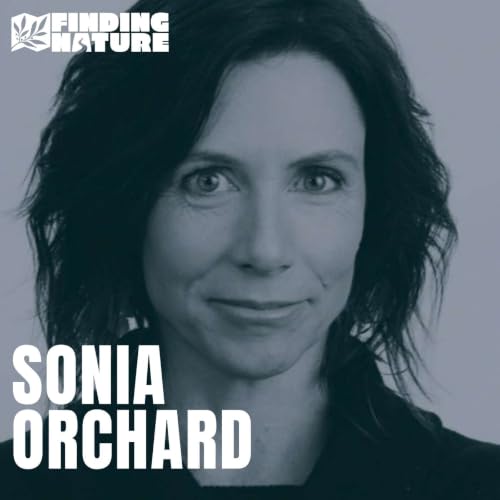
  • One Of Australia's Illnesses - Sonia Orchard On What Kids, And All People, Need
    2026/10/06

    Today I’m particularly honoured and humbled by today’s guest, Sonia Orchard. Now Sonia isn’t a name most people would recognise, but her story likely is, which is exactly why she’s on the show and why I wanted to speak with her. 60% of Australian kids are reported to experience some form of abuse or neglect. 1 in 10 Australian men admitted to committing a sexual offence against a child. NSW police are responding to an incident of domestic violence every three minutes. These are horrifying, harrowing, overwhelming statistics, just three of them too, and yet for the most part everything just carries on. What happened to children being the most important thing in our society? How can there be such a pervasiveness of something so awful? That’s why Sonia is on the show, to discuss these questions and much more.

    Sonia is the author of two books, her memoir Groomed, which tells the story of her own childhood sexual abuse by a man ten years her senior, as well as the most recent In The National Interest titled Before the Harm: Preventing Abuse, Protecting Children. The latter is an enlightening and shocking read, something I implore everyone out there to go and get a copy of. At the heart of her writing lies one simple question - we know how to prevent harm to children, and yet we don’t, so why not? As difficult as the book sounds, and as daunting as the subject matter is, the book is optimistic, determined by nature and a call to arms to every single one of us - as citizens, parents, colleagues, family members, voters, leaders - action prevents harm to kids. It’s available and it’s available now.

    There is much Sonia and I chat about here - from the current status of what is going on with how kids are harmed to the drivers of that, the behaviours of perpetrators, the victim victimiser paradigm, the need for moral courage in not waiting at the bottom of the cliff to try and rescue those being abused but go way upstream and examine the health of a society when 60% of its children are reported as abused or neglected. From what we can do everyday practically to the structural reforms and types of leadership needed. This was an incredibly powerful experience for me, and I was compelled to share a little of my own experience in the context of this topic too and how it’s affected me both as a child and now navigating life as a parent.

    Preventing harms to kids - we all want it. What do we need to change to do that? Everything.

    Some extra reading relevant to this episode from our friends at Altiorem.

    A roadmap for private investors: Investing to address gender-based violence

    Our Watch: Change the story and key frameworks

    Looking beyond traditional gender lens investing approaches using Access Impact Framework in support of SDG 5: Gender equality

    Send me a message

    Thanks for listening. Follow Finding Nature on Instagram

    続きを読む 一部表示
    1 時間 18 分
  • We Are The Existential Risk - No-one Knows AI Like Toby Walsh
    2026/09/29

    If there is one topic that has come to dominate this moment, it is artificial intelligence. Is it going to wipe us out? Will I lose my job? Is a data centre going up in my neighbourhood? Why are all these tech bros so incapable of sounding anything like a normal, sane, relatable person? Why do I have to hear so much about AI? Can’t I just have my connection and attention and identity back, please?

    I’m an avowed cynic of the broad set of technologies AI represents, and I’ve been fortunate to learn from some of the best minds in the world on this show as to how these technologies are warping and distorting our relationship to ourselves, each other, work, identity, even reality itself. People like Emily M Bender and Nina Jankowicz have made clear the hazards and harms of a technology we seemingly have no innate capability to withstand - like the Wizard of Oz, it’s omniscient existence and self-proclaimed extraordinary potential has our society captured. Haven’t we seen this all before though? Weren’t there warnings about climate change in the 1960s we’ve ignored ever since? What’s that saying about power tending to corrupt, and absolute power corrupting absolutely? Aren’t we observing that with a tiny number of companies seemingly holding all the chips against us?

    Yes, yes, I sound like a luddite. I’m obviously extraordinarily anti-progress, anti jobs and anti growth. Also a hypocrite too as I get to enjoy the quality of life I do today because of the evolution of technology over all of human history. Well, I’d love to believe AI could be helpful and valuable so I was very excited to invite Toby Walsh onto the show.

    Just about all Australians probably recognise Toby now - he’s become not just a prolific author helping to make sense of this moment after decades working in and leading University of New South Wales’ AI Institute, but he’s featured regularly on traditional and digital media. He addressed the National Press Club earlier this year, was a featured expert in Channel Seven’s AI reporting, and is regularly popping up on the ABC, SBS the BBC, CNN, The Guardian, NPR and The New York Times.

    If there is anyone in Australia to learn and hear from about not just the current world of AI, but also its history and heritage and where this all may be going, it’s Toby. His most recent book, God AI; Boom or Doom? What to expect when machines outsmart us examines the existential risk of AI. As we’ve heard repeatedly in recent weeks, some techbrogods are foreshadowing the end of all human life by the end of this decade! What does that even mean, how could it even be possible, and what other extinctions have occurred over the course of history that offer precedent to understand if these apocalyptic warnings are even credible.

    We also get into much else - the history of AI to help understand this moment, the potential of ubiquitous intelligence, use cases where it is proving to be helpful, but also how humans are so ill-prepared to handle something so compelling and convenient and laden with potential - maybe the AI prompted to maximise paperclip production and ends up causing humanity’s extinction is all just a furphy, and we’ll end up degrading, eroding and eventually fracturing our ability to relate and cohere together in drastic and irreparable ways.

    Some extra reading relevant to this episode from our friends at Altiorem.

    Artificial intelligence and the future of finance: A framework for structural change

    Modeling ghost GDP: Macro-financial risk and diversified portfolios in the age of artificial intelligence, automation, and populism

    Artificial intelligence and human rights investor toolkit

    Check out Planet Protein and get 10% off when you sign up.

    Send me a message

    Thanks for listening. Follow Finding Nature on Instagram

    続きを読む 一部表示
    1 時間 22 分
  • Senator Rosa Galvez On The Need For Government Before Calamity Hits
    2026/09/22

    Today’s guest is Canadian Senator Rosa Galvez. This was a very special experience to meet and speak with Rosa, whose background, expertise and humanity made this a conversation I both really enjoyed but also took so much from.

    Rosa, originally from Peru, is one of Canada’s leading experts in pollution control and its effects on human health. She was appointed to Canada’s Senate in late 2016, representing Québéc, and been involved with or led many of the country’s most substantive environmental, human health, finance and planetary wellbeing regulations, initiatives and committees over the last decade, which reflects her mindset and experience in appreciating the reality of complex systems, interconnectedness, the need for holistic approaches to both thinking and acting, and her own grounded experience as and with First Nations peoples and their practices.

    She’s a member of Canada’s Standing Senate Committee on Energy, the Environment and Natural Resources and Standing Senate Committee on National Finance. She’s has also served on the Standing Senate Committee on Transport and Communications and the Special Committee on the Arctic. She’s published widely - on Canada’s building codes, what a clean and just recovery from Covid-19 would involve and look like, Aligning Canada’s Finance with Climate Commitments, introduced Bill S-243, the Climate Aligned Finance Act and helped to drive the legislation of Canada’s financial sectors approach to transitioning to a net zero economy.

    Beyond her political and policy work, Rosa has been acknowledged broadly for this work and her career as an engineer. She was included in the Clean50 award in 2021, the 2022 Ecological Society of America Regional Policy Award, and the 2023 Top 25 Women of Influence Award.

    In this chat we get into many and various topics - a primer on the Canadian political system and her appointment, their nation’s choices currently under pressure from Trump’s tariff and economic warfare tactics, understanding and attempting to make decisions that account for multiple and simultaneous considerations and impacts, the language of human, our disconnection from nature, ceremony and each other, as well as the idea of needing government for before inevitable calamity and crisis hits.

    Some extra reading relevant to this episode from our friends at Altiorem.

    Climate Engagement Canada

    Directors' liability and climate risk: Comparative paper - Australia, Canada, South Africa and the United Kingdom

    The state of sustainable finance (2025-2030) global architecture, jurisdictional approaches and emerging trends

    Check out Planet Protein and get 10% off when you sign up.

    Send me a message

    Thanks for listening. Follow Finding Nature on Instagram

    続きを読む 一部表示
    1 時間 20 分
  • All We Have Are Our Stories - Damon Gameau On What Really Moves Us
    2026/09/15

    Damon Gameau is on the show today. This one was many many months in the making so I’m incredibly excited to be sharing it and so glad the diary Gods eventually made possible a chat that will live long in my memory for me. Damon is a renowned, award winning actor, filmmaker, and director who has made some of my favourite documentaries of the last little while. Most recently, Future Council centred children in their pursuit of understanding why adults seem so incapable of dealing with a series of problems that are so obvious to see, be affected by and seemingly addressable too. Before that, 2040 examined and highlighted the technological and governance solutions that already exist to deal with decarbonisation, pollution and circularity. He made That Sugar Film which revealed the captured dietary and health system all of us struggle to free ourselves from on a daily basis. Each of these and much more of his work goes to a simple truth - story is what moves humans.

    We care when we know others. We care when we understand. We care by knowing the stories of others and having them explain what’s not working and what is working, what’s possible if we change and also what’s likely if we don’t. I was keen to speak with Damon not only because of his body of work and learning from him through conversation, but also because over the last six months I’ve had my own epiphany which he helped me realise - that story is most likely the most disregarded yet necessary component of any change process. Easy to disregard as story can get wrapped up in stereotypes of advertising’s dark arts or the lamentable challenges associated with greenwashing. Story also takes time. It involves being with others, slowing down, listening, openness, a humility to let in what you may not already know, ultimately, to be challenged in what you believe or think is right. Story is inconvenient and may not work - much easier and faster to turn to a powerpoint or petition or to find blame in what and who you don’t like. After 20 years attempting to do change I never realised that every single time I’ve been moved and shifted a belief, it’s because of a story I was told, read or watched. From Inconvenient Truth and The Weather Makers in the mid 2000s, to the experience of watching Future Council to prepare for this chat. What resonates are stories.

    In this conversation Damon and I speak about all of this, including his own philosophy on story, their cultural significance, as well as how it matters in countering darker visions of a future that seems inevitable in our common consciousness. We also get into his and my own journeys as men and parents who’ve been cracked open by difficult life events, how we both had the stories we told ourselves fissured and needed to go through the proverbial crucible - something our whole society may also need - to come out cleansed, refreshed and buoyed by a new perspective and closer relationship to reality.

    Check out more of Damon's work at Future Council and The Regenerators.

    Some extra reading relevant to this episode from our friends at Altiorem.

    Framing and language for effective climate conversations

    We need a revolution in environmental communications

    What do sustainability disclosures disclose?

    Check out Planet Protein and get 10% off when you sign up.

    Send me a message

    Thanks for listening. Follow Finding Nature on Instagram

    続きを読む 一部表示
    1 時間 20 分
  • Playing Catch Up With Reality - Hugh White On Australia's Hard New World
    2026/09/08

    That’s Hugh White, and I’m Nathan Robertson-Ball, and welcome to or welcome back to the Finding Nature podcast. Each week I sit down with the leading thinkers and doers across policy, business, academia, civil society and the creative arts to explore their perspectives on and experiences in contributing to a world that is healthier, safer and more just. Lost in my career and having suffered a dramatic life oblivion I was sick and tired of the constantness of feeling disappointment and despair in my daily life. I wanted to better understand how change worked, how it happened, how others understood it and what the best across multiple fields did to pursue and activate it themselves. That simple question was the beginning of what Finding Nature is, and it’s a privilege to spend time with remarkable people every week and be curious about their insights and wisdom. I’m glad you’re here to experience it too.

    This is Hugh White’s second appearance on the show, and he is on the show as his latest book, Hard New World; Australia’s Post-American Future has just hit the shelves. This is a follow up to his extremely popular Quarterly Essay from the middle of 2025, as well as an extension on many of the ideas and commentaries there. I’m lucky doing this that I now get to read a lot of excellent writing that help me better understand this moment, how we got here and where we might be headed, and Hugh’s work has been central in helping me re-frame my own perspective. Hard New World is compelling reading that explores Australia’s position and identity in an era of significant geopolitical re-ordering, as well as what’s driving that re-ordering.

    Hugh’s expertise lies in Australian strategic and defence policy, Asia Pacific and world security, as well as global strategic affairs. Starting his career as an intelligence analyst, was a journalist at the Sydney Morning Herald, was International Relations Advisor to Bob Hawke during his Prime Ministership and served as a senior official in the Department of Defence. He was the founding Director of the Australian Strategic Policy Institute, served as the head of the Australian National University’s Strategic and Defence Studies Centre, has authored nine major publications as an author, co-hosts The Foreign Exchange podcast and his writing features regularly in publications like The Saturday Paper, Australian Financial Review and The Lowy Institute. That’s an abridged bio, but what it points to is if there is anyone in this country more credentialed and capable of eloquently and comprehensively sharing about the state of global affairs and Australia’s place in the world, Hugh is it.

    We cover so much ground in this chat. From Australia’s required identity shift to move with a changing world, the narrative required to do that and the political consequences of dealing with the geographical realities of Australia’s place in the world, the dynamics of the transition underway to a unipolar world, Trumpism and US isolationism, nuclear weapons, climate change as a threat multiplier but maybe as a challenge of such significance humanity can’t ignore reprising its cooperative spirit to address, the role of imagination in all of this and historical precedents how for post colonial Australia has shifted with the times - from Federation to the abolishment of the White Australia Policy. If you care about or are curious about the shifts underway in our world, this one is for you.

    Some extra reading relevant to this episode from our friends at Altiorem.

    Responsible investing in defence, security and resilience

    ADS group: UK defence ESG charter

    Geopolitics of the energy transition: Critical materials

    Check out Planet Protein and get 10% off when you sign up.

    Send me a message

    Thanks for listening. Follow Finding Nature on Instagram

    続きを読む 一部表示
    1 時間 27 分
  • Embracing Wildness - Claire Scobie Has The Stories That Awaken A Dormant Light
    2026/09/01

    Today’s guest is Claire Scobie, who’s the author of the new book ‘Wild Hope; Stories of Leading and Living In Uncertain Times.’ Now anyone who knows me knows that I’m generally a sceptic of hope and many of its connotations, especially in regards to the serious business of chasing political reform or addressing any and all of the many systemic and structural challenges we as a species and this planet faces, but I was convinced to pick Claire’s book up as I knew former guest Reece Proudfoot was one of the stories highlighted. Anything involving the serious and grassroots derived work Reece is doing in the Southern Highlands I both wanted to read about but also appreciate how his work fits within a larger story of community activation and development - the place where real change occurs.

    Claire is an author and journalist and she works with organisations through her business Wordstruck to help them uncover and tell the stories that shape their work and the change they want to make in the world. Her work has been featured in publications like the Observer, the UK’s Daily Telegraph and the Sydney Morning Herald, and this book is the result of her own journey of curiosity and discovery since her ecophany involving the unlikely moment she discovered a tiny marsupial found only on the islands of the Torres Strait was thought to have gone extinct, all while sitting on a plane in Hong Kong. Cracked open, Claire’s world has been different ever since, and Wild Hope is that story.

    I found great joy and comfort in Claire’s work and this conversation. Over the course of building Finding Nature the last two years I’ve had the extraordinary opportunity to meet and learn about literally thousands of projects and groups and activations occurring in every corner of our society. These may not be broad-scale in their impact, but they are what we have agency over and deliver essential ingredients for the human spirit - connection, nourishment, self efficacy and progress. In our communities - whether it’s a bush regen group, a LGBTIQ poetry slam series, attending something like a writers or film festival - it is in these arenas we meet like-minded and like-hearted people. It’s here we can feel safe and part of something bigger than ourselves, and where action becomes possible. Wild Hope tells this story and the stories of dozens of these types of communities from around the world. In this conversation Claire shares about this, her own journey of transformation and how through local connection, immersing in nature and learning about First Nations cultures and practices, she has learnt to walk a path filled with mystery, joy and love.

    Some extra reading relevant to this episode from our friends at Altiorem.

    Doughnut economics for regenerative business design

    Investing to reconnect financial value with people, nature and the real economy: An iterative blueprint for capital markets actors, policymakers and regulators

    100 million farmers: Breakthrough models for financing a sustainability transition

    Check out Planet Protein and get 10% off when you sign up.

    Send me a message

    Thanks for listening. Follow Finding Nature on Instagram

    続きを読む 一部表示
    1 時間 30 分