『Finding Nature』のカバーアート

Finding Nature

Finding Nature

著者: Nathan Robertson-Ball
無料で聴く

Find inspiration and guidance for the change you want to create and learn how others have achieved it in their life and work in pursuit of a more just, safe and healthier future.
Nourishment for the change making class.

© 2026 Finding Nature
経済学
エピソード
  • Reclaiming Agency In An Age Of AI Boosterism - Aubrey Blanche On Where To Start, What To Do And Valuing Dignity
    2026/10/20

    This week on the show is Aubrey Blanche. Aubrey is somewhat of a professional enigma - she’s lived multiple careers already, from time inside big tech and early stage investing, and now she’s at the Ethics Centre, while she’s an expert in human resources, diversity and inclusion and ethical AI. Aubrey has also established one of Australia’s largest regular AI newsletters and her writing has been featured in publications like Wired, The Wall Street Journal and Australian Financial Review.

    I wanted to get Aubrey on the show to chat about her myriad professional and personal experiences, to try and chart a course to understand the thread that runs through the life of someone with such diverse perspectives and experiences, but also to chat about her work in recent years in advising organisations with their own artificial intelligence deployment and implementation. If any organisation in Australia who may have a clue how to do this - and not focussing on the false flag of productivity and hooked by the marketing spin of large language model AI - it’d be The Ethics Centre, an organisation I have a huge regard for. Aubrey’s work there, and her background more broadly, struck me as resonate considering it was framed as requiring design with the affected people, to question its value and understand how it could be useful, but also that conscientious objection and the right to opt out is a legitimate option too.

    So this is a conversation that I hope does justice to Aubrey’s personality and spirit - it traverses everything from pain and trauma to healthy relationships and the need to undertake ongoing honest self appraisal, this moment of deranged LLM AI tech bro bubblemaxxing and how organisations fixated on using it for short term productivitymaxxing benefits are likely in for a rocky future. Fundamentally though, this is a conversation about values and what we value - from ourselves in this moment of job uncertainty to how we uphold the dignity of humanity to reprise a spirit of custodianship and responsibility for life more broadly.


    Some extra reading relevant to this episode from our friends at Altiorem.

    AI systems at work: A changing psychosocial work environment

    AI-driven productivity gains enable more CO₂ emissions than they avoid in a global energy–economy model

    Top 10 principles for ethical artificial intelligence


    Welcome to Drinking Country To Save Country. Check out Dharawal Spirits, and grab yourself something - drink responsibly!!!


    Check out our upcoming events, get all the info and grab your tickets.

    Events

    Send me a message

    Thanks for listening. Follow Finding Nature on Instagram

    続きを読む 一部表示
    1 時間 36 分
  • Impermanence And Uncertainty - Geoff Mann On Anticipating Futures
    2026/10/13

    Today’s guest is Geoff Mann. Geoff is a Canadian political economist who was recently in town and I loved having the opportunity to not only sit down and record this conversation, but to indulge in the breadth and depth of his unique background. His research, teaching and books have intersected around political economy, political theory and the history of ideas, with much of his writings in recent years delving into climate change, macroeconomic crisis, the far right and fascist politics, as well as how uncertainty underpins much of this. How do we make sense of what we don’t understand, or what has never happened before? What gives actual confidence to understand what could occur, what lessons do the past offer, how to identify false and fake confidence, what role does power play, how is our political system set up to deal with any form of complexity and uncertainty? These and much more were questions Geoff’s work has explored.

    What struck me though before and then meeting Geoff was how adamant he was in the necessity for humility in this moment. A climate crisis, wars, shifting geopolitical currents - yet many still stand up and let us know that they’ve seen the future, that they know - with a bizarre level of certainty - what all of this means. Chatting with Geoff I realised that the natural state of impermanence of living each day - which I do my best to ignore and hope to impose my own grand plans of control over regardless of how delusional that is - that impermanence is perhaps one of the most important concepts for our society to come to grips with today. How can we predict the impacts of climate change in economic models that weren’t built for that with any sense of certainty and think they give us the answer for what’s to come - when we have never in human history experienced anything like this climate ever, and when it will only become more volatile, unstable and unknown? Yet we try. And aren’t the consultants and lawyers enjoying that cash cow at the moment helping client after client deliver integrated climate assessment models that don’t in any way reflect the reality of disaster and creeping ecological changes underway in every corner of the planet.

    We cover so much in this conversation. The malady of mainstream economic theory and modelling to deal with a whole new reality, the role of story in beginning to imagine and anticipate potential futures, how to think about trade-offs, the potential for a climate leviathan or climate Mao, and the necessity for modesty, generosity and curiosity to be infused in any form of inquiry or action.

    Some extra reading relevant to this episode from our friends at Altiorem.

    The Climate Average Trap

    Prosperity without growth: The transition to a sustainable economy

    Rewiring finance – a new approach to financing a sustainable economy


    Check out our upcoming events, get all the info and grab your tickets.

    Events


    Send me a message

    Thanks for listening. Follow Finding Nature on Instagram

    続きを読む 一部表示
    1 時間 45 分
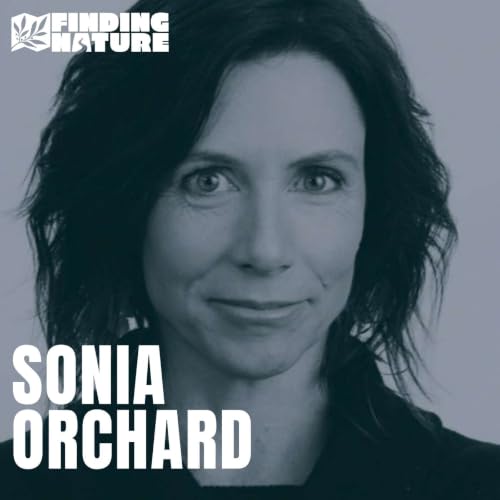
  • One Of Australia's Illnesses - Sonia Orchard On What Kids, And All People, Need
    2026/10/06

    Today I’m particularly honoured and humbled by today’s guest, Sonia Orchard. Now Sonia isn’t a name most people would recognise, but her story likely is, which is exactly why she’s on the show and why I wanted to speak with her. 60% of Australian kids are reported to experience some form of abuse or neglect. 1 in 10 Australian men admitted to committing a sexual offence against a child. NSW police are responding to an incident of domestic violence every three minutes. These are horrifying, harrowing, overwhelming statistics, just three of them too, and yet for the most part everything just carries on. What happened to children being the most important thing in our society? How can there be such a pervasiveness of something so awful? That’s why Sonia is on the show, to discuss these questions and much more.

    Sonia is the author of two books, her memoir Groomed, which tells the story of her own childhood sexual abuse by a man ten years her senior, as well as the most recent In The National Interest titled Before the Harm: Preventing Abuse, Protecting Children. The latter is an enlightening and shocking read, something I implore everyone out there to go and get a copy of. At the heart of her writing lies one simple question - we know how to prevent harm to children, and yet we don’t, so why not? As difficult as the book sounds, and as daunting as the subject matter is, the book is optimistic, determined by nature and a call to arms to every single one of us - as citizens, parents, colleagues, family members, voters, leaders - action prevents harm to kids. It’s available and it’s available now.

    There is much Sonia and I chat about here - from the current status of what is going on with how kids are harmed to the drivers of that, the behaviours of perpetrators, the victim victimiser paradigm, the need for moral courage in not waiting at the bottom of the cliff to try and rescue those being abused but go way upstream and examine the health of a society when 60% of its children are reported as abused or neglected. From what we can do everyday practically to the structural reforms and types of leadership needed. This was an incredibly powerful experience for me, and I was compelled to share a little of my own experience in the context of this topic too and how it’s affected me both as a child and now navigating life as a parent.

    Preventing harms to kids - we all want it. What do we need to change to do that? Everything.

    Some extra reading relevant to this episode from our friends at Altiorem.

    A roadmap for private investors: Investing to address gender-based violence

    Our Watch: Change the story and key frameworks

    Looking beyond traditional gender lens investing approaches using Access Impact Framework in support of SDG 5: Gender equality

    Send me a message

    Thanks for listening. Follow Finding Nature on Instagram

    続きを読む 一部表示
    1 時間 18 分
adbl_web_anon_alc_button_suppression_t1
まだレビューはありません