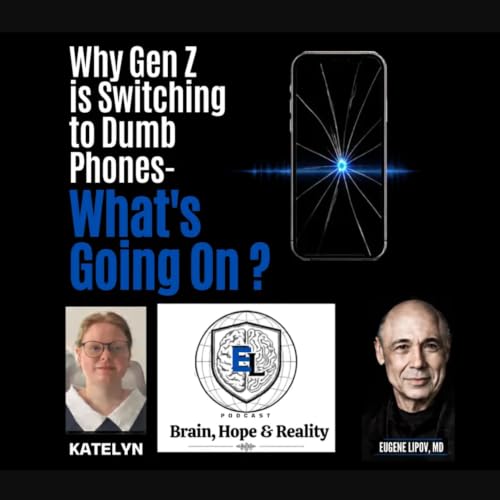
• Why Gen Z wants a dumb phone: What's Going On ?: EP44
    2026/09/07

    Anxiety, social media addiction, digital toxicity, digital brain rot, doomscrolling, phone addiction, Gen Z mental health, Gen Alpha mental health, PTSD, fight-or-flight, sympathetic nervous system, digital Tourette’s, social contagion, sleep problems, dumb phones, grayscale mode, screen time and the effects of social media on the brain are the focus of this episode of Brain, Hope & Reality with Eugene Lipov, MD and Katelyn.
    Why can anxiety feel intensely physical? Can repeated social-media exposure influence behavior? Why are young people turning to dumb phones? And what happens when the fight-or-flight system stays activated?
    Eugene Lipov, MD and Katelyn discuss anxiety symptoms, feeling of doom, social media fatigue, digital addiction, functional tic-like behaviors sometimes called “digital Tourette’s,” mimetic behavior, technoference, digital PTSD, dopamine, norepinephrine, cortisol, sleep, attention, smartphone addiction, grayscale phones, Focus Mode and reducing screen time.
    A central theme is simple: psychology has biology behind it.
    Anxiety can be experienced through the body as racing heart, chest tightness, stomach discomfort, shaky hands, difficulty breathing, dizziness and a powerful sense of dread or impending doom. The conversation explores how the sympathetic nervous system—or fight-or-flight system—may contribute to these sensations.
    The episode also examines how behaviors repeatedly seen online may influence other people, including discussion of sudden functional tic-like behaviors reported among some young social-media users.
    The conversation then turns to practical solutions. Can you make your smartphone boring? Can grayscale reduce the urge to scroll? Can Focus Modes and removing apps from your home screen create enough friction to interrupt automatic behavior? And what happens when you remove the phone from your bedroom completely?
    Katelyn shares strategies for recognizing anxiety in the body and managing it with grounding, breathing, physical sensation and behavioral techniques. The discussion also covers SMART goals, monitoring screen time, nature, hobbies and replacing passive scrolling with activities that engage your brain.
    CHAPTERS
    0:00 The Biology Behind Psychology
    1:52 Unpacking Anxiety Types
    2:53 The Rise of Mimetic Disease
    5:27 The Truth About Stimming
    10:23 Agoraphobia in the Digital Age
    13:29 The Dumb Phone Movement
    21:28 Why Gen Z Is Seeking Disconnection
    Subscribe to Brain, Hope & Reality for conversations about anxiety, PTSD, digital toxicity, brain science, the autonomic nervous system and practical ways to improve mental health.
    Where do you feel anxiety first—your chest, stomach, breathing, head or somewhere else?
    #Anxiety #DigitalToxicity #DigitalBrainRot #SocialMediaAddiction #PhoneAddiction #Doomscrolling #GenZ #GenAlpha #MentalHealth #PTSD #FightOrFlight #ScreenTime

    続きを読む 一部表示
    49 分
  • The Hidden Brain Damage From Screen Time You Can’t See, But MRI may show it :EP43
    2026/09/03

    Watch full episode on YouTube

    https://youtu.be/8mnGBzfQ1ZE

    Is your smartphone silently changing your brain?

    In this episode, Eugene Lipov, MD, board-certified physician, trauma expert, and pioneer in PTSI treatment, explores digital toxicity, screen addiction, doomscrolling, dopamine, attention, brain health, mental wellness, and the effects of smartphones and social media on Gen Z.

    Our guest, Natalie, shares firsthand experiences of growing up with smartphones, TikTok, social media, and constant digital stimulation.

    Topics Covered
    • Gen Z smartphone dependency and mental health
    • Digital toxicity and possible brain changes
    • TikTok, dopamine, and endless scrolling
    • How algorithms capture attention
    • Grayscale phones and digital boundaries
    • Sleep and keeping phones out of the bedroom
    • Flip phones and digital detox
    • AI-generated content, propaganda, and manipulation
    • Phubbing and loss of real-world connection
    • Practical ways to reduce excessive screen use
    • Can heavy smartphone use affect the brain?

    📘 Digital Brain Rot
    https://www.digitalbrainrot.com/

    📖 Brain on Fire: Doomscrolling, Dopamine, and the Decline of Attention
    https://www.amazon.com/Brain-Fire-Doomscrolling-Attention-Reclaiming/dp/B0GXFQGDHT/

    🌐 Official Website
    https://dreugenelipov.com/

    Follow Eugene Lipov, MD

    Facebook: https://www.facebook.com/elipovmd/
    Instagram: https://www.instagram.com/dreugenelipov/
    LinkedIn: https://www.linkedin.com/in/eugenelipov/

    📩 Business Inquiries: dreugenelipov1@gmail.com

    Timestamps

    00:00 Why Gen Z Can't Escape Smartphones
    00:19 Digital Toxicity & Brain Health
    01:20 Digital Toxicity Awareness Day
    02:33 Growing Up Connected
    03:24 Memory Loss, TikTok & Daily Life
    04:18 Why Smartphones Are So Addictive
    05:22 Flip Phones & Digital Detox
    06:46 Can Governments Limit Social Media?
    07:46 TikTok, Dopamine & Endless Scrolling
    09:39 How Algorithms Hijack Attention
    10:56 AI, Fake Content & Digital Manipulation
    12:42 Responsible Technology vs Digital Harm
    13:38 Smartphones & Brain Development
    16:35 Why Phones Don't Belong in the Bedroom
    18:43 Doomscrolling & Digital Addiction
    20:44 Phubbing: Phones vs Real Connections
    22:26 Natalie's Advice for Gen Z
    24:31 Habits to Break Phone Addiction
    27:12 AI Propaganda & Social Media
    30:16 Can Smartphones Shrink Your Brain?
    34:02 Brain Health, PTSD & Final Takeaways

    👍 Like, subscribe, and turn on notifications for more discussions on brain health, digital toxicity, trauma recovery, dopamine, neuroscience, PTSD, and PTSI.

    #BrainRot #DigitalToxicity #Doomscrolling #ScreenAddiction #BrainHealth #Dopamine #GenZ #TikTok #SocialMedia #MentalHealth #Neuroscience #PTSI #PTSD

    続きを読む 一部表示
    46 分
  • Inside the Mind of a Special Forces Veteran | Nick -EP42
    2026/09/02

    Learn how PTSD recovery, brain recovery, special forces training, trauma, mental health, digital toxicity, cognitive endurance, and mental resilience intersect in this conversation with a former Special Forces operator.

    In this episode of Brain, Hope & Reality, we explore what prolonged high-stakes training and trauma can do to the brain and nervous system, how PTSD can affect sleep, focus, emotional regulation, and daily performance, and why digital toxicity may make recovery more difficult by adding constant stimulation and distraction.

    We discuss the realities of PTSD recovery from both a psychological and physiological perspective, including the challenges of rebuilding brain recovery, cognitive endurance, focus, discipline, and mental resilience after intense stress. The conversation also examines how Special Forces training shapes the way people respond to pressure, discomfort, uncertainty, and fear.

    For veterans, first responders, people living with trauma, and anyone interested in performance and brain health, this discussion offers a grounded look at how recovery may involve more than simply “thinking differently.” Sleep, nervous-system regulation, physical activity, meaningful routines, relationships, and reducing unnecessary digital stimulation may all play a role.

    We also discuss practical ways to reduce digital toxicity, including creating phone-free periods, tolerating boredom, protecting sleep, spending more time in real-world activities, and becoming more intentional about when and why you reach for your phone.

    **Inside the Mind of a Special Forces Veteran | Brain, Hope & Reality Episode 44**

    Subscribe for conversations about PTSD, trauma recovery, brain health, mental health, Special Forces mindset, digital toxicity, sleep, resilience, performance, and nervous-system regulation.

    Comment below: What has helped you build resilience or reduce digital overload in your own life?

    0:00 From Gangs to Elite Marine Special Operations
    4:59 The Hidden History of the Navy SEALs
    7:40 The Reality of Stellate Ganglion Block
    10:30 The Physiological Cost of High Stress
    13:05 Building American-Made Businesses
    15:57 The Truth About Testosterone and SSRIs
    30:12 Redefining Education for the Next Generation

    #PTSD #PTSDRecovery #SpecialForces #BrainRecovery #MentalHealth #TraumaRecovery #DigitalToxicity #MentalResilience #BrainHealth #Veterans

    続きを読む 一部表示
    46 分
  • EP 40 | The Psychotherapy Revolution: PTSD, SGB & the Brain Science of Trauma
    2026/08/22

    PTSD, PTSI, psychotherapy, trauma recovery, Stellate Ganglion Block (SGB), anxiety, depression, neurobiology, threat detection, and brain recovery are at the center of this conversation between Eugene Lipov, MD, and Jeffrey Smith, MD.

    In this episode of Brain, Hope & Reality, they explore where traditional psychotherapy works, where it may fall short, and how advances in neuroscience are changing the way we understand trauma and emotional recovery.

    The discussion examines the brain’s threat-detection system, autonomic nervous system dysregulation, hyperarousal, anxiety, depression, and post-traumatic stress, along with the role of Stellate Ganglion Block (SGB)as an emerging intervention aimed at reducing excessive sympathetic nervous system activation.

    Rather than viewing trauma only as a psychological problem, this episode asks a broader question: what if persistent post-traumatic symptoms are also driven by measurable biological changes in the brain and nervous system?

    Topics include:

    • What psychotherapy gets right — and where it may be limited
    • How the brain detects and responds to threat
    • PTSD and PTSI as biological as well as psychological conditions
    • Stellate Ganglion Block explained
    • SGB for PTSD, anxiety, and depression
    • Hyperarousal and sympathetic nervous system activation
    • The relationship between neurobiology and emotional healing
    • Emerging approaches to trauma recovery
    Timestamps

    06:41 — What psychotherapy gets right — and wrong
    11:27 — The brain’s threat-detection system
    22:34 — Stellate Ganglion Block explained
    29:10 — SGB for PTSD, anxiety, and depression

    Follow Brain, Hope & Reality on Spotify for conversations about PTSD, PTSI, trauma recovery, SGB, psychotherapy, anxiety, depression, brain health, digital toxicity, sleep, and nervous-system regulation.
    Subscribe to Dr. Eugene Lipov on Substack for deeper research, articles, and updates:
    https://substack.com/@eugenelipovmd

    #Trauma #PTSD #Psychotherapy #MentalHealth #StellateGanglionBlock #Neuroscience #DrEugeneLipov #TraumaHealing

    続きを読む 一部表示
    39 分
  • EP 41 Your Past Lives May Be Affecting You Now | Neurobiology Explains Why | Brain Hope Reality
    2026/08/22

    Unlocking Trauma: How Hypnosis Reprograms the Subconscious

    In this powerful conversation, hypnotherapist Peter McLaughlin joins Dr. Eugene Lipov to explore how trauma can affect the subconscious mind and how hypnosis may help people reprocess deeply rooted emotional patterns.

    They discuss the neurobiology of trauma, the amygdala, the autonomic nervous system, subconscious memories, and the growing impact of digital overstimulation and “digital PTSD.”

    In this episode, you'll learn:

    • How trauma affects the brain and nervous system
    • How subconscious memories can influence behavior
    • The biology behind hypnosis and altered states
    • The connection between PTSD, the amygdala, and stress responses
    • How brain waves may relate to memory and emotional processing
    • Whether traumatic memories can be reprocessed
    • How smartphones and digital overstimulation affect mental health
    • The role of epigenetics and inherited trauma
    • Why some people remain stuck in trauma patterns
    • How hypnosis may support emotional regulation and nervous system recovery

    ⏱️ TIMESTAMPS

    00:00 Introduction
    02:14 What Trauma Does to the Brain
    06:42 The Subconscious Mind & Emotional Memories
    11:18 How Hypnosis Works
    15:37 PTSD, Amygdala & Nervous System
    21:05 Brain Waves & Altered States
    27:42 Can Traumatic Memories Be Reprogrammed?
    33:11 Digital PTSD & Smartphone Overstimulation
    39:24 Epigenetics & Inherited Trauma
    45:58 Why People Stay Stuck in Trauma Loops
    52:10 Hypnosis & Emotional Regulation
    58:44 Final Thoughts

    Subscribe to Dr. Eugene Lipov on Substack for research, articles, and updates:
    https://substack.com/@eugenelipovmd

    #trauma #hypnosis #ptsd #subconsciousmind #healingtrauma #mentalhealth #neuroscience #digitalptsd #dreugenelipov #petermclaughlin #brainhealth #emotionalhealing

    続きを読む 一部表示
    41 分
  • EP 37- A How Devon Larratt Stays Strong After 50 | DSR, Sleep & Peak Performance Explained |
    2026/08/21

    How does legendary arm wrestler Devon Larratt continue performing at an elite level after 50?

    In this episode of Hope Brain Reality, Dr. Eugene Lipov sits down with Devon Larratt, also known as Euro Crusher, to explore healthy aging, peak performance, sleep, trauma recovery, mental resilience, DSR (Dual Sympathetic Reset), and digital toxicity.

    Devon shares how DSR therapy improved his sleep, emotional health, recovery, and performance. Dr. Lipov explains why sleep, stress management, emotional regulation, and reducing digital toxicity can play a major role in brain health, recovery, and longevity.

    In this episode, you'll learn:

    • How Devon maintains world-class performance after 50
    • How DSR may support sleep, recovery, and emotional health
    • Why quality sleep matters for inflammation, brain function, and aging
    • How stress and trauma can affect performance and recovery
    • Why relaxation and emotional regulation can improve resilience
    • How excessive screen time and doomscrolling affect mental focus
    • Practical digital detox and phone fasting strategies
    • How creativity and art can support emotional healing
    • Habits that can support longevity and peak performance

    ⏱ CHAPTERS

    00:00 Introduction & Meet Devon Larratt
    01:05 How Devon Stays Strong After 50
    03:12 DSR Therapy & Better Sleep
    05:48 Emotional Healing After DSR
    08:27 Art, Trauma & Mental Recovery
    11:18 Peak Performance & Longevity
    14:42 Training Smarter as You Age
    18:05 Relaxation vs Burnout
    21:30 Why Sleep Is the Ultimate Recovery Tool
    24:15 Digital Toxicity & Brain Health
    27:40 Phone Addiction & Doomscrolling
    31:08 Digital Detox Strategies
    34:20 Advice for High Performers
    36:15 Aging With Purpose & Resilience
    37:42 Final Thoughts

    Join the movement August 2nd:
    https://digitaltoxicityawareness.com/

    👍 Like, subscribe, and turn on notifications for more expert conversations about brain health, trauma recovery, healthy aging, longevity, sleep science, digital wellness, neuroscience, and peak performance.

    🌐 Learn More

    Official Website
    https://dreugenelipov.com/

    📘 The God Shot
    https://thegodshotbook.com/

    📖 Brain on Fire
    https://www.amazon.com/Brain-Fire-Doo...

    👨‍⚕️ Medical Legal Consultant
    https://dreugenelipov.com/medical-leg...

    📱 Follow Dr. Eugene Lipov

    Facebook: /elipovmd

    Instagram: /dreugenelipov

    LinkedIn: /eugenelipov

    📩 Business Inquiries:

    dreugenelipov1@gmail.com

    #devonlarratt #armwrestling #dsr #sleep #healthyaging #longevity #brainhealth #digitaltoxicity #digitalwellness #traumarecovery #peakperformance #recovery #neuroscience #dreugenelipov

    続きを読む 一部表示
    18 分
  • EP39 Menopause Hits Hard | The Truth About Brain Fog | Dr. Eugene Lipov @DoctorSeibel ​
    2026/08/20

    Unlock the secrets to thriving through menopause with renowned reproductive endocrinologist Dr. Mache Seibel.

    If you're experiencing brain fog, exhaustion, poor sleep, hot flashes, or mood changes, this episode explains how estrogen affects the brain, sleep, and overall health, and what you can do to feel better.

    Dr. Seibel breaks down the latest advances in menopause treatment, including hormone therapy and new non-hormonal medications for hot flashes and sleep problems. He also shares practical strategies involving exercise, diet, stress management, CBT, and supplements.

    We cover:

    • How estrogen affects brain health, memory, sleep, and the body
    • Why brain fog and mood changes happen during menopause
    • Hormonal and non-hormonal treatment options
    • New medications for hot flashes and sleep disruption
    • How trauma, stress, inflammation, and autoimmune changes can affect symptoms
    • Lifestyle strategies that may improve energy, sleep, and quality of life
    • Exercise, diet, CBT, and supplements for menopause support

    Whether you're navigating menopause, supporting someone through it, or working in women's healthcare, this conversation offers practical insights for understanding symptoms and making informed decisions.

    ⏱ CHAPTERS

    00:00 Introduction & Meet Dr. Mache Seibel
    00:47 Why Menopause Hits Hard
    04:10 Brain Fog, Memory & Estrogen
    06:00 Sleep, Inflammation & Hormones
    09:37 Estrogen Receptors & Whole-Body Health
    12:12 Menopause Treatment Options
    17:22 New Medications for Hot Flashes
    24:30 Trauma, Stress & Menopause
    27:26 Diet, Exercise & Supplements
    29:44 Final Advice

    👍 Like, subscribe, and turn on notifications for more science-based conversations about women's health, menopause, hormones, brain health, trauma recovery, longevity, and healthy aging.

    🌐 Learn More

    Official Website
    https://dreugenelipov.com/

    📘 Order The God Shot
    https://thegodshotbook.com/

    📖 Brain on Fire
    https://www.amazon.com/Brain-Fire-Doo...

    👨‍⚕️ Medical Legal Consultant
    https://dreugenelipov.com/medical-leg...

    📱 Follow Dr. Eugene Lipov

    Facebook: /elipovmd

    Instagram: /dreugenelipov

    LinkedIn: /eugenelipov

    📩 Business Inquiries:

    dreugenelipov1@gmail.com

    #menopause #perimenopause #womenshealth #hormonehealth #hotflashes #brainfog #estrogen #hormonetherapy #midlife #healthyaging #sleephealth #drmacheseibel #dreugenelipov #brainhealth #womenswellness

    続きを読む 一部表示
    30 分
  • EP 38 The Hidden Brain Damage From Screen ( MRI show change | Dr. Eugene Lipov
    2026/08/19

    Is your smartphone silently changing your brain?

    In this eye-opening episode, Dr. Eugene Lipov, board-certified physician, trauma expert, and pioneer in PTSI treatment, explores digital toxicity, screen addiction, dopamine, doomscrolling, attention span, brain health, and mental wellness.

    The conversation looks at how smartphones and social media affect Gen Z, including:

    • Smartphone dependency and digital addiction
    • TikTok, dopamine, and endless scrolling
    • Attention span and brain health
    • Doomscrolling and digital toxicity
    • AI-generated content and digital manipulation
    • Smartphone use, sleep, and brain development
    • Flip phones and digital detox movements
    • Practical ways to reduce screen time and set healthier boundaries

    Whether you're a parent, student, educator, healthcare professional, or simply concerned about excessive screen time, this episode offers practical insights into protecting your focus and building healthier digital habits.

    🌐 Learn More

    Official Website: https://dreugenelipov.com/

    📘 Brain Rot: https://www.digitalbrainrot.com/

    📖 Brain on Fire: https://www.amazon.com/Brain-Fire-Doo...

    👨‍⚕️ Medical Legal Consultant: https://dreugenelipov.com/medical-leg...

    📱 Follow Dr. Eugene Lipov

    Facebook: /elipovmd

    Instagram: /dreugenelipov

    LinkedIn: /eugenelipov

    📩 Business Inquiries: dreugenelipov1@gmail.com

    Timestamps

    00:00 Why Gen Z Can't Escape Smartphones
    00:19 Digital Toxicity & Brain Health
    02:33 Growing Up Connected
    04:18 Why Smartphones Are So Addictive
    07:46 TikTok, Dopamine & Endless Scrolling
    09:39 How Algorithms Hijack Your Attention
    10:56 AI & Digital Manipulation
    13:38 Smartphones & Brain Development
    16:35 Why Phones Don't Belong in the Bedroom
    18:43 Doomscrolling & Digital Addiction
    20:44 Phubbing & Real Connections
    24:31 Breaking Phone Addiction
    27:12 AI Propaganda & Social Media
    30:16 Can Smartphones Shrink Your Brain?
    34:02 Brain Health & Final Takeaways

    👍 Like, subscribe, and turn on notifications for more discussions on brain health, neuroscience, trauma recovery, dopamine, digital wellness, and PTSI.

    #brainrot #brainhealth #digitaltoxicity #screentime #screenaddiction #doomscrolling #dopamine #mentalhealth #neuroscience #genz #tiktok #socialmedia #digitalwellness #ptsi

    続きを読む 一部表示
    46 分