• Rage Bait, Freak Flags & Finding Your Readers
    2026/04/26
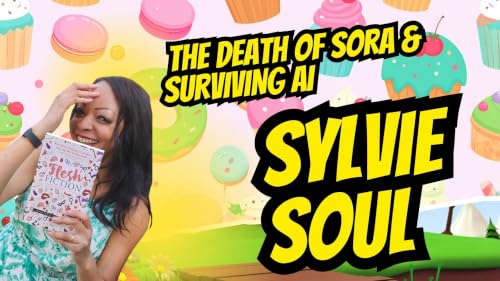
    ** Stay tuned for your May list of open calls on Tuesday!Most of my information is free, but some of the most exclusive info is paid. Join the next tier!I met Sylvie Soul at the Toronto Indie Author Conference and knew immediately I’d found a kindred spirit — someone who loves short fiction, wrestles with the same questions about craft and career, and isn’t afraid to go to dark places on the page. We sat down to talk about perfectionism, productivity, the courage it takes to write what you actually love, and why embracing your inner “disrupter” might be the best career move you ever make.The notes below are just a tiny taste of all the fun stuff we chat about in the actual podcast! Listen above, or if you like to watch (and who of us doesn’t?) Click here for the YouTube link:AF: Tell us a bit about yourself and your writing.SS: I’m a writer of short fiction — I’ve published several short stories over the years. The main goal, though, is the novel. The full manuscript I could either traditionally publish or, if not, I’m very much looking forward to self-publishing. I’ve been exploring my love of fiction, learning more about myself, discovering that speculative fiction is really my home. And I’m trying to get back to having an online presence. I had a site, it’s been dormant since the pandemic, but after meeting everyone at the Toronto Indie Author Conference, I feel motivated to bring up my brand and really express myself again.AF: There’s so much pressure these days for authors to be their own marketing machines — social media, TikTok, BookTok, all of it. Do you think every author has to be an influencer?SS: No, and I think there has to be a balance. I’m actually an introvert — I prefer being behind the scenes, and that’s even true in my day job, where I’m more in a support role. But when it comes to my writing, I’ve felt a shift lately. I do want my face out there. I want my personality attached to what I write. But the balance is the thing — you can build a presence, do the TikTok dances, do the BookTok thing, but if you’re devoting all your time to promoting that image, there’s little left over to actually focus on the craft. Especially if you have a day job on top of it. I don’t write full-time. Right now it’s a hobby. The dream is that eventually what I create overtakes what I do in my day job. But I think I’m a long ways out from that. So it’s about finding balance — fill my cup and also get paid.AF: I’ve come to believe that the one thing all successful full-time authors have in common is sheer output — the number of books they have out there. Zoe York has over a hundred, Mallory Cooper over four or five hundred. What do you think?SS: Consistency is the word that comes to mind for me. Don’t focus on motivation — you know what you have to do, so just get it done. But you’re right that it comes down to productivity. You have to add productivity to that triangle of talent, opportunity, and luck. That’s what lets them build. And honestly, what holds me back most is perfectionism. I always tell myself done is better than perfect, but I’m always so fearful that I’m going to be embarrassed in the future when people read something that isn’t exactly right — and that fear ends up freezing me completely.AF: You have a completed novel. Tell us about it.SS: I lovingly call it draft 1.5, because I’ve gone through moments where I’ve completed it, then gone, no, I don’t like this, I need to scrap it and start over. I finally had a version I was happy enough with to get from point A to point B. I gave it to my editor last year, and she gave me phenomenal notes. Now I have to go back and, as I say, take a sledgehammer to it and beat it into submission so it’s better. No one who cares about their audience ever puts out a first draft. Maybe it’ll be draft five. Maybe draft nine. I don’t know where it is yet, but it’s somewhere on the horizon. And word count wise — I’ll be honest — it’s still in novella territory. I haven’t cracked 50,000 words yet. But I think the market’s changing. People used to want a big fat tome. Now I think readers are more receptive to smaller, bite-sized stories they can actually consume. So if I just can’t embellish further, maybe it stays at 35,000 to 40,000 words. And that’s fine.AF: What’s your take on editors?SS: They are absolutely essential, and I don’t think we give them nearly enough praise. I was lucky enough to get a Toronto Arts Grant to help fund my editing, and it was the best money ever spent. I think when we reach the stage where we truly want to write the best thing possible, we’ve evolved past peer workshops — those can be overwhelming because you get six or seven different schools of thought and you don’t know which one to follow. You might have someone who has a completely different story in their head, and if you cater to them, you’re damaging your own ...
    続きを読む 一部表示
    33 分
  • The Real Truth About Author Nation — and What It Could Mean for Your Career
    2026/04/20
    Welcome to part two of my no-holds-barred chat with Joe Solari.If you’d rather watch a video, HERE IT IS. This podcast is dropping a day late—on a Monday instead of Sunday—because I spent the weekend at the Toronto Indie Author Conference at the Toronto Public Library, and I’ve got to tell you, I’m so glad I went.(I learned the difference between an em dash and an n dash during my free edit of the upcoming Roxie Vega novella. That was worth the price of admission alone, lol.)I met some remarkable people, learned a ton, came away with new strategies, and got that free edit. (Hi Sylvie! And of course, my conference bud, Mark Leslie Lefebvre)Paid subscribers can read all about what I learned and where I’m taking my career because of it in an exclusive post tomorrow.One thing writers absolutely need to do is keep learning. And that’s what this weekend was about for me. AND why I’m going to Author Nation.We need to hear how other authors are running their businesses, what’s working, what isn’t, and where the opportunities are.Because, as Joe said in our chat last week, there is no magic bean that grows a successful author career.The right person has to read the right story at the right time. But you can absolutely improve your odds of being discovered.If there’s one truth I keep coming back to in my years-long search for how to make real money with writing, it’s this: the more books you have out, the more chances you have to succeed.So whatever’s been holding you back—and I’m saying this to myself too—fear, imposter syndrome, perfectionism—it’s time to shove that aside in 2026.This is the year I give this thing a real go.Attending conferences like the Toronto Indie Author Conference and going to Author Nation this November are a big part of my strategy. It’s the networking. It’s the learning. It’s the headspace you put yourself in when you’re around people who are serious about this business.So I hope you enjoy part two of my chat with Joe, where he gives me a real blueprint for what to expect at Author Nation this November.Enjoy! (Ps. Most of the “stuff” is in the podcast and video. The bit below is just a summary.)— Here are the links mentioned in the chat;https://www.spoken.presshttps://www.curios.comhttps://www.kickstarter.com/https://www.authornation.livehttps://www.royalroad.com/homeAF: For authors who are wondering whether Author Nation is worth attending, what’s the biggest value?JS: Access. At a large event like Author Nation, authors can connect with major service providers, new technology companies, and other serious authors all in one place. It’s not just about inspiration. It’s about relationships, information, and opportunities that can save years of trial and error.AF: So it’s partly about networking, but also about learning what tools and strategies are actually working now?JS: Our job is to bring the industry to the community. That means established players, new platforms, and emerging technologies. We want authors to see what’s changing, think critically about it, and decide what fits their business.AF: You also talked about helping authors before they even get to the event.JS: One example is the free Kickstarter cohort. Authors can join, learn by listening, get feedback, simplify their campaigns, and improve their odds of funding. We’ve seen people use Kickstarter not just as a fundraising tool, but as a smart first launch for a book.AF: That was one of the most interesting things you said—that Kickstarter can help authors make money earlier instead of pouring money into a launch and hoping it works.JS: If authors can break even or better on a first launch, that solves a real business problem. It helps them fund production, build confidence, and grow without digging into savings.AF: And Author Nation is also creating projects that give authors opportunities beyond just attending panels.JS: Absolutely. We’ve run anthologies, launched them on Kickstarter, and created ways for authors to earn money and gain exposure. We’re also developing projects like comic adaptations, where writers from the community can see their work turned into something new. That kind of hands-on opportunity matters.AF: So this isn’t just a conference where people sit in rooms and take notes.JS: Everything we’re building has a purpose. We want authors to leave with clearer direction, better tools, stronger connections, and real ways to grow their business.AF: You also made an important point that authors need to think like business owners.JS: Nobody will care about your career as much as you do. Whether you pursue direct sales, Kickstarter, wide distribution, Kindle Unlimited, audio, serial fiction, or live events, you need to understand the model you’re choosing and build intentionally.AF: And that’s one of the real benefits of Author Nation—you’re giving authors a place to figure out which path makes sense for them.JS: There isn’t one ...
    続きを読む 一部表示
    54 分
  • Why Serious Authors Can't Miss Author Nation
    2026/04/12
    I’m going to Author Nation this year, and the founder and driving force behind one of the biggest writing conferences in the world talks about WHY this event can’t be missed if you are looking to take your author career to another level.PREFER to 👀? LINK TO YOUTUBE INTERVIEWPS. There was so much good info! Part two will drop next week.AF: What makes Author Nation different from other conferences?JS: Having been in this industry for 10 years now, and seeing how it’s changed and what’s going on, and understanding how it works — we’re really trying to create a place where two things happen:* One, we’re actually being forward-thinking and proactive and changing how the industry will work. If you’re not happy with how things are, change ’em.* But also being realistic about how difficult it is, especially if you’re striving toward earning a living as an author. Once you understand how difficult that is, what can you do to change the probabilities?We’ve never been the kind of group that says:“Oh yeah, come and buy our magic beans and you’re just gonna have success and it’ll be wonderful.” That’s not the truth.But what we can do is look at how things work and say, okay, what are the main failure points in author businesses? Then either educate you to go around those points or do things as a community to stack advantages toward our community.That’s how I think and how we’re approaching the show, and why it’s structurally different than other events. It really is kind of a system.AF: So, having raw talent isn’t enough to be successful in the author world?JS: Talent’s the floor, assuming it’s a good product, because bad products won’t sell no matter what. It really is luck, and there are so many factors you can’t control when it comes to algorithms and word of mouth.And then we complicate it further by having situations where people say, “Well, this is what I did, and you do the same thing, you can be successful.” I’m not saying those authors are lying, they do honestly believe that their success is repeatable. That’s survivor bias. But there are too many factors that can’t be controlled.AF: So what should authors take away from that?JS: Don’t beat yourself up because you’re in that fat tail, (Authorial note: Joe explains the Power Law Curve in our talk, and most authors are in the big tail and not the tall head of success.)Understand that what gets you to move from the average result to an above-average result isn’t your average cost of advertising, or how much you spend on marketing, as more often than not it’s a threshold event driven by your audience that you’ve built.AF: And what creates that threshold event?JS: It has more to do with a rinse-and-repeat cycle. The more you launch your books on Amazon, the more that you go to live events, the more that you do whatever it is that you’re deciding to build your brand around.(Authorial note: then I asked Joe Solari about a podcast episode I heard him on.. Self-Publishing with ALLi - Why Recipes for Publishing Success Dont Work. This is what he dives into next.)And this gets us to the artificial cultural market study. I think we should all be talking about it all the time. It demonstrated that if you took the same books on Amazon and took them to a parallel universe, it would come up with a different number one book right now.It’s about how the audience interacts with that data set. It has more to do with word of mouth and what’s driving a popularity market.I’ve seen a lot of times where authors will huddle up and try to case-study a successful author. What if we did all these things? What if we imitated the writing style, cover, whatever? We’re all gonna make covers like her now and we’re all gonna write psychological thrillers.But her success will lift the whole genre and may make some other people lift up, but it’s not like her audience sees your book, if it looked identical and was written similarly, as an equal substitute. It’s not like one pound of sugar is equal to another pound of sugar.It has more to do with the audience’s personal connection with those brands and the story world and the characters.AF: You mentioned Matt Dinniman and the wild success of Dungeon Crawler Carl. What did he do that made such a difference?JS: It was a long time before those books took off. A lot of people were not willing to do the things that Matt was doing.He went to a lot of live events. He was going to things like Dragon Con, but also anytime he would go anywhere that he traveled, he would do local book events. He would call up an independent bookstore and say, “Hey, I’d like to host some of my fans.” Maybe in the beginning, two to five people would show up.But he would keep doing it. And doing it. And doing it.Now he’s massive. Live Nation is running his events because they’ve gotten so big. But here is an example of how he goes the extra mile: They canceled his New York ...
    続きを読む 一部表示
    37 分
  • Direct Sales & Scare Mail with David Viergutz
    2026/03/28
    David Viergutz has dialed into something old made new again. It started with Scare Mail and is now a full story service at Epistolary Fiction.And he made $ 4 Million last year doing it.💰💰💰Prefer to watch?I was scrolling Facebook last year and froze the screen when I saw an ad for Scare Mail. What? As a horror fan and writer, I thought, this is sheer genius. Who wouldn’t want to find something that cool in their mailbox?Because, let’s face it. All I normally find in that green box outside my farmhouse is bills, ads for politicians and the occasional truly terrifying letter from the government.David Viergutz has a solution to one of my problems. The mailbox is no longer boring or just full of bad news.Plus, he may have solved another one of my problems… How to be profitable as a writer?(Give me six months and I’ll let you know how it’s going!)If you prefer to watch your interviews, here is the link to our chat on YouTube.These interviews dive deep into the truth of the publishing world in a friendly, accessible way for authors. To keep receiving all the best hints, join the next tier!AF: David, for people who are just discovering you, how did you get here? You’ve had such an unusual path into publishing.DV: My history is probably very similar to a lot of authors. At some point, you always wanted to be an author, then maybe you forgot about it, got a traditional job, and later found your way back.Along the way, I was in the service and in law enforcement, and that didn’t leave a lot of room for creativity. I became a personal trainer and had that business for a while. I remember standing over a client one day and saying out loud, “I don’t want to do this anymore.” At that point, I had written my first book.So I sold my gym. I was making about a hundred thousand dollars a year with it, and the year I sold it and published my first book, I made $220. My wife was thrilled to see how much money we were making.I’m a true overnight success. I wrote overnight for five years straight. (Authorial note: The more you hear the story behind successful authors, the more you realize there are almost NO overnight successes. It takes years of work to get to the tipping point.)I wrote 23 novels, stealing every second I could. I was always listening to podcasts on how to write better. I was reading books on how to write better. I got my master’s degree while standing in the evidence locker typing my thesis for six months straight. My chief gave me extra time so I could work on it.I spent a lot of time studying writing and the business of writing. I come from a true entrepreneur background. I come from sales. I come from selling very expensive personal training packages. So I’m kind of the reverse of most authors. Most authors are writers first and figure out the business later. I take a different approach. I’m a businessman who happens to do the writing, and I really enjoy that. If I want to write something, I think about how I can sell it first.I’ve spoken at Author Nation and at the Self Publishing Show in London. I’ve been featured in Indie Author Magazine and Writer’s Digest. And when you talk about ScareMail, really, that’s a brand, or several brands, that I own under a company called Epistolary. We are the world’s premier publisher for story letters and epistolary writing. As far as I know, I’m the only publisher on the planet focused specifically on story letters and epistolary writing. We don’t accept traditional novels. It has to be epistolary.AF: I love that. I’d also love to hear how far you’ve come, because I just listened to your interview with Joanna Penn when you didn’t even have your first warehouse yet. Your wife and kids were still stuffing envelopes. How did you go from that stage to where you are now?DV: I took the traditional approach like everybody else when it came to publishing. I had my books on Amazon because that was the easy place to have them. But I was always iterating on something different. Every single novel was something different, and I was always stretching the boundaries of where we are in sales, how we communicate with readers, how we sell to them, and what kinds of extras we can offer.So I spent about five years building an email list. My funnel at that time, right before I launched ScareMail, was to get free subscribers any way I could. Everything was focused on the subscriber. I didn’t care about sales. I cared about the subscriber.I spent about five years building that list and around a hundred thousand dollars to build it. I had 30,000 readers, and it was a cold list.AF: What do you mean by a cold list?DV: A cold list is a list where people come on, then disengage. They stop clicking on things, they stop reading, and you have to cull the herd. You get rid of them.If they’re not doing anything, you send them a series of emails asking, “What the hell are you doing? Why aren’t you clicking my stuff? Why aren’t you ...
    続きを読む 一部表示
    29 分
  • Growing an Indie Brand with David Hankins
    2026/03/22
    David Hankins and I have been writing short stories and learning the industry together for several years. He’s helped me when I’ve gotten stuck with my Writers of the Future entries. (like, why are they rejecting me?!) Authorial note— he took a story from rejected to Silver Honorable Mention.I’ve been watching him sell multiple short stories, run Kickstarters, and self-publish two fun novels with avid admiration.David has been an inspiration as I forge my own path through the many ways writers find success. He’s not afraid to try new things while always coming across as a professional.I interviewed him when he first won several years ago, and he read one of his shorts!This is his second time on the podcast, and feel free to check out his books and learn more about him, here: https://davidhankins.comAngelique: You seem to have a real method to your madness. When it comes to indie publishing, what have you found works?David: Really the way I tend to do things is I find the people who have done very well, and then I mimic what they do because clearly it worked for them. Then I see if I can do what they did in order to reach the next level. With publishing and writing books, I took a look at some of the big names who moved from traditional publishing over to primarily indie, like Dean Wesley Smith and Kevin J. Anderson. Dean gave us a class on the history of publishing, and it really came down to publishing changing dramatically about every fifty years. Right now we’re in the middle of one of those changes. Once he did that analysis, he moved straight over to what was new and where that was going, and I said, all right, I’m going to do the same thing.Angelique: I love that. So when you decided to publish Death and the Tax Man, why did Kickstarter make sense to you?David: Dean Wesley Smith has done a bunch of Kickstarters, and a bunch of others I had followed had done Kickstarters, and I was like, all right, I’m going to launch my first book with a Kickstarter, which was a smashing success. My profit was between thirty and fifty percent. That Kickstarter made about eight thousand dollars, so I made a profit of three to four. Which is great because that means I started in the green.Angelique: That’s amazing. And for anyone nervous about trying Kickstarter, what do you think the real risk is?David: The worst that happens is it doesn’t fund and you’re out nothing but time. But if you do the things that you have seen work, and you’ve observed other people, just mimic what they’ve done. Look at people who have run that kind of Kickstarter. For nonfiction especially, you’re trying to hook people in a different way than you would for a novel. It’s not the adventure, the mystery. It’s, here, learn how to do the thing.Angelique: What’s one of the biggest things you’ve learned so far from indie publishing your trilogy?David: I learned that there are lots of different audience pools out there. Kickstarter is its own pool of readers. The people who are supporting me on Kickstarter are not necessarily the people who are finding me on Amazon, because they do their book shopping on Kickstarter. There’s some crossover, but the growth that I had in Kickstarter did not translate over into Amazon reviews.Angelique: That’s so interesting. What did that teach you about reviews and momentum?David: One of the things that I was always hesitant on and didn’t really do was giving away copies to get reviews. A friend of mine is rapid releasing an urban fantasy series, and she’s doing ARC copies and giving away the free books. I was like, I just had people pay for it on Kickstarter. But it’s a totally different audience. They never would’ve found me on Kickstarter, and my Kickstarter people aren’t the ones who are going over there looking for ARC books to read and review.Angelique: So are you wide, or are you in KU?David: I’ve gone wide, and I’ve loved being wide. I can sell through my website, and I’ve actually sold more through my website and through direct sales, like me going to conventions and fairs and stuff like that. That’s where I made most of my money last year. If I were in KU, I couldn’t sell on my own website.Angelique: That direct sales piece is really interesting. What do you use to power that side of things?David: My sales engine is Square. They have a storefront, which is very basic. Here’s your book, book, book, price, click, buy. And that’s all I need. It integrates via links, so I have my book cover on my website and say, click here for my shop. I use Square because I started with them for in-person sales, because they’re very, very easy for in-person sales. I wanted something that integrated all the same stuff. I wouldn’t have to maintain two different tracking systems. If I sell out of a book in person, then it shows on my website as not available.Angelique: Since you’ve had success with in-person sales, what have you found makes the biggest ...
    続きを読む 一部表示
    35 分
  • The Unfiltered Truth About Indie Publishing with Mark Leslie
    2026/03/08
    Mark is a writer, an editor, a professional speaker, and a book nerd with a passion for craft beer.He’s also an ambassador for the Canadian publishing industry and my mentor.Prefer video? Watch this interview on YOUTUBE. It’s worth your while… I include a clip where I failed to hit record on our 1st attempt at this interview. My expression and shock might be priceless. I met Mark Leslie several years ago when we took the same short story webinar. When he found out about my short story blog, he invited me onto his podcast.Here is my first chat ever with Mr. Leslie:Since then, we’ve become fast friends, and I bump into him all over the continent at writing conferences.All sorts of goodies in this podcast…You can learn more about Mark over at markleslie.caAngelique: You’ve said failure is just a data point and writers shouldn’t be afraid of it. What do you mean by that in publishing?Mark: I’ve been in this industry for a long time, and I’ve failed thousands of times. I’ve screwed up, done the wrong thing, and made mistakes constantly. But if it weren’t for those mistakes, I wouldn’t have learned. Sometimes, if something works accidentally, you think you knew what you were doing, and that can actually teach you the wrong lesson. Failure gives you information. It shows you what didn’t work, and that helps you adjust.Angelique: A lot of writers look for the magic formula. Is there one?Mark: No. There’s no magic bullet. There are good strategies, yes, but every single book is different, even for the same author. Every platform is different. Every reader is different. You can’t just copy what someone else did and expect the same result. You have to learn and adjust it according to what you’re writing, who you’re serving, and how you’re releasing it. A hundred authors can do all the so-called right things, and only a tiny percentage may still hit that perfect timing where everything aligns.Angelique: So writers shouldn’t just chase whatever seems to be working for everyone else?Mark: Exactly. Too many indie authors act like a bunch of ten-year-olds playing soccer, all chasing the ball around. They’re following the latest trend without thinking strategically. You have to think more like Wayne Gretzky, skating to where the puck is going to be. You have to figure out where your puck is, and your puck is going to be different from someone else’s. Most of the time it still won’t work, but every once in a while you’ll get a hit. That’s part of the game.Angelique: Is publishing really that unstable, even when something works?Mark: Absolutely. You can have a good year and still be broke the next year. There’s no guarantee in writing. You have to be able to pivot. I put out maybe three books a year on average, and they don’t all make money. Some books are successful, some do okay, and some are complete duds. So I’m playing the odds. I’m not waiting ten years and hoping one book becomes a blockbuster. I’m producing the books that are meaningful to me and releasing them with passion.Angelique: How important is talent compared to persistence?Mark: Talent matters, but it’s only one part of the equation. Persistence is huge. The writers who don’t quit are the ones who win. You’re going to get bad reviews, rejection, disappointing sales, and things that make you want to stop. But if you quit, that’s the end. You have to keep going.Angelique: How should writers handle negative reviews and readers who don’t connect with the work?Mark: You have to remember that not every reader is your reader. My mother never liked my writing because she was a romance reader and I didn’t write romance. That didn’t mean my books were bad. It just meant she wasn’t the ideal reader for me. The same is true with reviews. Some people are simply not the right audience. That’s okay. What matters is finding the people who do love what you write.Angelique: Why does having a body of work matter so much in publishing?Mark: Because one book rarely gives you enough leverage. When you spend money marketing one book, the math is tough. Maybe people click, maybe a few buy, but the return can be small. When you have more books, even if they’re not all in the same series, a reader who likes one can go looking for the others. That’s where the value of a backlist comes in. If someone discovers you and enjoys your writing, they may go buy more of your books. That’s one of the best reasons to keep building a body of work.Angelique: Does the backlist only matter if you write in series?Mark: Series make it easier, but no, it’s not only about series. If a reader connects with your voice or your storytelling, they may want more from you regardless. I’ve done that myself as a reader. I’ve read one book by an author and immediately gone out and bought everything else they wrote. That’s the power of a body of work.Angelique: For writers with anthologies or story collections, should ...
    続きを読む 一部表示
    32 分
  • Indie Book Selling Strategies with Cindy Gunderson
    2026/03/01
    Okay, my fellow writers and readers,You are in for a treat. This remarkable woman is one of a kind. She’s authentic, friendly, and gave me so much actionable advice.And inspiration.And hope.Cindy has managed to create a thriving business without losing her sense of humor or fun. Her latest a-ah moment? She’s giving away her audiobooks for free on YouTube.FOR FREE. (Check it out)Though it’s completely counterintuitive, this is driving more sales for her. (Listen to learn more.) If you like YouTube, here is our interview in video form.And can you believe she initially grew her business to gangbuster numbers by using free social media marketing?Yup.I was lucky to meet Cindy at Superstars last year. (If you wonder about the benefits of cons, the connections and people you meet are worth every penny.)Here’s her official bio:Cindy Gunderson is a voice actress, content creator, and award-winning author. Since she has commitment issues, she writes sci-fi and fantasy, plus contemporary romance and women’s fiction under the pen name Cynthia Gunderson.After 25+ years of performing, voiceover and commercial work, instructing piano and vocal performance, and directing children’s theater, she turned to audiobook narration and production. She’s narrated, mastered, and produced over fifty-five audiobooks since 2020 in her home studio and has created a massive audio listener following/community on TikTok, YouTube, and other various audiobook platforms.Cindy’s first novel, Tier 1, was awarded First Place in Science Fiction at the 2021 CIPPA EVVY Awards, and her women’s fiction novel, Yes, And, was honored with the Indie Author Award’s first place prize for best adult novel in the state of Colorado, 2023.Let’s get real here. All we have to do is look at her titles and cover art to be drawn in.How clever is that title? You can listen to it here.Or this one:(Listen to it here)Okay, I could do this all day. So go ahead and click play on the podcast (link at top) or our YouTube interview. Here are some highlights below.If you want to learn more about Cindy,Her website is here: https://cindygundersonaudio.comMost of my content is free, but there is another tier for those who want to take their short story writing to the next level. AF: How many books did it take until you started to see some traction in your career?CG: It took me until I had 12 books out before I was making some money, and over 40 before I hit six figures. AF: Let’s talk about the day-to-day. Writing full-time is hard. What’s your routine—CG: I’m still figuring it out. Life variables change—kids’ schedules, my husband’s schedule—so what works one year doesn’t work the next. I’ve leaned into curiosity. My favorite phrase is, “I don’t have to do it forever.” I’ll try a routine, and if I hate it, I change it.AF: So what are your productivity goals?CG: What got me to six figures isn’t what will get me to the next level. I maxed out what I could do alone, so now I have two assistants, and we’re moving toward expanding the business. AF: What are they doing for you?CG: One is international—she helps with audio editing and content creation. The other does formatting, promo submissions, admin, Shopify tasks, and she’ll be helping more with book maintenance and my YouTube channel. Delegation is a whole skill set.AF: I heard you say it took five years to get to six figures—was that right?CG: Almost four years.AF: And is that gross or net?CG: Gross. Net depends on ad spend. The first year I hit six figures, I barely spent on ads because social media drove sales. That changed in the last 6–8 months—TikTok slowed down, platforms shifted—so I leaned harder into paid ads.AF: I love your social media posts where you pretend to be thinking like one of your main characters. Do those actually drive sales?CG: Yep. They used to drive more on TikTok than they do now, but they still work. My strategy shifted: social media used to be my sales strategy; now it’s connection, reader retention, superfans. Paid ads are more of a straight sales engine. And honestly, all the pieces work together—social, ads, Amazon, Meta, YouTube—you don’t always know which one “caused” the sale. Once I stopped trying to control it perfectly, it worked better.AF: When you say paid ads, what do you mean?CG: Mostly Facebook and Amazon right now. I also do promos by discounting—Chirp deals, Barnes & Noble promos. BookBub deals were okay for me, but expensive and stressful, so I don’t submit much anymore. Audio promos have been huge for me.AF: Where do most of your sales come from? Are you in KU?CG: I was wide for ebooks and doing Draft2Digital, but when social sales slowed, I talked to others and tried going back into KU. It was a huge boost. My audio is still wide, though. AF: Which audio platforms?CG: Audible, Chirp, Nook, Kobo, audiobooks.com—everywhere. And also free on YouTube.AF: Doesn’t free hurt paid?CG: Not in my ...
    続きを読む 一部表示
    31 分
  • From Expertise to Authority
    2026/02/15
    Learn more about Matty at The Indy AuthorPrefer to watch? I really enjoyed this conversation with Matty and though her new ventures focuses on helping entrepreneurs and those approaching retirement establish the next phase of their career, her advice works perfectly for authors hoping to grow their platforms.Like me! When I find an author who has managed to make this a full-time gig, I am all ears!!!If you’d rather focus on short stories— which is the main thrust of this platform, and where I am BUILDING authority — check out this podcast with my mentor, Mark Leslie Lefebvre and Matty Dalrymple where we talk about short story strategies.Now back to building authority from expertise!Here are some of the highlights from my chat with Matty:Angelique: Your project is called From Expertise to Authority. What’s the difference between those two?Matty: Expertise is what you know. Authority is when other people recognize you as someone to listen to on that topic. A lot of people—especially later-career professionals—have deep expertise, but they haven’t built the visibility, relationships, and platforms that turn that into authority. Authority isn’t just knowledge. It’s knowledge plus reach plus trust.Angelique: You work with a lot of experienced professionals, not just new writers. What are they usually trying to figure out?Matty: Many of them already have a book out. They’re retired or transitioning careers and want to stay engaged, share what they know, and be seen as leaders in a new or adjacent field. Their question isn’t “How do I publish?” It’s “How do I become known as a go-to voice in this space?” That’s the shift from simply having written something to building authority around a topic.Angelique: You emphasize starting simply. Why is that so important?Matty: Because it’s much easier to add than to take away. If you launch with a complicated system—paid tools, elaborate production, lots of deliverables—you can trap yourself in work that isn’t sustainable. I learned this with transcripts for my podcast. I started offering heavily edited transcripts, and when I had to stop for time reasons, it felt like I was taking something away from my audience. If I’d never offered them, no one would have missed them. Start lean. Build only what proves useful.Angelique: You talk about the three steps to building authority. Can you walk us through them?Matty: Sure.* Showing Expertise– This is where you share what you know. Written content is powerful here: newsletters, articles, posts that demonstrate your knowledge. You’re showing people your thinking.* Growing Connections and Trust – Now people get to know you. Your voice. Your perspective. This often happens through podcasts, interviews, and conversations where your human presence comes through.* Being an Authority – This is where people pay for access to your expertise. Courses, consulting, editorial services, coaching, client work. You’re not just sharing knowledge—you’re applying mastery to help others directly.Angelique: For someone with a strong niche—like mine in paid, no-fee short fiction markets—how do they grow without going broader?Matty: You don’t necessarily have to widen the niche. Instead, deepen your relationship layers. You’re already doing expertise-based work through written guidance. You’re building personality-based connections through conversations like this. The next step is exploring authority-based offerings—paid newsletters, consulting, editorial feedback, submission strategy help. That lets you be deeply meaningful to a specific audience rather than vaguely useful to a huge one.Angelique: You’re big on repurposing content. How does that fit into building authority?Matty: It’s essential. Every piece of content should do multiple jobs. An article can also be a podcast episode if you read it aloud. That article might become a chapter in a future book. An interview becomes both relationship-building and source material for your ideas. When you think holistically, you’re not creating ten separate things—you’re creating one idea that moves through multiple formats. That’s how you grow authority without burning out.Angelique: Let’s talk platforms. Why do you like newsletter ecosystems like Substack for this stage?Matty: Because you own the relationship. You have the email addresses. If a social platform changes or disappears, you can take your audience with you. It’s also low-cost, which matters when you’re in the building phase and not expecting immediate profit. It lets you experiment without heavy financial pressure.Angelique: How do in-person events factor into authority building?Matty: They’re powerful for two reasons. First, you observe your audience—what resonates, what doesn’t, what problems people actually talk about. Second, you build real relationships. You meet peers, speakers, organizers. Those connections lead to invitations, collaborations...
    続きを読む 一部表示
    31 分