『Writing and Selling Stories with Angelique Fawns』のカバーアート

Writing and Selling Stories with Angelique Fawns

Writing and Selling Stories with Angelique Fawns

著者: Angelique Fawns
無料で聴く

今ならプレミアムプランが3カ月 月額99円

2026年5月12日まで。4か月目以降は月額1,500円で自動更新します。

概要

Season 2 of "Read Me A Nightmare" shifts its focus to conversations with writers, editors, and creators working in and around dark fiction — about craft, career, and the realities of making stories in the world.Visit www.fawns.ca to learn more. Please --if you enjoy the episode, leave a review!

angeliquemfawns.substack.comAngelique Fawns
アート 文学史・文学批評
エピソード
  • Rage Bait, Freak Flags & Finding Your Readers
    2026/04/26
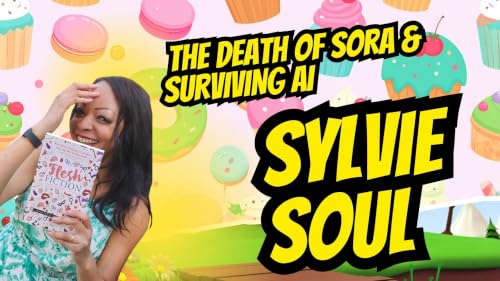
    ** Stay tuned for your May list of open calls on Tuesday!Most of my information is free, but some of the most exclusive info is paid. Join the next tier!I met Sylvie Soul at the Toronto Indie Author Conference and knew immediately I’d found a kindred spirit — someone who loves short fiction, wrestles with the same questions about craft and career, and isn’t afraid to go to dark places on the page. We sat down to talk about perfectionism, productivity, the courage it takes to write what you actually love, and why embracing your inner “disrupter” might be the best career move you ever make.The notes below are just a tiny taste of all the fun stuff we chat about in the actual podcast! Listen above, or if you like to watch (and who of us doesn’t?) Click here for the YouTube link:AF: Tell us a bit about yourself and your writing.SS: I’m a writer of short fiction — I’ve published several short stories over the years. The main goal, though, is the novel. The full manuscript I could either traditionally publish or, if not, I’m very much looking forward to self-publishing. I’ve been exploring my love of fiction, learning more about myself, discovering that speculative fiction is really my home. And I’m trying to get back to having an online presence. I had a site, it’s been dormant since the pandemic, but after meeting everyone at the Toronto Indie Author Conference, I feel motivated to bring up my brand and really express myself again.AF: There’s so much pressure these days for authors to be their own marketing machines — social media, TikTok, BookTok, all of it. Do you think every author has to be an influencer?SS: No, and I think there has to be a balance. I’m actually an introvert — I prefer being behind the scenes, and that’s even true in my day job, where I’m more in a support role. But when it comes to my writing, I’ve felt a shift lately. I do want my face out there. I want my personality attached to what I write. But the balance is the thing — you can build a presence, do the TikTok dances, do the BookTok thing, but if you’re devoting all your time to promoting that image, there’s little left over to actually focus on the craft. Especially if you have a day job on top of it. I don’t write full-time. Right now it’s a hobby. The dream is that eventually what I create overtakes what I do in my day job. But I think I’m a long ways out from that. So it’s about finding balance — fill my cup and also get paid.AF: I’ve come to believe that the one thing all successful full-time authors have in common is sheer output — the number of books they have out there. Zoe York has over a hundred, Mallory Cooper over four or five hundred. What do you think?SS: Consistency is the word that comes to mind for me. Don’t focus on motivation — you know what you have to do, so just get it done. But you’re right that it comes down to productivity. You have to add productivity to that triangle of talent, opportunity, and luck. That’s what lets them build. And honestly, what holds me back most is perfectionism. I always tell myself done is better than perfect, but I’m always so fearful that I’m going to be embarrassed in the future when people read something that isn’t exactly right — and that fear ends up freezing me completely.AF: You have a completed novel. Tell us about it.SS: I lovingly call it draft 1.5, because I’ve gone through moments where I’ve completed it, then gone, no, I don’t like this, I need to scrap it and start over. I finally had a version I was happy enough with to get from point A to point B. I gave it to my editor last year, and she gave me phenomenal notes. Now I have to go back and, as I say, take a sledgehammer to it and beat it into submission so it’s better. No one who cares about their audience ever puts out a first draft. Maybe it’ll be draft five. Maybe draft nine. I don’t know where it is yet, but it’s somewhere on the horizon. And word count wise — I’ll be honest — it’s still in novella territory. I haven’t cracked 50,000 words yet. But I think the market’s changing. People used to want a big fat tome. Now I think readers are more receptive to smaller, bite-sized stories they can actually consume. So if I just can’t embellish further, maybe it stays at 35,000 to 40,000 words. And that’s fine.AF: What’s your take on editors?SS: They are absolutely essential, and I don’t think we give them nearly enough praise. I was lucky enough to get a Toronto Arts Grant to help fund my editing, and it was the best money ever spent. I think when we reach the stage where we truly want to write the best thing possible, we’ve evolved past peer workshops — those can be overwhelming because you get six or seven different schools of thought and you don’t know which one to follow. You might have someone who has a completely different story in their head, and if you cater to them, you’re damaging your own ...
    続きを読む 一部表示
    33 分
  • The Real Truth About Author Nation — and What It Could Mean for Your Career
    2026/04/20
    Welcome to part two of my no-holds-barred chat with Joe Solari.If you’d rather watch a video, HERE IT IS. This podcast is dropping a day late—on a Monday instead of Sunday—because I spent the weekend at the Toronto Indie Author Conference at the Toronto Public Library, and I’ve got to tell you, I’m so glad I went.(I learned the difference between an em dash and an n dash during my free edit of the upcoming Roxie Vega novella. That was worth the price of admission alone, lol.)I met some remarkable people, learned a ton, came away with new strategies, and got that free edit. (Hi Sylvie! And of course, my conference bud, Mark Leslie Lefebvre)Paid subscribers can read all about what I learned and where I’m taking my career because of it in an exclusive post tomorrow.One thing writers absolutely need to do is keep learning. And that’s what this weekend was about for me. AND why I’m going to Author Nation.We need to hear how other authors are running their businesses, what’s working, what isn’t, and where the opportunities are.Because, as Joe said in our chat last week, there is no magic bean that grows a successful author career.The right person has to read the right story at the right time. But you can absolutely improve your odds of being discovered.If there’s one truth I keep coming back to in my years-long search for how to make real money with writing, it’s this: the more books you have out, the more chances you have to succeed.So whatever’s been holding you back—and I’m saying this to myself too—fear, imposter syndrome, perfectionism—it’s time to shove that aside in 2026.This is the year I give this thing a real go.Attending conferences like the Toronto Indie Author Conference and going to Author Nation this November are a big part of my strategy. It’s the networking. It’s the learning. It’s the headspace you put yourself in when you’re around people who are serious about this business.So I hope you enjoy part two of my chat with Joe, where he gives me a real blueprint for what to expect at Author Nation this November.Enjoy! (Ps. Most of the “stuff” is in the podcast and video. The bit below is just a summary.)— Here are the links mentioned in the chat;https://www.spoken.presshttps://www.curios.comhttps://www.kickstarter.com/https://www.authornation.livehttps://www.royalroad.com/homeAF: For authors who are wondering whether Author Nation is worth attending, what’s the biggest value?JS: Access. At a large event like Author Nation, authors can connect with major service providers, new technology companies, and other serious authors all in one place. It’s not just about inspiration. It’s about relationships, information, and opportunities that can save years of trial and error.AF: So it’s partly about networking, but also about learning what tools and strategies are actually working now?JS: Our job is to bring the industry to the community. That means established players, new platforms, and emerging technologies. We want authors to see what’s changing, think critically about it, and decide what fits their business.AF: You also talked about helping authors before they even get to the event.JS: One example is the free Kickstarter cohort. Authors can join, learn by listening, get feedback, simplify their campaigns, and improve their odds of funding. We’ve seen people use Kickstarter not just as a fundraising tool, but as a smart first launch for a book.AF: That was one of the most interesting things you said—that Kickstarter can help authors make money earlier instead of pouring money into a launch and hoping it works.JS: If authors can break even or better on a first launch, that solves a real business problem. It helps them fund production, build confidence, and grow without digging into savings.AF: And Author Nation is also creating projects that give authors opportunities beyond just attending panels.JS: Absolutely. We’ve run anthologies, launched them on Kickstarter, and created ways for authors to earn money and gain exposure. We’re also developing projects like comic adaptations, where writers from the community can see their work turned into something new. That kind of hands-on opportunity matters.AF: So this isn’t just a conference where people sit in rooms and take notes.JS: Everything we’re building has a purpose. We want authors to leave with clearer direction, better tools, stronger connections, and real ways to grow their business.AF: You also made an important point that authors need to think like business owners.JS: Nobody will care about your career as much as you do. Whether you pursue direct sales, Kickstarter, wide distribution, Kindle Unlimited, audio, serial fiction, or live events, you need to understand the model you’re choosing and build intentionally.AF: And that’s one of the real benefits of Author Nation—you’re giving authors a place to figure out which path makes sense for them.JS: There isn’t one ...
    続きを読む 一部表示
    54 分
  • Why Serious Authors Can't Miss Author Nation
    2026/04/12
    I’m going to Author Nation this year, and the founder and driving force behind one of the biggest writing conferences in the world talks about WHY this event can’t be missed if you are looking to take your author career to another level.PREFER to 👀? LINK TO YOUTUBE INTERVIEWPS. There was so much good info! Part two will drop next week.AF: What makes Author Nation different from other conferences?JS: Having been in this industry for 10 years now, and seeing how it’s changed and what’s going on, and understanding how it works — we’re really trying to create a place where two things happen:* One, we’re actually being forward-thinking and proactive and changing how the industry will work. If you’re not happy with how things are, change ’em.* But also being realistic about how difficult it is, especially if you’re striving toward earning a living as an author. Once you understand how difficult that is, what can you do to change the probabilities?We’ve never been the kind of group that says:“Oh yeah, come and buy our magic beans and you’re just gonna have success and it’ll be wonderful.” That’s not the truth.But what we can do is look at how things work and say, okay, what are the main failure points in author businesses? Then either educate you to go around those points or do things as a community to stack advantages toward our community.That’s how I think and how we’re approaching the show, and why it’s structurally different than other events. It really is kind of a system.AF: So, having raw talent isn’t enough to be successful in the author world?JS: Talent’s the floor, assuming it’s a good product, because bad products won’t sell no matter what. It really is luck, and there are so many factors you can’t control when it comes to algorithms and word of mouth.And then we complicate it further by having situations where people say, “Well, this is what I did, and you do the same thing, you can be successful.” I’m not saying those authors are lying, they do honestly believe that their success is repeatable. That’s survivor bias. But there are too many factors that can’t be controlled.AF: So what should authors take away from that?JS: Don’t beat yourself up because you’re in that fat tail, (Authorial note: Joe explains the Power Law Curve in our talk, and most authors are in the big tail and not the tall head of success.)Understand that what gets you to move from the average result to an above-average result isn’t your average cost of advertising, or how much you spend on marketing, as more often than not it’s a threshold event driven by your audience that you’ve built.AF: And what creates that threshold event?JS: It has more to do with a rinse-and-repeat cycle. The more you launch your books on Amazon, the more that you go to live events, the more that you do whatever it is that you’re deciding to build your brand around.(Authorial note: then I asked Joe Solari about a podcast episode I heard him on.. Self-Publishing with ALLi - Why Recipes for Publishing Success Dont Work. This is what he dives into next.)And this gets us to the artificial cultural market study. I think we should all be talking about it all the time. It demonstrated that if you took the same books on Amazon and took them to a parallel universe, it would come up with a different number one book right now.It’s about how the audience interacts with that data set. It has more to do with word of mouth and what’s driving a popularity market.I’ve seen a lot of times where authors will huddle up and try to case-study a successful author. What if we did all these things? What if we imitated the writing style, cover, whatever? We’re all gonna make covers like her now and we’re all gonna write psychological thrillers.But her success will lift the whole genre and may make some other people lift up, but it’s not like her audience sees your book, if it looked identical and was written similarly, as an equal substitute. It’s not like one pound of sugar is equal to another pound of sugar.It has more to do with the audience’s personal connection with those brands and the story world and the characters.AF: You mentioned Matt Dinniman and the wild success of Dungeon Crawler Carl. What did he do that made such a difference?JS: It was a long time before those books took off. A lot of people were not willing to do the things that Matt was doing.He went to a lot of live events. He was going to things like Dragon Con, but also anytime he would go anywhere that he traveled, he would do local book events. He would call up an independent bookstore and say, “Hey, I’d like to host some of my fans.” Maybe in the beginning, two to five people would show up.But he would keep doing it. And doing it. And doing it.Now he’s massive. Live Nation is running his events because they’ve gotten so big. But here is an example of how he goes the extra mile: They canceled his New York ...
    続きを読む 一部表示
    37 分
まだレビューはありません