エピソード

  • Why Achievement Can Be as Addictive as the Bottle
    2026/09/23

    Never a drink. Just a kid who learned to disappear into being useful. Lolita Guarin joins Massimo Rigotti to show how constantly needing to produce becomes the adult burnout pattern, how the CALM process (Control, Accept, Limit, Multiply) rebuilds self-trust, and why saying no will not kill you. This is the Observe and Restore work of the S.O.B.E.R. Method, for people who want sobriety and cannot walk into a public room to admit it.

    Key Takeaways
    • The survival skill that gets a kid through a house with addiction is often the same skill that burns the adult out: constantly needing to produce.
    • Achievement can be as addictive as the bottle it grew up next to. If you only feel seen when you are producing, stopping feels like death.
    • CALM is Control, Accept, Limit, and Multiply. Control asks what is yours to carry and what is not. Accept finds the silver lining without pretending the pain is fine. Limit is the courage to stop what no longer serves you. Multiply is doubling what already works.
    • Loyalty to old authorities keeps high achievers stuck. Take the authorities off the pedestal. They were people with their own trauma too, and they can be wrong.
    • Nobody will die if you say no. Start small. Build the muscle until boundaries feel like self-trust, not selfishness.
    • If you stop performing, the wall will not fall apart. One minute of doing nothing can expose how terrified you are of resting.
    • Massimo's Observe and Restore move this week: catch a yes that should have been no, write what you told yourself, run a control audit (is this mine to carry?), set one boundary out loud before Sunday, then pick one thing that refills you and do it twice.
    Timestamps

    00:00 Why disappearing into being useful still runs adult life
    00:50 How constantly needing to produce names the skill
    01:27 How Control separates what is yours to carry
    03:25 How Accept finds a silver lining without denial
    04:45 How Limit stops the madness of doing the same thing
    09:27 How Multiply doubles what already works
    16:49 Why the ER wake-up call forced a different life
    20:22 How a one-minute phone alarm exposes self-abandonment
    23:08 Why nobody will die if you say no
    24:48 Why the wall will not fall if you stop performing
    27:28 How to run this week's Observe and Restore move
    28:39 What keeps Lolita putting one foot in front of the other

    Resources
    • 🎁 Free gift! The exact 5 tools I use with clients to name what is really driving the urge to numb, before it takes over. Grab them free: https://sobermethod.com/5tools
    • 📘 Digital S.O.B.E.R. Method, available now: https://amazon.com/dp/B0H93ZTVS9
    Call to Action

    If you want lasting sobriety without walking into a room that could follow you back to your job or risk your license, start at https://sobermethod.com/services.

    About the Guest

    Lolita Guarin is a stress management coach and the author of Stress Management for Adult Children of Alcoholics. Born in Lithuania and later an immigrant to the US, she built the CALM process after people-pleasing and overwork put her in the emergency room. She helps high achievers trade performing for real self-trust. Start at https://www.beamazingyou.com/ instagram.com/@be_amazing_you

    Your Future is SOBER™

    続きを読む 一部表示
    25 分
  • Why the Crab Pulling You Down Is You
    2026/09/16

    You finally decide to change, and something pulls you back down. Bryan Blackmon joins Massimo Rigotti to show how crabs in a bucket keep you stuck, why the crab is often you, and how CRAB: Clean, Resilient, Adaptability, and Belief hold the climb when the old off switch is gone. This is the Behavior and Execute work of the S.O.B.E.R. Method, for people who want sobriety and cannot walk into a public room to admit it.

    Key Takeaways

    • Crabs in a bucket do not need a lid. The old crowd, the invitation, and the voice that says who are you kidding all pull you back down.
    • About eight times out of ten, Bryan found the crab was himself. Blaming the bucket is easier than owning the choice to stay in it.
    • No one is coming to save you. Support helps, but the climb only starts when you put one foot in front of the other.
    • CRAB is Clean, Resilient, Adaptability, and Belief. Clean is mind, body, and spirit, not substances alone. Belief that you are worthy is the foundation the rest stacks on.
    • Firm resolve after the aha moment lets the wrong people fall away without burning every relationship on day one.
    • The morning at the mirror landed four words that rehabs never stuck: you are worth it. If you are already waiting for that moment, you may already be in it.
    • Massimo's Behavior and Execute move this week: run a bucket audit, set one boundary before you walk into the room, add one crew member who is climbing the same direction, and journal what shifted each night.

    Timestamps
    00:00 Why crabs in a bucket need no lid
    01:01 How to spot if the crab is you
    03:50 Why no one is coming to save you
    05:26 How firm resolve drops the wrong crowd
    09:26 How the four CRAB pillars work
    17:45 How to hold pressure without numbing
    34:23 Why you are worth it finally sticks
    43:36 How to run a bucket audit this week

    Resources & Links

    • 🎁 Free gift! The exact 5 tools I use with clients to name what is really driving the urge to numb, before it takes over. Grab them free: https://sobermethod.com/5tools
    • 📘 Digital S.O.B.E.R. Method, available now: https://amazon.com/dp/B0H93ZTVS9

    Call to Action If you want lasting sobriety without walking into a room that could follow the job or the license, start at https://sobermethod.com/services.

    About the Guest Bryan Blackmon went from sleeping in his car on the streets of California to nine hundred days sober, running live event productions with no room for error, and leading a recovery community over one hundred and forty thousand strong built on four words: you are worth it.
    Bryan Blackmon / Crab Crew Life: https://crabcrewlife.com
    All of Bryan's links: https://linktr.ee/bryanandelaine

    Your Future is SOBER™

    続きを読む 一部表示
    39 分
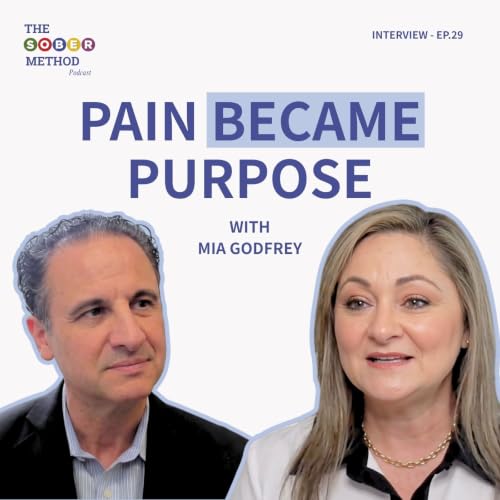
  • Why Feeling Buried Does Not Mean You Are Broken
    2026/09/09

    If life keeps knocking you down, the next bit of strength does not come from carrying it alone. Mia Godfrey joins Massimo Rigotti to show how community, honest pain, and faith rebuild a life after loss, and why numbing only postpones the work. This is the Restore step of the S.O.B.E.R. Method, for people who want sobriety and will not walk into a public room to admit it.

    Key Takeaways

    • One hour at a time did not give Mia hope. What helped was community and being honest enough to let someone else step in.
    • Performing fine and mixing a drink with medication only numbed the pain, but it did not process it.
    • Feeling buried does not mean you are broken. Mia's mother taught her that a buried person is a seed.
    • Do not force someone else's stages of grief. Be in the moment, cry if you need to, and then do not stay stuck.
    • Trading alcohol for overwork is still an addiction if the pain underneath is untouched.
    • Buried Not Broken exists because Mia's sister asked her to tell the story. Putting it in the open brought healing.
    • Massimo's restore step this week is to name grief when it rises, to avoid reaching for the off switch, and then to take one act, a prayer, a call, or write the memory down.

    Timestamps
    00:00 Where the next strength comes from
    02:19 Why numbing never processes pain
    04:31 How faith carries you through loss
    06:20 Why buried does not mean broken
    08:08 How to grieve without rushing it
    12:47 When moonshine became the off switch
    18:01 Why she told the whole story
    23:39 How to take one restore act

    Resources & Links

    • Free gift. The exact 5 tools I use with clients to name what is really driving the urge to numb, before it takes over. Grab them free: https://sobermethod.com/5tools
    • Digital S.O.B.E.R. Method, available now: https://amazon.com/dp/B0H93ZTVS9

    Call to Action
    If you want lasting sobriety, Massimo understands the unique pressures that drive elite professionals toward substance dependency. Start at https://sobermethod.com/services.

    About the Guest
    Mia Godfrey is the author of Buried Not Broken and rebuilt after loss after loss by letting people in and telling the truth. Start with her work at https://miagodfrey.com/.

    Your Future is SOBER™

    続きを読む 一部表示
    27 分
  • Why Perfectionism Is the Lie That Keeps You Drinking
    2026/09/02

    Perfectionism is not a badge. It is a lie that keeps high achievers striving, never satisfied, and reaching for a drink. In this conversation Massimo Rigotti sits with Peg O'Connor, PhD, a philosophy professor in long-term recovery, to unpack how perfectionism, shame, and bad faith quietly feed addiction, and why honest self-observation is the start of the S.O.B.E.R. Method. This episode is for high-achieving people who want to stop and will not walk into a public room to admit it.

    Key Takeaways

    • Perfectionism is self-deception: you treat "good enough" as defeat, then mistake what you can control for what you cannot.
    • Shame is not guilt. Guilt can attach to an act and help you do better. Shame is a worldview that says the problem is you.
    • Bad faith is living as if you cannot act differently. Peg O'Connor names imposter syndrome as a modern face of that lie.
    • There is a brutal gap between knowing you have a problem and being willing to change. Wanting is not willing.
    • Addiction shrinks possibility. Recovery expands it. Sometimes you borrow someone else's positive vision until you can see your own.
    • Seeing through your own self-deception is the real beginning of recovery. Massimo's Observe move this week: catch one perfectionist bar, ask if it is true, whose voice it is, and whether it is even in your control, then write one accurate observation instead.

    Timestamps

    00:00 Why perfectionism is a lie

    00:55 How good enough feels like defeat

    05:16 Why shame is worse than guilt

    08:41 What bad faith feeds a drink

    13:57 Why knowing is not being ready

    25:02 How philosophy got Peg sober

    28:23 Why seeing the lie starts recovery

    31:11 How to catch one perfectionist bar

    Resources & Links

    • Peg O'Connor, PhD, free Ready to Recover quiz: https://pegoconnorauthor.com/ready-to-recover-quiz-landing/
    • The Sober Philosopher: Instagram, TikTok, and Facebook @thesoberphilosopher
    • Massimo Private coaching: https://sobermethod.com/services
    • 🎁 Free gift! The exact 5 tools I use with clients to name what is really driving the urge to numb, before it takes over. Grab them free: https://sobermethod.com/5tools

    Call to Action

    If you want lasting sobriety without walking into a room that could follow the job or the license, start at https://sobermethod.com/services.

    About the Guest

    Peg O'Connor, PhD, is a philosophy professor, ethicist, and author, and a person in long-term recovery who credits philosophy with getting her sober. She created the free Ready to Recover quiz for the gap between knowing you have a problem and being prepared to change.

    Your Future is SOBER™
    The perfectionism you wear like armor may be the exact lie keeping you stuck. Name the standard, name the shame underneath it, and let accurate self-observation, not relentless striving, become the ground you rebuild on. You cannot change what you refuse to see, so tell yourself the truth first.

    続きを読む 一部表示
    34 分
  • Why Willpower Fails When the Voice Sounds Like You
    2026/08/26

    Willpower fails when the voice that says “just this once” sounds like your own good judgment. In this conversation Massimo Rigotti sits with therapist Dr. Robert Jaffe to unpack why that voice is a nervous-system safety pattern, not a character flaw, and why the Observe step of the S.O.B.E.R. Method has to happen before any Stoic choice is possible. This episode is for high-achieving people who want to stop and will not walk into a public room.

    Key Takeaways

    - The voice that argues for “just this once” sounds like your own good judgment; it is a nervous-system pattern, not a weak plan.

    - The nervous system only asks whether you are safe and works faster than the prefrontal cortex, which is why willpower alone usually arrives too late.

    - Dr. Jaffe names protective patterns including the hyper-driven responder, who self-medicates with achievement, and the self-reliant isolator (his own).

    - Addiction is the symptom. Dr. Jaffe used marijuana, then sexual addiction, then pills. Alcohol was not his drug on this tape.

    - High-functioning men often reach for a book or a podcast because very few will ever see a therapist.

    - Massimo’s practical Observe sequence: name the voice, two feet on the floor, longer exhale for about 90 seconds, then choose, then journal.

    Timestamps

    00:00 Why the voice sounds like good judgment

    00:58 Why willpower loses to the nervous system

    03:16 How childhood wires a dirty look as danger

    09:32 Achievement as a form of self-medication

    12:46 The isolator swaps one addiction for another

    16:24 Why men use a podcast, not a therapist

    18:00 A year off marijuana gone in nine seconds

    23:37 Observe the hijack before a Stoic choice

    Resources & Links

    - Dr. Robert Jaffe, free 20-minute Clarity Call: https://www.drrobertjaffe.com

    - Massimo Rigotti Private Coaching: https://sobermethod.com/services

    - 🎁 Free gift! The exact 5 tools I use with clients to name what is really driving the urge to numb, before it takes over. Grab them free: https://sobermethod.com/5tools

    - 📘 Digital S.O.B.E.R. Method, available now: https://amazon.com/dp/B0H93ZTVS9

    Call to Action

    If you want lasting sobriety without walking into a room that could follow the job or the license, start at https://sobermethod.com/services.

    About the Guest

    Dr. Robert Jaffe is a therapist who has sat with hundreds of men over 40-plus years. He maps protective patterns in the nervous system and offers a free 20-minute Clarity Call plus a three-minute diagnostic. The next step is whatever feels right. https://www.drrobertjaffe.com

    Your Future is SOBER™

    続きを読む 一部表示
    29 分
  • How to Quit Drinking Without AA (No Meeting, No Label)
    2026/08/20

    You can quit drinking without AA, without rehab, and without a meeting that follows you to work.

    I’m Massimo Rigotti. Over 10 years sober. I work privately with lawyers, doctors, and executives who look fine at 9am and pour the second the day ends.

    This is a 60-second intro to The SOBER Method. Weekly episodes. A private system, not a meeting. How to quit without AA. How to stay sober when the job still expects drinks. What to do when the hard part is over and life gets quiet.

    If you drink heavily every day, talk to a doctor before you stop cold. Then press play on any episode.

    Free tools: https://sobermethod.com/5tools

    https://sobermethod.com

    youtube.com/@sobermethod

    Your Future is S.O.B.E.R.™

    続きを読む 一部表示
    1 分
  • Why You Still Feel Empty After Getting Sober
    2026/08/19

    Sobriety didn’t fix him. Quitting only removed the symptom. The identity underneath was still running the show.

    Massimo sits down with Benjamin Lee, an Air Force bomb disposal veteran who lost himself to addiction after the uniform came off. Now a certified identity transformation coach, author of Sincerely, America, and founder of The Initiation Source, Benjamin explains why getting sober can leave a vacuum, and why that emptiness is not proof you failed.

    They cover Jungian shadow work, the gap between who you think you should be and how you actually show up, why losing military mission and brotherhood destabilized him more than losing the substance, and the 99 percent of his own behavior he later traced back to seeking validation. The conversation lands on the Stoic step of the S.O.B.E.R. Method: honest, continuous self-examination so you forge who you become next instead of just quitting who you were.

    What you’ll get:

    - Why addiction is usually the symptom, not the cause

    - Shadow work, including the “golden shadow” you were taught to dim

    - How to grieve the identity you lost (rank, mission, the drink) before it pulls you back

    - This week’s move: write who you are becoming, then take one concrete step toward that person

    Guest: Benjamin Lee

    Book: Sincerely, America · https://www.amazon.com/dp/B0FVBPRN64/

    Coaching: https://www.theinitiationsource.com

    Instagram: instagram.com/benjamin.john.lee

    Free tools: https://sobermethod.com/5tools

    Digital S.O.B.E.R. Method: https://www.amazon.com/dp/B0H93ZTVS9

    https://sobermethod.com

    The emptiness after you get sober is not proof you failed. It is a vacuum. Fill it on purpose.

    Your Future is S.O.B.E.R.™

    続きを読む 一部表示
    28 分
  • Why Successful Men Still Feel Numb and the Four-Needs Test That Explains It
    2026/08/12

    Successful on paper. Numb at night. If that’s you, the drink isn’t the disease. It’s the junk food you keep feeding a real need.

    Nathan Graham is a real estate broker turned AI consultant, nearly four years sober from alcohol and a gaming addiction that cost him jobs and nearly his marriage. He breaks down the four needs that drive every decision: certainty, adventure, significance, and love and connection. A habit that hits three or four of those at once doesn’t feel like a problem. It feels like relief. Then it leaves you empty an hour later.

    This is for high-achieving men who quit, or keep trying to quit, and still feel nothing. The Stoic move is naming the need before you touch the behavior.

    What you’ll get:

    • The four-needs test (certainty, adventure, significance, connection)
    • Why chasing accolades never fills the gap
    • How gaming, drinking, and “one more deal” are the same loop
    • A 3-day practice: pause, name the need, pick one non-negotiable (no phone first hour, last hour, or at the table)


    Guest: Nathan Graham · syntheticecho.ca
    Book: Why Won’t He Just Log Off?

    Free tools I use with clients: https://sobermethod.com/5tools
    Book: Digital S.O.B.E.R. Method · https://www.amazon.com/dp/B0H93ZTVS9
    Site: https://sobermethod.com

    #sobriety #quitdrinking #mensmentalhealth #highfunctioningalcoholic #phoneaddiction

    続きを読む 一部表示
    34 分