エピソード

  • How Legacy Brands Lost GenZ
    2026/01/02

    Generation Z has divorced legacy brands. From fashion to food, skincare to supplements, young Indians are abandoning household names for Instagram-born startups their parents have never heard of. Zara feels too expensive and repetitive. H&M lacks uniqueness. Traditional brands feel inauthentic and mass-produced. But this isn't about price alone. It's about trust, personalization, and meaning. In an era where identity is curated pixel by pixel on social media, GenZ needs brands that speak their language—brands with personality, rough edges, and values that align with their own. Brand consulting and founder of Think9 Consumer Technologies Santosh Desai tells host Anirban Chowdhury it’s a "fundamental structural shift"— a permanent rewiring of consumer behavior driven by technology, media fragmentation, and the democratization of distribution. Brand loyalty, he argues, was always just inertia. And that inertia is dead. Welcome to the post-loyalty economy.

    You can follow Anirban Chowdhury on his social media: X and Linkedin

    Check out other interesting episodes like: How Will a Volatile ₹ Impact You in 2026?, How Quick Commerce is Triggering a Health Crisis for Gen Z, India’s Labour Law Reboot, Viral to Valuation: Building Women’s Cricket as a Brand and much more.

    Catch the latest episode of ‘The Morning Brief’ on The Economic Times Online, Spotify, Apple Podcasts, JioSaavn, Amazon Music and Youtube.

    See omnystudio.com/listener for privacy information.

    続きを読む 一部表示
    21 分
  • ET In The Valley: Arvind Jain, Co-Founder And CEO Of Glean
    2025/12/31

    Arvind Jain couldn't find his own company's data at Rubrik. So in 2019 before ChatGPT, before the AI boom, he built Glean, the first enterprise generative AI company. Now they're doubling past $100M ARR with 1,100 employees and watching tech giants copy their playbook. But Jain admits his biggest mistake: being too conservative. "We should have gone much bigger, much faster," he says, crediting his Indian upbringing for the cautious approach. Still, Glean remains years ahead as competitors scramble to build "AI that knows your company's data." His contrarian take on AI? It won't shrink workforces, it'll just raise the bar for everyone. The real edge isn't the technology; it's execution. And despite the relentless pace keeping him up at night, Jain's never been more optimistic about building a multi-billion dollar business.

    You can follow Swathi Moorthy on her social media: X and Linkedin

    Check out other interesting episodes like: How Will a Volatile ₹ Impact You in 2026?, How Quick Commerce is Triggering a Health Crisis for Gen Z, India’s Labour Law Reboot, Viral to Valuation: Building Women’s Cricket as a Brand and much more.

    Catch the latest episode of ‘The Morning Brief’ on The Economic Times Online, Spotify, Apple Podcasts, JioSaavn, Amazon Music and Youtube.

    See omnystudio.com/listener for privacy information.

    続きを読む 一部表示
    23 分
  • Adani's Airport Playbook
    2025/12/30

    Mumbai finally has its second airport — a long-awaited addition that could reshape how India’s busiest aviation market moves. Beyond the terminal and runway, it signals the scale of Adani’s airport ambitions. In just a few years, the group has built a network of eight airports, and in FY25 its airport business turned profitable with ₹9,276 crore in revenue, ₹4,350 crore in EBITDA and ₹772 crore profit, supported by passenger growth, tariff resets and fast-expanding non-aero revenue from retail, duty-free, lounges and F&B. But there’s a road ahead — connectivity to NMIA needs to catch up, international flights will ramp gradually, and service experience will define passenger sentiment as numbers rise. On latest episode of The Morning Brief, ET’s aviation expert Forum Gandhi joins host Anirban Chowdhury to break down how Adani is building India’s biggest airport portfolio, what Navi Mumbai changes for travellers, and where the airport business goes next.

    Listen in.


    You can follow Anirban Chowdhury on his social media: X and Linkedin

    Check out other interesting episodes like: How Will a Volatile ₹ Impact You in 2026?, How Quick Commerce is Triggering a Health Crisis for Gen Z, India’s Labour Law Reboot, Viral to Valuation: Building Women’s Cricket as a Brand and much more.

    Catch the latest episode of ‘The Morning Brief’ on The Economic Times Online, Spotify, Apple Podcasts, JioSaavn, Amazon Music and Youtube.

    See omnystudio.com/listener for privacy information.

    続きを読む 一部表示
    17 分
  • Corner Office Conversation with Tobias Meyer, CEO, DHL Group
    2025/12/29

    Global trade is entering a more complicated phase. It is no longer outpacing global GDP, and the ideas that once drove seamless globalization are increasingly under pressure. In this episode, host Anirban Chowdhury speaks with Tobias Meyer, CEO of DHL Group, to cut through the rhetoric around “deglobalization” and focus on what is actually happening to trade flows and supply chains. Rather than collapsing, supply chains are being reworked—spread across more locations, stretched across longer routes, and shaped by political risk as much as cost. The conversation examines how US trade policy and intensifying strategic competition with China are influencing manufacturing choices and capital allocation. India and South Asia appear as potential beneficiaries, but not without limits imposed by infrastructure gaps, cost structures, and execution challenges. The episode also looks beyond policy, into logistics resilience, technology adoption, and the physical realities that still constrain commerce.

    You can follow Anirban Chowdhury on his social media: Twitter and Linkedin

    Listen to Corner Office Conversation: Corner Office Conversation with Knight Frank’s William Beardmore-Gray and Shishir Baijal, Corner Office Conversation with Sridhar Vembu, CEO, of Zoho Corporation, Corner Office Conversation with Gunjan Soni, Country Managing Director, Youtube India, Corner Office Conversation with Elizabeth Reid, Head of Search, Google and much more.

    Catch the latest episode of ‘The Morning Brief’ on The Economic Times Online, Spotify, Apple Podcasts, JioSaavn, Amazon Music and Youtube.

    See omnystudio.com/listener for privacy information.

    続きを読む 一部表示
    24 分
  • How Will a Volatile ₹ Impact You in 2026?
    2025/12/26

    In 2025, the Indian rupee has quietly become Asia’s worst-performing currency but the real impact isn’t just on trading screens, it’s inside Indian homes. From higher cooking oil prices and costlier foreign education to travel bills and shrinking savings returns, rupee volatility is reshaping middle-class finances in ways few anticipate. Why is the currency weakening despite strong GDP growth, healthy forex reserves, and a manageable current account deficit? Host Anirban Chowdhury talks to Madan Sabnavis, Chief Economist, Bank of Baroda to unpack how import inflation seeps in with a lag, why RBI interventions focus more on volatility than levels, and why currency swings hurt consumers more than a steady decline. With foreign investors pulling billions out, US-India trade talks stalled, and global sentiment overpowering fundamentals, the rupee’s fate may lie beyond domestic control.

    Listen In:

    You can follow Anirban Chowdhury on his social media: X and Linkedin

    Check out other interesting episodes from the host like

    Battle Beyond Borders, Peace Perished: Explaining the Pahalgam Terror Attack, Corner Office Conversation with Sridhar Vembu, CEO, of Zoho Corporation, Rebel Foods’ chief on Building Brands, Tech, and an IPO on the Horizon and much more.

    Catch the latest episode of ‘The Morning Brief’ on The Economic Times Online, Spotify, Apple Podcasts, JioSaavn, Amazon Music and Youtube.

    See omnystudio.com/listener for privacy information.

    続きを読む 一部表示
    18 分
  • India Calls its Grasslands “Wastelands”; it’s a ₹1.3 lakh Crore Mistake!
    2025/12/25

    Half your milk comes from animals grazing on land the government calls wasteland. The mutton in your biryani? Same story. We're talking ₹1.3 lakh crore annually 5% of India's GDP built on ecosystems we've systematically mislabeled as worthless since the British needed a tax category for "land we can't monetize. Now we're converting these "wastelands" into solar farms at scale without asking the millions of pastoralists who depend on them, or calculating the carbon stored beneath them, or wondering what happens when milk and meat prices spike because we've paved over the free grazing grounds that keep them affordable. The twist? These aren't degraded lands waiting for rehabilitation. They're ancient grasslands and savannas that have existed for millennia, doing exactly what they're supposed to do. We just never bothered to look closely enough to notice. Until now, when it might be too late. Host Anirban Chowdhury asks Dr Abi Vanak, Director, Centre for Policy Design at the Ashoka Trust for Research in Ecology and the Environment (ATREE-CPD), to explain.

    Listen in:

    You can follow Anirban Chowdhury on his social media: X and Linkedin

    Check out other interesting episodes from the host like Battle Beyond Borders, Peace Perished: Explaining the Pahalgam Terror Attack, Corner Office Conversation with Sridhar Vembu, CEO, of Zoho Corporation, Rebel Foods’ chief on Building Brands, Tech, and an IPO on the Horizon and much more.

    Catch the latest episode of ‘The Morning Brief’ on The Economic Times Online, Spotify, Apple Podcasts, JioSaavn, Amazon Music and Youtube.

    See omnystudio.com/listener for privacy information.

    続きを読む 一部表示
    21 分
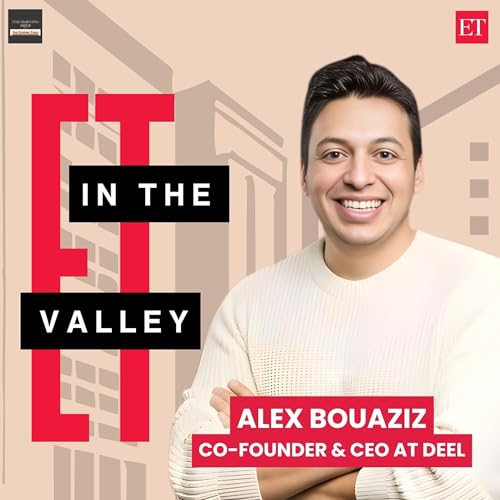
  • ET in the Valley: Alex Bouaziz, Co-Founder & CEO at Deel
    2025/12/24

    What does it take to build and scale a remote-first company across borders, regulations, and cultures? In this episode, host Himanshi Lohchab talks to Alex Bouaziz, co-founder and CEO of Deel, on how the company grew from a startup idea into a global HR and payroll platform operating in over 150 countries. Bouaziz reflects on early pivots, lessons from Y Combinator, and the idea of founder–product fit that continues to shape Deel’s culture and strategy. The conversation explores Deel’s expanding product suite, investments in payroll infrastructure, its approach to compliance, and how capital has been deployed through acquisitions and innovation. The episode also examines broader shifts in global hiring, cross-border talent movement, and India’s increasing role in Deel’s long-term plans offering a clear-eyed view of how companies manage scale and complexity in a rapidly changing world.

    Tune in.

    You can follow Himanshi Lohchab on her social media: X and Linkedin

    Check out other interesting episodes of ET in the Valley: ET in the Valley: Grant Lee, Co-Founder & CEO of Gamma, ET in the Valley: Databricks Co-founder Patrick Wendell, ET in the Valley: Replit Founder and CEO Amjad Masad, ET in the Valley: ElevenLabs Co-Founder Mati Staniszewski and much more.

    Catch the latest episode of ‘The Morning Brief’ on The Economic Times Online, Spotify, Apple Podcasts, JioSaavn, Amazon Music and Youtube.

    See omnystudio.com/listener for privacy information.

    続きを読む 一部表示
    17 分
  • India Rewrites its Nuclear Energy Rulebook
    2025/12/23

    India’s nuclear energy framework is set for its most consequential reset in decades with the passage of the Shanti Bill. In this episode, host Anirban Chowdhury speaks to ET’s executive editor, politics Pranab Dhal Samanta and Anubhuti Vishnoi to unpack what the new law changes and why it matters now. The discussion traces India’s long nuclear journey: from staying outside the Non-Proliferation Treaty and building indigenous capabilities, to gaining global legitimacy after the Indo-US nuclear deal. Yet, despite access to international fuel and technology, expansion remained sluggish, constrained by strict liability norms and a tightly controlled, state-led model. The Shanti Bill seeks to change that. It consolidates existing laws into a single framework, removes supplier liability, aligns compensation rules with global conventions, and introduces graded liability caps. Crucially, it opens the door to private participation, separates regulatory and operational roles, and clarifies responsibilities across the nuclear fuel cycle while keeping strategic control with the state. As nuclear power is expected to play a larger role in India’s long-term energy mix, this episode explains how the new framework could reshape the future of civilian nuclear power in the country.

    You can follow Anirban Chowdhury on his social media: X and Linkedin

    Check out other interesting episodes from the host like
    Battle Beyond Borders, Peace Perished: Explaining the Pahalgam Terror Attack, Corner Office Conversation with Sridhar Vembu, CEO, of Zoho Corporation, Rebel Foods’ chief on Building Brands, Tech, and an IPO on the Horizon and much more.

    Catch the latest episode of ‘The Morning Brief’ on The Economic Times Online, Spotify, Apple Podcasts, JioSaavn, Amazon Music and Youtube.

    Credits: Films Division, Indian National Congress, DNAIndiaNews, AP Archive, Mint

    See omnystudio.com/listener for privacy information.

    続きを読む 一部表示
    29 分