エピソード

  • The Parenting Shift That Changes Everything: Be the Model
    2026/01/21
    Are you doing all the right parenting things—but still feeling exhausted, disconnected, and frustrated that nothing is really changing?Have you ever wondered why your kids don’t seem to listen, why your marriage feels off, or why life feels harder than it should—even though you’re “trying” so hard?In this powerful and deeply honest episode, we break down one of the most misunderstood truths about parenting and leadership: humans don’t change through instruction—they change through modeling.We explore why trying is not the same as doing, why so many parents feel stuck in the “messy middle,” and how misaligned priorities quietly sabotage family connection, peace, and fulfillment.You’ll hear why gratitude and letting go create more progress than force, why real change often feels counterintuitive, and how focusing on yourself—not fixing everyone else—is the fastest way to transform your family.This episode is for parents who are ready to stop spinning their wheels and start seeing real results—in their marriage, parenting, health, finances, and inner peace.If you want a calmer home, closer relationships, and a family culture built on joy, clarity, and leadership—this conversation will challenge you in the best way possible.Key Takeaways✅ Children learn through modeling—not lectures or rules✅ Trying doesn’t produce results—doing does✅ Aligned priorities create peace, fulfillment, and joy✅ Gratitude accelerates growth and attracts better outcomes✅ You can’t change your family until you lead yourself first✅ Real progress is direction change—not instant perfection✅ Doing less—but doing the right things—changes everythingMemorable Quotes🗣 “You are the way—you’re the model.”🗣 “Trying is not the same as doing.”🗣 “If you want your kids to change, lead the way.”🗣 “Gratitude isn’t a checklist—it’s a state of being.”🗣 “When your priorities are aligned, you feel it.”Chapters00:00 Introduction to Holistic Success01:08 The Struggle for Balance in Life02:06 The Importance of Prioritizing Relationships03:08 The Role of Modeling in Family Dynamics03:14 Navigating Challenges in Parenting04:07 The Complexity of Emotional Needs04:34 The Power of Gratitude and Positive Focus06:53 Recognizing Progress and Direction08:14 The Journey Towards Extraordinary Family Life16:29 Prioritizing Pleasure in Relationships17:29 The Importance of Personal Health and Ownership20:57 Leading by Example: The Power of Personal Change26:50 Finding Joy in the Journey29:44 The Balance of Doing and Allowing34:59 Clarity and Intuition in ActionRESOURCES:Let us help you in your extraordinary family life journey.How We Raised 7 Well-Adjusted Kids - Without Yelling, Tantrums, Punishments or Power Struggles (+ get THE CHECKLIST: Things We Do Every Day to Raise Well-Adjusted Kids)Rachel’s ⁠⁠Must-Read Booklist for Well-Read Moms⁠⁠Greg's ⁠⁠Recommended Reading List for Parents & Youth⁠⁠Join the 12-Week Habits Challenge for parents of kids 13+Don’t miss out on the Extraordinary Parent Mentoring Method class!Get Greg’s NEW Formidable Family Man BOOK!Get Rachel's ⁠⁠Family Systems & Charts⁠⁠Get Rachel’s Extraordinary Family Life PlannerFollow us on Instagram: ⁠@worldschoolfamily⁠ or ⁠@greg.denning⁠
    続きを読む 一部表示
    38 分
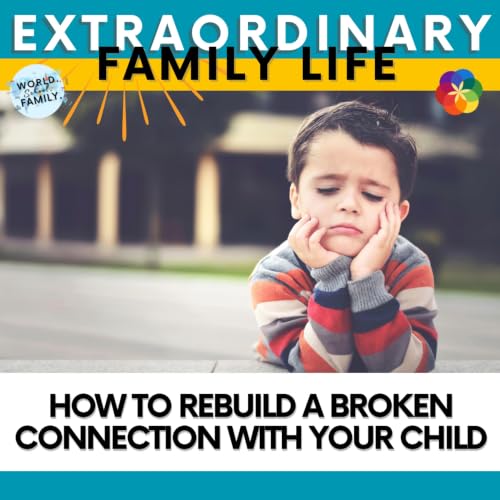
  • How to Rebuild a Broken Connection With Your Child
    2026/01/14

    Are you struggling to connect with your child—even though you love them deeply and are trying your best?


    Have you ever wondered why behavior issues, emotional distance, or constant conflict keep showing up in your family—no matter how hard you work at parenting?


    In this powerful episode, we break down a truth that changes everything: good parenting ultimately comes down to strong attachment and connection with your children.


    Whether you’re parenting toddlers, teens, or somewhere in between, every behavior—tantrums, rebellion, withdrawal, anxiety, defiance—points back to attachment. And the good news? Attachment can always be rebuilt.


    We dive deep into why early attachment matters, how patterns formed in infancy can carry into the teen years and adulthood, and—most importantly—what you can do now to repair broken bonds, rebuild trust, and create lasting connection with your child.


    This episode is both hope-filled and practical, showing parents exactly how small, intentional changes—like presence, co-regulation, physical affection, and emotional attunement—can completely transform family dynamics.


    If you’ve ever felt discouraged, blamed yourself, or wondered if it’s “too late,” this conversation will give you clarity, direction, and confidence moving forward.


    Family work is the most important work—and success is in the details.


    Watch the full video here: https://www.youtube.com/watch?v=SQxLUerQ1z0


    🔑 Key Takeaways

    Behavior problems are attachment problems—and attachment can be healed

    Strong connection prevents tantrums, rebellion, and emotional shutdown

    Presence matters more than rules, lectures, or discipline

    Co-regulation must come before correction

    Physical affection and emotional validation build nervous system safety

    Even teens still need you as their emotional anchor

    Small daily check-ins prevent big problems later

    Parents must be willing to grow, change, and take responsibility


    💬 Memorable Quotes

    🗣 “Good parenting comes down to good connections with your kids.”

    🗣 “If there’s misbehavior, there’s an attachment issue underneath it.”

    🗣 “Presence—not perfection—is what heals broken bonds.”

    🗣 “Just because something is common doesn’t mean it’s healthy.”

    🗣 “Parents have to level up—children aren’t the problem.”


    ⏱️ Chapters

    00:00 Reflections on Family Legacy and Connection

    00:35 The Importance of Family Work

    01:27 Understanding Attachment in Parenting

    02:23 Neuroplasticity and Rebuilding Connections

    03:36 Creating Bonds with Children

    05:25 The Role of Dads in Parenting

    05:51 Identifying Attachment Disorders

    07:31 Strategies for Rebuilding Connections

    07:46 The Power of Presence in Parenting

    08:41 Engaging with Children Effectively

    09:32 Practical Tips for Connection

    11:43 The Importance of Physical Affection

    15:03 The Importance of Touch and Co-Regulation

    16:28 Emotionally Attuned Parenting

    18:06 Navigating the Balance of Support and Independence

    19:56 Rebuilding Attachment and Connection

    22:18 Engaging in Shared Activities for Bonding

    26:32 The Role of Parents as Emotional Anchors
    30:04 Creating a Life of Connection and Fulfillment

    続きを読む 一部表示
    31 分
  • How to Parent Without Yelling (And Why Tantrums Stop)
    2026/01/07
    Are you tired of yelling—and still dealing with tantrums, defiance, and emotional meltdowns?What if the reason tantrums keep happening isn’t because your child is “misbehaving,” but because something deeper isn’t being addressed?In this episode, Greg & Rachel Denning break down the exact framework they’ve used to practice parenting without yelling—and to prevent tantrums before they start. As parents of seven, they share the six core principles that transformed their family culture from reactive and exhausting to calm, connected, and emotionally resilient.You’ll learn why tantrums are a symptom, not the problem, and how prioritizing connection over correction eliminates the need for constant discipline. This conversation challenges the myth that punishment creates better behavior and shows how teaching, clarity, emotional co-regulation, and healthy challenge create lasting change.They also explain why many kids simply lack the neurological ability to self-regulate, and how co-regulation—not isolation or punishment—is the missing piece for most families struggling with meltdowns.If you’re ready to stop firefighting behavior and start building a family culture that actually works, this episode will change how you see parenting.Watch the full episode here: https://youtu.be/V1Vrh3u6FpI Key Takeaways:✅ Connection reduces the need for correction — discipline works best when the relationship is protected first.✅ Tantrums are symptoms, not the problem — go upstream to unmet needs instead of reacting to behavior.✅ Parent with clarity, not threats or bribes — vague rules create rebellion; clear teaching creates ownership.✅ Emotional co-regulation is essential — children can’t self-regulate until they’re taught how through you.✅ Family systems reduce chaos — routines and expectations remove friction and power struggles.✅ Resilience is built through connection and challenge — kids grow strongest when they choose hard things with your support.Memorable Quotes🗣 “Connection reduces the need for correction.”🗣 “Tantrums are a symptom of a problem—not the problem itself.”🗣 “If you’re not getting the results you want, you need to question your parenting methods.”🗣 “The most effective way to discipline a child is to teach them—not punish them.”🗣 “We never correct our children at the expense of connection.”🗣 “Children don’t need isolation when they’re overwhelmed—they need co-regulation.”🗣 “Parenting is your most important role. Everything else is secondary.”Chapters:00:00 Raising Well-Adjusted Kids on the Move00:42 Understanding Tantrums and Yelling01:01 Prioritizing Connection Over Correction04:13 The Importance of Connection Over Correction05:20 Understanding the Desire for Connection06:01 The Impact of Parental Engagement06:10 Recognizing Attachment Issues06:28 Daily Intentional Connection06:47 Behavior as a Symptom, Not the Problem07:21 Going to the Root Cause of Behavior09:25 The Investment in Parenting Knowledge10:39 Clarifying Expectations in Parenting11:34 Engaging in Clear Communication13:33 Encouraging Dialogue for Clarity18:05 Natural Consequences and Child Empowerment19:58 Establishing Family Systems for Smooth Parenting22:14 Emotional Co-Regulation in Parenting27:51 Building Resilience Through Connection and ChallengeRESOURCES:Let us help you in your extraordinary family life journey.How We Raised 7 Well-Adjusted Kids - Without Yelling, Tantrums, Punishments or Power Struggles (+ get THE CHECKLIST: Things We Do Every Day to Raise Well-Adjusted Kids)Rachel’s ⁠⁠Must-Read Booklist for Well-Read Moms⁠⁠Greg's ⁠⁠Recommended Reading List for Parents & Youth⁠⁠Join the 12-Week Habits Challenge for parents of kids 13+Don’t miss out on the Extraordinary Parent Mentoring Method class!Get Greg’s NEW Formidable Family Man BOOK!Get Rachel's ⁠⁠Family Systems & Charts⁠⁠Get Rachel’s Extraordinary Family Life PlannerFollow us on Instagram: ⁠@worldschoolfamily⁠ or ⁠@greg.denning⁠
    続きを読む 一部表示
    34 分
  • Authoritative Parenting Style: Why It Works Best
    2025/12/31
    Do you and your spouse disagree about discipline—one of you feels too strict while the other feels too soft?Are your kids pushing boundaries, playing you against each other, or reacting emotionally because expectations aren’t clear?In this episode of the Extraordinary Family Life Podcast, Greg and Rachel Denning break down the authoritative parenting style—and why it’s the gold standard for raising confident, capable, emotionally healthy kids. You don’t need to parent the same way, but you do need to parent from the same underlying approach.We explain why discipline is rooted in teaching, not punishment, and how authoritative parenting creates structure without control and warmth without permissiveness. When parents are divided, kids feel insecure. When parents are united, children feel safe—and behavior improves naturally.This episode walks through the four major parenting styles, why authoritarian and permissive approaches both fail long-term, and how authoritative parenting balances firm boundaries with connection, respect, and clarity.We also discuss:Why kids actually need boundaries to feel safeHow to disagree as parents without damaging your marriageThe difference between being a boss and being a leader in your homeHow to repair mistakes in real time (even in front of your kids)Why teaching builds internal motivation while punishment creates fearIf you want kids who do the right thing for the right reason—and a home built on trust, stability, and mutual respect—this episode gives you the framework.Key Takeaways✅ The authoritative parenting style creates security and confidence.✅ Discipline works best when it teaches instead of punishes.✅ Kids need clear boundaries to feel safe—not freedom without limits.✅ Parents can have different styles but must share the same approach.✅ Firm and kind are not opposites—you need both.✅ Unity between parents prevents manipulation and power struggles.Memorable Quotes🗣 “Discipline is rooted in teaching—not punishment.”🗣 “It’s not about who’s right. It’s about what’s right.”🗣 “Nobody likes to be controlled.”🗣 “You can be firm and kind at the same time.”🗣 “Unity provides the structure kids need to feel safe.”Chapters00:00 Parenting from the Same Page01:39 The Importance of Communication in Parenting03:21 Navigating Parenting Styles05:47 Understanding Parenting Approaches08:13 The Four Parenting Philosophies16:06 The Pitfalls of Authoritarian Parenting17:35 Understanding Permissive Parenting21:16 The Consequences of Neglectful Parenting26:35 The Gold Standard: Authoritative Parenting38:44 Getting on the Same Page as Parents40:50 The Journey of Personal Development in ParentingRESOURCES:Let us help you in your extraordinary family life journey.How We Raised 7 Well-Adjusted Kids - Without Yelling, Tantrums, Punishments or Power Struggles (+ get THE CHECKLIST: Things We Do Every Day to Raise Well-Adjusted Kids)Rachel’s ⁠⁠Must-Read Booklist for Well-Read Moms⁠⁠Greg's ⁠⁠Recommended Reading List for Parents & Youth⁠⁠Join the 12-Week Habits Challenge for parents of kids 13+Don’t miss out on the Extraordinary Parent Mentoring Method class!Get Greg’s NEW Formidable Family Man BOOK!Get Rachel's ⁠⁠Family Systems & Charts⁠⁠Get Rachel’s Extraordinary Family Life PlannerFollow us on Instagram: ⁠@worldschoolfamily⁠ or ⁠@greg.denning⁠
    続きを読む 一部表示
    41 分
  • Stop Sibling Fights Fast (Scripts That Actually Work)
    2025/12/24
    Are you exhausted from the nonstop “That’s mine!” “Stop touching me!” “It’s not fair!” battles—and you’re wondering what to say in the moment without yelling or punishing?What if sibling fights weren’t something you “managed”… but something you could actually heal at the root—with simple scripts that build emotional strength, self-awareness, and better behavior over time?In this video, Greg & Rachel Denning (extraordinary parents of 7, world travelers, and family coaches) share real-life, word-for-word scripts for the most common sibling conflict triggers—from toddlers to teens—including fighting over toys, possessions, personal space, copying/mimicking, fairness, name-calling, snapping, blaming, and even aggression.You’ll learn how to stop doing “symptom management” and instead resolve the underlying causes—so conflict doesn’t become your family’s daily culture. The Dennings break down their calm, connected approach: validate first, teach the principle, role-play the skill, and use natural consequences (without harshness).Key Takeaways:✅ Stuff is never worth the relationship — don’t let toys, beds, or “my space” become a source of ongoing conflict.✅ Start with validation — calm the emotion first without picking sides so kids feel seen and can actually listen.✅ Teach the cause, not just the moment — long-term change happens when you heal the “infection,” not just manage the symptom.✅ Use identity-based coaching — “Who do you want to be?” helps kids self-correct and choose maturity.✅ Build self-awareness on purpose — asking “How does that make you feel?” trains kids to notice bitterness vs. connection.✅ Separate together, not alone — when a child can’t calm down, you don’t banish them… you co-regulate and help them reset.✅ Hold hard boundaries on big domino behaviors — name-calling, insulting, and aggression must stop because they poison family culture.✅ Use natural consequences that teach — consequences should be connected, agreed on (when possible), and strong enough to create change.Memorable Quotes:🗣 “Never let stuff become a point of conflict in a relationship.”🗣 “If you’re going to choose to be bothered by small things, how often will you be bothered?”🗣 “We can’t only give attention to symptom management—if we want permanent results, we have to focus on the cause.”🗣 “Who do you want to be? What kind of person do you want to be?”Chapters00:55 Addressing Sibling Rivalry01:31 Healing Underlying Issues02:21 Practical Strategies for Conflict Resolution07:03 Navigating Sibling Conflicts09:47 Teaching Emotional Intelligence14:37 Calming Techniques for Heated Moments19:53 Addressing Annoying Behaviors24:48 Promoting Personal Responsibility28:18 Building Perspective on Family Dynamics29:29 Handling Name-Calling and Insults37:43 Building Resilience in Children38:13 Parental Responsibility and Empowerment40:27 Emotional Bank Accounts in Sibling Relationships41:20 Understanding Fairness in Family Dynamics43:38 Teaching Fairness and Sharing43:49 Addressing Physical Aggression in Children48:37 The Importance of Accountability and Consequences49:13 Fostering Ownership and Responsibility50:35 Eliminating Jealousy and Competition51:21 Standing Up Against Bullying54:37 Creating an Extraordinary Family LifeRESOURCES:Let us help you in your extraordinary family life journey.How We Raised 7 Well-Adjusted Kids - Without Yelling, Tantrums, Punishments or Power Struggles (+ get THE CHECKLIST: Things We Do Every Day to Raise Well-Adjusted Kids)Rachel’s ⁠⁠Must-Read Booklist for Well-Read Moms⁠⁠Greg's ⁠⁠Recommended Reading List for Parents & Youth⁠⁠Join the 12-Week Habits Challenge for parents of kids 13+Don’t miss out on the Extraordinary Parent Mentoring Method class!Get Greg’s NEW Formidable Family Man BOOK!Get Rachel's ⁠⁠Family Systems & Charts⁠⁠Get Rachel’s Extraordinary Family Life PlannerFollow us on Instagram: ⁠@worldschoolfamily⁠ or ⁠@greg.denning⁠
    続きを読む 一部表示
    56 分
  • 3 Strategies to Stop Family Drama in 3 Days (Seriously)
    2025/12/17
    Do you feel like the same family conflicts keep resurfacing—no matter how many times you “deal with them”?What if the problem isn’t the conflict… but the drama patterns you’re unknowingly participating in?In this episode of the Extraordinary Family Life Podcast, Greg and Rachel break down the drama triangle—a destructive cycle made up of three familiar roles: victim, rescuer, and persecutor. These roles keep families stuck in emotional reactivity, resentment, and zero real resolution.Here’s the truth most parents never hear: you can face conflict head-on without making it dramatic.Stepping out of drama doesn’t mean avoiding problems, disengaging, or “letting things slide.” It means learning how to handle disagreement with clarity, courage, and love—so issues actually get resolved instead of endlessly repeated.In this conversation, you’ll learn:Why drama is not the same thing as conflict—and how to tell the differenceThe three roles that silently keep family arguments loopingHow one conscious person can interrupt the entire patternThe exact three steps to exit the drama triangle—starting immediatelyHow to shift from victim → creator, rescuer → coach, and persecutor → challengerWhy inner work and emotional awareness are essential to peaceful parentingHow these tools don’t just change today’s arguments—but transform family legaciesIf you’re exhausted from emotional blowups, silent treatments, or constantly playing referee, this episode offers a practical, empowering path forward—one that leads to real resolution, stronger relationships, and a calmer family culture.Key Takeaways✅ Drama is optional—even when conflict is unavoidable.✅ The drama triangle keeps families stuck without resolution.✅ You only need one person to change the pattern.✅ Stopping your automatic reaction is the first powerful step.✅ Awareness creates choice—and choice creates change.✅ Creator, coach, and challenger roles lead to lasting solutions.✅ Inner work is the gateway to calmer, more effective parenting.Memorable Quotes🗣 “Conflict can be uncomfortable without being dramatic.”🗣 “Drama repeats. Conflict resolves.”🗣 “People treat you the way you train them to treat you.”🗣 “You don’t need everyone to change—just one conscious person.”🗣 “This doesn’t just change family dynamics. It changes family legacies.”Chapters00:00 Introduction to Family Dynamics and Drama03:55 Understanding the Drama Triangle06:04 Roles in the Drama Triangle09:24 Breaking Free from the Drama Triangle12:16 Stepping Out of the Drama Triangle14:24 Awareness and Naming Roles17:49 Transitioning to Empowered Roles17:57 The Creator, Coach, and Challenger Roles37:06 Transforming Family DynamicsRESOURCES:Let us help you in your extraordinary family life journey.How We Raised 7 Well-Adjusted Kids - Without Yelling, Tantrums, Punishments or Power Struggles (+ get THE CHECKLIST: Things We Do Every Day to Raise Well-Adjusted Kids)Rachel’s ⁠⁠Must-Read Booklist for Well-Read Moms⁠⁠Greg's ⁠⁠Recommended Reading List for Parents & Youth⁠⁠Join the 12-Week Habits Challenge for parents of kids 13+Don’t miss out on the Extraordinary Parent Mentoring Method class!Get Greg’s NEW Formidable Family Man BOOK!Get Rachel's ⁠⁠Family Systems & Charts⁠⁠Get Rachel’s Extraordinary Family Life PlannerFollow us on Instagram: ⁠@worldschoolfamily⁠ or ⁠@greg.denning⁠
    続きを読む 一部表示
    40 分
  • Stop the 18-and-Out Myth: Why Teens Don’t Need to Leave to Launch
    2025/12/10
    What if the whole idea that your teen “must move out at 18” is one of the biggest parenting myths of our generation?In this episode, Greg and Rachel challenge the cultural belief that independence = separation. They explain why forcing teens into adult life at 18 isn’t just unnecessary—it’s often harmful, developmentally inappropriate, and rooted in a modern social experiment that has produced more loneliness, more mental illness, weaker families, and generations of underprepared young adults.Greg and Rachel reveal the truth: If your child will only become capable, confident, mature, and contributing after you kick them out… that’s a parenting problem—not a launching strategy.Instead, they show how the teen years (16–25) are the prime window for deep mentoring, skill-building, emotional development, and world-class education. And that staying home longer—in a healthy, high-skill, high-expectation family—creates stronger adults, stronger marriages, and stronger generational wealth.You’ll hear:Why the “18 equals adulthood” idea is culturally manufactured—not biologicalHow incomplete brain development (until 25!) radically changes how we should guide young adultsWhy independence begins at age 2, not 18… and how to train kids long before the teen yearsWhy most failure-to-launch cases come from lack of parenting skills, not lack of kid motivationIf you’ve ever wondered why today’s teens struggle—or how to help your kids become confident, competent adults without pushing them out prematurely—this conversation will completely reframe your parenting vision.🎉 Enrollment is now open for our Winter 2026Habits for a Successful Life Online Class for Teens → Learn More HereKey Takeaways✅ If a child needs to be kicked out to mature, the issue is parenting skills—not the child.✅ Independence should be trained from early childhood—not suddenly expected at 18.✅ Teens can stay home longer and become more capable, confident, and successful.✅ The nuclear-family model is new, modern, and failing—intergenerational families thrive.✅ Failure to launch has nothing to do with age 18—and everything to do with training, skills, and relationship quality.Memorable Quotes🗣 “If your kids only become competent when you kick them out, you’ve already failed as a parent.”🗣 “Independence is developed long before 18—but it doesn’t require separation.”🗣 “The U.S. is one of the most emotionally broken societies on Earth. Stop copying what’s not working.”🗣 “Teen chaos isn’t normal. It’s common because it’s done wrong.”🗣 “The goal is teens who could leave at any moment—and thrive—but choose to stay close because they love being with you.”Chapters00:00 Epic Adventures and Homecomings00:28 Rethinking the 18-Year-Old Move-Out Myth00:57 Parenting Skills and the Failure to Launch03:04 The Role of Education in Young Adulthood05:51 Cultural Perspectives on Family Dynamics09:23 The Dangers of Social Media Influence09:41 Reframing Independence and Parenting Strategies16:21 Empowering Children with Life Skills19:09 The Importance of Parenting Techniques26:11 Building a Family Legacy and Financial StabilityRESOURCES:Let us help you in your extraordinary family life journey.How We Raised 7 Well-Adjusted Kids - Without Yelling, Tantrums, Punishments or Power Struggles (+ get THE CHECKLIST: Things We Do Every Day to Raise Well-Adjusted Kids)Rachel’s ⁠⁠Must-Read Booklist for Well-Read Moms⁠⁠Greg's ⁠⁠Recommended Reading List for Parents & Youth⁠⁠Join the 12-Week Habits Challenge for parents of kids 13+Don’t miss out on the Extraordinary Parent Mentoring Method class!Get Greg’s NEW Formidable Family Man BOOK!Get Rachel's ⁠⁠Family Systems & Charts⁠⁠Get Rachel’s Extraordinary Family Life PlannerFollow us on Instagram: ⁠@worldschoolfamily⁠ or ⁠@greg.denning⁠Gather with us at the ⁠World School Family (Beach & Farm) Resort⁠ in Portugal
    続きを読む 一部表示
    36 分
  • Raising Resilient Teens in a Soft, Comfortable World
    2025/12/03
    Do you ever look around and think, “Why are teens today so fragile when life is easier than ever?”In this conversation, Greg and Rachel break down why so many young people are anxious, avoidant, and overwhelmed by normal life—and how to raise resilient teens who can actually handle hard things. They unpack the impact of comfort culture, overprotection, and screen-based living, then share practical ways to “microdose” and “macrodose” challenge through workouts, travel, projects, and real-life responsibility. You’ll learn how to build holistic toughness—physical, mental, emotional, spiritual, social, and even financial—without shaming your kids or recreating the harshness of past generations.🎉 Enrollment is now open for our Winter 2026Habits for a Successful Life Online Class for Teens → Learn More HereKey Takeaways✅ Today’s teens are collapsing under normal life stress because they’ve been overprotected from real challenges and underprotected from digital harm.✅ Things feel hard because we are soft—capacity hasn’t been built through repeated, meaningful difficulty.✅ True toughness must be holistic: physical, mental, emotional, spiritual, social, and financial resilience.✅ Comfort culture (DoorDash, AC, screens, easy entertainment) removes the friction that used to naturally build grit.✅ Microdosing difficulty (workouts, cold, chores, outdoor time) builds daily resilience without drama.✅ Macrodosing difficulty (big trips, adventures, demanding projects, races) resets perspective and capacity.✅ Real-life experience beats virtual experience—social media, porn, and games rewire the brain without building real-world skills.✅ Kids need challenge and emotional validation—not “toughen up” coldness, and not bubble-wrap fragility.✅ You can’t force hard things; you must invite kids into them and sell them on the benefits so they buy in.✅ The goal is a family culture where hard things feel “normal,” not heroic—“This isn’t that bad. We can do it.”Memorable Quotes🗣 “Things seem hard because we are soft.”🗣 “We want to be doing things so insanely difficult that hard things that come along are like, ‘No big deal.’”🗣 “Our kids are living in a bubble from real life—but being poisoned by virtual life.”🗣 “The only way to become tough is to do hard things.”🗣 “Your body can be in pain while your mind and spirit are in joy.”🗣 “We need to be holistically tough so we can handle whatever life throws at us.”Chapters00:00 The Importance of Grit in Parenting00:34 The Crisis of Modern Youth01:53 Resilience and Emotional Intelligence04:32 The Comfort Crisis: A Modern Dilemma07:03 Building Grit Through Experience08:10 The Role of Family in Developing Strength08:57 Micro and Macro Dosing Hardship10:19 The Value of Challenging Experiences11:29 The Dangers of Overprotection14:37 Holistic Development in Families17:13 Creating a Supportive Community19:49 The Role of Perspective in Parenting20:56 Navigating Modern Challenges21:16 The Importance of Real Experiences23:09 The Impact of Virtual Reality on Youth25:37 Choosing Discomfort for Growth26:50 Strategic Parenting for Resilience27:07 Building a Legacy of StrengthRESOURCES:Let us help you in your extraordinary family life journey.How We Raised 7 Well-Adjusted Kids - Without Yelling, Tantrums, Punishments or Power Struggles (+ get THE CHECKLIST: Things We Do Every Day to Raise Well-Adjusted Kids)Rachel’s ⁠⁠Must-Read Booklist for Well-Read Moms⁠⁠Greg's ⁠⁠Recommended Reading List for Parents & Youth⁠⁠Join the 12-Week Habits Challenge for parents of kids 13+Don’t miss out on the Extraordinary Parent Mentoring Method class!Get Greg’s NEW Formidable Family Man BOOK!Get Rachel's ⁠⁠Family Systems & Charts⁠⁠Get Rachel’s Extraordinary Family Life PlannerFollow us on Instagram: ⁠@worldschoolfamily⁠ or ⁠@greg.denning⁠Gather with us at the ⁠World School Family (Beach & Farm) Resort⁠ in Portugal
    続きを読む 一部表示
    31 分