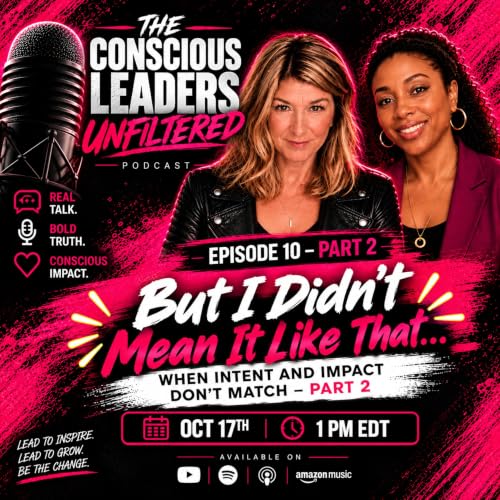
『The Conscious Leaders UNFILTERED』のカバーアート

The Conscious Leaders UNFILTERED

The Conscious Leaders UNFILTERED

著者: Cheryl x Kiah
無料で聴く

What if leadership isn't about the people you manage—but about how you show up every single day? The Conscious Leaders Unfiltered is where authentic conversations meet conscious living. Join Cheryl and co-host Kiah as they explore the real, unfiltered side of leadership—self-leadership, relationships, emotional intelligence, purpose, courage, and growth. Because conscious leadership isn't a title. It's a way of living, loving, and leading that creates lasting impact—whether you're leading one person or many.Cheryl x Kiah 個人的成功 自己啓発
エピソード
  • Episode 11: “Wait… You Can Lead With Heart AND Hold People Accountable?!” — With Guest Dianne White
    2026/10/24

    What happens when leadership gets messy, the future is uncertain, and the people looking to you for answers need more than a motivational speech?

    You lead with heart. You show up with intention. And sometimes, you learn that the most powerful thing you can ask someone is, “What do you need from me today?”

    In this episode of The Conscious Leaders Unfiltered, Cheryl and Kiah sit down with the incredible Dianne White, a seasoned retail leader who knows a thing or two about building strong teams, navigating change, and finding the human side of leadership when things get tough.

    And this one is personal!

    From first impressions and a memorable yellow jacket to the mentorship, laughter, and lessons that shaped their leadership journeys, there's plenty of history at this table.

    Dianne takes us behind the scenes of her leadership journey, sharing how her mother's resilience, her family's entrepreneurial roots, and more than two decades of experience taught her that leadership isn't about having all the answers. It's about helping people discover what they're capable of.

    We get into the uncomfortable stuff, too. Balancing empathy with accountability. And recognizing that sometimes the greatest impact you make as a leader has nothing to do with business results and everything to do with how someone felt because of you.

    Because here's the thing: You can care deeply about people AND hold them accountable. In fact, that's where conscious leadership really begins.

    • Leading when everything feels uncertain. What happens when you're responsible for motivating a team whose jobs may be disappearing? Dianne shares the reality of leading through liquidation with compassion and honesty.

    • The mentorship that came full circle. Kiah and Dianne share the stories, lessons, and unexpected moments that shaped their relationship and helped them grow as leaders.

    • Empathy and accountability can absolutely coexist. Caring about someone doesn't mean avoiding the tough conversations. It means having them with intention.

    • Are you catching people doing things right? Dianne shares a powerful lesson about recognition and why celebrating the good matters just as much as coaching the gaps.

    • Stop managing tasks. Start connecting with humans. From daily check-ins to meaningful conversations, we explore how trust is built in the smallest moments.

    • Customer experience starts with the leader. Forget robotic scripts and forced smiles. Genuine connection begins with how we show up for our teams.

    • Reflection without the self-criticism spiral. How do we learn from our mistakes without allowing them to define us?

    • The courage to fail. Why becoming a better leader means accepting that sometimes you'll get it wrong, and choosing to grow anyway.

    “If I'm not growing people, I'm not leading people.”

    That one deserves a moment. Because how often do we measure leadership by what gets done instead of who grows along the way?

    “Conscious leadership for me is leading with purpose, empathy, and intention.”

    Not just when things are going well. Especially when they're not.

    “Be prepared to fail to become a better leader.”

    Because perfection was never the goal. Growth was.

    Here's our challenge to you after listening:

    • Before you leave today, ask someone, “What do you need from me?” And really listen.

    • Catch someone doing something right and tell them why it mattered.

    • Give yourself permission to learn from yesterday without carrying the weight of it into tomorrow.

    • Remember that the people you lead are people first, with lives, challenges, dreams, and stories you may know nothing about.

    Because the true measure of leadership isn't just what you accomplish. It's who becomes better because you were part of their journey.

    So grab your coffee, settle in, and join us for a conversation filled with heart, honesty, a little laughter, and plenty of moments that might just make you rethink how you lead.

    And as always, go find the good and lead with love. ❤️


    続きを読む 一部表示
    58 分
  • Episode 10 - Part 2: “But I Didn’t Mean It Like That…” — When Intent and Impact Don’t Match
    2026/10/17

    What happens when you genuinely didn’t mean to hurt someone… but you did?

    In this episode of The Conscious Leaders Unfiltered, Cheryl and Kiah get into one of those conversations that sounds simple until you’re actually living it: what happens when our intent and our impact don’t match?

    Because “But I didn’t mean it like that” might be completely true. But so is the other person’s experience.

    We unpack what happens when our instinct is to defend our character instead of getting curious about our impact, why being a good person doesn’t mean you’ll always get it right, and what accountability actually looks like when your intentions and someone else’s experience collide.

    And yes, we turn the mirror on ourselves too — because conscious leadership isn’t about mastering the perfect apology or never causing harm. It’s about becoming aware enough to notice your reaction, manage your ego, listen to what you may not fully understand, and choose what you do next.

    • Why intent and impact can both be true at the same time
    • Why “you hurt me” can immediately feel like “you think I’m a bad person”
    • What defensiveness is often trying to protect
    • How to pause before making someone else’s hurt about your discomfort
    • Why even a well-intended compliment can land differently than expected
    • The difference between explaining your intent and using it to dismiss impact
    • Why identity, lived experience, power and systemic barriers can influence how something lands
    • How curiosity can interrupt defensiveness in real time
    • Why reflection matters — not so we can beat ourselves up, but so we can show up differently next time
    • How to accept someone’s experience without necessarily agreeing with every part of their interpretation
    • Why conscious leadership asks us to care more about our response than proving we are a good person

    Your intent might explain the first moment. What you do after that reveals your leadership.

    You don’t have to erase your intention.

    You don’t have to absorb someone else’s entire interpretation of who you are.

    And you don’t have to get everything right.

    But when someone tells you that something you said or did hurt them, “I didn’t mean it like that” can’t always be where the conversation ends.

    There is an opportunity to pause long enough to ask:

    What is mine to own here?

    That’s where awareness becomes accountability.

    Two things can be true.
    You can have meant well and still have caused harm. Acknowledging one doesn’t automatically erase the other.

    Repair matters more than defense.
    Once we understand there has been an impact, the goal doesn’t have to be proving what we meant. It can become understanding what happened and deciding how we move forward.

    Reaction isn’t the end of the story.
    Defensiveness might show up first. Ego might show up first. Discomfort might show up first. Conscious leadership is noticing what showed up — and deciding whether you want it making the next decision.

    Reflection should change something.
    Looking back isn’t about endlessly replaying the moment. It’s about learning enough from it that the next version of you has another choice available.

    When someone tells you that you hurt them, what shows up first — curiosity or defense?

    Can you acknowledge someone’s impact without immediately explaining your intention?

    Are you apologizing because you understand, or because you desperately want the uncomfortable conversation to be over?

    And maybe the biggest one:

    When your intent and your impact don’t match, who do you choose to become next?

    Because conscious leadership was never about getting it right every single time.

    It’s about being willing to see yourself clearly enough to grow when you don’t.

    Intent can explain the moment.
    Awareness helps us understand it.
    But what we choose next is where leadership begins.

    In this conversationThe idea we kept coming back toA few things we’re taking with usQuestions we’re sitting with

    続きを読む 一部表示
    35 分
  • Episode 10: “But I Didn’t Mean It Like That…” — When Intent and Impact Don’t Match
    2026/10/17

    What happens when you genuinely didn’t mean to hurt someone… but you did?

    In this episode of The Conscious Leaders Unfiltered, Cheryl and Kiah get into one of those conversations that sounds simple until you’re actually living it: what happens when our intent and our impact don’t match?

    Because “But I didn’t mean it like that” might be completely true. But so is the other person’s experience.

    We unpack what happens when our instinct is to defend our character instead of getting curious about our impact, why being a good person doesn’t mean you’ll always get it right, and what accountability actually looks like when your intentions and someone else’s experience collide.

    And yes, we turn the mirror on ourselves too — because conscious leadership isn’t about mastering the perfect apology or never causing harm. It’s about becoming aware enough to notice your reaction, manage your ego, listen to what you may not fully understand, and choose what you do next.

    • Why intent and impact can both be true at the same time
    • Why “you hurt me” can immediately feel like “you think I’m a bad person”
    • What defensiveness is often trying to protect
    • How to pause before making someone else’s hurt about your discomfort
    • Why even a well-intended compliment can land differently than expected
    • The difference between explaining your intent and using it to dismiss impact
    • Why identity, lived experience, power and systemic barriers can influence how something lands
    • How curiosity can interrupt defensiveness in real time
    • Why reflection matters — not so we can beat ourselves up, but so we can show up differently next time
    • How to accept someone’s experience without necessarily agreeing with every part of their interpretation
    • Why conscious leadership asks us to care more about our response than proving we are a good person

    Your intent might explain the first moment. What you do after that reveals your leadership.

    You don’t have to erase your intention.

    You don’t have to absorb someone else’s entire interpretation of who you are.

    And you don’t have to get everything right.

    But when someone tells you that something you said or did hurt them, “I didn’t mean it like that” can’t always be where the conversation ends.

    There is an opportunity to pause long enough to ask:

    What is mine to own here?

    That’s where awareness becomes accountability.

    Two things can be true.
    You can have meant well and still have caused harm. Acknowledging one doesn’t automatically erase the other.

    Repair matters more than defense.
    Once we understand there has been an impact, the goal doesn’t have to be proving what we meant. It can become understanding what happened and deciding how we move forward.

    Reaction isn’t the end of the story.
    Defensiveness might show up first. Ego might show up first. Discomfort might show up first. Conscious leadership is noticing what showed up — and deciding whether you want it making the next decision.

    Reflection should change something.
    Looking back isn’t about endlessly replaying the moment. It’s about learning enough from it that the next version of you has another choice available.

    When someone tells you that you hurt them, what shows up first — curiosity or defense?

    Can you acknowledge someone’s impact without immediately explaining your intention?

    Are you apologizing because you understand, or because you desperately want the uncomfortable conversation to be over?

    And maybe the biggest one:

    When your intent and your impact don’t match, who do you choose to become next?

    Because conscious leadership was never about getting it right every single time.

    It’s about being willing to see yourself clearly enough to grow when you don’t.

    Intent can explain the moment.
    Awareness helps us understand it.
    But what we choose next is where leadership begins.

    In this conversationThe idea we kept coming back toA few things we’re taking with usQuestions we’re sitting with

    続きを読む 一部表示
    41 分
adbl_web_anon_alc_button_suppression_t1
まだレビューはありません