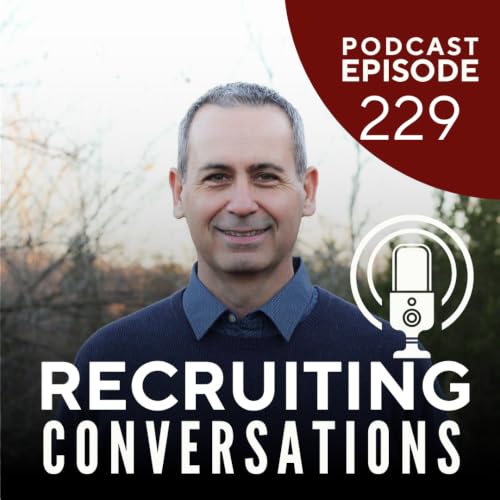
エピソード

  • Magnetize Your Growth: Build a Recruiting Playbook That Attracts, Connects, and Retains
    2025/12/02

    Most recruiting playbooks are either too vague to matter or too corporate to inspire. In this episode of Recruiting Conversations, I break down how to create a magnetic recruiting playbook; one that does more than document steps. It attracts the right talent, builds deep community, and creates retention that scales.

    We'll cover three powerful pillars: marketing that feels human, community that creates belonging, and retention that builds belief. This isn't theory. It's a rhythm that reinforces your leadership at every level.

    Episode Breakdown

    [00:00] Introduction – Why most playbooks fail and how to build one that magnetizes people to your team
    [01:00] What a Playbook Really Is – Not a document, but a lived rhythm that reflects the culture of your team
    [02:00] Part 1: Marketing That Connects

    • Define your content pillars: What should you be known for?

    • Build a cadence: Weekly posts, monthly updates, quarterly events

    • Show your leadership: Let the market feel what it's like to be led by you

    • Involve your team: Shared wins and team content multiply your message

    [03:30] Marketing Is Not About Going Viral – It's about being consistently visible with real value

    [04:30] Part 2: Community That Retains

    • Outline rhythms of connection: Weekly calls, celebrations, shout-outs

    • Systematize belonging: Notes, gifts, personal coaching

    • Teach peer-to-peer support: Real community isn't top down, it's side to side

    [05:30] Community Has to Be Structured to Scale – Templates, calendars, and shared docs bring this to life

    [06:00] Part 3: Retention That Lasts

    • Four keys: Clear expectations, consistent coaching, visible progress, emotional connection

    • Define onboarding rhythms

    • Track growth, give feedback, build relationship

    • Retention isn't about comp or ops, it's about belief

    [07:00] The Gift of Documenting the Gaps – Writing your playbook reveals where you're winging it, and that's how you get better

    [07:30] Final Challenge

    • Create three sections: Marketing, Community, Retention

    • List five things you already do and five you want to start doing

    • Build templates, assign owners, and create checklists over the next 30 days

    Key Takeaways
    • A Playbook Isn't a PDF. It's a System That Lives and Breathes – Build rhythms, not just resources

    • Marketing Should Be Personal and Predictable – Stop trying to go viral. Start being visible

    • Community Doesn't Happen By Chance – It happens by design and weekly repetition

    • Retention Is Built, Not Hoped For – It requires coaching, celebration, and belief

    • Your Playbook Makes You Scalable – It moves your leadership from your head into the hands of others

    You don't need to build something flashy. You need to build something real, something that grows with you, attracts the right people, and keeps your team aligned.

    Want help building your own magnetic recruiting playbook? Subscribe to my weekly email at 4crecruiting.com or book a session at bookrichardnow.com. Let's turn your leadership into a system that multiplies.

    続きを読む 一部表示
    9 分
  • It's Not About the Rate: How to Handle Objections Around Pricing and Compensation
    2025/11/25

    When a candidate pushes back on pricing or comp, they're rarely asking about math. They're asking if your model is worth believing in. In this episode of Recruiting Conversations, I walk through the mindset, scripting, and strategic timing for leading high-trust conversations around pricing and compensation.

    This isn't about defending numbers. It's about reframing the value of your system and building belief that shifts the conversation from fear to vision.

    Episode Breakdown

    [00:00] The Real Question – Pricing and comp objections aren't about spreadsheets. They're about trust and perceived value
    [01:00] Step 1: Reframe the Mindset – Don't debate. Reframe. Pricing is emotional, not just logical
    [02:00] Step 2: Acknowledge the Emotion – "It makes sense that pricing matters. You want to protect your pipeline." Validation opens the door
    [02:30] Step 3: Ask Performance-Based Questions

    • How often are you being shopped?

    • What's your lock pull-through rate?

    • Do you feel like you're chasing rate, or controlling the conversation?
      [03:30] Step 4: Offer a Vision of Relief – "What if you didn't have to win on rate? What if trust, process, and speed helped you win instead?"
      [04:00] Step 5: Shift the Comp Conversation – "Let's walk through how your comp translates to actual support, systems, and scale."
      [05:00] Step 6: Move From Numbers to Outcomes

    • What would two more loans per month mean?

    • What's the impact of three extra hours per week?

    • What happens when your team actually helps you scale?

    [06:00] Step 7: Sell Alignment, Not Comp – Culture, coaching, leadership, and belief win long-term loyalty
    [06:30] Step 8: Use Stories, Not Stats – Real before-and-after stories build more belief than spreadsheets
    [07:00] Step 9: Invite Skepticism, Don't Resist It – "What do you need to feel confident? What are you comparing this to?" Curiosity disarms fear
    [08:00] Step 10: Anticipate Objections With Tools

    • Pricing overview

    • Comp comparison

    • Cost of delay analysis

    • Follow-up story sequences


    [08:30] Final Challenge – Create your comp narrative. Document three stories. Re-engage three recruits who stalled on price

    Key Takeaways
    • Objections Around Price Are Really About Belief – Your job is to shift the conversation to value and alignment

    • Recruits Don't Just Want Numbers. They Want Outcomes – Clarity, support, and vision create more loyalty than a higher comp

    • Use Empathy, Then Lead With Questions – Start by validating their concern. Then help them see a bigger picture

    • Stories Win More Than Spreadsheets – Share real-world before-and-after examples of people who made the move

    • Be Proactive With Tools – Don't wait for objections. Anticipate them with documents, stories, and confident messaging

    Recruits don't stay because of comp. They stay because of coaching, clarity, culture, and belief. Your job isn't to outbid. It's to out-value.

    続きを読む 一部表示
    10 分
  • The Market Isn't Too Small. Your Strategy Might Be
    2025/11/18

    What if you've already talked to every LO in your market? What if the pool feels saturated, picked over, or just plain stuck?

    In this episode of Recruiting Conversations, I'll show you how to shift your mindset, redefine your opportunity, and build a rhythm that creates traction—even when your list is short. Whether you're in a small town or a crowded metro, this strategy will help you go deeper, not just wider.

    Episode Breakdown

    [00:00] Introduction – When your market feels small, what do you do? The answer isn't volume. It's clarity
    [01:00] You're Not Stuck. You're Just Defining Opportunity Too Narrowly – Most leaders assume the list is exhausted when they've only made one or two touches
    [02:00] Depth Over Breadth – Build a rhythm that stays in front of your market:

    • Monthly value-adds

    • Personal video check-ins

    • Team stories and culture clips

    • Consistent follow-up
      [03:00] Value Isn't a Job Posting – Real value is insight, encouragement, and strategy. It positions you as a thought partner, not a pitch person
      [04:00] Saturation Isn't the Issue – Most top LOs don't move from one pitch. They move from trust built over time
      [05:00] Rejection Is Not the End – It's just timing. Stay in the conversation so you're the one they call when it's time
      [06:00] Expand Your Definition of Opportunity

    • Junior LOs

    • Loan partners or processors

    • Career-adjacent talent

    • Agents considering a switch to lending
      [07:00] Build a Visibility Calendar – 50+ high-touch moments per year for every LO in your market. That's how you stay top of mind
      [08:00] Local Referrals Are Everything – In tight markets, relationships create recruiting momentum. Build influence with agents and community leaders
      [08:30] If You've Stopped Believing, Nothing Else Works – Mindset is your real ceiling. The market isn't too small. You've just stopped seeing it clearly
      [09:00] Weekly Challenge

    1. Audit your recruiting list

    2. Re-engage cold contacts

    3. Share one valuable resource

    4. Make one strategic referral ask

    5. Post something that shows what your leadership feels like

    Key Takeaways
    • You're Not Out of Leads. You're Out of Rhythm – Consistency, not volume, is what moves the needle

    • In Small Markets, Reputation Scales Faster Than Ads – People talk. Your brand is built on how you show up

    • Don't Just Build a Pipeline. Build Familiarity – Value, visibility, and repetition make you unforgettable

    • Redefine What Counts as a "Good Lead" – Great hires often come from places others overlook

    • You Don't Need Everyone. You Just Need a Few Aligned People to Believe – That's how real growth starts

    Your market might be small, but your impact doesn't have to be. Build your system. Stay visible. Lead with value. You'll win with depth.

    Want help creating a recruiting rhythm that works—even in limited markets? Subscribe to my weekly email at 4crecruiting.com or book a strategy session at bookrichardnow.com. Let's help you recruit with clarity and consistency.

    続きを読む 一部表示
    11 分
  • Small Market, Big Wins: When It Makes Sense to Hire a Recruiter in a Limited Territory
    2025/11/11

    What if your entire market has fewer than 100 LOs? Is hiring a recruiter still worth it? In this episode of Recruiting Conversations, I walk through the exact framework for determining whether a recruiter is the right move in a small market. I cover the systems, mindset, math, and sequencing that make it work, and share a real-world story of one leader who turned 85 LOs into 9 hires in 12 months.

    This isn't about headcount. It's about mastery, clarity, and building a system that multiplies your time.

    Episode Breakdown

    [00:00] The Question – Is it worth hiring a recruiter if I only have 70 to 100 loan officers in my area?
    [01:00] Why Market Size Is the Wrong Lens – It's not how many LOs exist, it's how many are aligned and how strong your system is
    [02:00] Visibility vs. True Recruiting – Reaching out once is not recruiting. You need consistent, structured engagement
    [02:30] Real Story: Midwest Leader With 85 LOs – After mapping the market, he realized very few LOs had received consistent value or follow-up
    [03:30] Question 1: Is Recruiting a Top 3 Priority? – If not, a recruiter becomes an admin, not a multiplier
    [04:00] Question 2: Do You Have a System? – CRM, avatar, cadence, scripting, follow-up, all must be in place before hiring
    [04:45] Question 3: Are You Recruiting for Fit or Volume? – In small markets, alignment is more important than raw production
    [05:20] Question 4: Can You Tell a Clear Story? – If your recruiter can't communicate your value clearly, you'll lose to comp-focused competitors
    [06:00] The Math That Makes It Work

    • 3 key hires = $60K/month revenue

    • $720K annually

    • More than enough to justify the hire


    [06:30] What a Recruiter Should Be – Not a cold caller, but a connector who runs value plays and books warm calls
    [07:00] When to Delay the Hire – If your system is messy or undefined, wait. Build first. Then hire
    [07:30] Real Results – The Midwest leader built a system first, hired a recruiter second, and scaled to 9 hires in a "too small" market
    [08:00] Action Steps

    1. Build a clean LO list

    2. Document your recruiting message

    3. Create a 90-day value-add follow-up plan

    4. Prove it works

    5. Hire a recruiter to run the top of funnel


    [09:30] Closing Thought
    – You don't need more market. You need more mastery. Strategy wins, not size

    Key Takeaways
    • It's Not About Market Size. It's About Market Mastery – A recruiter in a small market works if the system is already built

    • Recruiting Must Be a Top Priority – No hire can replace your ownership of the vision

    • Build First, Hire Second – Document your message, process, and rhythms before bringing someone in

    • Focus on Alignment Over Volume – In a small market, values and vision matter more than raw numbers

    • Your Story Wins the Game – When your message is clear, your recruiter becomes a magnet, not a salesperson

    A small market doesn't limit your impact. Lack of clarity does. Build the system. Then scale it with the right partner.

    Want help building your recruiting system so a recruiter can multiply it? Subscribe to my weekly email at 4crecruiting.com or book a strategy session at bookrichardnow.com. Let's help you win in any market no matter if it's big or small.

    続きを読む 一部表示
    10 分
  • Recruiting the Inner Circle: How to Win When Outside Voices Influence the Decision
    2025/11/04

    You've been there. The recruit is engaged, the vision is aligned, and then silence. Or worse, hesitation that comes from a spouse, a current manager, or a friend. In this episode of Recruiting Conversations, I unpack one of the most common and misunderstood challenges in recruiting: how to lead when someone else is influencing your recruit behind the scenes.

    This is the framework I teach leaders to help them stay calm, coach through fear, and win trust without becoming defensive or pushy.

    Episode Breakdown

    [00:00] Introduction – The silent deal-breaker: recruits influenced by voices you can't see
    [01:00] Recognize the Pattern – Recruits often consult with a spouse, friend, mentor, or current manager during decision-making. This is normal, not a red flag
    [02:00] Outside Voices Are Often Uninformed – They offer opinions without context. They bring emotion, not strategy. You must equip your recruit to lead those conversations
    [03:00] Step 1: Bring It Up Before It Happens – Set the expectation early that these voices may show up, and offer your support when they do
    [04:00] Step 2: Normalize the Moment – Tell them it's okay to feel pulled. Then offer to talk through anything they're hearing, without judgment or pressure
    [05:00] Step 3: Ask Better Questions – What exactly did they say? What concern do you think is behind that? What part of it resonates with you?
    [06:00] Step 4: Validate the Emotion – Instead of debating, say, "That makes sense." Recruits need safety before they can process clearly
    [06:30] Step 5: Offer to Include the Outside Voice – "Would it help if we brought your spouse or mentor into a call—not to pitch, just to answer questions?" That move alone often builds trust
    [07:00] Step 6: Equip Them With Language – Give the recruit specific, value-based reasons for the move so they're not fumbling through the conversation at home
    [08:00] Personal Story – Richard shares how a recruit nearly walked away after a buddy's advice, until one key moment helped him realize he was borrowing someone else's fear
    [09:00] Final Challenge – Think about one stalled recruit. Reach out this week, invite the conversation, and be the calm voice in the noise

    Key Takeaways
    • Outside Influence Is Inevitable – But when you're proactive, it doesn't have to be a deal-breaker

    • Don't Argue. Equip – Help your recruit navigate those conversations with clarity, not confusion

    • Invite the Inner Circle In – Offering to speak with spouses or mentors shows transparency and builds credibility

    • Fear Grows in the Dark – The best recruiters name concerns early, normalize hesitation, and help people process wisely

    • You're Recruiting More Than the Candidate – You're recruiting their household, their belief system, and their circle of trust

    In a world full of loud opinions, the leaders who slow down, listen well, and guide with clarity are the ones people choose to follow.

    Want help building a recruiting system that equips you to lead high-trust, high-emotion conversations like this? Subscribe to my weekly email at 4crecruiting.com or book a coaching session at bookrichardnow.com.

    続きを読む 一部表示
    10 分
  • How to Build Certainty When Recruits Feel Stuck
    2025/10/28

    Ever had a recruiting conversation stall, not because of your offer, but because the recruit says, "I don't know"? In this episode of Recruiting Conversations, I break down the exact framework I use to move people from fog to clarity. You'll learn how to coach through indecision, lead with belief, and help recruits see a future they can say yes to.

    Because the best recruiters aren't just closers. They're clarity coaches.

    Episode Breakdown

    [00:00] Introduction – The most common stall in recruiting isn't about money. It's about uncertainty
    [01:00] Why Recruits Say "I Don't Know" – Most are tired, reactive, and surviving in someone else's system
    [02:00] Mindset Shift – Their lack of clarity isn't a red flag. It's an opportunity to coach
    [02:30] Framework Step 1: Values-Based Questions

    • What kind of leadership brings out your best?
    • What kind of culture do you want?
    • What would make this next chapter meaningful?

    [03:30] Framework Step 2: Explore Frustrations

    • What's not working?
    • Where are you stuck?
    • What are you tolerating?


    [04:00] Framework Step 3: Cast Personal Vision

    • What would success feel like a year from now?
    • What do you want more of, and less of?
    • What kind of team would energize you?


    [04:30] Framework Step 4: Reflect Back Their Answers

    • "You value freedom. You want a leader who sees you. You're ready to grow, but only if it aligns with your life."
    • This creates connection and belief


    [05:00] Framework Step 5: Build a Decision-Making Framework

    • What matters most in this decision?
    • What fears are coming up?
    • What would give you peace about moving forward?


    [06:00] Framework Step 6: Create Forward Momentum – "Take this week to reflect. Let's meet next Wednesday. I'll walk you through what life on our team looks like."


    [07:00] The Power of Slowing Down – Most recruiters talk at people. Elite leaders guide them to clarity


    [07:30] Real Story Example – One coaching client helped a stuck LO find clarity through one simple question:

    "If nothing changes this year, how will that feel?" The LO said, "I'd regret it." That changed everything


    [08:00] Final Challenge – Pick one stalled recruit this week. Slow down. Ask better questions. Reflect back what you hear. Help them believe change is possible

    Key Takeaways
    • Clarity Creates Certainty – Most people aren't unsure because of the opportunity. They're unsure because they've never been coached through the fog

    • Stop Pitching. Start Reflecting – Recruits don't want features. They want alignment

    • Your Questions Matter More Than Your Pitch – The right conversation can unlock belief faster than any presentation

    • Slowing Down Builds Trust – When you become the first person to truly listen, you become the leader they trust

    • The Best Recruiters Are Coaches First – Your job isn't just to close the aligned. It's to help people find their alignment

    Want to coach through clarity at scale? Subscribe to my weekly email at 4crecruiting.com, or book a session at bookrichardnow.com. Let's help you build trust before you ever talk about the job.

    続きを読む 一部表示
    9 分
  • Let Them See It: How to Show Recruits What It's Like to Be on Your Team
    2025/10/21

    Telling recruits what your team is like isn't enough anymore. You have to show them. In this episode of Recruiting Conversations, I walk through how to build a content and conversation strategy that gives prospective hires a window into your team, before they ever commit to a call.

    When done right, this approach creates trust, builds belief, and positions you as the kind of leader worth following. I break it down step by step.

    Episode Breakdown

    [00:00] Introduction – Why trust has to be felt, not just pitched
    [01:00] Visibility and Believability – The new standard in recruiting is showing up consistently and showing up real
    [02:00] What Content Actually Connects – Capture leadership moments, team energy, voice notes, and authentic wins
    [03:30] Real Examples of Effective Content

    • Coaching clips

    • Voice memo takeaways

    • Win stories framed with leadership language
      [05:00] Turning Conversations Into Recruiting Tools

    • Swap pitches for stories

    • Lead with empathy, not features

    • Ask vision-based questions, then respond with stories
      [07:00] Connecting Content With Conversation

    • Follow up with a clip that proves what you just shared

    • Use visual proof instead of repeating the same pitch
      [08:00] Build a Content Vault

    • Save coaching moments, culture quotes, team celebration clips

    • Use them to drip belief, not blast benefits
      [09:00] Be Willing to Be Vulnerable

    • Share your truth, your challenges, your why

    • Recruits want to follow someone human, not perfect
      [10:00] Final Challenge – Capture one moment, turn it into one post, use it in one follow-up this week

    Key Takeaways
    • Words Don't Win Trust. Experiences Do – Let people see what it feels like to be led by you

    • Capture the Real, Not the Polished – The best content comes from coaching, calls, and everyday leadership

    • Your Stories Are More Believable Than Your Pitch – Real success stories are more powerful than claims

    • Follow Up With Proof, Not Pressure – A simple clip or post can build more belief than another call

    • You're Already Leading. Now Let People See It – Don't build something great in silence

    Recruits want more than a better offer. They want a better experience. Show them what that looks like before they ever say yes.

    Want help turning your leadership into a recruiting magnet? Subscribe to my weekly email at 4crecruiting.com or book a strategy session at bookrichardnow.com. Let's help your leadership go public.

    続きを読む 一部表示
    10 分
  • They Don't Need a Pitch. They Need a Pause. The New Recruiting Strategy for Overwhelmed LOs
    2025/10/14

    Most recruiters are showing up with features, hype, and opportunity. But what burned out producers actually need is relief. In this episode of Recruiting Conversations, I break down how to lead with empathy instead of solutions, how to identify real burnout, and how to open up high-trust conversations with people who are struggling.

    If you've ever felt like you're talking to a wall when someone is clearly checked out or exhausted, this episode will help you connect instead of convince.

    Episode Breakdown

    [00:00] Introduction – Why this isn't just a recruiting question, it's a leadership one
    [01:00] Understand the Burnout Pattern – High volume turned into high stress. Then low volume turned into fear. Now they're stuck in survival mode
    [02:00] Step 1: Lead With Empathy, Not Solutions – Don't pitch. Connect. Ask real questions like:

    • How have you been holding up?

    • What's been the hardest part of this market for you?

    • Are you energized or worn down right now?
      [03:00] Step 2: Normalize What They're Feeling – You're not weak. You're human. This is a hard season. Let them feel seen
      [04:00] Step 3: Ask Vision Questions – Once they feel safe, ask what they wish life looked like

    • What would freedom look like?

    • What kind of support would change everything?

    • What kind of pace would be sustainable?
      [05:00] Step 4: Tell the Story, Not the Solution – Share your burnout story or someone else's. Let them hear possibility, not pitch
      [06:00] Step 5: Invite, Don't Close – Don't push for commitment. Say:

    • "Not sure if this is the right fit, but I'd love to show you what's possible"
      [07:00] Step 6: Follow Up With Care, Not Chase – Send a text, share a podcast, drop a Loom. Rebuild trust slowly
      [08:00] Final Challenge – Reach out to three people who are tired. No pitch. Just care

    Key Takeaways
    • Burnout Isn't a Sales Problem – It's a human problem. Slow down and lead with empathy

    • Don't Solve, See Them – Validation builds more trust than solutions ever will

    • Help Them See Possibility Again – Ask questions that paint a new future

    • Your Story Is More Powerful Than Your Pitch – Share your own rhythm shift

    • Trust Scales – The leaders who show up with care will win when others push

    You don't need a perfect answer to recruit the burned out. You just need presence, empathy, and a rhythm of care. That's how you become the leader they trust when they're ready for something different.

    Want to build a recruiting system that speaks to the real pain in today's market? Subscribe to my weekly email at 4crecruiting.com, or book a call at bookrichardnow.com. Let's help you recruit through trust.

    続きを読む 一部表示
    10 分