• 🚀 AI Won't Just Automate Jobs; It Will Challenge Identities (Issue 677)
    2026/04/08
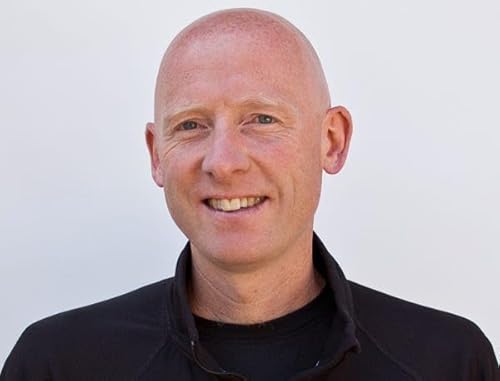
    My guest for this episode is Peter Morville. Peter is a pioneer in the fields of information architecture (IA) and user experience. His bestselling books include Information Architecture, Intertwingled, Search Patterns, Ambient Findability, and Planning for Everything. He has been helping people to plan since 1994, and advises such clients as AT&T, Cisco, Harvard, IBM, the Library of Congress, Macy’s, the National Cancer Institute, and Vodafone. He has delivered keynotes and workshops in North America, South America, Europe, Asia, and Australia. His work has been covered by NPR, The Economist, The Washington Post, and The Wall Street Journal. In 2024, Peter founded Sentient Sanctuary, a nonprofit think tank and animal sanctuary, and wrote a philosophical IA novel, Animals Are People. He blogs at intertwingled.org. Peter’s IA book has been on my shelf since 1998, when I was a young designer first learning how to design websites (after designing software at IBM and Apple). So, I’ve been a fan for a long time! He has some intriguing thoughts on the future of tech and the impact of AI on careers, so I know you’ll enjoy this episode.SummarySpeaking of AI, here’s an AI-generated summary of our podcast transcript. It’s kinda good for tasks like this, right? We talk, it listens, and then it summarizes. * AI skepticism has been earned. Peter spent 25 years professionally advising clients to be skeptical of AI hype, and then ChatGPT changed his mind. The lesson: evaluate each wave on its own merits rather than defaulting to either enthusiasm or dismissal. * We’re in the fog of war. No one (not the CEOs, nor the researchers) can see clearly beyond the next year or two of AI’s trajectory. The smart career move is to keep your eyes and options open rather than betting everything on one prediction about how this unfolds.* Question the motives behind the hype. When tech executives insist AI must permeate everything, consider who profits. As I put it: the CEO of Nvidia telling everyone to use AI is like the CEO of Oreo telling us to eat 50 cookies a day. Follow the money before following the advice.* Technology follows fashion cycles. Peter’s observation that tech trends work like fashion is underappreciated. You fight the fashion at your own peril (e.g., resisting Agile during its rise). The skill is learning to ride the wave strategically while waiting to see what actually remains when the dust settles.* AI disruption is exponentially faster this time. Unlike the Industrial Revolution, where ripple effects took generations, this wave is hitting engineering, design, legal, medical, and other white-collar jobs simultaneously. Robotics will soon follow for blue-collar workers. Speed is the new variable that makes historical analogies imperfect.* AI as a coding tool has a hidden failure mode. We discussed a cautionary tale. A veteran CTO went “all in” for 90 days only to find AI-generated code nearly impossible to debug when it broke. Productivity gains can mask a dangerous loss of deep understanding.* Your identity is not your job title or employer. One of the most powerful moments: Peter’s deliberate effort to give up being “the information architect” after 25 years, and my coaching exercise of asking people to introduce themselves without mentioning their company or title. The people who can’t do it are the most vulnerable to identity collapse in a disruption.* Redefine yourself by going back to childhood. When Peter hit age 40, he started thinking about retiring at 50 to have the freedom to do something else. Initially, he struggled to identify what he would do if money wasn’t a motivator. His breakthrough came from remembering what he loved as a kid: animals. That led to a 48-acre farm sanctuary in Virginia. Reconnecting with your pre-career self is a powerful reinvention strategy.* The future belongs to purpose-driven solopreneurs. AI is making it possible for one person to do what used to require a larger team. Combined with the decline of lifelong corporate careers, Peter and I see an opportunity for individuals who build around something they care about, rather than chasing traditional big-company careers. * Ask better questions than “What won’t AI automate?” Peter reframed this perfectly: the less obvious and more important questions are Where can I find purpose? What will make me want to get up in the morning? Career resilience in the AI era isn’t just about skill-proofing; it’s about building a life around meaning that no algorithm can replace. ⬆️ Scroll up and hit play to listen to our conversation. Where to find out more* Intertwingled (Peter’s blog) * Sentient Sanctuary (his nonprofit animal sanctuary) Schedule a complimentary call with me if you want to discuss your career goals and how I can help. I’m Larry Cornett, a career coach for ambitious professionals who might be feeling a bit stuck, frustrated, and unfulfilled. Reclaim your confidence to design ...
    続きを読む 一部表示
    39 分
  • 🚀 Let's Talk About AI, Baby! (Issue 673)
    2026/03/18
    Are you familiar with Alex Karp, the CEO of Palantir? He thinks you’d better get used to the reality of the impact of AI on your job. “This technology disrupts humanities-trained—largely Democratic—voters, and makes their economic power less. And increases the economic power of vocationally trained, working-class, often male, working-class voters. And so these disruptions are gonna disrupt every aspect of our society. And to make this work, we have to come to an agreement of what it is we’re going to do with the technology; how are we gonna explain to people who are likely gonna have less good, and less interesting jobs.” - Alex Karp (source)And if you keep up with tech news, you may have seen that Meta is planning large layoffs ​that could affect 20% or more of the company. They are trying to offset their massive investments in AI infrastructure, but also anticipating the greater efficiencies of AI-assisted employees. Apparently, Zuckerberg believes the company will no longer need a significant number of its current staff. “We’re starting to see projects that used to require big teams now be accomplished by a single very talented person.” - Mark Zuckerberg (source)Even if you don’t work in the tech industry, I’m sure you have witnessed how AI is weaving its way into many of the tools and services we use every day. Some employees encounter more often than others, of course (e.g., knowledge workers). And some folks are fairly insulated from its impact, for now at least (e.g., those with blue-collar jobs). Where does your profession fit into this chart from Anthropic below? Are you one of the people Karp says will have to accept “less good, and less interesting jobs”? Will the theoretical capabilities of AI enable it to take over your job soon? Anthropic CEO Dario Amodei last year said the technology could disrupt half of entry-level white-collar work. Microsoft’s AI chief, Mustafa Suleyman, made a similar prediction, estimating most professional work will be replaced within a year to 18 months. (source)With few exceptions, people are rushing headlong into AI and using it for so many things where it doesn’t really add value and may even be destructive (e.g., AI therapists, AI companions, AI warfare strategists). I do use some AI tools judiciously (e.g., Granola AI). But I don’t let AI saturate ALL of my tasks and life. I kind of like using my cognitive skills and judgment as much as possible. As usual, humanity is frantically adopting a new technology, damn the consequences. * We did it with plastics. * We did it with herbicides and pesticides. * We did it with the automobile. * We did it with social media. * We keep doing it with pharmaceuticals. I just wish that—for once—we would be smarter about the research, the rollout, and establishing intelligent ethical guardrails. Some people predict that AI will eliminate millions of jobs. Some have denied that AI will take jobs. In fact, they claim the rise of AI will create a host of new jobs. A few admit that jobs are indeed disappearing (you need fewer employees when they can leverage AI to accelerate work and take on tasks that others used to provide). As usual, the actual answer is complex, and no one can predict the future. The best we can do is try to ride the wave and see where it takes us. I’ve seen a lot of tech trendsI’ve been in the working world for a very long time—before personal computing, the internet, and cellphones entered the scene. So, I’ve experienced and observed the disruption caused by new technologies. Some were a flash in the pan, while others stuck and changed our lives forever (for better or worse). I know some people who behaved like squirrels on their ninth cup of coffee. They would leap into every new tech trend and embrace it with a rabid passion, only to abandon it a few weeks or months later when a new shiny object appeared. That’s not exactly an optimal use of your time and energy! However, at the other end of the spectrum, I watched other people complain grumpily about every new tech trend and refuse to engage with any of it. Before long, those people’s dusty skills were irrelevant, and they struggled to remain employed. That sucks, too. So, what is one to do with this AI trend? Will you be a squirrel with ADHD, a stubborn tortoise, or something in between? It boils down to the following career choices. Five options * Ignore * Adapt * Ascend * Pivot * Escape Scroll up to listen to the audio of this episode to hear my full thoughts on all of this. Schedule a complimentary call with me if you want to discuss how AI is impacting your career and profession, and what you should do about it.Additional Reading* When Using AI Leads to “Brain Fry” * It’s tempting to offload your thinking to AI. Cognitive science shows why that’s a bad idea * Harvard professor says AI users are losing cognitive abilities * Are these AI prompts damaging your thinking skills? I’m Larry Cornett...
    続きを読む 一部表示
    40 分
  • What Are You Missing? (Issue 667)
    2026/02/11

    In this podcast episode, I explain more about why I created the Invincible Career Guide and how we’ll be using it to provide a structured approach to pursuing your career goals this year (hit play above to listen). Each month has a specific theme, and each week includes topics and exercises aligned with that theme.

    Grab the content of this week’s update so you can paste it into your copy of the career guide. It’s about the gap between where you are today and where you want to be by the end of this year (your career goals for 2026).

    The Invincible Career Guide for 2026

    I created the companion guide to provide additional structure for the weekly emails I will share with you this year. If you haven’t grabbed your copy yet, use the button below to access and save it.

    It’s in Google Slides format, so you can save a copy of the presentation to your own Google Drive in your preferred folder. This will allow you to edit the placeholder text to enter your answers to the questions in the guide.

    How to use the guide

    Every month this year will have a specific theme.

    * Each week will have a set of homework questions related to that month’s theme.

    * I will share a new presentation document with that week’s questions via the newsletter email and in my private community.

    * Then download the new presentation, copy and paste the new slides into your editable copy of the guide, and use it to answer the questions.

    I have already included all the slides and questions for January (i.e., Your Goals) in the guide. New slides will come each month. Stay tuned for more emails about those.

    Themes this year

    * Your Goals

    * The Blockers (February)

    * Your Toolbox

    * Strategy & Plan

    * Making Progress

    * Becoming Invincible

    * Your Network

    * Targeting

    * Broadcasting

    * Systems

    * Resources

    * Evaluation

    Schedule a complimentary call with me if you have questions about the guide and how to use it effectively.

    I’m Larry Cornett, an executive coach who works with ambitious professionals to help them reclaim their power, become more invincible, and create better opportunities for their work and lives. Do more of what you love and less of what you hate! 📕 Check out The Invincible Daily Journals!

    Would you like to help support my newsletter and podcast, but don’t want to commit to a monthly fee? Check out my ☕️ Buy Me a Coffee. I’m a solopreneur, and coaching and writing are how I provide for my family. Thanks for your help!


    This is a public episode. If you'd like to discuss this with other subscribers or get access to bonus episodes, visit newsletter.invinciblecareer.com/subscribe
    続きを読む 一部表示
    39 分
  • 🚀 How to Survive in Tech This Year (Issue 663)
    2026/01/14

    Struggling to find a new job in tech? Look outside the bubble! I’ve been telling my clients this for years.

    As the core of the Silicon Valley tech industry swirls in chaos, uncertainty, and darkness, move to the periphery and explore healthier industries and geographies that need your valuable expertise.

    “So much opportunity, inspiration, creativity, and possibility lies in applying the skills and experience that you may have from technological disciplines in other realms and industries that are often far less advanced in their deployment of technologies.” - Anil Dash (source)

    Some strategies that I discuss in this episode:

    * Look at industries outside of the traditional tech industry.

    * Look at geographies outside the U.S.

    * Consider going independent with consulting or contracting.

    ⬆️ I go into a lot more detail in the audio. So, scroll up and hit play to listen.

    Would you like to brainstorm some options with me? You can always schedule a complimentary call.

    I’m Larry Cornett, an executive coach who works with ambitious professionals to help them reclaim their power, become more invincible, and create better opportunities for their work and lives. Do more of what you love and less of what you hate! If you’re interested in joining my free Invincible Career community, please complete this application form, and we’ll get back to you.

    I know some people would like to help support my newsletter and podcast, but don’t want to commit to a monthly fee. So, I set up a ☕️ Buy Me a Coffee to let folks contribute without an ongoing financial commitment. I’m a solopreneur, and coaching and writing are how I provide for my family. Thanks for your support!


    This is a public episode. If you'd like to discuss this with other subscribers or get access to bonus episodes, visit newsletter.invinciblecareer.com/subscribe
    続きを読む 一部表示
    33 分
  • The Gen X Comeback in the 3rd Chapter of Life (Issue 659)
    2025/12/10
    Thank you to everyone who tuned in live today! In this livestream conversation, I sat down with Substack writer and podcaster Jonathan Small to talk about what it really means to navigate work, identity, reinvention, and retirement as members of Generation X. Jon and I traveled different career paths. He moved from magazine publishing to digital media, podcasting, and entrepreneurship. Check out his current Substack publication, Small Talk. I shifted from a big-tech career (e.g., Apple, IBM, eBay, Yahoo) into independent coaching as a solopreneur. But we’ve both lived through the same constant pattern: industries rise, industries fall, and Gen X is constantly forced to reinvent itself.We talked about how traditional career expectations failed our generation. The idea of a stable, decades-long job with a pension evaporated. Entire fields collapsed (e.g., print magazines, early tech companies), and many people clung to the past too long, only to find themselves shut out of the future. What has kept the survivors afloat is adaptability. As I shared in the conversation, I’ve learned to watch the “canaries in the coal mine” and pivot before a company or industry fails. Jon had to make similar leaps as the print media industry imploded around him.A big theme was identity. Many Gen X professionals still define themselves by job titles, employers, or industries that may no longer exist. Jon and I both experienced that moment of losing our “main character” identity and having to figure out who we were without our familiar career spotlight. It’s painful at first, but eventually liberating. Your profession is not your identity! The sooner you separate the two, the stronger and more resilient you become.We also talked about the realities of ageism, unstable 401(k)s, and the pressure of being the “sandwich generation,” caring for both aging parents and kids heading to college. It’s no wonder so many Gen Xers feel anxious about retirement. But despite all of this, our generation remains remarkably resilient. Someone in the chat joked that we’re the “Chumbawamba generation”—we get knocked down, we get back up again. And it’s true.One of the most important takeaways from our conversation is the shift toward multiple income streams. Many of us no longer expect one job to provide all of our income, meaning, or stability. Check out Free Agent Nation by Daniel Pink. Jon and I both shared how life improved once we stopped forcing a single revenue source to carry everything. * More flexibility. * More time with family. * More control of our energy. * More meaningful work, on our own terms.We also touched on the growing loneliness many mid-career adults face, especially when office culture disappears. Building community (e.g., through platforms like Substack and online groups) and collaborating have become essential. Sharing your work publicly, even imperfectly, helps replace that lost connection. And as I emphasized, the antidote to fear isn’t perfection. It’s showing up consistently.We ended on a hopeful note. As Gen Xers, we’re entering what Jon called Chapter Three of our lives. It’s the stage where experience, autonomy, creativity, and wisdom finally converge (think Yoda). We don’t need to chase the identity we had at 25. We get to design something new. The internet gives everyone the opportunity to build their own platform, reach people globally, and create a working life that fits who they are now.Would you like to talk with me about planning the next phase of your career? You can always schedule a complimentary call.🎁 I’m offering a holiday special for premium subscriptions to my Invincible Career newsletter. Get 50% off for the first year, and you get access to a premium channel in my private community, weekly office hours, monthly group calls, and unlock the private archive of hundreds of subscriber-only posts. I’m Larry Cornett, an executive coach who works with ambitious professionals to help them reclaim their power, become more invincible, and create better opportunities for their work and lives. Do more of what you love and less of what you hate! 📕 Check out The Invincible Daily Journals! This is a public episode. If you'd like to discuss this with other subscribers or get access to bonus episodes, visit newsletter.invinciblecareer.com/subscribe
    続きを読む 一部表示
    59 分
  • Solopreneur Q&A Chat (Larry & Anna)
    2025/11/21

    Thank you Chris Brown, BoldTimers, Dipti Patel, Richard DAmbrosio, and many others for tuning into my live video with Anna Codina - Stress Coach!

    Join me for my next live video in the app.


    This is a public episode. If you'd like to discuss this with other subscribers or get access to bonus episodes, visit newsletter.invinciblecareer.com/subscribe
    続きを読む 一部表示
    59 分
  • November Update
    2025/11/17

    Thank you to everyone who tuned in to my live video! Join me for my next live video in the app.


    This is a public episode. If you'd like to discuss this with other subscribers or get access to bonus episodes, visit newsletter.invinciblecareer.com/subscribe
    続きを読む 一部表示
    21 分
  • 🚀 Remember When Tech Was Fun and Hopeful? What Changed? (Issue 655)
    2025/11/12

    My guest for this episode is Tague Griffith. He is a seasoned engineer who has been building products and leading teams across a number of the tech industry’s best-known companies, including Google, Apple, Amazon, as well as some lesser-known startups. Most of his career has focused on new product development. He’s also dipped into research and advisory work, including helping develop Stanford’s wastewater pathogen monitoring project and consulting on 1 -> 2 growth for engineering teams.

    Tague and I worked together at Apple back when the company was struggling and kind of unpopular. At that time, we were the underdogs. Most of us didn’t join Apple for the money. We joined because we loved the company and its products, and felt that we were a bit different as well.

    He has strong opinions and some cool stories, so I know you’ll enjoy this episode!

    We talk about

    * What the tech industry and Silicon Valley were like in the early ‘90s

    * Tague’s career since Apple (Netscape, Google, Amazon, Flickr, etc.)

    * The project he is most proud of after decades of working in tech

    * The double-edged sword of technology’s evolution

    * Modern product development challenges

    * The current state of the industry

    * Cultural shifts in Silicon Valley

    * Why we should still have hope

    ⬆️ Scroll up and hit play to listen to our whole conversation.

    Where to find more

    * Tague’s LinkedIn

    * His GitHub

    * His X

    I’m Larry Cornett, an executive coach who works with ambitious professionals to help them reclaim their power, become more invincible, and create better opportunities for their work and lives. Do more of the work you love and less of what you hate! If you’re interested in joining my free Invincible Career community, please complete this application form, and we’ll get back to you. Thanks!


    This is a public episode. If you'd like to discuss this with other subscribers or get access to bonus episodes, visit newsletter.invinciblecareer.com/subscribe
    続きを読む 一部表示
    1 時間 5 分