エピソード

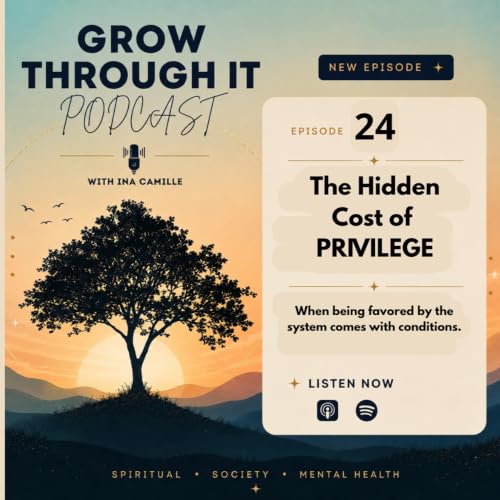
  • 𝗘𝗽𝗶𝘀𝗼𝗱𝗲 𝟮𝟰: 𝗧𝗵𝗲 𝗛𝗶𝗱𝗱𝗲𝗻 𝗖𝗼𝘀𝘁 𝗼𝗳 𝗣𝗿𝗶𝘃𝗶𝗹𝗲𝗴𝗲
    2026/08/30

    What if privilege isn’t just about what a system gives you, but also about what that system asks of you in return?

    In this episode of Grow Through It, Ina explores privilege through a systems lens, moving beyond the idea that privilege means having an easy or struggle-free life. We’ll look at white privilege, attractiveness privilege, gender, ability, status, and other forms of advantage, and explore an often-overlooked truth: a system can advantage you while still constraining you.

    We’ll also unpack conditional privilege—what happens when access, approval, or belonging depends on staying attractive, thin, successful, productive, young, able-bodied, or close enough to whatever the system considers ideal.

    This isn’t about denying inequality or suggesting that everyone is harmed equally. It’s about asking a bigger question:

    What if being favored by a system isn’t the same thing as being free from it?

    And in this episode’s Grow Through It / Walk Through It, you’ll be invited to locate yourself within the systems around you, where you hold advantages, where you encounter barriers, and where you may have learned to maintain your position at the expense of yourself or someone else.

    Because the goal isn’t guilt. It’s awareness, responsibility, and ultimately, collective liberation.

    続きを読む 一部表示
    41 分
  • 𝗘𝗽𝗶𝘀𝗼𝗱𝗲 𝟮𝟯: 𝗪𝗵𝗮𝘁 𝗜𝗳 𝗬𝗼𝘂𝗿 𝗦𝗼𝗰𝗶𝗮𝗹 𝗔𝗻𝘅𝗶𝗲𝘁𝘆 𝗜𝘀𝗻’𝘁 𝗝𝘂𝘀𝘁 𝗔𝗯𝗼𝘂𝘁 𝗬𝗼𝘂?
    2026/08/16

    What if your social anxiety isn’t happening entirely inside of you?

    In this episode of Grow Through It, Ina gets vulnerable about her own evolving relationship with social anxiety, including a recent presentation that left her far more anxious than she expected and prompted a bigger question: Why do some environments allow us to feel completely like ourselves, while others seem to make us shrink, monitor, and second-guess ourselves?

    We explore what social anxiety actually is, how self-monitoring can create a feedback loop of nervous-system activation, and the complicated intersection between social anxiety, high sensitivity, empathy, and our ability to read a room.

    We’ll also zoom out from the individual to examine the environment. Because sometimes you may be accurately noticing tension, discomfort, hierarchy, or subtle social cues, even if anxiety doesn’t always interpret those cues accurately.

    And in this episode’s Grow Through It / Walk Through It, you’ll examine the environments where you feel most—and least—like yourself, what your nervous system may be responding to, and how to stay connected to yourself even when the room changes.

    Healing social anxiety isn’t only about learning how to feel comfortable everywhere. Sometimes it’s also about becoming curious about where you are, what you’re sensing, and what happens to you when you’re there.

    続きを読む 一部表示
    36 分
  • 𝗘𝗽𝗶𝘀𝗼𝗱𝗲 𝟮𝟮: 𝗛𝗼𝘄 𝗧𝗵𝗲 “𝗜𝘀𝗺𝘀” 𝗕𝗲𝗰𝗼𝗺𝗲 𝗨𝘀
    2026/08/02

    *Due to technical challenges, last week's episode was delayed*


    What if many of the beliefs you hold about yourself were taught, not chosen?


    In this episode, we’re exploring how the “isms”—capitalism, racism, sexism, ableism, classism, and other systems of power— shape the way we think about our worth, our relationships, our success, and even our ability to rest.


    Using psychology, trauma research, and systems thinking, we’ll examine how these forces become internalized over time and why so many of the struggles we experience are bigger than individual willpower.


    We’ll also reflect on recent cultural moments and ask a deeper question:

    What do these conversations reveal about the invisible rules we’ve all been taught to live by?


    Resources & References

    The ideas explored in this episode are informed by the work of the following researchers, clinicians, and scholars:

    • ​Dr. Gabor Maté – Trauma, attachment, addiction, and the mind-body connection
    • ​Dr. Bruce Perry – Neurosequential Model, childhood trauma, and brain development
    • ​The Adverse Childhood Experiences (ACEs) Study – Felitti, V. J., Anda, R. F., and colleagues
    • ​Dr. Bruce McEwen – Allostasis and allostatic load (how chronic stress affects the brain and body)
    • ​Dr. Peter Sterling – Co-developer of the concept of allostasis

    These works have profoundly influenced the trauma-informed perspective shared throughout this episode and are recommended for anyone interested in learning more.


    続きを読む 一部表示
    37 分
  • 𝗘𝗽𝗶𝘀𝗼𝗱𝗲 𝟮𝟭: 𝗪𝗲𝗹𝗰𝗼𝗺𝗲 𝗕𝗮𝗰𝗸! 𝗕𝗲𝘆𝗼𝗻𝗱 𝘁𝗵𝗲 𝗜𝗻𝗱𝗶𝘃𝗶𝗱𝘂𝗮𝗹: 𝗦𝗲𝗲𝗶𝗻𝗴 𝘁𝗵𝗲 𝗦𝘆𝘀𝘁𝗲𝗺𝘀 𝘁𝗵𝗮𝘁 𝗦𝗵𝗮𝗽𝗲 𝗨𝘀
    2026/07/13

    What if the problem isn’t the person?

    So much of the way we understand behavior starts with the individual. We ask what’s wrong, why someone acts the way they do, or how they can change. But what if that’s only part of the story?

    In this episode, we explore how families, schools, workplaces, communities, and culture shape our thoughts, emotions, identities, and behaviors. Drawing from trauma-informed practice, systems thinking, and the work of Dr. Gabor Maté, we’ll examine why many of the traits we call “personality” are actually adaptations to the environments we’ve lived in.

    When we shift our focus from blame to context, we don’t excuse harmful behavior, we understand it more fully. And that understanding opens the door to deeper healing, more effective solutions, and greater compassion for ourselves and others.

    If you’ve ever wondered why personal growth sometimes isn’t enough, this conversation is for you.


    続きを読む 一部表示
    16 分
  • 𝗚𝗿𝗼𝘄 𝗧𝗵𝗿𝗼𝘂𝗴𝗵 𝗜𝘁: 𝗕𝗼𝗻𝘂𝘀 𝗦𝗲𝗿𝗶𝗲𝘀 𝗣𝘁. 2
    2026/06/28

    While I rest and prepare for Season 3 of Grow Through It, I’m revisiting a few powerful conversations from my podcast archives that continue to feel deeply relevant today.


    This two-part conversation originally aired on Come Through, Liberation! and explores the intersection of Black mental health, healing, and collective liberation with Dr. Phillip Roundtree.


    Although the conversation was recorded years ago, the questions remain just as important:


    How does healing connect to liberation? What role does mental health play in creating the world we want to live in?


    Old conversation. New context. Same purpose.


    Season 3 of Grow Through It returns in July.

    続きを読む 一部表示
    44 分
  • 𝗚𝗿𝗼𝘄 𝗧𝗵𝗿𝗼𝘂𝗴𝗵 𝗜𝘁: 𝗕𝗼𝗻𝘂𝘀 𝗦𝗲𝗿𝗶𝗲𝘀 𝗣𝘁. 𝟭
    2026/06/14

    While I rest and prepare for Season 3 of Grow Through It, I’m revisiting a few powerful conversations from my podcast archives that continue to feel deeply relevant today.


    This two-part conversation originally aired on Come Through, Liberation! and explores the intersection of Black mental health, healing, and collective liberation with Dr. Phillip Roundtree.


    Although the conversation was recorded years ago, the questions remain just as important:


    How does healing connect to liberation? What role does mental health play in creating the world we want to live in?


    Old conversation. New context. Same purpose.


    Season 3 of Grow Through It returns in July.

    続きを読む 一部表示
    53 分
  • 𝗘𝗽𝗶𝘀𝗼𝗱𝗲 𝟮𝟬: 𝗕𝗲𝗳𝗼𝗿𝗲 𝗪𝗲 𝗚𝗲𝘁 𝗜𝗻𝘁𝗼 𝗦𝗲𝗮𝘀𝗼𝗻 𝟯…
    2026/05/31

    Season 2 began as a conversation about healing.


    What I didn’t expect was how often the conversation would lead us back to survival.


    Throughout this season of The Grow Through It Podcast, we’ve explored workplace culture, trauma, self-abandonment, authenticity, relationships, identity, emotional labor, and the environments that shape us. Again and again, one truth kept emerging: many of us are navigating systems and circumstances that make it difficult to stay connected to ourselves.


    In this season finale, I’m reflecting on the biggest lessons from Season 2 and the themes that continued to surface across episodes, guests, and conversations with listeners.


    Together, we’ll explore:


    🎙️How survival changes people

    🎙️Why healing isn’t just an individual responsibility

    🎙️The discomfort that often accompanies growth

    🎙️What it means to reconnect to aliveness in a world that often rewards functioning over flourishing


    We’ll also talk about the role of systems, environments, relationships, and community in shaping our experiences, and why I believe healing requires us to look beyond ourselves without losing connection to ourselves.


    One thing I’ve learned this season is that healing is not simply about understanding our wounds. It’s also about examining the conditions that created them, the adaptations that helped us survive, and the practices that help us come alive again.


    As we close Season 2 and look ahead to Season 3, I want to hear from you:


    What conversation impacted you most this season?


    And perhaps more importantly…


    What are you currently growing through?


    Thank you for being part of this journey.


    Let’s keep growing through it together.🙏🏾

    続きを読む 一部表示
    16 分
  • 𝗘𝗽𝗶𝘀𝗼𝗱𝗲 𝟭𝟵: 𝗧𝗵𝗲 𝗡𝗲𝗿𝘃𝗼𝘂𝘀 𝗦𝘆𝘀𝘁𝗲𝗺 𝗖𝗼𝘀𝘁 𝗼𝗳 𝗦𝘂𝗿𝘃𝗶𝘃𝗶𝗻𝗴 𝗪𝗼𝗿𝗸𝗽𝗹𝗮𝗰𝗲 𝗖𝘂𝗹𝘁𝘂𝗿𝗲
    2026/05/17

    What happens when your nervous system adapts to surviving workplace culture instead of living fully within it?

    In this episode of Grow Through It Podcast, Ina Camille explores the hidden emotional and physiological cost of navigating chronic stress, emotional labor, hypervigilance, burnout, and survival mode in workplace environments, especially for Black women and marginalized communities.

    This conversation dives into:

    • how the nervous system responds to emotionally unsafe environments
    • the difference between emotional maturity and emotional capacity
    • survival adaptations like perfectionism, over-functioning, and emotional suppression
    • the impact of chronic workplace stress on relationships, identity, and self-connection
    • why healing must remain systems-aware and not purely individualistic

    Through psychoeducation, storytelling, and trauma-conscious insight, this episode invites listeners to move away from shame and toward deeper self-understanding.

    Because sometimes your exhaustion is not personal failure.
    Sometimes it’s what happens when your body has been carrying too much for too long.


    Follow Ina Camille on Instagram:
    @inacamillecoaches


    続きを読む 一部表示
    35 分