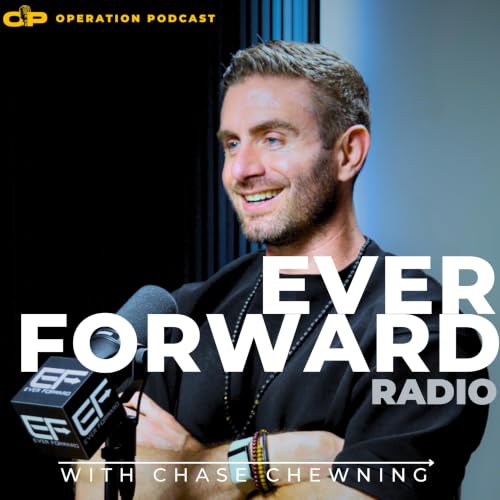
『Ever Forward Radio with Chase Chewning』のカバーアート

Ever Forward Radio with Chase Chewning

Ever Forward Radio with Chase Chewning

著者: Operation Podcast
無料で聴く

今ならプレミアムプランが3カ月 月額99円

2026年5月12日まで。4か月目以降は月額1,500円で自動更新します。

概要

Hi, I'm Chase Chewning (@chase_chewning on Instagram) and this is the podcast that is devoted to help you build a life that propels you forward - EVER FORWARD. Conversations with industry leaders in health and wellness, personal development, entrepreneurship, celebrities and entertainers, creatives, military and so much more. I am a US Army veteran, ACE Certified Health Coach, and I hold a BS in Exercise Science and MS in Health Promotion and currently live in Los Angeles, CA.2026 個人的成功 自己啓発 衛生・健康的な生活
エピソード
  • EFR 935: Future-Proof Your Brain from Dementia and Stay Sharp at Any Age with Tommy Wood
    2026/04/20
    This episode is brought to you by Strong Coffee Company, WHOOP, Caldera Lab and Audible. Boost mental sharpness today and prevent cognitive decline tomorrow, including Alzheimer's disease, with science-backed strategies that will extend your brain's longevity beyond what you thought was possible. The most important part of the body, especially as we age, is our brain. So why aren't we taking the health of our brain as seriously as our heart and achy joints, particularly when people are struggling to focus every day, and dementia and Alzheimer's cases continue to rise? In The Stimulated Mind, Dr. Tommy Wood, a Formula 1 sports performance coach and neuroscientist specializing in lifelong brain health, dispels the myth that the brain is doomed to decline with age. Instead, by providing the right stimulus and building more "headroom"—the amount of mental function we have available to us—we can help our brain to adapt and develop. Follow Tommy @drtommywood Follow Chase @chase_chewning ----- 00:00 – Can up to 70% of dementia be prevented? 00:17 – Why skill-building protects the brain 00:34 – The belief about aging that becomes self-fulfilling 01:55 – Why we're overstimulated and under-stimulated at the same time 03:00 – Train your brain like you train your body 04:28 – Why rest, recovery, and sleep matter for brain performance 05:59 – Brain function is more malleable than most people think 07:15 – Why failure is the primary driver of neuroplasticity 08:22 – Crossword puzzles vs real cognitive challenge 09:40 – What people think is helping brain health, but isn't enough 11:53 – The placebo effect and why "something" can still help 12:28 – Why crosswords help less than you think 14:04 – What it actually means to "stimulate" the brain 15:43 – Why education and complex skills delay cognitive decline 17:05 – Brain clocks, biological age, and measuring brain aging 19:15 – What dancers, artists, gamers, and musicians all have in common 20:23 – It matters less what you do than how hard you engage 22:49 – The truth about the 10,000 hour rule 24:08 – Can video games actually help the brain? 27:40 – The best way to combine learning and application 29:52 – The brain as an adaptation machine 31:11 – How immersion and environment accelerate learning 33:09 – Why some people thrive under pressure and others shut down 35:33 – Is there really a difference between brain and mind? 38:08 – Belief, performance, and the neuroscience of "I can" vs "I can't" 40:25 – What happens in the brain when you think you can't do something 44:27 – Stress-is-bad vs stress-is-enhancing mindsets 50:49 – Can your own beliefs override what you're told? 53:24 – Growth mindset and why belief changes performance 54:30 – Why people lose belief in themselves 56:23 – Self-compassion, process, and staying engaged long-term 58:35 – Mindfulness, presence, and learning as an adult 01:02:02 – Can these habits really prevent Alzheimer's and dementia? 01:02:45 – The real dementia risk numbers: 45% to 70% 01:03:29 – Biggest modifiable risk factors for dementia 01:04:29 – Hearing aids, cataracts, and reversing hidden risk 01:06:26 – Why dementia risk is massively modifiable 01:07:21 – Alzheimer's vs vascular dementia explained 01:09:23 – Why women have historically carried more Alzheimer's burden 01:10:03 – Education, equality, and declining dementia rates 01:15:03 – Where boredom fits into brain health and performance 01:16:02 – Pomodoro, deep work, and cognitive recovery 01:17:06 – Why boredom may be essential for creativity 01:19:24 – Treat your brain like a cognitive athlete 01:20:11 – Creatine for brain health: hype or helpful? 01:25:19 – Best-supported supplements for cognitive performance 01:27:20 – Omega-3s, B vitamins, vitamin D, and iron 01:29:03 – Magnesium, zinc, choline, and antioxidants 01:31:20 – Cognitive headroom: reserve, resilience, and resolve 01:35:33 – What "Ever Forward" means to Tommy Wood ----- Episode resources: Save 15% on organic coffee and lattes with code CHASE at https://www.StrongCoffeeCompany.com/chaseGet a FREE activity tracker at https://www.Join.WHOOP.com/everforwardSave 20% on my favorite men's skincare with code EVERFORWARD at https://www.CalderaLab.comWatch and subscribe on YouTubeGet Tommy's new book The Stimulated Mind and get the audiobook for FREE with your 30-day trial of Audible
    続きを読む 一部表示
    1 時間 39 分
  • EFR 934: Unsingle - How to Date Smarter and Create Love That Lasts with Amy Chan
    2026/04/13

    This episode is brought to you by Audible, Ancient + Brave, Strong Coffee Company and Fatty15.

    Today we welcome relationship expert Amy Chan to break down the science of heartbreak, attachment patterns, and modern dating, revealing why breakups feel like addiction withdrawal and how high-performers often sabotage their healing by avoiding emotions instead of processing them. You'll learn how to stop ruminating on your ex, rebuild your identity after a breakup, and create new neural pathways through intentional action, as well as why strategies like "staying friends" or "winning the breakup" often backfire. Amy also shares her dating funnel framework, helping listeners understand how to move from casual dating to committed relationships while avoiding common pitfalls like confusing preferences with dealbreakers. This conversation is a powerful guide for anyone looking to move on faster, date smarter, and build healthier, more conscious relationships.

    Follow Amy @missamychan

    Follow Chase @chase_chewning

    -----

    00:00 – Why You Can't Skip the Pain of a Breakup

    00:28 – Feeling vs Avoiding Emotions

    00:58 – What Happens When You Suppress Pain

    01:26 – Meet Amy Chan

    01:51 – The Problem with Forcing Forgiveness

    02:47 – The Science of Breakup Withdrawal

    04:15 – Why Men Struggle More After Breakups

    05:26 – Rebound Relationships Explained

    06:30 – How Long It Really Takes to Heal

    08:40 – Your Brain on Heartbreak (Addiction Comparison)

    09:09 – Why No Contact Works

    10:12 – The Reality of Avoiding Your Ex

    11:11 – Why Doing Nothing Slows Healing

    12:07 – How to Stop Ruminating

    13:19 – Building New Neural Pathways

    14:38 – Trying to "Win" the Breakup

    15:57 – What to Do in the First 30 Days

    17:19 – How Friends Should Support You

    18:16 – Different Types of Breakups

    19:53 – Should You Ever Get Back Together?

    22:32 – Why Hooking Up with Your Ex Sets You Back

    23:21 – The Danger of Staying Friends Too Soon

    24:29 – Healing vs Avoidance

    25:47 – Pedestal vs Villain Mindsets

    27:32 – Living in Reality vs Fantasy

    29:19 – The Dating Funnel Explained

    31:03 – From Dating to Commitment

    32:29 – Biggest Dating Mistakes Today

    33:31 – Preferences vs Dealbreakers

    34:28 – Dating Skills vs Relationship Skills

    36:34 – How to Create Attraction on Dates

    39:14 – Desperation & Dating Energy

    41:25 – What Men Get Wrong on Dates

    42:04 – Dating After Long-Term Relationships

    44:23 – What Predicts Relationship Success

    45:16 – Why Your "Type" Is Holding You Back

    46:33 – The Dating Experiment That Works

    49:31 – Dating Apps vs Real-Life Connections

    51:27 – Optimizing Your Dating Profile

    53:02 – Best Cities for Dating

    54:54 – Aligning Strategy with Relationship Goals

    56:56 – Are You Delusional in Dating?

    58:30 – Money, Roles & Modern Relationships

    01:00:28 – Navigating Family & Cultural Differences

    01:02:30 – Final Lesson: Keep Your Heart Open

    01:03:27 – What Relationships Are Really For

    01:04:09 – How to Move Ever Forward in Love

    -----

    Episode resources:

    • FREE 30-day trial of Audible at https://www.AudibleTrial.com/everforward
    • 20% off True Creatine and True Biome with code EVERFORWARD at https://www.AncientAndBrave.com
    • 15% off organic lattes and coffee with code CHASE at https://www.StrongCoffeeCompany.com/chase
    • 15% off C15:0 essential fatty acid with code EVERFORWARD at https://www.Fatty15.com/everforward
    • Watch and subscribe on YouTube
    • Get Amy's new book Unsingle
    続きを読む 一部表示
    1 時間 14 分
  • EFR 933: How to Rewire Your Attachment Style & Stop Self-Sabotaging Relationships with Thais Gibson
    2026/04/09

    This episode is brought to you by Timeline and WHOOP.

    Today we sit down with licensed therapist and attachment expert Thais Gibson to break down how your attachment style, subconscious programming, and core wounds shape your relationships, performance, and daily behavior. We explore the four attachment styles (anxious, avoidant, fearful, secure), how childhood conditioning drives adult patterns, and—most importantly—how to rewire your subconscious mind using practical neuroscience-backed tools. If you've ever struggled with people-pleasing, fear of abandonment, emotional disconnection, or repeating toxic relationship patterns, this conversation offers actionable strategies to build secure attachment, emotional resilience, and high performance from the inside out.

    Follow Thais @thepersonaldevelopmentschool

    Follow Chase @chase_chewning

    -----

    00:00 – Why you can't outwork your subconscious mind

    00:39 – You're not stuck: attachment styles can be rewired

    02:20 – Why attachment theory matters for personal growth

    03:01 – Don't label yourself—understand your patterns

    04:04 – How attachment styles form in childhood

    05:07 – What actually creates anxious attachment

    08:53 – What are attachment styles? (Simple breakdown)

    09:11 – The 4 attachment styles explained

    10:26 – Why secure attachment leads to better relationships

    12:20 – How trauma and life events reshape attachment

    14:10 – Anxious attachment: core wounds & behaviors

    19:39 – Dismissive avoidant: emotional suppression patterns

    24:00 – Fearful avoidant: trauma, inconsistency & chaos

    28:38 – Empathy vs hypervigilance (key difference)

    33:08 – The 5 pillars of healing attachment styles

    34:35 – Do high performers have insecure attachment?

    37:11 – Why adversity + support creates growth

    39:58 – Needs vs core wounds (what drives behavior)

    41:56 – Why goals fail (subconscious vs conscious mind)

    44:18 – How to rewire limiting beliefs (step-by-step)

    52:28 – The 21-day subconscious rewiring method

    57:18 – Can you "switch" attachment styles?

    59:46 – Superpowers of each attachment style

    01:00:25 – Nervous system regulation vs root healing

    01:04:10 – Practical ways to calm your nervous system

    01:06:39 – Somatic processing to stop emotional triggers

    01:11:00 – Taking responsibility (even if it's not your fault)

    01:15:17 – Why you repeat relationship patterns

    01:17:56 – The fastest way to find your blind spots

    01:20:13 – Small daily self-betrayals that shape your life

    01:24:20 – Communication mistakes that ruin relationships

    01:28:20 – How to express needs effectively

    01:34:29 – What "Ever Forward" really means

    -----

    Episode resources:

    • Get MitoPure urolithin A for as little as $79 at https://www.Timeline.com/everforward
    • Get a FREE activity tracker and Peak FREE for one month at https://www.Join.Whoop.com/everforward
    • Watch and subscribe on YouTube
    • This is an Operation Podcast production
    続きを読む 一部表示
    1 時間 40 分
まだレビューはありません