エピソード

  • Getting Your Life Back: What Recovery Really Looks Like | Marci Hopkins, Part 3
    2026/09/25

    What does rebuilding your life after alcohol addiction actually look like—and how do you stay sober when recovery feels overwhelming?

    In Part 3 of Marci Hopkins’ story on Addiction Talk, Marci moves from her past into the practical side of recovery, sharing the tools, mindset shifts, and daily practices that helped her build a life she no longer wanted to escape from.

    Marci discusses changing the way she thought about herself through practices such as gratitude, meditation, spirituality, and positive affirmations. She recalls a powerful moment in recovery when she was finally able to say out loud, “I love myself.”

    She also talks about the challenges of early sobriety, including the first 30 to 90 days, facing emotions without alcohol, recognizing triggers and cravings, and learning grounding techniques. Marci emphasizes the importance of community, 12-step support, therapy, and giving yourself grace while building a foundation for long-term recovery.

    Nearly 11 years into her recovery, Marci says the work has been worth it.

    Early on, she imagined that someday she might be able to drink again—perhaps sitting on her front porch with a glass of wine. Today, she says she doesn't want alcohol back in her life. Instead of worrying about staying sober forever, she learned to focus on one day at a time—sometimes one minute or even one second at a time.

    In Part 3, Marci and host Joy Sutton discuss:

    • What rebuilding your life in recovery can look like
    • Changing your thinking after addiction
    • The challenges of the first 30–90 days of sobriety
    • Managing alcohol cravings and triggers
    • Grounding techniques for difficult moments
    • Why community and support matter in recovery
    • The role therapy played in Marci's journey
    • Gratitude, meditation, and self-worth
    • Why recovery is worth the work
    • Staying sober one day at a time
    • Building a recovery “toolbox”
    • Learning to believe that you are worthy of a better life

    Marci also shares practical techniques she uses to stay present, including a daily gratitude practice, breathing exercises, and sensory grounding methods that can help bring attention back to the present moment when emotions, cravings, or anxiety become overwhelming.

    And she closes the conversation with a message for anyone who may be struggling:

    Your past does not define you. You are capable. You are worthy.

    Marci says the worth that addiction and pain can make someone lose sight of is still there—and that recovery can offer the opportunity to rediscover it.

    If you or someone you love is struggling with alcohol or addiction, help is available.

    Watch Parts 1 and 2 of Marci Hopkins’ story on Addiction Talk to hear how her journey began and the experiences that led her to recovery.

    Addiction Talk is brought to you by American Addiction Centers, a leading provider of addiction and mental health services.

    Addiction Talk is brought to you by American Addiction Centers. If you or someone you know needs help, call 866-407-4130, or visit our website at AmericanAddictionCenters.org

    続きを読む 一部表示
    17 分
  • Childhood Trauma, Alcohol & the Life No One Could See | Marci Hopkins, Part 2
    2026/09/25

    How can childhood trauma shape someone’s relationship with alcohol—and why can addiction remain hidden even when life looks successful from the outside?

    In Part 2 of Marci Hopkins’ story on Addiction Talk, Marci takes us back to where her relationship with alcohol began and shares the painful experiences that followed her from childhood into adulthood.

    Marci recalls having her first drink around age eight and getting drunk for the first time at 12. She also opens up about childhood sexual abuse, feeling unsafe at home, struggling with her self-worth, and eventually using alcohol as a way to escape. As she got older, drinking became an increasingly constant part of her life.

    But from the outside, Marci’s life could look very different.

    She built a successful career in media, moved to Los Angeles, got married, and continued moving forward professionally—all while alcohol remained a regular part of her life. Marci describes herself as having been a high-functioning alcoholic, even though at the time she would not have identified herself that way.

    Marci and host Joy Sutton also explore how comparing your drinking to other people’s drinking can make it easier to convince yourself that you don’t have a problem. Marci explains how she surrounded herself with people who drank like she did—or more—which made her own drinking seem less concerning.

    In Part 2, Marci discusses:

    • Childhood trauma and alcohol use
    • Drinking at an early age
    • Using alcohol to cope and escape
    • How trauma affected her self-worth and relationships
    • Building a successful life while continuing to drink
    • What high-functioning alcoholism looked like in her life
    • Why comparing your drinking to others can be dangerous
    • Addiction and family history
    • Forgiveness and letting go of the past
    • Why feeling wounded doesn't mean you're broken
    • Rebuilding your life in addiction recovery

    Marci ultimately shares an important shift in how she came to view sobriety: instead of thinking she was giving up alcohol, she began to see recovery as getting her life back.

    As she puts it, a life built on an unstable foundation can come crashing down—but recovery provides an opportunity to rebuild that life one brick at a time.

    In Part 3, Marci explains what that rebuilding actually looked like for her, including changing her thinking, navigating cravings and triggers, finding support, practicing gratitude, and learning to live one day at a time.

    If you or someone you love is struggling with alcohol or addiction, help is available.

    Continue with Part 3 of Marci Hopkins’ recovery story on Addiction Talk.

    Addiction Talk is brought to you by American Addiction Centers, a leading provider of addiction and mental health services.

    Addiction Talk is brought to you by American Addiction Centers. If you or someone you know needs help, call 866-407-4130, or visit our website at AmericanAddictionCenters.org

    続きを読む 一部表示
    15 分
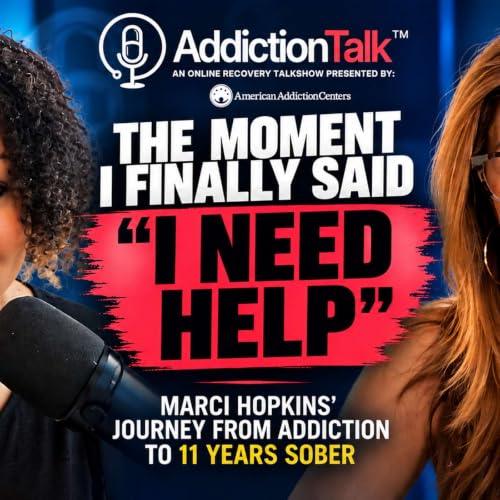
  • High-Functioning Alcoholism: Marci Hopkins’ Journey From Addiction to 11 Years Sober | Part 1
    2026/09/25

    Can someone look successful on the outside while struggling with alcohol addiction behind the scenes?

    In Part 1 of Marci Hopkins' story on Addiction Talk, Marci opens up about the years she spent hiding her struggle with alcohol, the shame and exhaustion she experienced, and the moment that ultimately changed the direction of her life.

    After waking up following a DUI, Marci reached a point where she knew something had to change. She describes what surrender really meant for her, walking into an AA meeting for the first time, and realizing that asking for help wasn't a sign of weakness.

    Marci also shares how she became skilled at hiding her drinking. Despite building a career, appearing successful, and keeping a smile on her face, she says she was breaking down inside. Then, on October 4, 2015, she sat in front of her husband and said three words:

    "I need help."

    Those words became a turning point in a recovery journey that has now lasted nearly 11 years.

    In Part 1, Marci and host Joy Sutton discuss:

    • What high-functioning alcohol addiction can look like
    • Hiding an alcohol problem from friends and family
    • The exhaustion of pretending everything is okay
    • What surrender means in addiction recovery
    • Why asking for help takes strength
    • Pride and ego as barriers to getting help
    • Finding community in early sobriety
    • Marci's first experiences with AA
    • The three words that changed her life

    And this is only the beginning of Marci's story.

    In Part 2, Marci goes back to where her relationship with alcohol began, including childhood trauma, drinking at a young age, and the experiences that shaped her relationship with alcohol as she grew into adulthood.

    If you or someone you love is struggling with alcohol or addiction, help is available.

    Watch Part 2 to continue Marci Hopkins' recovery story.

    Addiction Talk is brought to you by American Addiction Centers, a leading provider of addiction and mental health services.

    Addiction Talk is brought to you by American Addiction Centers. If you or someone you know needs help, call 866-407-4130, or visit our website at AmericanAddictionCenters.org

    続きを読む 一部表示
    17 分
  • Why Finding Purpose Wasn’t Enough: Addiction, Relapse & Recovery | Jamie Leibert Part 3
    2026/09/04

    Why Finding Purpose Wasn’t Enough: Addiction, Relapse & Recovery | Jamie Leibert Part 3

    Description:
    Jamie Leibert had survived federal prison, built successful businesses, found adventure, and discovered something he believed was more powerful than addiction. But his recovery story wasn't that simple.

    In the conclusion of this three-part Addiction Talk conversation, Jamie gets candid about returning to drugs, the cycle of substance use that followed him for years, and the realization that passion and success alone couldn't solve everything.

    Jamie explains why he eventually had to change his environment, telling Joy, “I can't be sober and in a toxic environment.” He also discusses the importance of his wife, his support network, boundaries, and continuing to understand the trauma that contributed to his addiction.

    The conversation ultimately comes full circle as Jamie discusses the life he's built today, his relationship, adventure, wingsuiting, and his ongoing pursuit of becoming the best version of himself.

    Listen to the conclusion of Jamie Leibert's powerful story of addiction, prison, relapse, purpose, and personal transformation.

    Addiction Talk is brought to you by American Addiction Centers, a leading provider of addiction and mental health services.

    Addiction Talk is brought to you by American Addiction Centers. If you or someone you know needs help, call 866-407-4130, or visit our website at AmericanAddictionCenters.org

    続きを読む 一部表示
    19 分
  • He Found Something More Powerful Than Addiction: Jamie Leibert’s Story | Part 2
    2026/09/04

    Jamie Leibert left federal prison with new tools and a new perspective—but he didn't walk out a completely changed man.

    In Part 2 of Addiction Talk, Jamie shares what happened after prison as he continued struggling with anger, addiction, relationships, and the unresolved trauma of his past.

    He explains how mixed martial arts taught him an unexpected lesson: instead of turning away when life hits you, sometimes you have to lean into it. That philosophy began changing the way Jamie approached problems, but even professional success and financial freedom weren't enough to keep him from returning to drugs.

    Eventually, Jamie discovered wingsuiting and adventure sports—and something powerful enough to change what he wanted from his life. As he tells Joy, “I found something more powerful than addiction.”

    But was finding purpose enough to keep him from going back?

    Continue with Part 3 as Jamie reveals what happened next—and what he ultimately learned about relapse, environment, support, and recovery.

    Addiction Talk is brought to you by American Addiction Centers, a leading provider of addiction and mental health services.

    Addiction Talk is brought to you by American Addiction Centers. If you or someone you know needs help, call 866-407-4130, or visit our website at AmericanAddictionCenters.org

    続きを読む 一部表示
    22 分
  • From Childhood Trauma to Federal Prison: Jamie Leibert’s Story | Part 1
    2026/09/04

    Description:
    How does a child who knows he has potential end up struggling with drugs and eventually serving time in federal prison?

    In Part 1 of this three-part Addiction Talk conversation, host Joy Sutton sits down with Jamie Leibert to explore the early experiences that shaped his life. Jamie opens up about childhood trauma, abandonment, drug use, self-destructive behavior, and the path that ultimately led him to federal prison.

    While in solitary confinement, Jamie reached a breaking point. Tired of hurting, feeling helpless, and blaming others for his life, he sought help from a prison therapist—a relationship that would begin changing the way Jamie saw himself, his past, and his future.

    But leaving prison wouldn't mean leaving addiction and anger behind.

    Continue with Part 2 to hear what happened when Jamie returned to life outside prison—and why changing his life proved much more complicated than he expected.

    Addiction Talk is brought to you by American Addiction Centers, a leading provider of addiction and mental health services.

    Addiction Talk is brought to you by American Addiction Centers. Looking for more addiction-related content? Follow us on YouTube, Instagram and TikTok @americanaddictioncenters!

    Addiction Talk is brought to you by American Addiction Centers. If you or someone you know needs help, call 866-407-4130, or visit our website at AmericanAddictionCenters.org

    続きを読む 一部表示
    25 分
  • Culture Is Medicine: A Native American Approach to Addiction Recovery | Linda Oxendine Part 3
    2026/08/21

    What happens when an entire community changes the way it responds to addiction?

    In the final part of Linda Oxendine's Addiction Talk: Expert Insights conversation, Linda shares the impact CORE North Carolina and its community partners have made in addressing opioid overdose and addiction in and around Robeson County.

    She shares powerful real-world examples of Narcan saving lives and explains why lasting change requires more than a short-term program. Communities need partnerships, addiction-trained healthcare professionals, education, trust and sustainable support.

    Linda also explores why culturally informed care is so important for Native American communities. She discusses reconnecting Lumbee Tribal Members with cultural traditions including dancing, drumming and talking circles—and explains why “culture is medicine.”

    The episode concludes with Linda's powerful message about how we should approach people experiencing addiction:

    “People are not projects to be fixed. They are sacred stories to be understood.”

    Addiction Talk is brought to you by American Addiction Centers, a leading provider of addiction and mental health services.

    Addiction Talk is brought to you by American Addiction Centers. If you or someone you know needs help, call 866-407-4130, or visit our website at AmericanAddictionCenters.org

    続きを読む 一部表示
    14 分
  • Addiction Is Not a Moral Failing: Trust, Narcan & Harm Reduction | Linda Oxendine Part 2
    2026/08/21

    How do you save lives when addiction is still viewed as a moral failing?

    In Part 2 of Linda Oxendine's conversation on Addiction Talk: Expert Insights, Linda explains how CORE North Carolina began challenging stigma and bringing harm reduction, Narcan education and addiction awareness directly into the community.

    Linda discusses working with faith leaders, educating families about substance use disorders, and breaking down the misconception that someone experiencing addiction can simply decide to stop using.

    She also explains why trust is essential when working with Native American communities and why helping someone doesn't always begin with treatment or abstinence. Sometimes it begins by meeting a person where they are, keeping them alive and walking alongside them until they're ready for something different.

    Linda's message is simple but powerful: addiction isn't a moral failing, and recovery cannot be forced.

    But did this approach actually work? In Part 3, Linda reveals what happened after years of community outreach—including lives saved from overdose and measurable changes in her community.

    Addiction Talk is brought to you by American Addiction Centers, a leading provider of addiction and mental health services.

    Addiction Talk is brought to you by American Addiction Centers. If you or someone you know needs help, call 866-407-4130, or visit our website at AmericanAddictionCenters.org

    続きを読む 一部表示
    16 分