エピソード

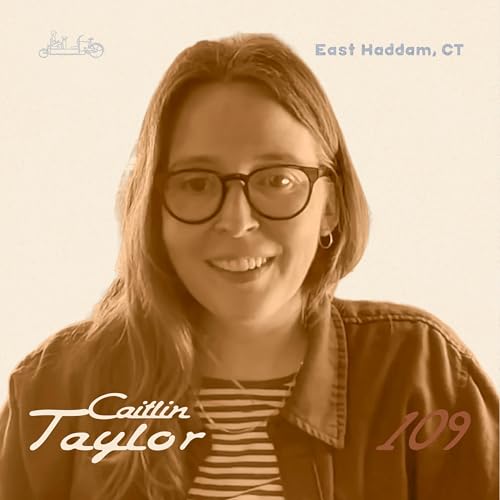
  • 109 / The missing middle of our food infrastructure / with Caitlin Taylor
    2026/05/05

    Caitlin Taylor — architect, farmer, and founder of Midcourse Design & Development — is in good traffic this week for a conversation about the missing middle of America's food system, and why architects need to understand farming, supply chains, and retail, en route to rebuilding regional infrastructure.


    We also touch on: Why architects rarely work on food infrastructure. The lived experience of running a certified organic farm. How Mass Design Group shaped her practice model. The missing middle between industrial and direct-to-consumer. Why most food businesses operate despite the built environment, not because of it. Regional processing as the bottleneck. Fiddleheads co-op in New London, Connecticut as an exemplar. Why independently owned grocery stores are so rare. Grocery store layout and fresh versus shelf-stable ratios. Projects coming soon that will demonstrate the Midcourse model.


    Timeline:

    00:00 Caitlin Taylor is in good traffic.

    05:35 The multidisciplinary studio model.

    07:24 Weaving architecture, operations, planning, and finance.

    08:02 How Caitlin started Midcourse.

    08:39 Being both an architect and a farmer.

    09:31 Living on a certified organic farm.

    10:19 The food world as a small, networked community.

    11:11 Only architect in a room of farmers, only farmer in a room of architects.

    12:02 When the realization happened.

    13:04 Husband becoming a farmer while Caitlin was in grad school.

    13:39 The wacky idea that food system architecture mattered.

    14:21 Joining Mass Design Group in 2016.

    14:41 Founding the Food Systems Design Lab.

    16:59 Testing what role architecture plays in regional food systems.

    20:53 Why Caitlin left Mass to start Midcourse.

    25:31 The missing middle of food infrastructure.

    31:15 Processing, storage, distribution, aggregation.

    37:00 Why regional infrastructure disappeared.

    43:03 Globalized consolidation and economies of scale.

    49:21 Making regional systems economically viable.

    55:12 How architects can help food businesses.

    56:01 Grocery stores as museums of regional food.

    56:48 Seasonal eating and living with the seasons.

    57:17 Fresh versus packaged shelf ratios.

    58:04 Where to see this in action.

    58:27 Fiddleheads co-op in New London, Connecticut.

    59:35 Independently owned cooperative grocery stores.

    1:00:25 Why co-ops are so rare and often fail.

    1:01:23 The commute question.

    1:01:55 200 feet from kitchen to farm wash station.

    1:03:02 Wrapping up.


    Links:

    More on Midcourse.

    続きを読む 一部表示
    1 時間 3 分
  • 108 / The single-family starter home trap / with Tahra Hoops
    2026/04/25

    Tahra Hoops — director of economic analysis at the Chamber of Progress and writer of The Rebuild — is back in good traffic this week for a conversation about financial nihilism, what happens when an entire generation stops believing homeownership is possible, and why the definition of "starter home" desperately needs an update. As Gen-Z watches record spending on concerts and short-term consumption coexist with near complete abandonment of long-term financial planning, Tahra breaks down the policy failures that created this mess, as well as the middle housing opportunities sitting right in front of us. And, how the politics of the likes of both Elizabeth Warren and Bernie Moreno are missing the moment in producing tangible housing policy solutions.

    The conversation dives into California's condo construction defect laws — arcane legislation that makes it financially impossible for developers to build the middle housing units that could actually serve as starter homes for young people. From townhomes to small condos, the housing types that used to be entry points into ownership have virtually disappeared, leaving renters stuck between unaffordable single-family homes and corporate-owned apartment buildings with no path to equity.

    We also touch on: The boomer economy and lack of investment in young generations. Why people spend $6,000 on Coachella but can't imagine owning a home. How fintech enables short-term consumption while destroying long-term planning. What a starter home actually means today. The Cost of Living Blueprint report. Why better Democrats need to enter the California governor race. City council as the sweet spot for policy wonks. Banning millennial gray hardwood floors.

    Timeline:

    00:00 Intro.

    07:44 Tahra Hoops returns to the show.

    08:03 What prompted the starter home piece.

    08:38 The boomer economy and lack of youth investment.

    09:37 Gen Z one versus Gen Z two split.

    10:16 Financial nihilism and scaling back.

    10:41 Evolving the starter home conversation.

    11:01 What is a starter home anymore?

    11:36 Coachella spending versus housing realities.

    12:19 Short-term consumption and long-term collapse.

    13:07 California condo defect laws.

    14:55 Why developers won't build condos.

    18:11 The missing middle housing shortage.

    22:26 Starter homes as typologies other than single-family.

    27:02 Financing and construction cost barriers.

    32:15 Rethinking what ownership looks like.

    37:43 Policy solutions beyond zoning reform.

    43:16 The Cost of Living Blueprint report.

    47:52 California governor race and runoff dynamics.

    53:33 State level politics as Parks and Rec documentary.

    54:30 City council as policy wonk sweet spot.

    56:41 Boomers love progress until it moves next door.

    58:07 Design and sneaking units past NIMBYs.

    58:51 Landscape architecture consultation requirements.

    59:42 Millennial gray hardwood floor ban proposal.

    1:00:51 The Rebuild newsletter and upcoming work.

    1:01:48 Wrapping up.


    Read more:

    A Starter Home is Whatever We Want it to Be.

    Subscribe to The Rebuild.

    Chamber of Progress Cost Of Living Policy Blueprint for 2026 Midterms.


    Follow:

    Tahra, on X.

    続きを読む 一部表示
    1 時間 3 分
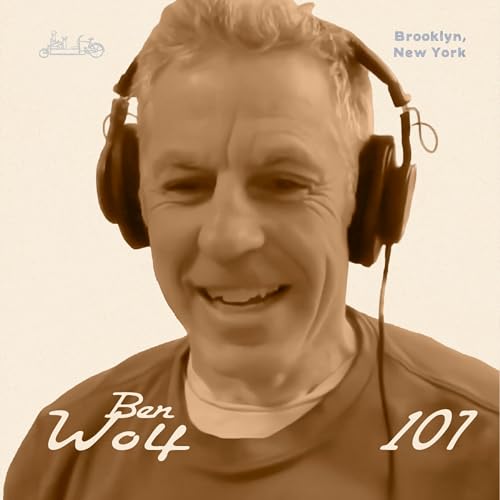
  • 107 / Streets as a microcosm of democracy / with Ben Wolf
    2026/04/17

    Ben Wolf — cinematographer and director of the documentary Changing Lanes — is in good traffic this week for a conversation about using a Brooklyn bike lane project as a lens for understanding democracy, infrastructure, and why America feels politically stuck.


    As the documentary begins its theatrical release in Los Angeles and prepares to stream on major platforms, Ben reflects on what local stories can teach national audiences and why good information matters more than ever.


    We also touch on: How the pandemic created space to pursue creative projects. Cycling's transformation from outsider activity to mainstream. Why streets are a proxy for bigger political problems. Mayors Bloomberg, Adams, and Mamdani's approaches to bike infrastructure and street safety. Renters versus owners in infrastructure debates. Car commercials as propaganda for the status quo. Why there's no equivalent marketing for walking and biking. Film festival reception and upcoming theatrical release. Sicily hill towns where streets have stairs, and walking ten minutes to the piazza for coffee.


    Timeline:

    00:00 Ben Wolf and Changing Lanes.

    07:23 Three years following a street redesign story.

    08:15 The pandemic as catalyst for directing.

    09:07 Wanting to explore local transportation and politics.

    09:41 Streets as illustrations of democracy.

    10:09 The locked public meeting.

    11:12 Finding the spine of the story.

    11:45 Housing debates bleeding into street fights.

    13:58 Renters versus owners and credibility claims.

    16:54 The broader political paralysis theme.

    16:01 Mamdani election and optimism for change.

    17:55 Bloomberg and Janette Sadik-Khan's rapid change era.

    19:39 Mayor Eric Adams' record.

    21:10 Why compromise feels impossible.

    26:21 Corporate car propaganda versus reality.

    30:48 Generations of automotive marketing.

    36:34 The counter-narrative we don't get.

    42:25 Making local stories nationally relevant.

    43:06 The problem of bad information.

    44:10 Car companies as propaganda experts.

    44:51 Documentaries as counter to corporate messaging.

    45:55 Theatrical release and streaming plans.

    46:47 Hosting screenings in your city.

    47:48 LA as the most car-centric place.

    48:08 Using Olympics as catalyst for change.

    48:33 The commute question.

    48:53 A vacation house in Sicily.

    49:22 Everything within a ten-minute walk.

    49:38 Wrapping up.


    Further context:

    Where to view the film, upcoming.

    Hosting a screening.

    続きを読む 一部表示
    51 分
  • 106 / Field notes from Oslo, Stockholm, & Copenhagen.
    2026/04/06

    Back stateside after a week in Scandinavia, and ready to share some field notes! Rather than just repeating what urbanists already know about Nordic bike infrastructure and cafe culture, we'll walk through the specific design choices that make these cities work, the surprising ways they differ from each other, and the sobering reality that even the best examples aren't perfect. For Americans dissatisfied but optimistic about what their cities could become, this audio offers part blueprint, part reality check.

    We start in Oslo, on to Stockholm, then Copenhagen.

    We also touch on: Why Oslo defers to pedestrians at every turn. Density without excessive height. Taking skis on the metro to the slopes from city center. Stockholm's Pittsburgh-like topography with bright buildings. Comparing car presence across Scandinavian cities. Copenhagen's bike rush hour. Simple gathering spots. How infrastructure enables social vibrancy. What US cities can learn from imperfect examples with common frictions.

    Timeline:

    00:00 Back from Scandinavia with quick takeaways.

    03:37 Oslo: the safest pedestrian experience ever.

    04:49 Speed limits never over 25 mph.

    05:11 Building heights: 3-6 stories, palatable density.

    06:26 Instant pedestrian signals at every crossing.

    07:14 Taking skis on the metro to the slopes.

    07:37 Stockholm: the most intriguing pedestrian experience.

    08:12 The archipelago geography and constant water views.

    09:01 Pittsburgh comparison.

    11:34 Stockholm as the most car-present Nordic city.

    13:28 Copenhagen: the bike capital reality check.

    16:45 Bike rush hour on Friday.

    18:22 Time-competitive transportation alternatives.

    20:37 Head on a swivel: navigating heavy bike traffic.

    22:06 Different speeds creating friction and attention.

    24:03 Building heights comparable to Stockholm.

    24:30 Surprisingly narrow sidewalks in many places.

    25:54 The most vibrant social environment ever witnessed.

    26:47 Window ledges as seating and gathering spots.

    27:32 How little it takes to facilitate social vibrancy.

    28:00 Wrapping up.

    続きを読む 一部表示
    28 分
  • 105 / Cities bet on millennials, but forgot they'd have kids / with Rachel Booth
    2026/03/14

    Rachel Booth — U.S. social policy writer at Vox — is in good traffic this week for a conversation about what happens when cities bet on millennials but forget they eventually have kids, why upzoning alone won't solve the family-sized housing shortage, and how to tell complex urban stories to audiences who need them most. As someone who has covered housing and homelessness for 15 years and is now 38.5 weeks pregnant while living in D.C. as a renter, Rachel brings both professional expertise and deeply personal stakes to the question of whether cities can actually work for families.

    Rachel walks through her Vox reporting on the stark reality facing urban America: large urban counties lost roughly 8% of their under-five population between 2020 and 2024, and in New York City, families with kids under six left at twice the rate of everyone else. She explains why even in cities that have successfully upzoned and increased housing production, the economics of development overwhelmingly produce studios and one- and two-bedroom apartments rather than the three- and four-bedroom units families need. The conversation shifts to Vox's approach to accessibility—how to make wonky housing policy compelling without dumbing it down—and Rachel's work on an upcoming book project that explores these themes further. From the challenge of translating podcasts into audiobooks to why transcript availability has changed journalism, the episode weaves between urbanism and the evolving media landscape that shapes how these ideas spread.

    We also touch on: Why vacancy rates don't tell the full housing story. The diversity cities lose when families leave. The economics of why developers don't build family-sized units. How Vox makes complex topics accessible. The tension between accessibility and depth. Rachel's book project and the audiobook problem. Why YouTube remains a question mark for writers. Baltimore to D.C. on the MARC train. Walking 40 minutes to the Vox office.

    Timeline:

    00:00 Rachel Booth from Vox.

    02:47 Cities and families as political common ground.

    03:28 Rachel's November piece on millennials and families.

    04:03 38.5 weeks pregnant and renting in D.C.

    04:32 The second piece on family-sized housing.

    05:07 Why upzoning produces studios and one-bedrooms.

    05:46 Vacancy rates versus housing types.

    07:14 Large urban counties lost 8% of under-five population.

    07:40 NYC families leaving at twice the rate.

    09:22 The diversity cities lose without families.

    12:18 Why developers don't build three-bedroom units.

    16:34 Construction costs and unit mix economics.

    21:45 Policy levers beyond upzoning.

    26:12 How Vox approaches accessibility.

    31:58 Making wonky topics compelling without dumbing down.

    37:24 The tension between depth and accessibility.

    42:19 Rachel's book project on housing.

    46:33 The audiobook versus podcast problem.

    49:40 Why conversations work better than monologues.

    52:12 YouTube as the big question mark.

    53:27 Podcast transcripts and journalism research.

    55:46 AI applications for podcasts.

    56:41 The commute question.

    57:07 Walking 40 minutes to the Vox office.

    57:24 Baltimore to D.C. on the MARC train.

    58:22 Wrapping up.


    Further context:

    Rachel's article: Cities made a bet on millennials — but forgot one key thing.

    Rachel's recent works.

    @rcobooth on Twitter.

    @rcobooth, on Instagram.

    続きを読む 一部表示
    59 分
  • 104 / Large-scale architecture's role & responsibility in urbanism / with Forth Bagley
    2026/03/05

    Forth Bagley — Principal Architect at KPF (Kohn Pedersen Fox) — is in good traffic this week for a conversation about designing at scale, threading the needle between progressive design and commercial realities, and why tall buildings owe a responsibility to the cities they define. As an architect involved in transforming places from Covent Garden, to Changi Airport, to Hudson Yards, to Central Hong Kong, Forth brings a strong perspective on what it takes to actually get ambitious projects built, and what happens when iconic architecture becomes the backdrop for everything — good and bad — in a city.

    Forth walks through how KPF finds itself embedded in neighborhoods for decades, often through clients who follow them across continents — like the developer who hired them in Hong Kong, then brought them to Covent Garden in London to upgrade what had become a tourist trap into a lifestyle destination for everyday Londoners. He explains how Hudson Yards, the largest private development in North American history, required building over active rail lines, threading complicated funding mechanisms, and pulling back architectural ambition at the right moments to ensure the project could actually get built and generate the tax revenue New York desperately needed. The conversation touches on Bill Pedersen's theory that tall buildings become the church spires of modern cities — responsible not just to owners but to skylines, wayfinding, and civic identity — and the uncomfortable reality that a decade-long project can launch in 2008 and emerge into a completely different world of Uber, Amazon deliveries, and viral photography.

    We also touch on: Why built precedent matters more than renderings. Threading the needle between pushing boundaries and staying on budget. Half of all designs ending up on the cutting room floor. Tall buildings as wayfinding tools and civic markers. Architecture as public relations and its downsides. Why Hudson Yards saved New York from deeper fiscal crisis. Austin's Waterline and green terraces. Hong Kong's seamless infrastructure.


    Timeline:00:00 Intro.02:24 Introducing Forth Bagley from KPF.02:47 The architect's perspective on the show.03:12 KPF's mission: elevating basic building blocks.03:47 From single buildings to neighborhoods over 50 years.04:09 How KPF gets hired for major projects.05:12 Covent Garden: from Hong Kong client to London.06:34 Upgrading a tourist trap for everyday Londoners.07:19 Hudson Yards: largest private development in North America.08:47 Building over active rail lines.09:12 The West Side as a net negative on tax rolls.10:33 Why built precedent matters.11:55 Threading the needle between ambition and reality.13:22 Half of designs end up on the floor.14:38 The difference between getting built and not.18:45 Bill Pedersen's theory of tall building responsibility.21:17 Tall buildings as church spires and civic markers.24:33 Looking different from different points of view.26:58 The responsibility to the skyline.31:42 Hudson Yards and the iPhone problem.34:19 Starting in 2008, emerging into a different world.38:27 Hudson Yards and New York's tax revenue crisis.41:53 Public school kids educated because of the project.44:14 Architecture as public relations problem.45:02 When iconic buildings become protest backdrops.46:21 Making buildings harmonious with existing skylines.47:07 Hudson Yards preventing fiscal disaster.47:51 Austin's Waterline and green terraces.48:14 The commute question.48:51 JFK to Hong Kong W hotel without stepping outside.49:42 Hong Kong's seamless infrastructure systems.50:02 Wrapping up.


    Further context:

    KPF's work.

    On Instagram.

    続きを読む 一部表示
    50 分
  • 103 / Super bowl economics, stadium financing, & sports as a land use / with Dominic Leonardo
    2026/02/25

    Dominic Leonardo — the urban planner and creator behind CityGlowUp — is back in good traffic this week for a conversation about the hidden costs of hosting major sporting events, why cities keep building stadiums they can't afford, and what a leaked 2013 Super Bowl bid book reveals about the NFL's demands. As cities across the country bond for billions to build new facilities hoping for economic windfalls, Dominic's recent videos expose financial inconsistencies that rarely make headlines — and why the math might never add up the way boosters claim.

    We also touch on: The Buffalo Bills and Kansas City Chiefs' new stadium deals. How economic impact studies overstate benefits. Parking requirements as a tax on density. Rhode Island's iterative approach to housing legislation. ADUs in existing non-conforming structures. Massachusetts transit-oriented development laws. Hasbro leaving Rhode Island for Boston. The Washington Bridge replacement project.


    *Apologies for the delay in getting this out - an illness slowed us down, last week.


    Timeline:

    00:00 Dominic Leonardo returns.

    02:47 CityGlowUp on YouTube.

    03:28 The economics of the Super Bowl video.

    04:08 The leaked 2013 NFL bid book.

    04:55 Tax exemptions and 35,000 free parking spaces.

    05:24 Are cities really seeing economic growth?

    05:41 Brad's biggest hypocrisy.

    06:33 Why stadium financing is so problematic.

    07:07 New England's unique approach to stadiums.

    07:42 The Buffalo Bills and Kansas City deals.

    08:25 Dallas Cowboys and public subsidies.

    11:18 Economic impact studies and their flaws.

    15:34 The cultural value of sports teams.

    19:47 Other CityGlowUp videos worth watching.

    24:12 Parking requirements as a hidden tax.

    29:38 Minimum lot sizes and exclusionary zoning.

    35:22 Rhode Island's housing production package.

    40:15 Iterative legislation year after year.

    44:50 ADUs in existing non-conforming structures.

    48:33 State preemption of local zoning.

    52:41 Comparing Rhode Island to Massachusetts.

    57:28 Transit-oriented development laws in Mass.

    1:01:15 Commuter rail bleeding into Rhode Island.

    1:04:22 The latest in Rhode Island land use.

    1:06:23 ADU regulations evolving rapidly.

    1:07:23 Hasbro leaving for Boston.

    1:07:38 Rhode Island versus other New England states.

    1:09:40 Wrapping up and future meetups.


    Further context:

    CityGlowUp on YouTube.

    On Instagram.

    On TikTok.

    続きを読む 一部表示
    1 時間 10 分
  • 102 / Public land, Ruben Gallego and federal housing plans, & loneliness / with Diana Lind
    2026/02/13

    Diana Lind — urbanist, author, and writer of The New Urban Order newsletter — is back in good traffic this week for a wide-ranging conversation about municipal public land, the loneliness epidemic, and why threading the needle between instant reactions and thoughtful responses matters more than ever. Diana's newsletter has become essential reading for anyone trying to make sense of urbanism's role in the cultural moment, and this episode breaks down several recent pieces that reveal how much untapped potential sits hidden in plain sight.


    Diana walks through her recent interview with Dr. George McCarthy from the Lincoln Institute of Land Policy, which uncovered that 276,000 acres of government-owned land sits within 1,000 feet of transit stations across the U.S. — most of it owned by local municipalities that don't even know what they have. She explains why this matters more than office conversions for solving the affordable housing crisis, how transit agencies could function as developers to fund their own operations, and what communities of practice around public land could accomplish. The conversation shifts to her piece on third places and loneliness, exploring why social media platforms tried to become digital gathering spaces, why they failed, and what the physical infrastructure of connection actually requires. From ads telling you to see your doctor from your couch to students demanding in-person classes after years of Zoom, Diana traces the countervailing forces shaping how—and whether — we show up in shared space.


    We also touch on: Why municipalities don't know what land they own. The Trump administration's public land sales. Office-to-housing conversions versus building on public land. How social media became anti-social. The drift toward staying home and the fight against it. Why kids don't play outside anymore (hint: it's the parking lots). Philadelphia's Rail Park and the 250th anniversary of the Declaration of Independence. Skiing 45 minutes from Philly.


    Timeline:

    00:00 Diana Lind returns to the show.

    03:02 Parsing out any individual newsletter.

    03:44 Today's letter: public land and transit.

    04:45 276,000 acres near transit stations.

    05:16 Municipalities don't know what they own.

    06:23 Trump administration selling federal buildings.

    07:16 Transit agencies as developers.

    08:07 Public land versus office conversions.

    12:18 The third places and loneliness piece.

    16:34 Why social media tried to be a third place.

    21:45 The failure of digital gathering spaces.

    26:12 What physical infrastructure requires.

    31:58 Countervailing messages about staying home.

    37:24 The drift and the fight against it.

    42:19 Why we're made to move and connect.

    46:33 Students demanding in-person classes.

    49:40 Ads selling comfort from your couch.

    50:33 The importance of built environment choices.

    52:34 Setting up the full question correctly.

    53:10 The coolest thing in Philadelphia this year.

    53:58 Skiing 45 minutes from Philly.

    54:26 The Rail Park and community involvement.

    55:11 Philly's 250th anniversary and World Cup games.

    55:49 Wrapping up.


    Further context:

    Subscribe to Diana's newsletter.

    Diana's site.

    続きを読む 一部表示
    56 分