

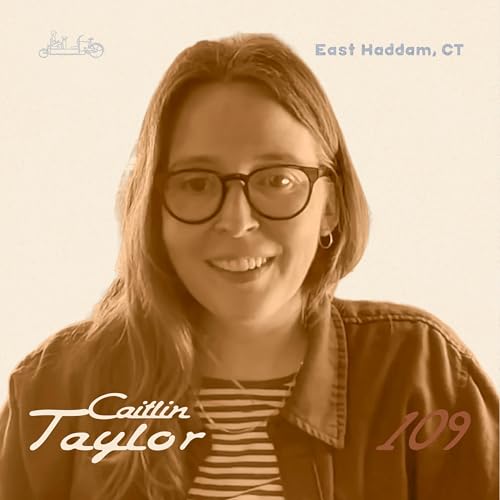
109 / The missing middle of our food infrastructure / with Caitlin Taylor
カートのアイテムが多すぎます
カートに追加できませんでした。
ウィッシュリストに追加できませんでした。
ほしい物リストの削除に失敗しました。
ポッドキャストのフォローに失敗しました
ポッドキャストのフォロー解除に失敗しました

109 / The missing middle of our food infrastructure / with Caitlin Taylor
-
ナレーター:
-
著者:
概要
Caitlin Taylor — architect, farmer, and founder of Midcourse Design & Development — is in good traffic this week for a conversation about the missing middle of America's food system, and why architects need to understand farming, supply chains, and retail, en route to rebuilding regional infrastructure.
We also touch on: Why architects rarely work on food infrastructure. The lived experience of running a certified organic farm. How Mass Design Group shaped her practice model. The missing middle between industrial and direct-to-consumer. Why most food businesses operate despite the built environment, not because of it. Regional processing as the bottleneck. Fiddleheads co-op in New London, Connecticut as an exemplar. Why independently owned grocery stores are so rare. Grocery store layout and fresh versus shelf-stable ratios. Projects coming soon that will demonstrate the Midcourse model.
Timeline:
00:00 Caitlin Taylor is in good traffic.
05:35 The multidisciplinary studio model.
07:24 Weaving architecture, operations, planning, and finance.
08:02 How Caitlin started Midcourse.
08:39 Being both an architect and a farmer.
09:31 Living on a certified organic farm.
10:19 The food world as a small, networked community.
11:11 Only architect in a room of farmers, only farmer in a room of architects.
12:02 When the realization happened.
13:04 Husband becoming a farmer while Caitlin was in grad school.
13:39 The wacky idea that food system architecture mattered.
14:21 Joining Mass Design Group in 2016.
14:41 Founding the Food Systems Design Lab.
16:59 Testing what role architecture plays in regional food systems.
20:53 Why Caitlin left Mass to start Midcourse.
25:31 The missing middle of food infrastructure.
31:15 Processing, storage, distribution, aggregation.
37:00 Why regional infrastructure disappeared.
43:03 Globalized consolidation and economies of scale.
49:21 Making regional systems economically viable.
55:12 How architects can help food businesses.
56:01 Grocery stores as museums of regional food.
56:48 Seasonal eating and living with the seasons.
57:17 Fresh versus packaged shelf ratios.
58:04 Where to see this in action.
58:27 Fiddleheads co-op in New London, Connecticut.
59:35 Independently owned cooperative grocery stores.
1:00:25 Why co-ops are so rare and often fail.
1:01:23 The commute question.
1:01:55 200 feet from kitchen to farm wash station.
1:03:02 Wrapping up.
Links:
More on Midcourse.