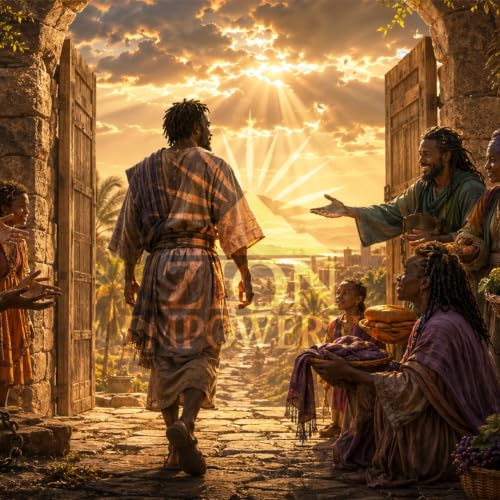
エピソード

  • THE HANDS THAT REMEMBER
    2026/08/02

    Scripture Readings: Psalm 116:1–9 John 20:24–29 Deuteronomy 8:11–18 Isaiah 49:14–16

    Last Sunday, we learned that the cloud still knows the way. This week, the cloud moves into the hands.

    The proud hand forgets. The wounded hand testifies. The hand of God remembers.

    JOHN 20:24–29

    The Absent Disciple and the Wounds That Produce Witness

    The center of this passage is not Thomas’s doubt.

    The center is Messiah entering a locked room and saying, “Peace be with you.”

    Thomas is often called “Doubting Thomas,” but Scripture calls him the Twin. He is a wounded disciple who missed the first appearance and now struggles to survive on somebody else’s encounter.

    DEUTERONOMY 8:11–18

    The Danger of Forgetting in a Good Season

    Moses does not say, “Be careful when you are hungry.”

    He says, “Be careful when you are full.”

    The text does not condemn prosperity. It condemns amnesia.

    Moses does not tell Israel, “Your hands did nothing.”

    He tells them, “Remember who gave your hands their strength.”

    No one is self-made.

    A mature testimony does not erase our labor. It places our labor inside the story of covenant, community, and grace.

    ISAIAH 49:14–16

    The Forgotten City and the God Who Cannot Forget

    Zion looks at her broken walls and reaches a conclusion about God:

    “The Lord has deserted us. The Lord has forgotten us.”

    This is not simple unbelief. It is wounded belief.

    God does not answer by pretending that the walls are not broken. God answers by revealing where those broken walls have been carried.

    “I have engraved you upon the palms of My hands. Your walls are continually before Me.”

    The wound is not proof that God has turned away.

    The wound is being carried within divine memory.

    The Ark Still Carries What Broke

    Healing does not always mean returning to the condition that existed before the wound. Sometimes healing means that what broke is no longer permitted to determine whether we are worthy of being carried.

    HEBREW WORDS FROM THE LESSON

    Shakhaḥ, שָׁכַח: To forget. To live as though deliverance and grace no longer matter.

    Zakhar, זָכַר: To remember. To bring the past into present behavior.

    Ko’aḥ, כֹּחַ: Strength, power, or capacity. God gives Israel the strength to produce.

    Kaf, כַּף: The palm or hollow of the hand, the place where something is held and kept near.

    Ḥaqaq, חָקַק: To engrave or inscribe permanently.

    Shalom, שָׁלוֹם: Peace, wholeness, and restored order. Shalom does not mean the wounds never occurred. It means they no longer control the future.

    QUESTIONS FOR REFLECTION

    What has pain or isolation caused you to miss?

    Which blessings are you most tempted to describe as personal achievement alone?

    What situation have you interpreted as evidence that God forgot you?

    Who has been edited out of the story of your success?

    Which scar is becoming testimony instead of shame?

    What broken part of your story might God still consider sacred?

    CLOSING THOUGHT

    Do not let success make you forget.

    Do not let suffering convince you that you have been forgotten.

    Do not let resurrection pressure you to hide every scar.

    The God who guided Israel through the wilderness still knows the way. The Messiah who entered the locked room still speaks peace. The God who heard Zion’s lament still declares:

    “I will not forget you.”

    The cloud still knows the way, and the hands still remember the story.

    続きを読む 一部表示
    36 分
  • THE CLOUD STILL KNOWS THE WAY

    2026/07/26

    THE CLOUD STILL KNOWS THE WAY

    Torah: Deuteronomy 1:29–33 Gospel: John 14:1–7 Psalm: Psalm 105:39–45

    For much of July, Anchorage lived beneath rain. Then the sun returned, and ordinary light felt like a gift. But Scripture reminds us not to lose our wonder when the clouds gather again. Israel was not led by clear skies. God went before them in a cloud by day and fire by night. The cloud did not reveal the whole wilderness. It revealed enough to obey.

    Sometimes the cloud is not hiding the road. Sometimes the cloud is saying, “This way.”

    Deuteronomy 1:29–33

    A — Do Not Fear

    “Have no dread or fear of them.”

    B — God Goes Before You

    “The Lord your God… will fight for you.”

    C — God Carries You

    “You saw how the Lord your God carried you, just as one carries a child.”

    B′ — God Goes Before You

    God seeks out the place to camp and shows Israel the route.

    A′ — Yet the People Fear

    “In spite of this, you have no trust in the Lord your God.”

    Israel’s fear did not stop God from going before them. Their confusion did not rewrite God’s character, and their unbelief did not stop the cloud from moving.

    Question: What act of God’s past faithfulness must you remember before interpreting what stands before you now?

    John 14:1–7

    A — Do Not Be Troubled

    “Do not let your hearts be troubled.”

    B — A Place Is Prepared

    “I go to prepare a place for you.”

    C — Messiah Gathers Us to Himself

    “I will come again and will take you to myself.”

    B′ — The Disciples Ask for the Route

    “Lord, we do not know where you are going. How can we know the way?”

    A′ — Messiah Is the Way

    “I am the way, and the truth, and the life.”

    Thomas asks for a map, but Messiah gives him himself. Faith is not having complete visibility. Faith is remaining near enough to follow the One who already stands in our tomorrow.

    Question: Where are you demanding a complete explanation when God may be inviting you into a deeper relationship?

    Questions for Reflection

    1. What might you be calling an obstruction that God may be using as guidance?
    2. Where might what feels like departure actually be preparation?
    3. What past deliverance must you remember before facing your present fear?
    4. Can you trust God when the cloud shows only the next step?
    5. What would it mean to remain near the One who is the Way?

    The sun may appear, the cloud may return, and the road may change. But the God who goes before us does not.

    The cloud still knows the way.

    続きを読む 一部表示
    35 分
  • When Salvation Stops
    2026/07/22

    Numbers 33 records where Israel departed, not only where they arrived. Luke 19 records the moment Messiah stopped walking through Jericho and stayed. This week's study, "When Salvation Stops," follows both texts through the stations of a journey — leaving Egypt's identity behind, turning back toward what we thought we escaped, facing the bitter water at Marah, and finding shade at Elim. God changes the meaning of the place, and the people who pass through it.

    Follow along with the full text at zionempowered.com, where you'll find the psalm, both scripture readings, the PaRDeS reflection, and the word study for each lesson. Then join us live every Sunday at 9:30 AM Alaska time — the Zoom link and all announcements are posted on the site. Everyone is welcome.

    続きを読む 一部表示
    33 分
  • A Vow of Holiness — When the Mist Rises —The Breath Between Waters
    2025/11/01

    Sunday Study – October 19, 2025

    Title: A Vow of Holiness — When the Mist Rises — The Breath Between Waters Texts:

    • Prophet: Jeremiah 35:5–11 — The Rechabites’ Vow
    • Torah / Creation: Genesis 2:4–17 — The Breath and the Garden
    • Psalm: Psalm 46 — “God is our refuge and strength”

    Episode Summary

    This teaching braided two seemingly distant scenes — a nomadic clan in Jeremiah who refuse wine in Jerusalem, and the earth in Genesis 2 that sends up a mist before any rain ever fell. Both are doing the same spiritual act: holy restraint.

    • The Rechabites show that covenant can be kept inside a bigger covenant — “a vow within the vow.”
    • Genesis 2 shows creation praying before humanity prays — the earth exhales, God responds.
    • Together they teach: holiness often begins not with what we do, but with what we refuse to do. Refusal can be worship.

    Key Ideas

    • Holiness as Refusal: “No” can be a liturgy. The Rechabites’ abstaining was obedience, not legalism.
    • Mist as First Prayer: The ’ed (אֵד) rising from the ground (Gen 2:6) = creation’s prayer before rain. Worship before worship.
    • Covenant Inside Covenant: Their family rule wasn’t Torah, but God still honored it — like church/denominational disciplines today.
    • Restraint = Ecology: Genesis 2 is not just theology; it’s a pattern for sustainable living — heaven gives, earth responds.
    • Pressure Test: The Rechabites stayed obedient even “when Babylon attacked” — holiness that survives crisis.

    Hebrew / Nerd Corner (keep in the notes)

    • ’ed (אֵד) — mist, vapor rising → prayer ascending.
    • neder (נֵדֶר) — vow, chosen boundary → holiness by consent.
    • adam / adamah (אָדָם / אֲדָמָה) — human from ground → reason the Rechabites stayed near the soil, not the palace.

    “Different Lenses” (for quick mention in the pod)

    • Western lens: “Why so strict?”
    • Hebraic lens: “Restraint preserves covenant.”
    • Prophetic lens: “Your ‘no’ today might save your grandchildren.”

    Discussion / Home Circle Questions

    1. Why does holiness so often sound like “don’t” instead of “do”?
    2. What are our “modern wines” — things not sinful, but distracting from covenant?
    3. How do we honor church/family rules without preaching them as Scripture?
    4. What would it look like for our prayer life to “rise like mist” before the storm?
    5. How can this Rechabite obedience model help church / union / community leadership stay clean in “Babylon seasons”?

    Pull Quote

    “Before God sent rain, the earth sent breath. Restraint was the first act of worship.”

    Benediction

    May the vow you keep become the breath that keeps you. May restraint be your compass, not your cage. May your prayer rise like mist before morning, and may God find you faithful when the world pours its wine. Amen.

    続きを読む 一部表示
    44 分
  • “From Chaos to Character — Living in the Order of God”
    2025/11/01

    Summary

    This episode we explore the themes of faith, creation, and holiness through scripture readings and reflections. It emphasizes the importance of living a life that pleases God, the creative process inherent in holiness, and the transformative power of light over darkness. The discussion draws from Genesis and Thessalonians, highlighting the connection between God's creation and our personal journeys.

    Takeaways

    The importance of prayer in community gatherings.

    Scripture readings set the tone for reflection and learning.

    Living to please God is a continuous journey.

    Holiness is not about repression but about creativity.

    God's creation story teaches us about purpose and order.

    Light symbolizes hope and clarity in our lives.

    The spirit of God hovers over chaos, inviting transformation.

    Encouragement is vital for believers in their faith journey.

    We are made in God's image, endowed with creative potential.

    Understanding the Genesis creation story enriches our spiritual insights.

    続きを読む 一部表示
    49 分
  • The Eagle and the Courtyard — When Memory Saves the Temple
    2025/10/12

    Sunday Study — “The Eagle in the Courtyard: When Memory Saves the Temple”

    Series/Context: Jeremiah 26 • Parashat Ha’azinu (Deut 32) echoes • AME Zion cadence

    Before God sends a sword, He sends a sermon. Prophetic memory—the discipline of remembering God’s word and works—preserves a people from repeating their sin.

    Scriptures Featured

    • Psalm of the Day (sung): David’s Song of Praise2 Samuel 22:1–7, 17–20, 29–31
    • Prophetic Focus: Jeremiah 26:1–19, emphasis vv. 12–15 (“Do not omit a word”)
    • Torah Anchor (Song of Moses): Deuteronomy 32:7–12 (remembering; eagle imagery)
    • Cross-reference recalled by elders: Micah 3:12 (Zion plowed like a field)

    Title line used in teaching: The Eagle in the Courtyard—When Memory Saves the Temple. Then & Now:

    • Then: Early reign of Jehoiakim. God sends a sermon, not a sword. Jeremiah stands in the courtyard where prayer and profit mix and warns: Temple ≠ Righteousness.
    • Now: “Courtyard age”—news trembles, wars flare, leaders wobble, shutdown threats, healthcare anxiety. God still hovers; His wings spread in warning and mercy. Will we hear the sermon before the sword?

    Core Movements (PARDES + Chiastic Highlights)

    P (Peshat — plain sense)

    • Jer 26: God commands Jeremiah: Stand, speak, omit not a word. If Judah repents, God relents.
    • Crisis scene: Priests/prophets demand death; elders remember Micah, de-escalate, and judgment is averted.
    • Deut 32: Command to remember days of old; God guards like an eagle, carries Israel on pinions.

    R (Remez — hints)

    • Do not omit a word” (Jer 26:2) ↔ “Do not add or subtract” (Deut pattern). The song Moses sings becomes history Jeremiah lives.
    • Courtyard = place where worship and commerce mix; test of integrity.

    D (Drash — homiletic)

    • Leadership burden: Be okay being the least popular when truth is required. Don’t tape over the check-engine light.
    • Prophetic memory: The miracle is not only Jeremiah speaking—it’s elders remembering Micah. Memory becomes mercy.

    S (Sod — deep/mystical)

    • Wrath in Hebrew: ’af (nose/breath), ḥēmāh (heat). Wrath is refining heat, the hot breath of love that protects mercy and restores order. God’s heat = transformation, not annihilation.

    Micro-Chiasm in the passage (teaching centerpiece)

    A Word given → B Warning declared → C People threaten prophet → B′ Elders recall earlier warning (Micah) → A′ Word remembered preserves life

    Prayer & Benediction

    Seal: “May memory become our mercy, obedience our offering, and justice our song. Amen.”

    Music Suggestions (from today’s flow)

    続きを読む 一部表示
    42 分
  • Mercy in the Assembly
    2025/10/12

    “Assemble, Remember, Do: Mercy That Trains”

    Episode Focus Before God sends a sword, He sends a sermon. Micah’s closing mercy and Moses’ seven-year assembly teach a discipline of prophetic memory: assemble → hear → learn → revere → do.

    Scripture Set

    • Psalm 103:8–13 — Compassion that outlasts anger.
    • Micah 7:18–20 — God casts sins into the sea; truth to Jacob, ḥesed to Abraham.
    • Deuteronomy 31:10–13 — The septennial public reading: gather everyone (men, women, children, converts) to hear and keep Torah.

    Mercy isn’t leniency; it’s apprenticeship. Forgiveness clears the ledger so grace can train us (Titus 2): from assembled hearing to embodied doing.

    Key Moves (160-IQ, but plain)

    1. Prophetic Memory: In Jeremiah 26 the elders remember Micah and de-escalate death; in our house, elders’ memory guards the future.
    2. Five Verbs of Covenant Practice (Deut 31): Assemble (qāhāl) → Hear (shema: listen to obey) → Learn (internalize pattern) → Revere (Godward posture) → Do (public fruit).
    3. Mercy’s Architecture: Ḥesed (loyal love) + ’emet (reliable truth) = stable community. AME Zion application: men model loving-kindness; the body practices reliable truth.
    4. Wrath Reframed: In Hebrew, wrath = hot breath that refines, not obliterates; God’s “heat” protects mercy and restores order.
    5. Inclusion Is Commanded: Children and converts are not spectators; they are formed by the same hearing and doing. (BUDS and children’s church aren’t childcare; they’re covenant compliance.)

    Practice This Week

    • Write a 5-sentence “What I Must Remember” card (one Scripture, one testimony, one action). Read it daily.
    • Invite one elder to tell a memory that protects our future.
    • Replace a taped-over “check engine” light: name one avoided truth; act one small obedience.

    Discussion Starters

    1. Where do your “courtyard collisions” (worship vs. profit) occur, and what would not omitting a word look like there?
    2. Which verb do you skip most—assemble, hear, learn, revere, or do—and why?
    3. When have you felt God cast a chain into the sea—and how did you walk differently?
    続きを読む 一部表示
    40 分
  • The Servant Who Restores
    2025/10/05

    Strength often looks like silence and steadiness. God’s Servant brings restorative justice—healing what’s bruised, fanning faint embers, freeing the bound—rather than retaliatory payback. Deuteronomy’s promise of circumcised hearts explains how this is possible: God reshapes us to love rightly, then sends us to be light.

    Key Text Highlights

    • Isaiah 42:1 – “Look at my servant… I have put my Spirit upon him.”
    • Isaiah 42:3–4 – “He will not break a bruised reed… until justice prevails.”
    • Deut 30:3–6 – God gathers the scattered and cuts away what blocks love, enabling true covenant faithfulness.

    Teaching Notes

    • Whose justice? Not Pilate’s, not partisan—God’s justice: restorative, not merely punitive.
    • Gentle leadership: Divine authority is meekness (power under control)—it protects the fragile and rekindles the fading.
    • Restorative > retaliatory: God’s pruning (e.g., Sodom/Gomorrah) restrains harm and restores shalom; vengeance is easy—repair is holy.
    • Micro & macro: This applies in public witness (à la Dr. King’s nonviolence) and in homes: discipline that guides without “snuffing out the wick.”
    • From Deuteronomy to Isaiah: Circumcision of the heart (Deut 30:6) is the inner surgery that produces the Isaiah-42 posture—quiet strength, compassion, justice that heals.
    • Discipleship lens: If we see Christ in the passage and we are to be Christ-like, then the call falls on us: we become a symbol of the covenant and a light to the nations.

    Simple Chiastic Glimpse (Isaiah 42:1–7)

    A. Chosen Servant (v.1)  B. Gentle Means—no shouting, no crushing (v.2–3a)   C. Justice Prevails (v.3b–4) ← center  B′. Covenant Light—open eyes, free captives (v.6–7) A′. Creator’s Backing—the One who gives breath (v.5)

    Application

    • At church: Guard the tender; organize for justice that repairs.
    • At home: Correct without extinguishing the child’s “light.”
    • At work: When life delivers consequences, show mercy + truth, not score-settling.
    • In witness: Become a living symbol of covenant faithfulness—steady, bright, invitational.

    Discussion Questions

    1. Where have you experienced restorative (not retaliatory) justice—and what fruit did it bear?
    2. What does “not breaking a bruised reed” look like in your leadership at home or work?
    3. Which “heart habits” might God be cutting away (Deut 30:6) so you can love Him—and others—more freely?
    4. Who around you is sitting in a “dark dungeon” (Isa 42:7)? What would opening eyes/doors look like this week?
    5. How can our congregation embody gentle strength while still confronting real injustice?

    続きを読む 一部表示
    41 分