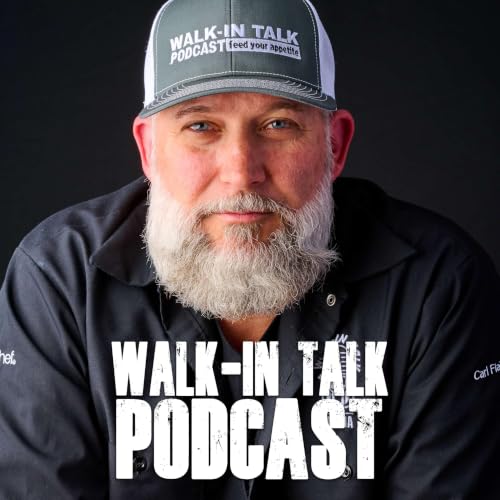
『Walk-In Talk Podcast』のカバーアート

Walk-In Talk Podcast

Walk-In Talk Podcast

著者: Carl Fiadini
無料で聴く

【Amazonプライム会員限定】今ならプレミアムプランが4か月 月額99円。

10月19日まで。※適用条件あり
Walk-In Talk Podcast Where the food industry comes to life. Hosted by Carl Fiadini, founder of Walk-In Talk Media, the Walk-In Talk Podcast is a B2B restaurant, foodservice and hospitality industry podcast featuring the chefs, restaurateurs, operators, manufacturers, distributors, farmers, suppliers and industry leaders shaping the business of food. From restaurant operations, foodservice distribution and sourcing to culinary leadership, food safety, equipment, technology and the realities of running a hospitality business, Walk-In Talk delivers raw, unfiltered conversations with the people who make this industry move. We go beyond the pass and beyond the studio—covering major restaurant and foodservice trade shows, producing original culinary films and mini-documentaries, and sitting down with the people influencing where the industry is headed. With more than 200 episodes and recognition across major podcast platforms, Walk-In Talk connects the entire foodservice ecosystem through conversations built for hospitality professionals—and anyone who wants to understand the people, businesses and ideas behind the food industry. Walk-In Talk Podcast is an Official Podcast Partner for: New York Restaurant Show California Restaurant Show Florida Restaurant Show Pizza Tomorrow Summit Carolina's Restaurant Show U.S. Culinary Open Proudly partnered with industry brands and organizations including: RAK Porcelain USA Metro Foodservice TriMark USA Crab Island Seafood Shogun Farms Cahaba Club Citrus America The Burnt Chef Project Operation BBQ Relief Sustainable Supper Club Walk-In Talk Media proudly serves as the North American media partner for The Burnt Chef Project, supporting mental health awareness throughout the hospitality industry. 🎧 Where the food industry comes to life—and where hospitality speaks. 📬 Guest pitches, collaborations and brand partnerships: Info@thewalkintalk.com© 2025 Walk-In Talk Podcast アート クッキング 食品・ワイン
エピソード
  • Chef Jacob Rios: From Self-Doubt to Executive Chef | Leadership, Family & Finding Purpose
    2026/10/16
    Chef Jacob Rios was supposed to become a mechanical engineer. Growing up in Puerto Rico, he was a straight-A student with a passion for mathematics, engineering, and the Air Force. His future seemed certain. Then his parents sold their home, their cars, and walked away from their careers to give their children better opportunities in Florida. For Jacob, the transition changed everything. He struggled with English, failed the standardized tests he needed to pursue college, and watched his confidence disappear. The student who once excelled at everything suddenly felt like a failure. For the first time, Jacob began questioning his own intelligence. And he carried something even heavier: the belief that he'd let his parents down. A television commercial for culinary school eventually gave him a new direction. His mother supported the decision. His father wasn't convinced. But Jacob found something in professional kitchens that he'd been missing: purpose, confidence, and people willing to believe in him. Working his way through some of Central Florida's busiest restaurants, including Fulton's Crab House and Wolfgang Puck, Jacob learned the business under chefs who recognized his determination. Later, working alongside Chef Vanoy Rogers, he discovered another side of cooking through creativity, experimentation, and a deeper understanding of ingredients. Then COVID changed everything. After losing his job, Jacob moved his family to Charleston, South Carolina, where staffing shortages and the realities of rebuilding restaurant operations forced him to reconsider what leadership really meant. Instead of simply disciplining struggling employees, he began developing them. Dishwashers became cooks. Cooks became supervisors. And three principles became the foundation of his approach: honesty, integrity, and respect. Today, Jacob is the Corporate Executive Chef for Next Level Brands, helping lead culinary operations across Tampa Bay restaurants including Union New American, Boulon Brasserie, and Forbici. But his greatest passion isn't simply creating dishes or opening restaurants. It's developing the next generation of chefs. Through a structured mentorship program, Jacob is helping employees build the skills, confidence, and leadership abilities needed to advance their careers. And in one of the episode's most personal moments, Jacob shares how winning a competition on Food Network's Chopped finally brought the words he'd waited years to hear from his father. "You're not a mechanical engineer. You're an engineer of the kitchen." The conversation comes full circle as Jacob reflects on fatherhood, the sacrifices his parents made, and his determination to support his own children's dreams, whatever they may be. In the Walk-In Talk Media studio, Jacob also prepares two dishes that reflect his culinary journey: Puerto Rican shrimp mofongo inspired by his childhood and Shogun Farms wild boar with chocolate mole, huarache, and ayocote beans inspired by his recent travels to Mexico City. This is a conversation about immigration, family sacrifice, overcoming self-doubt, restaurant leadership, mentorship, and finding purpose in an unexpected career. From the industry. For the industry. EPISODE TAKEAWAYS 1. Family Sacrifice Can Become Both Motivation and Pressure Jacob's parents left their careers and sold nearly everything to create better opportunities for their children. When his original career plans fell apart, Jacob struggled with the feeling that he'd failed them. 2. A Language Barrier Can Change How You See Yourself Once a confident, high-achieving student in Puerto Rico, Jacob found himself questioning his intelligence after struggling with English and standardized testing in Florida. 3. Finding Your Purpose Doesn't Always Follow the Original Plan Mechanical engineering was Jacob's dream. A culinary school commercial introduced him to an entirely different future, one that eventually gave him back the confidence he'd lost. 4. The Right Mentor Can Change Someone's Life Chefs Mark Boor, Rob, and Vanoy Rogers helped Jacob develop different aspects of his career, from kitchen operations and financial management to creativity, experimentation, and leadership. 5. COVID Forced a Different Approach to Restaurant Leadership Facing severe staffing shortages in Charleston, Jacob discovered that developing employees was more sustainable than simply disciplining or replacing them. 6. Honesty, Integrity, and Respect Are More Than Words These three principles became the foundation of Jacob's leadership philosophy and continue to influence the culture he helps build at Next Level Brands. 7. The Next Generation of Chefs Needs More Than Culinary Skills Jacob discusses the Chef de Partie development program at Next Level Brands, designed to help employees advance through mentorship, leadership training, and professional development. 8. Restaurant Success Begins With the People Behind the Food Managing multiple restaurant concepts ...
    続きを読む 一部表示
    58 分
  • Chef Diego Garcia: I Had Nothing to Fall Back On
    2026/10/02
    At 14 years old, Chef Diego Garcia left his family in Mexico and returned to New York alone. He barely spoke English. He wasn't going to school. He worked wherever he could, and for a period of time, he had nowhere to live. Diego slept in the New York City subway, cleaned himself up in restaurant bathrooms and helped people carry groceries while trying to save enough money to rent a room. His parents back in Mexico had no idea. But Diego's story didn't begin there. Growing up in Puebla, he worked alongside his family in street markets, unloaded trucks filled with produce and learned to slaughter goats and prepare barbacoa with his father and grandfather. Food wasn't a career yet. It was simply part of life. New York changed that. Restaurants became Diego's education. He learned English by reading newspapers on the train and learned his craft inside kitchens. French technique, Italian cooking, sustainable seafood and years of working alongside chefs from different cultures eventually gave him a language of his own. The road wasn't clean. As a teenager in Florida, Diego found himself selling drugs, stealing cars and dangerously close to a future he knew he didn't want. He left, returned to New York and made a decision that would alter the direction of his life: he was going all in on cooking. Today, Diego is approaching 200 events through his own private-chef business while working toward his ultimate goal of opening a restaurant built around seafood, Mexican heritage and the many cultures and techniques that shaped him along the way. But this conversation goes much deeper than food. Diego talks about homelessness, poverty, pride, family violence, bad decisions, abusive kitchen culture, leadership, fatherhood, healing from childhood trauma and finally learning to be proud of himself. For years, he was trying to make his parents proud. Only recently did he realize there was someone else he needed to make proud too. Himself. KEY TAKEAWAYS Survival came before ambition. At 14, Diego returned to the United States alone because he believed staying in Mexico offered him little opportunity for education or a future. When homelessness followed, he focused on getting through one day at a time. Food was part of his life long before it became a profession. Growing up in Puebla meant markets, produce, livestock and barbacoa. By 11 or 12, he was already helping his father and grandfather process goats and cook them using techniques passed through his family. Restaurants became his classroom. Without culinary school and with limited English, Diego learned inside kitchens while teaching himself English through newspapers, books, music and everyday conversation. His path could have gone very differently. As a teenager in South Florida, Diego became involved with drugs, stolen cars and other illegal activity. Recognizing where that road could lead, he left Florida, cut ties with that life and returned to New York. Cooking became the alternative. Returning to professional kitchens gave Diego a direction. What began as survival became a deliberate pursuit of culinary knowledge and eventually a career. He learned leadership from good kitchens and bad ones. Diego experienced yelling, humiliation, racism and physical mistreatment in kitchens. Rather than repeating it when he became a leader, he decided to pay closer attention to what the people working for him might be going through. His cooking reflects more than one home. Mexico remains central to Diego's identity, but New York is part of him too. French, Italian, Nordic, Asian and seafood-driven influences have become tools he uses to express his Mexican heritage rather than replace it. His restaurant vision is rooted in honesty. Diego ultimately wants a seafood-driven marisquería built around fresh ingredients, Mexican roots and genuine hospitality. His goal isn't to tell guests how impressed they should be. He wants them to leave genuinely satisfied. Success has become personal. For much of his life, Diego measured himself against whether his parents would be proud of him. Seeing his mother's reaction to his recent television appearance helped him recognize something he had rarely allowed himself to feel: The Companies Helping Shape Hospitality Metro Foodservice Solutions - Commercial-grade storage, transport, and workflow systems that help professional kitchens operate efficiently. RAK Porcelain USA - Professional tableware built for performance, durability, and presentation at the highest level. TriMark USA - North America's largest foodservice design, equipment, and supplies provider, helping operators build smarter, more efficient kitchens. Testo North America - Precision measurement and food safety solutions designed for professional hospitality operations. Crab Island Seafood - Florida-based manufacturer of premium seafood dips and spreads inspired by coastal flavors. Citrus America - Commercial juicing solutions delivering consistency, speed, and ...
    続きを読む 一部表示
    48 分
  • Chef Clayton Parrett: A Student for Life
    2026/09/11
    Chef Clayton Parrett has spent more than two decades in kitchens, but he still considers himself a student. Growing up in rural South Louisiana, Clayton's earliest education came from the land. Hunting, fishing, livestock, agriculture and eventually working around a slaughterhouse taught him where food came from long before he understood that cooking would become his life. That path eventually took him offshore, cooking on drilling operations in the Gulf for weeks at a time. The isolation and relentless routine taught him patience, discipline and responsibility, lessons that would follow him through restaurants, universities, convention centers and hotels before ultimately bringing him to the historic Fenway Hotel in Dunedin, Florida. But Clayton says one of the biggest turning points in his career came when he learned something entirely different: How to fail. Accepting failure gave him permission to experiment, take chances and become more curious about food. It also helped shape a philosophy he still carries today. Clayton doesn't particularly believe in mastery. There are too many cultures, ingredients, techniques and traditions he hasn't experienced yet. "I prefer to say I'm a student for life." That curiosity is now helping drive the culinary direction at Fenway, where Clayton and his team are exploring global beef, ingredient provenance and the kind of luxury dining experience capable of competing on a much larger stage. One of their long-term ambitions is earning consideration among the world's leading steakhouses. And Clayton brought that same curiosity into the Walk-In Talk studio. Using wild boar tenderloin from studio partner Shogun Farms, Clayton created a dish rooted deeply in memories of Louisiana, incorporating field peas, persimmon, satsuma, sumac and produce from Cahaba Club. It's a plate built around the landscape and flavors that helped shape him as a chef. He followed it with an entirely different exploration: an antelope croquette with smoked Gouda and three vibrant sauces, combining classical French technique with an ingredient many diners rarely encounter. And then came the beef. Japanese A5 Wagyu rated BMS 12, representing the level of sourcing, education and product knowledge Clayton and his team are working to bring to Fenway. What's Hot Tampa Bay Leah Wilson of Creative Loafing Tampa Bay also returns to the studio for her recurring What's Hot Tampa Bay segment, and this time the conversation is all about Best of the Bay. Leah breaks down how the long-running Tampa Bay competition works, from public nominations and voting to the annual Best of the Bay celebration, and why the recognition means so much to the restaurants, chefs, businesses and personalities selected by the community. There's an added connection this year: Chef Clayton Parrett and Fenway are participating in the Best of the Bay celebration, putting Clayton directly into one of the biggest hospitality and culture events on Creative Loafing Tampa Bay's calendar. It makes for an episode that moves naturally between where a chef comes from, what keeps him learning, the food he is building today and the Tampa Bay community he is now helping shape. Chef Clayton Parrett Fenway Hotel | Dunedin, Florida Featuring Leah Wilson Creative Loafing Tampa Bay | What's Hot Tampa Bay Featuring ingredients from Walk-In Talk Media studio partners Shogun Farms and Cahaba Club. A Walk-In Talk Media production. From the industry. For the industry. Key Takeaways His culinary education began with the land. Growing up in South Louisiana gave Clayton an early understanding of animals, agriculture, seasonality and the relationship between food and community. Work ethic became survival early. He left home young, lived with friends, finished school and worked long hours because quitting was never really part of the plan. Offshore cooking changed him. Spending weeks at a time on Gulf drilling operations taught him patience, routine, responsibility and how to function when there is nowhere else to go. Learning to fail changed his relationship with food. Clayton says his real passion developed once he understood that failure was acceptable as long as he kept trying. He does not believe the learning ever ends. Rather than chasing the idea of mastery, Clayton sees himself as a lifelong student of ingredients, cultures, techniques and people. Food is education. To Clayton, an ingredient is never just something to cook. It is an opportunity to understand geography, biology, agriculture, culture and technique. Community remains central. Whether talking about Louisiana, hurricanes, family or his kitchen team, Clayton repeatedly comes back to the idea that people survive and grow together. Leadership means giving knowledge away. He wants the cooks who work with him to leave knowing as much as he can possibly teach them. The Fenway's beef program is becoming increasingly ambitious. Clayton is studying breeds, origins, grading systems ...
    続きを読む 一部表示
    44 分
adbl_web_anon_alc_button_suppression_t1
まだレビューはありません