エピソード

  • AI is Here. Now What?
    2026/11/11
    Unmuted Podcast | Episode #92AI Is Here. Now What? Special Workday Series | Episode 1 of 6 Guest: Justin Joseph – Head of PSA, Product & Engineering, WorkdayHost: Jeff Waldman – Founder & HR Tech Evangelist at ScaleHR & SocialHRCamp Episode Overview AI is everywhere. Organizations are investing heavily, employees are experimenting with new tools, and expectations for productivity and efficiency have never been higher. But here's the million-dollar question: Where's the return on investment? Welcome to the first episode of a special six-part Unmuted Podcast series in partnership with Workday! In this episode, Jeff Waldman sits down with Justin Joseph, Head of PSA, Product & Engineering at Workday, to explore why AI adoption doesn't automatically translate into meaningful business results. The challenge isn't necessarily the technology. It's the data, processes, workflows, and organizational readiness surrounding it. Justin shares why organizations need to rethink how work gets done before simply introducing AI, the importance of building trust and governance, and why HR leaders must work closely with IT to realize AI's full potential. Together, they explore practical steps organizations can take to move beyond experimentation and begin generating measurable value from AI. We Explore: Why AI investments aren't always delivering the expected ROI How data quality and process readiness influence AI effectiveness Why organizations should rethink workflows before automating them The importance of trust, governance, and appropriate human oversight How HR leaders can identify practical AI use cases and quick wins Why AI adoption is as much about culture and change management as technology How HR and IT can work together to drive successful AI transformation Three Practical Steps to Get Started: Review your data foundation. Ensure your information is accurate, accessible, and appropriate for AI use. Start with one process. Identify a high-friction or frequently repeated workflow where AI could deliver meaningful improvements. Rethink the workflow. Don't simply automate existing processes. Involve employees in redesigning how work gets done. Timestamps: 00:00 – Introduction: AI is here, now what?01:30 – AI investment, adoption, and ROI challenges03:43 – Meet Justin Joseph and his role at Workday05:03 – Why AI adoption doesn't guarantee ROI08:02 – Understanding AI use cases in HR09:36 – Rethinking processes before introducing AI11:08 – Data quality and process readiness12:38 – Trust, governance, and data boundaries14:03 – Where humans should remain involved16:16 – Taking a thoughtful approach to AI adoption17:25 – Three practical steps to get started21:06 – AI adoption as culture and change management22:02 – Why HR and IT must work together23:11 – Closing remarks About Justin Joseph Justin Joseph is Head of PSA, Product & Engineering at Workday, where he works at the intersection of technology, product development, and enterprise innovation. In this episode, Justin shares his perspective on the practical realities of AI adoption, helping organizations move beyond deploying tools toward improving workflows, strengthening data foundations, and achieving meaningful business outcomes. Connect with Justin: https://www.linkedin.com/in/justin-joseph-new-york/ About Workday Workday is an enterprise technology platform that brings HR and Finance together through an open, trusted platform powered by AI. With Sana from Workday at the heart of its AI strategy, Workday helps organizations put AI agents to work, improve productivity, and deliver meaningful business outcomes. Workday is also a proud Gold Sponsor of all six Canadian SocialHRCamp events in 2026, supporting hands-on learning, collaboration, and innovation across Canada's HR and Talent communities. This episode kicks off a special six-part Unmuted Podcast series featuring Workday leaders exploring AI, HR technology, and the evolving world of work. Learn more about Workday: https://www.workday.com/ Key Takeaway Successful AI adoption isn't about how many tools you deploy. It's about whether those tools improve how work gets done. Start small, get your data and processes right, involve your people, and treat AI transformation as a business and cultural change—not simply a technology rollout. About ScaleHR Unmuted is powered by ScaleHR (https://goscalehr.com/), helping emerging HR, Recruitment, and Work Tech companies accelerate brand awareness and lead generation through Catalyst, our community-driven omnichannel marketing solution. Unmuted is also part of the WRKdefined podcast network, available on Spotify, Apple Podcasts, and other platforms. 🌐 Explore Unmuted: https://goscalehr.com/theunmutedpodcast🎧 Find Unmuted on WRKdefined: https://wrkdefined.com/podcast/unmuted #Podcast #Workday #AIinHR #HRTech #ArtificialIntelligence #AIAdoption #DigitalTransformation #FutureOfWork
    続きを読む 一部表示
    25 分
  • Human in the Loop. Or Just Someone to Blame?
    2026/10/29
    Unmuted Podcast | Episode #91Human in the Loop. Or Just Someone to Blame? Guest: Kerris Hougardy – SVP People, Ting InternetHost: Jeff Waldman – Founder & HR Tech Evangelist at ScaleHR & SocialHRCamp Episode Overview: As AI becomes increasingly embedded in hiring, performance management, compensation, and other workplace decisions, organizations often point to one important safeguard: keeping a "human in the loop". But does having a human involved actually guarantee meaningful oversight? Or are we simply giving someone responsibility for decisions they don't really control? In this episode of Unmuted, Jeff Waldman sits down with Kerris Hougardy, SVP People at Ting Internet, to challenge one of the most commonly used phrases in responsible AI. They explore why human oversight can become little more than a rubber stamp when employees lack the time, information, confidence, or authority to question AI-generated recommendations. Drawing on her experience leading people strategy through organizational transformation, Kerris explains what genuine accountability looks like, why the level of human involvement should reflect the risk of the decision, and how organizations can prepare employees to work effectively alongside AI. She also shares Ting Internet's approach to AI literacy, which prioritizes human capabilities like critical thinking, judgment, curiosity, empathy, and courage before technical AI skills. We Explore: What "human in the loop" actually means in HR and why we should question it Why human oversight often breaks down when people lack time, context, or authority How automation bias can turn meaningful review into a rubber stamp Who should be accountable when AI influences important workplace decisions Why higher-risk decisions require greater human involvement and judgment How Ting Internet is building AI literacy by focusing on human skills first What organizations can do to make human oversight meaningful and measurable What Meaningful Human Oversight Requires: Time to properly evaluate AI-generated recommendations Access to the information and context behind the output Authority to question, override, or reject recommendations Psychological safety to challenge technology without consequences Timestamps: 00:00 – Introduction and episode overview02:08 – Meet Kerris Hougardy and her role at Ting Internet03:40 – What "human in the loop" really means06:45 – Time, context, process, and automation bias09:39 – Where human oversight breaks down10:00 – Accountability and the self-driving car example13:17 – What meaningful oversight looks like16:16 – Balancing efficiency with human judgment18:10 – Ting's AI literacy approach: human skills first22:35 – The biggest takeaway for HR leaders23:33 – Closing remarks About Kerris Hougardy Kerris Hougardy is the SVP People at Ting Internet, where she leads employee experience, organizational development, and culture strategy across a distributed workforce. With more than 20 years of HR and organizational leadership experience, Kerris has guided organizations through complex transitions, including restructuring, rapid technological change, and large-scale transformation. She is passionate about advancing AI workforce readiness and helping organizations balance technological innovation with human judgment, trust, inclusion, and long-term capability. Her approach emphasizes transparency, resilience, and shared ownership, with a belief that organizations must invest as much in human readiness as they do in technology. Connect with Kerris on LinkedIn at https://www.linkedin.com/in/kerrishougardy/ About Ting Internet Ting Internet is a US-based internet service provider focused on delivering high-speed fiber internet to communities. Within the organization, Kerris and her team are approaching AI adoption with an emphasis on workforce readiness, responsible use, and strengthening the human capabilities needed to work effectively alongside emerging technologies. Key Takeaway Having a human involved in an AI-driven decision doesn't automatically create accountability. Meaningful oversight requires people who understand what they're reviewing, have the time and information to evaluate it, and possess the authority and confidence to challenge the technology. The question isn't simply whether there's a human in the loop. It's whether that human actually has the power to make a difference. About ScaleHR Unmuted is powered by ScaleHR (https://goscalehr.com/), helping emerging HR, Recruitment, and Work Tech companies accelerate brand awareness and lead generation through Catalyst, our community-driven omnichannel marketing solution. Unmuted is also part of the WRKdefined podcast network, available on Spotify, Apple Podcasts, and other platforms. 🌐 Explore Unmuted: https://goscalehr.com/theunmutedpodcast🎧 Find Unmuted on WRKdefined: https://wrkdefined.com/podcast/unmuted #Podcast #AIinHR #HRTech #ResponsibleAI #HumanInTheLoop #AIGovernance #...
    続きを読む 一部表示
    25 分
  • The AI Trust Gap: Who’s Responsible When HR Uses AI?
    2026/10/15
    Unmuted Podcast | Episode #90 Topic: The AI Trust Gap: Who's Responsible When HR Uses AI? Guest: Haley Friary-Schenk – Founder & CEO, HumaniCore AI Host: Jeff Waldman – Founder & HR Tech Evangelist at ScaleHR & SocialHRCamp Episode Overview AI is increasingly influencing how organizations hire, evaluate, promote, compensate, and manage people. But as these technologies become more deeply embedded in workplace decisions, a critical question is emerging: Who's responsible for ensuring we can actually trust them? Vendors build the technology. Employers choose and deploy it. Employees and candidates experience the consequences. Regulators establish the rules. But when something goes wrong, where does accountability begin and end? In this episode of Unmuted, Jeff Waldman sits down with Haley Friary-Schenk, Founder and CEO of HumaniCore AI, to explore the growing trust gap in AI-enabled HR technology and what it will take to close it. Drawing on her experience as a former Chief People Officer who has implemented complete HR technology stacks across five organizations, Haley explains why trust cannot rest on vendor assurances alone. Organizations need independent, defensible evidence that AI-enabled people decisions are being made responsibly. Together, they explore emerging AI regulations, the challenges of evaluating increasingly complex HR technology stacks, the importance of independent verification, and why employers cannot simply outsource accountability to their technology providers. We Explore Why AI trust and accountability are shared responsibilities across vendors, employers, and regulators What HR leaders should demand from vendors before deploying AI-enabled technology How fragmented HR systems, missing data, and algorithmic bias can undermine fairness Why emerging AI regulations are changing expectations for employers and technology providers Whether HR technology is approaching its own version of cybersecurity's SOC 2 moment Why independent verification must be ongoing, reproducible, and supported by meaningful human oversight What organizations need to do today to establish defensible evidence of responsible AI use Five Questions HR Leaders Should Ask AI Vendors Who tested the tool, and did they also sell you remediation? How many people were not counted in the audit? Whose data was used for testing -- real applicants or a designed dataset? When is the model retrained, and will you be notified before it happens? Where does the vendor's responsibility end and the employer's begin? Timestamps 00:36 – Introducing Unmuted and the AI trust gap01:35 – Why AI trust matters in HR02:05 – Trust and accountability across the AI ecosystem03:31 – Meet Haley Friary-Schenk04:37 – Haley's HR background and the origin of HumaniCore AI05:05 – Independent certification for AI-enabled people decisions06:23 – The role of regulation in AI adoption07:15 – Existing laws and emerging AI regulations09:08 – Who needs to trust whom?10:37 – Why employers can't outsource accountability to vendors11:33 – The risks of fragmented HR technology stacks13:15 – What HR leaders should ask AI vendors13:52 – Five critical vendor questions14:21 – How missing applicant data affects audit results15:46 – Model retraining, accountability, and legal review16:58 – Navigating global regulatory differences19:17 – Is HR technology approaching its SOC 2 moment?20:21 – What meaningful independent verification must prove21:18 – Reproducibility, ongoing audits, and certification23:42 – Building genuine trust in AI-enabled HR technology24:11 – Why evidence must exist before a complaint or lawsuit25:11 – Making human oversight real and measurable26:01 – AI in hiring, promotion, compensation, and termination27:05 – The most important takeaway27:36 – Why "our vendor said we were covered" isn't a defense28:28 – HumaniCore AI's launch plans29:53 – Closing remarks About Haley Friary-Schenk Haley Friary-Schenk is the Founder and CEO of HumaniCore AI and a former Chief People Officer with extensive experience leading HR technology transformation. Throughout her career, Haley has implemented complete HR technology stacks across five organizations, ranging from startups to publicly traded companies operating in 28 countries. After witnessing AI begin to reshape HR technology and recognizing growing gaps in accountability, Haley pursued further education in artificial intelligence, including studies at MIT Sloan and graduate studies at Penn State's Smeal College of Business. She founded HumaniCore AI to help establish greater accountability, transparency, and trust in AI-enabled employment decisions. Connect with Haley: https://www.linkedin.com/in/haleyfriarysphr/ About HumaniCore AI HumaniCore AI is an independent third-party certification body focused on AI-enabled people decisions across the full employment lifecycle. The organization works with technology vendors developing AI-powered HR solutions...
    続きを読む 一部表示
    26 分
  • When Your Investigation Gets Investigated
    2026/10/09
    Unmuted Podcast | Episode #89 Topic: The $200,000 Employee You Already Have Guest: Samantha Carter - Founder at trACT Software ⁠Host: Jeff Waldman – Founder & HR Tech Evangelist at ScaleHR & SocialHRCamp Workplace investigations are only as strong as the process behind them. In this episode, Jeff Waldman and Samantha Carter unpack what “defensible” really means, why documentation matters months or even years later, and how jurisdiction, neutrality, and procedural fairness shape every step. It’s a practical conversation for HR leaders, investigators, and business owners who need to handle sensitive complaints in a way that can stand up to scrutiny. Key topics: In this episode, Jeff Waldman introduces the episode’s core idea - when an investigation gets questioned later, the process matters more than simply saying the outcome was fair. Samantha Carter explains that defensibility does not mean the outcome was “right” - it means the investigator can show clear, logical, well-documented decision-making from intake through final report. Samantha shares how her first investigation, early in her HR career, reflected an older mindset of trying to get people to confess - and how her approach evolved into one centred on neutrality and procedural fairness. We discuss why small and mid sized organizations often struggle with investigations because they are not doing them every day, may not have a repeatable process, and can end up doubting whether their file will hold up later. Samantha explains why documentation gaps are one of the biggest risks - especially decisions about which witnesses to interview, which allegations to pursue, and why certain people were excluded. We discuss jurisdictional differences, including how some provinces in Canada are more prescriptive than others and how Ontario’s workplace investigation expectations focus on thoroughness, neutrality, training, and appropriateness in the circumstances. Samantha notes that scrutiny is increasing, including through AI-enabled review and later challenges from complainants or respondents that can trigger additional complaints or retaliation claims. Jeff shares a practical habit from early in his career - writing summary notes immediately after meetings or interviews so the file still makes sense years later. Samantha outlines what organizations should do differently now: set clear expectations at the start, explain the investigator’s role, remain consistent across parties, and give respondents enough detail to respond meaningfully. We discuss the importance of going back to witnesses when new contradictory information emerges, even if that slows the process down, because procedural fairness depends on giving people a chance to respond. Samantha closes with the key lesson: thorough planning at the outset determines whether the process, if not necessarily the outcome, will be defensible. Procedural fairness - giving each party a meaningful chance to understand and respond to the allegations Neutrality - approaching the investigation without pre-deciding the outcome Defensibility - being able to show clear, fact-based reasoning for each decision Threshold assessment - deciding early whether the allegation requires a formal investigation Timestamps 00:00 - Setting up the conversation on defensible workplace investigations 00:58 - Why the process matters more than the final outcome 03:32 - Samantha Carter’s background and first investigation 06:28 - Why internal HR teams struggle with investigations 08:38 - What “defensible” means in practice 11:07 - Why jurisdiction changes the rules 15:48 - Common process and documentation mistakes 20:03 - What regulators expect to see in a file 24:33 - How to make investigations more consistent and transparent 27:30 - Why follow-up questions matter for procedural fairness 30:40 - The one thing every investigator should remember 31:31 - Closing thoughts and trACT Software update About Samantha Carter Samantha Carter is the Founder of trACT Software and HR TrAction, bringing more than 20 years of human resources experience specializing in workplace investigations, compliance, and people-first leadership. A Certified Human Resources Leader (CHRL), Certified Information Privacy Professional (CIPP/C), and licensed Private Investigator (PI), Samantha has managed investigations across organizations of all sizes and industries. Her experience exposed a recurring challenge: inconsistent investigation processes, fragmented documentation, and growing compliance risks. She founded trACT Software to help HR professionals and investigators manage workplace investigations with greater consistency, confidence, and defensibility. Connect with Samantha: LinkedIn: https://www.linkedin.com/in/samanthacarterchrl/ Visit trACT Software: https://www.tractsoftware.ca/ About trACT Software's Public Beta Workplace investigations are complex, sensitive, and often difficult to manage consistently. From documenting evidence ...
    続きを読む 一部表示
    27 分
  • The $200,000 Employee You Already Have
    2026/10/01
    Unmuted Podcast | Episode #88 Topic: The $200,000 Employee You Already HaveGuest: Ayana Carroll – Founder and CEO of MetrixAIHost: Jeff Waldman – Founder & HR Tech Evangelist at ScaleHR & SocialHRCamp Organizations can usually tell you where their money is going. But ask what skills, capabilities, and readiness their workforce already has, and the answer may be less clear. That blind spot can be costly. Companies may approve an external hire without first asking whether someone already on the team could step into the role. Meanwhile, employees may lack a clear view of where they can grow next. In this episode of Unmuted, Jeff Waldman sits down with Ayana Carroll, founder and CEO of MetrixAI, to explore why internal mobility can be difficult to put into practice, and how better visibility into employees’ skills may help organizations find talent they already have. Ayana shares what inspired her to build MetrixAI after seeing layoffs happen alongside external hiring, and explains why fragmented HR data, outdated systems, and an overreliance on job titles can make internal talent harder to see. Together, Jeff and Ayana discuss the potential costs of overlooking existing employees, how useful skills data can support employee growth, and what organizations can do to make internal mobility more visible and actionable. We Explore: Why companies may hire externally without first considering internal talent How limited visibility into employee skills can make internal mobility harder Why HR data is often fragmented across systems and spreadsheets The difference between tracking job titles and understanding transferable skills What HRIS, learning management, and performance systems can, and cannot, tell you about workforce capabilities Why employees and managers need a meaningful reason to keep skills data up to date How internal talent visibility can support employee growth and organizational planning What Ayana hopes to learn from MetrixAI’s public beta Why employees are more engaged when they can see a path forward How organizations can make better use of the capabilities they already have Timestamps 00:00 — Setup and getting ready to record 03:32 — Welcome to the Unmuted Podcast 04:02 — Introducing the episode: “The $200,000 employee you already have” 05:28 — Why it can be hard for HR to see workforce capabilities 06:28 — Meet Ayana Carroll, founder and CEO of MetrixAI 07:03 — Ayana’s HR background and career mission 08:30 — The experiences that inspired MetrixAI 10:55 — The gap between internal mobility programs and employee experience 12:56 — Why HR data can be scattered across systems 15:08 — The potential cost of overlooking internal talent 17:55 — Why organizations may default to external hiring 19:56 — What HR systems can—and can’t—show about employee capabilities 21:23 — Keeping workforce skills data current 23:58 — What Ayana hopes to learn from MetrixAI’s public beta 25:45 — What success could look like over the next year 27:08 — Looking beyond departmental boundaries to transferable skills 28:20 — The takeaway: help employees use their full capabilities 29:59 — Closing thoughts About Ayana Carroll Ayana Carroll is the founder and CEO of MetrixAI. With more than 25 years of experience as an HR practitioner, including at the executive level, Ayana has focused her career on helping people find their path. She also chaired the board for Dress for Success, supporting women as they work toward economic stability. Through MetrixAI, Ayana is working to help organizations better understand the skills and capabilities they already have, and help employees see where they might grow. About MetrixAI's Public Beta Your next great hire may already work for you. MetrixAI helps organizations with 250-3,000 employees uncover their people’s skills, identify growth opportunities and build stronger succession plans. Join its founding beta program to get full platform access, dedicated onboarding and a direct voice in shaping the product—with lifetime preferred pricing when you complete the program and become a paid subscriber. Apply to become a founding beta partner. About ScaleHR The Unmuted Podcast is powered by ScaleHR (goscalehr.com), helping emerging HR, Recruitment, and Work Tech companies accelerate brand awareness and lead generation through Catalyst, our community-driven content and omnichannel marketing solution. Unmuted is also part of the WRKdefined podcast network, making it easy to listen or watch on your preferred platform, including Spotify, Apple Podcasts, and more. 🌐 Explore Unmuted: click here 🎧 Find Unmuted on WRKdefined: click here #Podcast #InternalMobility #TalentManagement #HR #WorkforcePlanning #EmployeeDevelopment #HRTech #PeopleAndCulture #FutureOfWork
    続きを読む 一部表示
    23 分
  • We Don't Need More Team Building. We Need More Meaning.
    2026/09/24
    Unmuted Podcast | Episode #87 Topic: We Don't Need More Team Building. We Need More Meaning. Guest: Jody Steinhauer - President & Chief Bargain Officer at Bargains Group and Kits for a Cause Guest LinkedIn: ⁠https://www.linkedin.com/in/jodysteinhauer/ Guest Website: ⁠https://www.bargainsgroup.com/⁠⁠⁠ Host: Jeff Waldman – Founder & HR Tech Evangelist at ScaleHR & SocialHRCamp Organizations spend a lot of time and money trying to bring employees together. Team outings. Retreats. Social events. Virtual happy hours. They can be fun, but simply putting people in the same room doesn't automatically create connection, belonging, or a stronger team. What if the missing ingredient is meaning? In this episode of Unmuted, Jeff Waldman sits down with Jody Steinhauer to explore how shared purpose, community involvement, and giving back can create a different kind of employee experience, one built around contribution, empathy, and making an impact together. Jody shares her journey from building The Bargains Group to founding Engage and Change and Project Winter Survival, and eventually creating Kits for a Cause, connecting organizations with charities through purposeful employee engagement experiences. We Explore: Why traditional team-building activities don't always create lasting connection What happens when employees come together around a cause bigger than their everyday work How purpose-driven experiences can build empathy, trust, and stronger relationships Why volunteering during work hours can make participation more accessible How these experiences can uncover leadership skills that don't always emerge in the workplace How organizations can incorporate purpose into conferences, ERG gatherings, sales meetings, and other existing events Why asking employees which causes matter to them is a great place to start How HR leaders can make community impact authentic rather than turning it into another corporate initiative Timestamps: 00:00 — Opening conversation00:35 — Introducing the Unmuted Podcast01:31 — Why team building alone may not create meaning02:23 — Meet Jody Steinhauer03:20 — Jody's story and The Bargains Group05:00 — The beginning of Project Winter Survival06:23 — Engage and Change and winter survival kits08:19 — The growth of Kits for a Cause09:54 — What creates meaningful connection at work12:41 — Purpose, empathy, and productivity15:24 — What traditional team building gets right—and misses17:38 — Purpose-driven activities after COVID19:22 — Connecting hybrid teams through meaningful experiences20:37 — What happens when teams work together around a cause21:35 — Discovering hidden leadership skills23:42 — Where HR leaders can start24:42 — Asking employees what matters to them26:29 — Keeping activities accessible and meaningful27:26 — Purpose and changing employee expectations29:30 — Jody's closing advice: make purpose a priority About Jody Steinhauer: Jody Steinhauer is the President and CBO (Chief Bargain Officer) of The Bargains Group, which she grew from her Toronto apartment into a multi-million-dollar business. A passionate advocate for giving back, Jody is also the Founder and CEO of Engage and Change, the charity behind Project Winter Survival, launched in 1999 to support people experiencing homelessness across the GTA. She is also behind Kits for a Cause, a social enterprise that connects organizations and teams with charities in need through purposeful employee engagement and team-building experiences. Its clients have included Amazon, Meta, Starbucks, United Way and organizations across Canada and the U.S. Jody is an award-winning entrepreneur, author, speaker, employee engagement expert and, as she describes herself, an "impact matchmaker" and "broker of goodness". 🔗 Connect with Jody: linkedin.com/jodysteinhauer🌐 Jody Steinhauer: jodysteinhauer.com🌐 The Bargains Group: bargainsgroup.com🌐 Kits for a Cause: kitsforacause.com🌐 Engage and Change: engageandchange.org About ScaleHR: The Unmuted Podcast is powered by ScaleHR (goscalehr.com), helping emerging HR, Recruitment, and Work Tech companies accelerate brand awareness and lead generation through Catalyst, our community-driven content and omnichannel marketing solution. 🎙️ Unmuted is also part of the WRKdefined podcast network, making it easy to listen or watch on your preferred platform, including Spotify, Apple Podcasts and more. 🌐 Explore Unmuted: goscalehr.com/theunmutedpodcast🎧 Find Unmuted on WRKdefined: wrkdefined.com/podcast/unmuted #Podcast #EmployeeEngagement #TeamBuilding #Purpose #Leadership #HR #PeopleAndCulture #WorkplaceCulture #FutureOfWork
    続きを読む 一部表示
    28 分
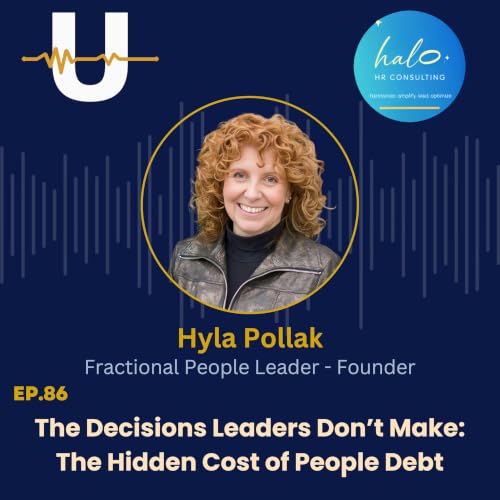
  • The Decisions Leaders Dont' Make: The Hidden Cost of People Debt
    2026/09/17
    Unmuted Podcast | Episode #86 Topic: The Decisions Leaders Don't Make: The Hidden Cost of People Debt Guest: Hyla Pollak - Founder & Fractional HR Leader at Halo HR Consulting Guest LinkedIn: https://www.linkedin.com/in/hylapollak/ Guest Website: https://culture-consulting-hyla-nf3851m.gamma.site/⁠⁠⁠ Host: Jeff Waldman – Founder & HR Tech Evangelist at ScaleHR & SocialHRCamp Podcast host Jeff Waldman opens the episode by framing a common leadership problem: when leaders avoid hard people decisions, the cost compounds. Guest Hyla Pollak explains what “people debt” is, why even strong leaders fall into it, and how delayed action quietly erodes culture, trust, and performance. Guest spotlight: Hyla, an HR leader who works in HR on demand and fractional HR, brings practical perspective from helping founders and growing organizations handle people issues before they become expensive. Key Topics: In this episode: people debt as the human version of technical debt. Hyla defines people debt as the accumulated cost of unresolved people issues caused by indecision or delay. Why doing nothing is still a decision. The central idea is that postponing action does not avoid cost. It simply shifts the bill forward, often at a higher price. What leaders are often afraid of. Hyla points to fear of losing talent, lack of replacement options, conflict avoidance, and uncertainty about what happens after a tough decision. The hidden workload created by avoidance. When one person underperforms or is misaligned, someone else usually absorbs the slack, often the CEO or a manager already carrying a full load. How people debt affects culture. Employees notice when poor performance is tolerated, or difficult behaviour is ignored, and that signals what the organization really values. Values only matter when tested. Hyla argues that values on walls and websites mean little if leaders do not use them to make hard decisions when it counts. A practical leadership example. Jeff shares a story about a senior VP whose directness was initially hard to take, but whose decisions were ultimately right for the business and aligned with its values. The role of clarity. Hyla says many performance problems are actually expectation problems, and leaders should check whether goals and standards are truly clear. A better question than “Should I fire them"? The episode focuses on addressing issues earlier, through coaching, clarification, and asking what the cost of waiting really is. The long view. A key takeaway is to ask what the situation will look like in six months if nothing changes, and whether the current inaction is sustainable. Timestamps: 00:00 - Opening and the meaning of “people debt” 01:45 - Technical debt versus people debt 03:41 - Welcoming Hyla Pollak and her HR background 05:14 - HR on demand and fractional HR explained 06:28 - What people debt actually is 09:02 - Why leaders let people debt build up 10:27 - Short-term pain versus long-term cost 11:52 - Culture, trust, and the invoice employees pay 13:29 - CEO example: a finance leader who could not keep up 15:23 - What employees learn when leaders tolerate poor performance 18:15 - A story about a senior VP whose tough decisions helped the business 20:49 - Values matter most when things get hard 21:53 - Gustavo Rossetti’s Forward Talk and the idea of conversation debt 24:12 - How leaders can recognize and address people debt earlier 26:13 - Questions leaders should ask before delaying action 28:47 - The one thing to remember: doing nothing is a decision 29:31 - Closing remarks and where to find the podcast Notable Quotes: 1) “Not making a decision is actually a decision because you’ve decided not to decide". 2) “What leaders do not address can become just as powerful a signal about culture as what they actively promote". 3) “If you change nothing, nothing changes". About Hyla Pollak: Hyla Pollak is a senior People & Culture leader with 20+ years of experience helping organizations build strong teams, navigate change and tackle the people issues that can get messy. She founded Halo HR Consulting to provide fractional People executive leadership, strategic HR advisory, and HR On Demand for founders and leaders who need quick, practical help solving HR and people problems. About ScaleHR: The Unmuted Podcast is powered by ScaleHR (https://goscalehr.com/), helping emerging HR, Recruitment, and Work Tech companies accelerate brand awareness and lead generation through Catalyst, our community-driven content and omnichannel marketing solution. Learn more: ⁠https://www.goscalehr.com/⁠ #Podcast #Leadership #HR #HumanResources #Management
    続きを読む 一部表示
    27 分
  • Employee Benefits Are Changing: What HR Needs to Know Now
    2026/09/10
    Unmuted Podcast | Episode #85 Topic: Employee Benefits Are Changing: What HR Needs to Know Now Guest: Chris Gory - President & Benefits Consultant at Orchard Benefits Guest LinkedIn: ⁠https://www.linkedin.com/in/chrisgory/ Guest Website: https://orchardbenefits.ca/ ⁠Host: Jeff Waldman – Founder & HR Tech Evangelist at ScaleHR & SocialHRCamp The Unmuted Podcast, hosted by Jeff Waldman, explores the topics shaping HR, talent, HR tech, leadership, and the future of work. In this episode, Jeff speaks with employee benefits expert Chris Gory about the major changes Canadian employers need to understand in benefits. The conversation focuses on Alberta’s Bill 11, which requires employers to keep employees aged 65 and older on health benefits coverage. Chris explains why the legislation affects companies across Canada with even one employee in Alberta, what HR leaders need to do, and why other provinces may eventually introduce similar changes. Jeff and Chris also discuss the growing importance of mental health coverage, the rise of ADHD-related claims, changing workforce demographics, generic drugs, dental costs, and the importance of using employee claims data to design a benefits plan that meets the needs of the actual workforce. Takeaways What Alberta’s Bill 11 means for employers across Canada Why employees aged 65 and older may need to be added back to benefits plans How mental health benefits have become table stakes The growing importance of covering a wider range of mental health practitioners Why ADHD claims are increasing, particularly among women aged 25 to 45 How workforce demographics influence benefits usage Why generic drugs are helping moderate benefits costs The importance of using claims data to guide benefits strategy Chapters 00:00 Introduction to the Unmuted Podcast 01:52 Employee Benefits Are Changing 04:16 Welcoming Chris Gory 06:20 Chris’s Background in Employee Benefits 08:04 Understanding Alberta’s Bill 11 10:08 Could Other Provinces Follow Alberta? 13:21 Why Mental Health Benefits Are Now Table Stakes 16:56 The Rise of ADHD Claims 19:13 Designing Benefits for a Diverse Workforce 20:03 How Workforce Demographics Affect Claims 21:33 Using Data to Build Better Benefits Plans 22:02 Why Benefits Costs Are Not Rising as Expected 23:04 Generic Drugs and Dental Cost Trends 24:27 Key Takeaways for HR Leaders 25:45 Closing the Episode About Chris Gory Chris Gory is an employee benefits expert with more than 35 years of experience in insurance and benefits. Since 2004, he has specialized in working with startups and growing companies, including technology organizations across Canada. Chris works with Orchard Benefits and advises companies on building effective, competitive, and data-informed employee benefits programs. Connect with Orchard Benefits: https://orchardbenefits.ca/ About ScaleHR The Unmuted Podcast is powered by ScaleHR (https://goscalehr.com/), helping emerging HR, Recruitment, and Work Tech companies accelerate brand awareness and lead generation through Catalyst, our community-driven content and omnichannel marketing solution. Learn more: https://www.goscalehr.com/ #Podcast #EmployeeBenefits #HR #HumanResources #Benefits
    続きを読む 一部表示
    23 分