• Unitarianism & the Birth of Humanism (Todd Ekloff June 2025)
    2026/02/14

    Rev. Todd Eklof’s talk traces the deep historical roots of humanism and argues that it has always been intertwined with Unitarianism. He begins with early 20th‑century religious humanism and figures like John Dietrich, noting that Dietrich’s shift toward humanism took shape during his ministry in Spokane, where the congregation’s 1888 bylaws affirmed “reason” and “scientific” inquiry as the basis of religious belief. Eklof highlights how Dietrich and Curtis Reese sparked the early Humanist Debate within Unitarianism, and he challenges the modern assumption that humanism is a recent add‑on to the tradition. As he puts it, humanism is grounded in “the betterment of humanity,” a theme he traces through Jewish monotheism, the teachings of Jesus, Renaissance humanism, and Enlightenment rationalism.

    From there, Eklof broadens the lens, showing how humanistic values—human dignity, agency, welfare, and the use of reason—have persisted across every era in which Unitarianism has existed. He contrasts this long lineage with what he sees as today’s drift toward anti‑rationalism within Unitarian Universalism. Drawing on examples from the transcript such as the Edict of Torda, which he describes as “the first religious toleration law in human history,” he argues that Unitarianism’s survival depends on reclaiming its historic North Star: a commitment to truth, freedom, and the flourishing of all people.

    続きを読む 一部表示
    35 分
  • The Improbability of Us (Ewen Hadington January 2026)
    2026/02/06

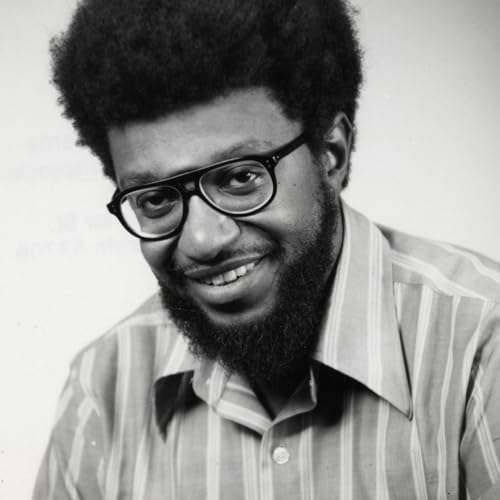
    This UUMUAC podcast episode features Evan Hadingham, former Senior Science Editor of PBS's Nova, who brings his extensive background in prehistory and archaeology to explore humanity's precarious existence. Drawing on his experience and writings, Evan guides listeners through a journey of cosmology, climate, catastrophes, and human evolution, highlighting the many critical points where humanity's survival was far from certain. He incorporates insights from scientists, philosophers, poets, and popular culture to frame this exploration.

    Evan's talk, titled "The Improbability of Us," invites listeners to reflect on the fragility of human history and our present condition with a sense of wonder and gratitude rather than fear. He discusses how scientific understanding has evolved from ancient cosmologies to modern perspectives, touching on indigenous creation stories, classical Western views, and the transformative impact of Renaissance discoveries. This episode offers a thoughtful examination of how improbable it is that humans exist today and encourages appreciation for the complex chain of events that brought us here.

    続きを読む 一部表示
    20 分
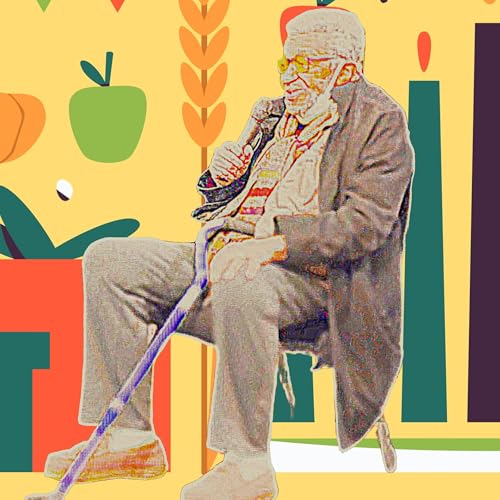
  • Children of the Rainbow (Rev. Dr. Finley Campbell, 1970)
    2026/01/27

    Rev. Dr. Finley C. Campbell’s Children of the Rainbow is a stirring call to recognize difference as the foundation for genuine unity. Speaking in 1970, he argued that the presence of Black students on white campuses was never neutral—it was meant to be a shock, a confrontation, a reminder of America’s unfinished reckoning with slavery, segregation, and systemic racism. Their very existence in classrooms challenged the myth of “colorblindness,” insisting instead that difference must be acknowledged and valued, like the many colors of a rainbow. This confrontation opened doors to humility, awareness, and the possibility of deeper human connection.

    Campbell went on to describe Black students as catalysts for educational and cultural transformation, demanding that Black history, literature, and art be integrated into mainstream learning. Their organizing created space not only for Black liberation but also for white students to confront the “Blackness” within themselves—the suppressed vitality and soul that society had long repressed. Finally, he placed Black student activism in a broader political frame: beginning with the liberation of Black people, but extending toward the liberation of all humanity. In his vision, the “Children of the Rainbow” are living witnesses against oppression, carriers of resilience, and heralds of a future where justice is shared across race, class, and nation.

    続きを読む 一部表示
    27 分
  • Denise Tracy on the "Beloved Community" (July 2025)
    2026/01/21

    Reverend Denise Tracy continues her exploration of Beloved Community with vivid stories that show how compassion dissolves fear and how ordinary people can rise to extraordinary humanity. Drawing on the musical Come From Away, she reflects on the generosity of the people of Gander, Newfoundland, who sheltered thousands of stranded travelers after 9/11. Through song and story, the musical reveals how strangers overcame fear, grief, and difference to form lifelong bonds—an embodiment of beloved community that continued long after the crisis ended. Reverend Tracy connects this to her own experiences of unexpected connection, from a simple exchange with a family in Brussels to witnessing a diverse crowd united by music in a public square.

    Her message widens into a meditation on the countless ways people quietly care for one another every day—through worship, through crisis response, through acts of solidarity that rarely make headlines. She reminds us that beloved community is not an abstract ideal but something we create in real time, with the people right in front of us. Whether in a Zoom service, a village cemetery in Belgium, or an airport gate in Albuquerque, the sacredness of community emerges when people choose compassion, presence, and shared responsibility.

    Reverend Tracy closes with a call to action rooted in Unitarian Universalist values: to witness, to help, to speak, to sing, to show up for one another, and to build the beloved community both within our congregations and beyond them. Her reflections, paired with the words of Dr. Martin Luther King Jr., invite listeners to imagine a world where love guides our choices and where every day offers an opportunity to create connection. It’s a moving, hopeful message—one that will stay with listeners long after the episode ends.

    続きを読む 一部表示
    20 分
  • Deb Reich on Transcending the Power of Words that Bind Us (Dec 2025)
    2026/01/13

    🎙️ Synopsis

    Transcending the Power of Words That Bind Us — Deb Reich (introduced by Jack Reich)

    The podcast opens with host Barbara Jean Walsh introducing a Vespers Service featuring writer and peace‑builder Deb Reich, preceded by a warm biographical introduction from her brother Jack Reich. Jack traces Deb’s journey from her New York upbringing to her decades living in Israel and Palestine, where she immersed herself in both Jewish and Palestinian communities and committed her life to intercommunal reconciliation.

    Deb’s central theme is how certain words and phrases—especially those used in discourse about Israel and Palestine—become “sacred terminology” that both inspire and imprison us. She argues that these emotionally charged terms accumulate symbolic weight over generations, eventually constraining thought, empathy, and political imagination.

    She reflects on her own evolving relationship with words like “Zionism,” “democracy,” “homeland,” “resistance,” and “liberation.” Raised to see Zionism as wholly positive, she was stunned to discover how Palestinians experienced the same word as the source of their suffering. She illustrates how language becomes a kind of ideological inheritance, shaping identity and allegiance long after its original meaning has shifted or fractured.

    Deb shares stories from her life, including her work with peace organizations, her friendships across communities, and her experiences living in a Muslim Arab village. These stories highlight how direct human contact dissolves the abstractions that words often harden into. She contrasts this with the way slogans, dogma, and political rigidity—on both left and right—can “gaslight” people into avoiding uncomfortable truths.

    She critiques the way certain activist phrases (e.g., “from the river to the sea”) or Israeli statements (e.g., “there are no innocents in Gaza”) function as verbal weapons, shutting down dialogue and alienating potential allies. She also examines the Palestinian concept of anti‑normalization, acknowledging its historical logic but lamenting how it has often suffocated grassroots cooperation.

    Deb refuses to be bound by the word “genocide,” insisting that the moral catastrophe in Gaza must be confronted without becoming trapped in semantic battles. She emphasizes the human toll—trauma, displacement, grief—and the profit motives that quietly fuel ongoing destruction.

    Throughout, she returns to the idea that language can either entrench enmity or open pathways to shared humanity. She describes her own transformation as she learned Arabic, lived among Palestinian families, and experienced daily life in all its ordinariness—children playing, neighbors calling to one another, the rhythms of village mornings. These experiences, she says, “irrevocably humanized” the people and the language for her.

    In the Q&A portion, Deb expands on the psychological exhaustion many Israelis feel, the lack of political leadership committed to justice, and the research organizations that track public sentiment. She recommends books that illuminate lived experiences on both sides and discusses long‑term political possibilities, including confederation models that might someday evolve into shared governance—though she stresses that such visions require healing, trust, and leadership not currently present.

    The podcast closes with an invitation to explore more UUMUAC programming and to engage with the organization’s work toward multiracial unity and justice.

    続きを読む 一部表示
    25 分
  • Finley Campbell on Multiracial Unity and Black History (Feb 2006)
    2025/12/31

    If you are wondering what UUMUAC, or even multiracial unity, is all about, you’ve come to the right place. Barbara Jean Walsh, and I am the vice-chair of UUMUAC, the Unitarian Universalist Multiracial Unity Council. One of the first people I met after moving to Chicago a few years ago was Finley Cambell. It has been a real treat for me to work on archiving his audio files since I did not have the opportunity to hear him deliver full-length services in person. This particular sermon is an excellent introduction to the spirit and philosophy of the man who founded UUMUAC – and why.

    Rev. Dr. Finley C. Campbell’s 2006 Black History Month sermon is a powerful, dramatic, and deeply engaging exploration of race, history, and the future of Unitarian Universalism. Delivered in his signature “dramatic monologue” style, the sermon blends humor, scholarship, storytelling, and prophetic urgency. Campbell invites the congregation to join him in a three‑act “drama,” asking them to listen not just as observers but as participants in a shared moral struggle.

    Speaking against the backdrop of a turbulent 2006—Supreme Court battles, war, political polarization, the aftermath of Hurricane Katrina, and the death of Coretta Scott King—Campbell argues that we are living in a time of “irrepressible conflict.” In such a moment, he says, understanding the multiracial roots of Black history is essential for building a just and unified future.

    Campbell challenges the congregation to distinguish between diversity and division. Diversity, he notes, has always been part of the Black experience, shaped by centuries of interracial relationships—both loving and violent. But diversity becomes dangerous when it fragments community instead of strengthening it. He reminds listeners that the great movements for justice in American history succeeded only when people of many backgrounds worked together.

    A major portion of the sermon unpacks the origins of racism, which Campbell describes not as natural prejudice but as a deliberately constructed ideology. Drawing on history, theology, and personal experience, he shows how racism was created to justify slavery, institutionalized in the Constitution through the Three‑Fifths Compromise, and reinforced by scientists, artists, churches, and governments. He distinguishes racism from prejudice and bigotry, arguing that racism is a system—one that empowers bigots and shapes national policy.

    Campbell then turns to the future, echoing Martin Luther King Jr.’s warning that America must choose between chaos or community. He argues that Unitarian Universalists face a similar choice: between a multiculturalism that keeps groups separate and a multiracial unity that brings people together in shared struggle. True unity, he insists, is not colorblindness but a “rainbow of steel”—distinct identities joined in common purpose.

    The sermon ends with a call to action. Campbell urges congregations to become sites of resistance, places where people can find solidarity, courage, and community in the face of political and economic challenges. He envisions a Unitarian Universalism that embodies the universalist ideal: a fellowship that transcends race, class, and nation, grounded in justice and human dignity.

    This sermon is rich, challenging, and often humorous. It moves quickly—from Aristotle to Jefferson, from South Pacific to the Civil War, from biblical imagery to contemporary politics—yet it remains deeply personal and grounded in lived experience. Whether read or heard, it offers a compelling vision of what multiracial community can be.

    Many thanks to Finley’s wife and comrade Bobbi for give UUMUAC access to this and other recordings.

    続きを読む 一部表示
    30 分
  • The Dignity Index with Dan Kenney (2025)
    2025/12/16

    Introduction

    • Barbara Jean Walsh (UUMUAC board member) introduces speaker Dan Kenney, a retired teacher and founder of Rooted for Good (formerly DeKalb County Community Gardens).
    • The focus of the talk is The Dignity Index, a tool created in 2022 by the University of Utah and partners through the UNITE initiative to measure dignity vs. contempt in language.

    What is the Dignity Index?

    • An 8-point scale:
      • 1–4 → contempt, dehumanization, divisive speech.
      • 5–8 → dignity, respect, constructive dialogue.
    • Purpose: to ease divisions, prevent violence, and foster healthier debate.

    Key Themes

    • Definition of dignity: rooted in the Latin dignitas (“worthy, having value”), aligned with the Unitarian Universalist principle of inherent worth and dignity of every person.
    • Donna Hicks’ work: dignity violations drive conflict, divorce, war, and revenge; dignity can heal divides.
    • Contempt vs. dignity:
      • Contempt fuels polarization, violence, and broken relationships.
      • Dignity fosters respect, inclusion, and problem-solving.

    Illustrative Stories

    • Special Olympics 1995: athletes used disposable cameras backwards as telescopes to see President Clinton—lesson in misjudgment and perspective.
    • Historical change: institutions for people with disabilities largely closed since 1968, showing progress is possible.
    • Arthur Brooks: warns of cultural addiction to contempt, driven by media business models.
    • Amanda Ripley: contempt dominates political speech, inciting division and violence.

    Examples of the Index in Action

    • Leon Mug (Rwanda, 1992): “wipe out this scum” → Score 1 (dehumanizing, violent).
    • John McCain: bipartisan cooperation → Score 6 (respectful, collaborative).
    • Hillary Clinton (2016): “basket of deplorables” → Score 3 (moral contempt).
    • Desmond Tutu: recognizing humanity even in child soldiers → Score 8 (universal dignity).

    Call to Action

    • Building blocks for a culture of dignity:
      • Admit misjudgments.
      • Practice bravery.
      • Name the problem: contempt.
      • Embrace the solution: dignity.
      • Measure, manage, mobilize.
    • Encouragement to take the Dignity Pledge and use the Index in personal relationships, not just politics.
    • Emphasis: democracy requires healthy debate, and healthy debate requires dignity.

    Closing

    • Barbara Jean Walsh invites listeners to learn more at Dignity.us and UUMUAC.org, encouraging membership and engagement.

    In essence: The podcast argues that contempt is tearing society apart, while dignity—respecting the inherent worth of every person—is the antidote. The Dignity Index provides a practical tool to measure and encourage dignified speech, helping bridge divides in families, communities, and democracy itself.

    Would you like me to condense this even further into a one-paragraph executive summary you could use for newsletters or outreach?

    続きを読む 一部表示
    26 分
  • Thanksgiving: A Multiracial Vision (November 2021)
    2025/12/03

    Rev. Dr. Finley Campbell reflects on the complexities and contradictions of our times, urging boldness and truth in the face of personal, existential, and political challenges. He draws parallels between historical struggles against white supremacy, such as the Battle of Gettysburg, and contemporary crises, emphasizing gratitude for progress while acknowledging ongoing peril.

    Dr. Campbell shares a personal reflection on his father's role as a Baptist preacher and introduces a reimagined version of the hymn "The Church Has One Foundation," blending traditional religious imagery with a broader, inclusive vision of God that embraces diverse spiritual narratives.

    He discusses the concept of human will through the lens of quantum metaphysics, highlighting the interplay of chance and necessity in shaping our lives. This leads into his central theme: Thanksgiving as a symbol of multicultural synergy—a coming together of diverse cultures to create a new, unified culture.

    Focusing on the 1623 Pilgrims' Thanksgiving, Dr. Campbell identifies three key cultural groups at the table: the Native American Wampanoag, the Puritans seeking religious freedom, and the capitalist traders focused on commerce. He explains that "culture" encompasses customs, arts, social institutions, and achievements, and emphasizes that multiculturalism involves the coexistence and blending of multiple cultural or ethnic groups.

    He highlights the role of Squanto, a Native American who spoke English due to prior contact with Europe, as a crucial connector facilitating communication and cooperation among these groups. The meal itself symbolized unity, featuring a blend of indigenous and English foods and shared practices, such as hunting and fishing.

    Dr. Campbell stresses that despite differences in religion and values—ranging from earth-centered spirituality to Calvinist Protestantism and capitalist agnosticism—these groups found synergy through shared experiences and mutual dependence.

    He envisions this multicultural synergy as the foundation for a new culture that would eventually give rise to descendants who challenge later racist and white supremacist ideologies.

    The importance of this perspective lies in countering narratives that portray early American history solely through the lens of white supremacy. Dr. Campbell references contemporary efforts within Unitarian Universalism, including the contested eighth principle and groups like DRUM (Diverse Revolutionary Unitarian Universalist Multicultural Ministries), which emphasize the need to recognize and honor multicultural contributions without perpetuating white supremacy.

    He draws a parallel to current global struggles, such as refugees at the Polish-Belarusian border, framing their quest for safety and community as a modern Thanksgiving moment, united by a divine or teleological force that transcends division.

    Ultimately, Dr. Campbell calls for unwavering commitment to fighting any form of multiculturalism defined by race, which he sees as a divisive "serpent" threatening the unity symbolized by Thanksgiving. He concludes with a hopeful invocation of love as the spirit that binds diverse peoples together, urging continued dedication to justice and inclusion.

    続きを読む 一部表示
    26 分