エピソード

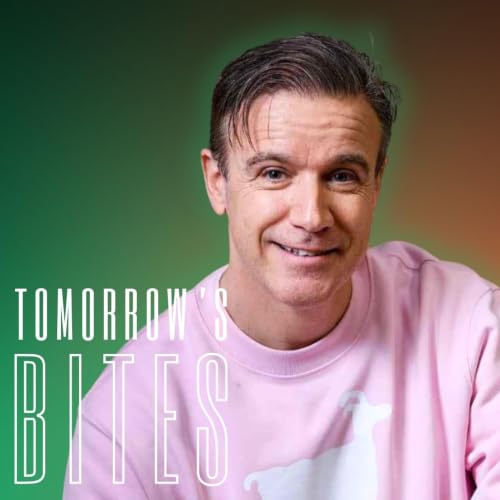
  • SIAL Paris, Rising from Ashes and Rebranding For Retail: A Year of Favamole in Tomorrow's Bites - with Andres Jara Building In Public #12
    2026/10/21

    Join our community in Signal with people like you: request ⁠here⁠. ________________________

    At 18, sitting in Barranquilla, he found a food fair on a French website he could barely read. Eighteen years later, he’s walking into it with a product and a nomination.

    In this episode of Tomorrow’s Bites, we sit down with Andres Jara, founder of Favamole, to mark one full year of Building in Public. It’s been a year of a fire, funding rounds, a company that almost went under and panic attacks. It’s also a year of a rebrand, a move into retail, a new recipe and a SIAL Innovation nomination he first dreamed about as a teenager in Colombia.

    This isn’t a victory lap. It’s an honest look back at what a year of building actually teaches you, and what he’d never do again.

    We explore:

    • The conversation with his mother at 18, and why he’s treating this nomination as a win whatever the outcome
    • What he’d do differently if he started over: start leaner, build an audience before you need one, and stop trying to learn everything yourself
    • Why a product that is completely new in concept means buyers ask “what do I do with this?”, and why he now has to act like a mother bird
    • Why nobody’s ignoring you, they’re just busy, and how following up became the muscle that changed his relationships
    • How he uses AI to challenge his own thinking, and to chase the follow-ups he used to let slip
    • Why being in a network for two years meant nothing until he showed up with a concrete ask
    • The rebrand for retail: why shoppers buy on autopilot, and what it takes to pull them out of it
    • Storytelling online when groceries move to apps, and why the best brands make their product the secondary character
    • What’s next: sell, sell, sell, because a company can’t live on grants and funding alone

    🙏 LEAVE A REVIEW

    If you like our podcast please leave us a review on your favourite platform – even one sentence helps! Thank you for your support; it helps the show a lot and it helps others to discover the show!

    👋 GET IN TOUCH WITH US

    👥 ⁠⁠⁠⁠⁠⁠⁠⁠Linkedin⁠⁠⁠⁠⁠⁠⁠⁠

    📸 ⁠⁠⁠⁠⁠⁠⁠⁠Instagram⁠⁠⁠⁠⁠⁠⁠⁠

    ⁠⁠⁠⁠⁠⁠⁠🌎 ⁠⁠Website⁠⁠⁠⁠⁠


    続きを読む 一部表示
    41 分
  • Poppi Sold for $2B and This Gum Startup Is Copying It's Winning Strategies - with Co-founder of Boost Gum Anthony Sherman
    2026/10/14

    Join our community in Signal with people like you: request here.

    What do you do when the one thing you built your product around is the one thing nobody cares about?

    Anthony Sherman was 18 when he and his best friend Max found a university patent for antioxidant chewing gum. They tested it in their kitchen, ran 10,000+ customer interviews, and got a brutal answer: nobody cares about antioxidants. Now, as mechanical engineering grads, they’re building Boostgum, a tree-sap alternative to the gum on every checkout shelf.

    Their most viral videos feature a literal car tire. Why? Because the stretchy polymer in most gum is the same one found in tires, rubber bands and glue.

    We explore:

    • Why chicle (tree sap) lost to a synthetic base in the 1950s, and why it was ten times cheaper
    • What 10,000+ conversations taught them: sell the feeling, not the ingredient
    • How two 18-year-olds took on a university’s licensing terms, and spent a year and a half getting them rewritten
    • Why a “million views” video can really be 210,000, and the hook mistake that causes it
    • The “TV problem”: shipping gum costs more than the gum, and retail won’t take you without the followers
    • What Poppy’s $2B exit taught them about leading with community, not prebiotics


    They had 1,704 followers on May 6, 2026, the day they went full-time. By the time we recorded, they were around 49,000. Today the account is past 100K.

    Listen now to hear why the smartest hook in gum is a car tire.

    🙏 LEAVE A REVIEW
    If you like our podcast please leave us a review on your favourite platform – even one sentence helps! Thank you for your support; it helps the show a lot and it helps others to discover the show!

    👋 GET IN TOUCH WITH US
    👥 Linkedin📸 Instagram
    🌎 Website
    😊 The Guest: Anthony Sherman

    Look into the company Boost Gum

    続きを読む 一部表示
    1 時間 1 分
  • Best Bites: From Dumped Apples To 300 SKUs, in the middle of Lebanon Crisis - from our conversation with Rudolph Elias, Founder of Agreen and 2XPND
    2026/10/07

    In 2017, Lebanese apple farmers were dumping their harvest on the roads because nobody would buy it. Rudolph thought his network could help them export. Then he found the catch: the apples were grown with heavy pesticides, and he refused to sell fruit that would poison whoever ate it. So he set a hard rule of no pesticide residues, went certified organic and fair trade, and started paying farmers a fair share. What came next was built through a banking collapse, COVID, and the Beirut port explosion.

    With Rudolph, founder of Agreen Organics, we trace how one dumped apple harvest turned into more than 300 organic SKUs, and why he treats every crisis as something to cross, not a reason to stop. In 6 min you learn how a mission-driven food brand survives when everything around it falls apart.


    Listen to the full conversation here

    続きを読む 一部表示
    6 分
  • From Facing Bankruptcy to €6M in Revenue This Year Selling Unique Infant Formula - with Frank Dekker, Founder of Pure Goat
    2026/09/30

    To start a business in the most regulated corner of the food industry, Frank Dekker says you need one thing above all: be naive. Because if you knew the war zone waiting for you, you'd never begin.


    In this episode of Tomorrow's Bites, we sit down with Frank Dekker, founder of Pure Goat, to trace how a father who quit his dairy-industry job a month after having his son built an organic goat-milk infant formula that will hit 6 million euros in revenue this year. This is not a clean success story. It's the one where he sold his house, faced bankruptcy before he'd sold a full batch, and lost everything he put into the Middle East in six months.


    Frank knew what went into the formula he was feeding his own baby. He didn't like it. So he found the smartest person he could, stripped a standard formula down to its bones, and rebuilt it: goat instead of cow, organic, milk fat kept in instead of swapped for palm oil, omega from algae instead of the eyeball of a fish sold off as fishery waste.


    In this conversation, Frank reveals what those seven years actually cost:

    • Why he had to promise farmers and factories more than he could deliver, and how he lived for five years with people telling him he'd broken those promises
    • The 15 factories that said no, and the one man in Austria, Stefan, whose single yes unlocked the whole business
    • Why his first production run cost 400,000 to 500,000 euros, sold only 150,000 in year one, and left him staring at a batch he might have to destroy
    • The customer he assumed he had, wealthy aware parents, and who actually turned out to buy
    • Why a declining birth rate is his biggest opportunity, not his biggest threat
    • The one thing regulation forbids him from saying about his own product, even with the words "in my opinion" attached
    • And why he refuses to expand into any category other than goat: he wants to be the goat of the goats


    And much more...

    🙏 LEAVE A REVIEW

    If you like our podcast please leave us a review on your favourite platform – even one sentence helps! Thank you for your support; it helps the show a lot and it helps others to discover the show!

    👋 GET IN TOUCH WITH US

    👥 ⁠⁠Linkedin⁠⁠

    📸 ⁠⁠Instagram⁠⁠

    ⁠🌎 ⁠⁠Website⁠⁠

    😊 The Guest: Frank Dekker⁠

    Look into the company ⁠⁠Pure Goat Co.

    続きを読む 一部表示
    48 分
  • The Founder Secret Nobody Posts About: Shrinking Universes and Toxic Positivity with Andres Jara Co-founder Favamole
    2026/09/23

    What happens to your business when your world quietly shrinks and you're too busy performing optimism to notice?

    In this episode of Tomorrow's Bites, we check back in with Andres Jara, founder of Favamole, for his latest building-in-public update and this one goes somewhere most founder content refuses to go. After the Kitchen Republic fire, a change of homes, and months of working in isolation, Andres found himself caught in what he calls "toxic positivity": telling himself everything was fine, while his universe — and the energy that drives his business, was slowly collapsing inward.

    It took a conference in Germany and a solo walk through the mountains of Spain to break the pattern. What came back wasn't just motivation. It was clarity.

    We explore:

    • Why "toxic positivity" is one of the most dangerous traps for early-stage founders and how to spot it before it hollows you out
    • How Andres rebuilt his content strategy from scratch: four pillars, a muscle-building mindset, and finally posting as himself again
    • The signal vs. noise filter that's now running every decision from trade show applications to investor meetings to LinkedIn DMs
    • Why random strangers on the internet cheer you on while your closest friends ask why you're doing this
    • Why "if it's not a hell yes, it's a hell no" and how learning to say no is building the company faster than saying yes ever did
    • What's coming next: a rebrand, a retail push, a new flavor, international retailers, and a SIAL debut


    Yesss, another build an public. Number 11. Next one is special a one-year anniversary, don't miss that one. :)


    -Best, Andrés & Sjacco

    続きを読む 一部表示
    42 分
  • How a 21-Year-Old Is Building the Gut-Friendly Chocolate Brand Targeting a $93B Market - Daniel Berlin Founder of DIRTY GUT
    2026/09/16

    What does it take to challenge a $93 billion industry — when you're 21 years old, studying entrepreneurship by day, and sourcing cacao from Africa by night?

    In this episode of Tomorrow's Bites, we sit down with Daniel Berlin, founder of DIRTY GUT — a gut-friendly chocolate brand built on a simple but radical premise: chocolate is actually healthy. It's just what a century of big food companies have done to it that isn't. Armed with four probiotic strains, three prebiotic fibers, coconut sugar, and a name so uncomfortable it's impossible to forget, Daniel is coming for the legacy brands — the ones making "milk chocolate" with 11% cacao and calling it food.

    He started this at 21. He's 22 now. He already has paying customers, a co-manufacturer, direct relationships with ethically sourced cacao farms in Africa, and an investor meeting scheduled for right after this conversation.

    We explore:

    • Why a Hershey bar is legally allowed to contain only 11% cacao — and what that says about a century of consumer deception in the chocolate aisle
    • How Daniel built his first advisor network entirely through cold emails sent from a college student address — and why most of them said yes
    • The name nobody wanted: why "DIRTY GUT" was rejected, ignored, and then impossible to get out of his head — just like Liquid Death
    • Why chocolate is actually one of the best delivery mechanisms for live probiotics — and why most probiotic supplements on the market barely work
    • What the Olipop and Poppi playbook looks like applied to chocolate — and whether the category is ready for the same shift that happened to soda
    • Why he's managing a multi-continent ingredient supply chain from an Excel sheet — and what he's building to replace it this summer

    And much more...

    🙏 LEAVE A REVIEW

    If you like our podcast please leave us a review on your favourite platform – even one sentence helps! Thank you for your support; it helps the show a lot and it helps others to discover the show!

    👋 GET IN TOUCH WITH US

    👥 ⁠Linkedin⁠

    📸 ⁠Instagram⁠

    🌎 ⁠⁠Website⁠

    😊 The Guest: Daniel Berlin

    Look into the company ⁠Dirty Gut

    続きを読む 一部表示
    53 分
  • The Part That Listeners Didn't Skip: Why This Tea Founder Refuses to Buy Anything He Hasn't Tasted at the Farm - from our conversation with Sergey Shevelev, Founder Moychay International
    2026/09/09

    Sergey Shevelev learned Chinese so he could skip the middleman. Before smartphones, he communicated with his first tea supplier through broken English and clunky translation software. Then he went further. He left the markets behind and went straight to the farms, the fields, the forests. His rule is simple: he only buys tea he has tasted himself at the factory. Today he works with 25 to 30 farmers growing wild tea from plantations left unfertilized for decades, some from trees over a thousand years old. With Sergey, founder of Moychay International, we cover what quality really means, why clean soil comes first, and why the right technologist makes or breaks a product. In 13 min you learn how sourcing at origin builds a tea brand worth trusting.Listen to the full conversation ⁠here⁠.


    続きを読む 一部表示
    12 分
  • The Secret Retail Tactics This Ex-Category Manager is Using To Sell Healthy Cocoa Spreads in Every Supermarket - with Co-Founder of Orthonia, Olivier Laporta
    2026/09/02

    For years, Olivier sat in the comfortable chair. As a category manager at Delhaize, he was the one giving suppliers a thumbs up or thumbs down, deciding what made it onto the shelf. Now he's on the other side of the table, sending emails that go unanswered for three weeks, waiting on a single order that his cash flow depends on.

    In this episode of Tomorrow's Bites, we sit down with Olivier Laporta, co-founder of Orthonia, to unpack what it actually takes to put a healthier cacao spread on a shelf already owned by one of the most beloved brands in the world.

    In this conversation, Olivier reveals what the two sides of the shelf taught him:

    • The four P framework a category manager uses to decide your fate, and why your margin can kill you before your product ever gets tasted
    • Why the same power he once held now feels horrible from the supplier's seat
    • How he and Katharina bought machines, drove a small truck to a factory, and started producing themselves, then spent a 30-degree summer day under a broken machine to save a single order
    • Why keeping production in-house is a pain that's also their protection against copycats
    • The uncomfortable Nutri-Score A line they refuse to cross, even when a B would be easier
    • The rebrand and the investor warning about calling something chocolate when there's no cocoa butter inside
    • Why organic ingredients here cost three times conventional, not the usual 15%, and the split-range decision that tension is forcing


    This is a conversation about power, margins, shelf life, and the unglamorous mechanics of getting a better product into someone's hands.

    If you're building a food brand and trying to crack retail, this is the episode to hear before your first buyer meeting.

    Share it with a founder about to pitch a category manager.


    🙏 LEAVE A REVIEW
    If you like our podcast please leave us a review on your favourite platform – even one sentence helps! Thank you for your support; it helps the show a lot and it helps others to discover the show!


    👋 GET IN TOUCH WITH US

    👥 ⁠⁠Linkedin⁠⁠

    📸 ⁠⁠Instagram⁠⁠

    ⁠🌎 ⁠⁠Website⁠⁠

    😊 The Guest: ⁠Olivier Laporta

    🍫What he does: Orthonia


    続きを読む 一部表示
    57 分