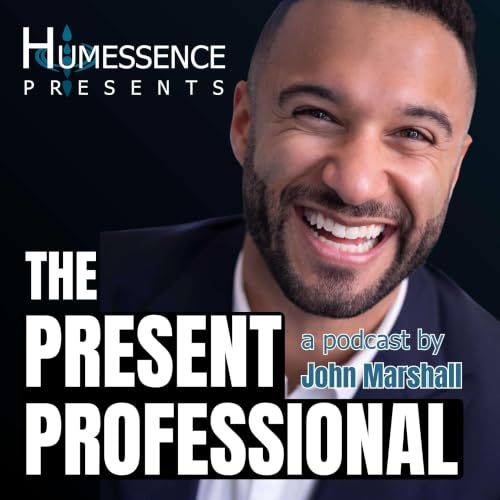
『The Present Professional』のカバーアート

The Present Professional

The Present Professional

著者: John Marshall
無料で聴く

【Amazonプライム会員限定】今ならプレミアムプランが4か月 月額99円。

10月19日まで。※適用条件あり

The Present Professional is where leadership meets consciousness.


Hosted by John Marshall — executive coach, speaker, and founder of Humessence — this podcast explores what it means to lead well, live intentionally, and build success with presence.


Each episode dives into conversations and reflections on human-centered leadership, emotional intelligence, and conscious culture. You’ll hear from leaders, coaches, and thinkers redefining the future of work — and learn practical ways to bring balance, clarity, and authenticity to your own leadership journey.


Whether you’re developing yourself, your team, or your organization, The Present Professional helps you integrate who you are with what you do.

© 2026 The Present Professional
マネジメント マネジメント・リーダーシップ リーダーシップ 出世 就職活動 経済学
エピソード
  • 087 - Creating a Culture of Grace at Work with Alan Derek Utley
    2026/09/17

    In this thoughtful and practical conversation, John Marshall sits down with Alan Derek Utley, HR executive, speaker, and founder of Culturate Advisory, to explore how good, well-intentioned leaders can unintentionally contribute to unhealthy workplace cultures. Drawing from more than 25 years in HR and leadership development, Alan introduces the idea of accidental toxicity and explains how hidden pressures, perfectionism, fear, and organizational expectations can quietly shape the way people lead and work. At the center of the conversation is Alan's concept of Fanatical Grace, a leadership approach that creates space for people to be human while still holding clear standards for performance and growth. John and Alan unpack why accountability and acceptance do not have to exist at opposite ends of the spectrum, how labels like "negative" or "micromanager" can keep teams stuck, and why constructive curiosity can lead to better conversations than criticism alone. They also explore psychological safety, productive conflict, the behaviors leaders model under pressure, and the role HR plays in aligning policies, incentives, and leadership expectations with the culture an organization actually wants. This episode offers a grounded look at how small moments of grace can interrupt toxic patterns, strengthen trust, and help people perform at a higher level without sacrificing their humanity.

    Resources:
    Alan Derek Utley - https://alanderekutley.com/
    The Grace Period Newsletter - https://www.linkedin.com/newsletters/the-grace-period-7333176031089963008
    CliftonStrengths - https://www.gallup.com/cliftonstrengths/en/

    Connect with Alan Derek Utley:
    LinkedIn - https://www.linkedin.com/in/alanderekutley
    Website - https://alanderekutley.com/
    TikTok - https://www.tiktok.com/@alanderekutley

    Takeaways

    Most workplace toxicity is not created by people intentionally trying to harm others; it often develops when good people respond poorly to hidden pressure, fear, unrealistic expectations, and systems that reward the wrong behaviors.

    Leaders do not have to choose between accountability and acceptance. Healthy leadership holds people responsible for results while still recognizing their humanity, circumstances, and capacity to learn.

    A simple check-in can feel like micromanagement when trust is already strained, which makes understanding how leadership behavior is experienced just as important as understanding the leader's intention.

    Labels like "negative," "difficult," or "not a team player" can shut down understanding. Replacing those labels with observable behaviors and genuine questions creates space to discover what is actually happening.

    Constructive curiosity can be more useful than constructive criticism because asking what is behind a behavior often reveals problems, pressures, or information that judgment alone would miss.

    Grace does not mean ignoring mistakes or lowering expectations. It means acknowledging that something went wrong, separating the mistake from the person's identity, and then working together to make the next outcome better.

    Hidden pressures often come from the person we believe we are supposed to be at work, such as the leader who always has the answer, the employee who never misses work, or the executive who prioritizes business at any personal cost.

    Leaders teach culture through the behaviors they model. Telling employees to disconnect on vacation means little if the leader continues answering emails throughout their own time away.

    Psychological safety grows when people know they can question decisions, disagree respectfully, admit mistakes, and raise concerns without being immediately punished or labeled.

    Creating a grace-fueled culture requires more than individual good intentions. Organizations must examine their policies, incentives, leadership behaviors, performance measures, and cultural norms to ensure the entire system supports the behaviors they say they value.

    Visit The Present Professional webpage on humessence.com and learn more about how we support leadership development and culture enablement at growth-stage organizations.


    Thank you for listening.

    Coach John Marshall | Instagram | LinkedIn

    続きを読む 一部表示
    1 時間 17 分
  • 086 - Building Emotional Intelligence and Workforce Readiness with Coach Monique DeMonaco
    2026/09/03

    In this deeply personal and practical conversation, John Marshall sits down with Coach Monique DeMonaco, founder of EQ Wize, internationally trained life, leadership, executive, and career coach, and emotional intelligence expert, to explore why self-awareness and soft skills have become essential for success in work and life. Monique shares her remarkable journey from growing up in an environment with little emotional intelligence, being told she would never attend college, and struggling with limiting beliefs, to earning an MBA and building a coaching practice that has helped people around the world. She explains why lasting behavior change begins with understanding what sits beneath the behavior, introduces her framework for the four core beliefs that contribute to human suffering, and shows how awareness can create greater compassion for ourselves and others. The conversation then turns to young professionals and the workplace, examining why technical qualifications alone are no longer enough, how parenting and societal shifts have influenced resilience and confidence, and what families and organizations can do to help the next generation become more prepared for adulthood and work. Filled with accessible tools, candid stories, and practical strategies, this episode offers a powerful reminder that the more aware we become, the more choice we have in who we become next.

    Resources:
    EQ Wize
    Coach Monique Website
    Failure to Launch Program

    Connect with Coach Monique DeMonaco

    Special Offer for The Present Professional Listeners:

    Use promo code TPP when working with Coach Monique or EQ Wize.

    Coaching - Coach Monique's coaching programs typically include eight sessions. The Present Professional listeners receive a ninth session at no additional cost.

    EQ Wize - Receive 15% off an EQ Wize course using promo code TPP.

    Takeaways

    • Awareness is the starting point for meaningful change because it is difficult to change a behavior when you do not understand the thought, belief, expectation, or past experience driving it.
    • What appears to be a problem behavior is often a coping mechanism or consequence of something deeper, which is why changing behavior alone may not create lasting results.
    • Monique's four-part framework examines beliefs around not being enough, believing what you want is unavailable to you, fearing rejection, and needing connection as possible roots of recurring emotional and behavioral patterns.
    • Separating behavior from identity creates room for growth because making a mistake or receiving difficult feedback does not mean there is something fundamentally wrong with who you are.
    • Self-awareness can increase compassion for other people because understanding the beliefs underneath your own reactions makes it easier to become curious about what may be driving theirs.
    • Resilience grows when people learn to see failure as an experience rather than evidence that they themselves are a failure.
    • Parents can unintentionally reduce resilience when they repeatedly remove consequences, solve problems their children are capable of solving, or protect them from experiences that build independence and confidence.
    • Standards are a vote of confidence because expecting a young adult to contribute, take responsibility, and solve appropriate problems communicates that you believe they are capable.
    • Technical skills may help someone qualify for an opportunity, but emotional intelligence, communication, critical thinking, professionalism, and the ability to read a room can strongly influence what happens once they are in the interview or workplace.
    • Organizations preparing the next generation of talent should clearly communicate how they invest in development, provide opportunities for growth, and give people the tools they need to become more capable professionals rather than treating development as punishment.

    Visit The Present Professional webpage on humessence.com and learn more about how we support leadership development and culture enablement at growth-stage organizations.


    Thank you for listening.

    Coach John Marshall | Instagram | LinkedIn

    続きを読む 一部表示
    1 時間 10 分
  • 085 - How to Measure Leadership Readiness with Logan Yonavjak
    2026/08/20

    In this forward-looking conversation, John Marshall sits down with Logan Yonavjak, co-founder and CEO of the Readiness Engine, to explore one of the hardest questions organizations face: how do you know who is actually ready for the next level of leadership? Drawing from her background in capital allocation, investing, and organizational decision-making, Logan explains why charisma, credentials, tenure, and past performance often provide an incomplete picture of future leadership capacity. She introduces the adult developmental psychology behind the Readiness Engine and explores how linguistic analysis and AI can surface patterns in strategic complexity, coachability, relational intelligence, resilience, purposeful agility, and the ability to create psychological safety. John and Logan also examine how identity, culture, trauma, and mindset can shape development, how organizations can make succession and promotion decisions with greater objectivity, and why AI should augment human judgment rather than replace it. From uncovering overlooked leadership potential to creating more accessible paths for development and coaching, this episode offers a fascinating look at how organizations can move beyond instinct and begin measuring what readiness for complexity actually looks like.

    Resources:
    Readiness Engine
    Readiness Engine Methodology
    Immunity to Change by Robert Kegan and Lisa Lahey
    Spiral Dynamics by Don Beck and Christopher Cowan

    Connect with Logan Yonavjak: LinkedIn | Website

    Takeaways

    • Past performance, credentials, visibility, and charisma can tell you where someone has been, but they do not necessarily tell you whether that person is ready for the complexity of the next role.
    • Adult development continues across decades, and leadership capacity can expand as people become able to hold more perspectives, manage greater complexity, and see situations with increasing objectivity.
    • Strategic complexity is not simply knowing more information; it is the ability to coordinate multiple perspectives, competing priorities, and longer-term consequences without collapsing them into an overly simple answer.
    • Coachability and identity flexibility may be foundational to leadership development because people who can separate feedback from their sense of self are better positioned to learn, adapt, and change.
    • Culture, language, biology, personal experience, and trauma can all influence how fixed or flexible someone becomes in their identity, making development far more nuanced than labeling someone as having either a growth or fixed mindset.
    • Relational intelligence matters because leaders do not operate alone, and paying attention to what people do not say can reveal important patterns about empathy, relationships, and how they interact with others.
    • Team Climate IQ reflects a leader's ability to create the psychological safety necessary for people to speak honestly, share ideas, take interpersonal risks, and perform at their best.
    • Resilience is not simply enduring more stress; it includes developing practices, relationships, and systems that help regulate the nervous system, recover from pressure, and reduce the likelihood of burnout.
    • AI and linguistic analysis can provide organizations with an additional perspective on leadership capacity, but the goal should be to augment human decision-making and make biases easier to examine rather than hand employment decisions entirely to an algorithm.
    • The most valuable leadership assessment is not one that permanently labels someone as ready or not ready; it creates a developmental baseline and helps identify what that person can work on to increase their capacity for the next level.

    Visit The Present Professional webpage on humessence.com and learn more about how we support leadership development and culture enablement at growth-stage organizations.


    Thank you for listening.

    Coach John Marshall | Instagram | LinkedIn

    続きを読む 一部表示
    1 時間 8 分
adbl_web_anon_alc_button_suppression_t1
まだレビューはありません