エピソード

  • Episode 370 with 'Pemi Aguda, Author of One Leg on Earth and Wondrous Writer of the Surreal and the Incredibly Real, the Subtle and the Resonant
    2026/11/17
    Notes and Links to ‘Pemi Aguda’s Work ‘Pemi Aguda is from Lagos, Nigeria. She is the author of One Leg on Earth and Ghostroots, a finalist for the 2024 National Book Awards in Fiction, the LA Times First Fiction Prize, the NYPL Young Lions Award, and the PEN/Faulkner Award. She has an MFA from the Helen Zell Writers’ Program at the University of Michigan, and her short stories have won O. Henry Prizes, a Nommo Award for Short Story, a Henfield Prize, and the Writivism Prize. Her work has been supported by an Octavia Butler Memorial Scholarship, and her novel-in-progress won the 2020 Deborah Rogers Foundation Writers Award. She was a 2021 Fiction Fellow with the Miami Book Fair, a MacDowell fellow, and is the current Hortense Spillers Assistant Editor at Transition Magazine. W. W. Norton, Virago, and Masobe published Ghostroots in 2024, and her debut novel, One Leg on Earth, in May 2026. Buy One Leg on Earth 'Pemi Aguda's Website Review of One Leg on Earth with Locus Mag At about 2:40, ‘Pemi responds to Pete’s questions about her early language and literary life At about 7:30, ‘Pemi talks about reading widely and “traveling” through this varied reading At about 9:15, ‘Pemi describes some of the writing and writers who continue to inspire her and push her work forward At about 10:30, ‘Pemi responds to Pete’s question about how she developed her voice At about 13:00, ‘Pemi highlights the wonderful person and writer that Edwidge Danticant is At about 14:30, Pete asks ‘Pemi about the balance between allegory and plot and structural planning, and she expands on the seeds for the book At about 16:30, ‘Pemi talks about the interviews she did with displaced groups in Lagos that informed so much of her book, as well as an important TED Talk by Olutimehin Adegbeye At about 19:55, The two discuss the book’s epigraphs and ‘Pemi responds to Pete asking her perspective in returning to Lagos to write about it At about 21:45, Pete lays out the book’s Prologue and exposition At about 23:00, ‘Pemi talks about positioning Yosoye, the book’s protagonist, as an “outsider” At about 25:20, The YSC-Youth Service Corps-is explained by ‘Pemi At about 27:15, “Pemi reflects on Yosoye’s first reactions to the stories of the pregnant women in Lagos dying by walking into the water At about 29:30, “Pemi responds to Pete’s question about “sowing doubt” in the book, and she points to Shirley Jackson’s work as one she appreciates At about 33:00, The two discuss building over displaced communities and “progress” At about 38:00, ‘Pemi expands on ideas of self-sufficiency and power dynamics in some places in Nigeria At about 40:40, ‘Pemi responds to Pete’s question about Yosoye’s pregnancy and writing block, as well as the importance of The Architect and his view of the parallels between pregnancy and the burgeoning new community being built At about 45:00, Beloved, an eccentric character, is discussed in terms of her motives At about 48:50, ‘Pemi reflects on a pivotal flashback scene that deals with feeling out of place At about 51:30, ‘Pemi responds to Pete asking about “in-betweens” and the balance between Yosoye’s contradictory feelings At about 54:30, ‘Pemi reflects on The Architect and a local chief and the importance of their conversation and differing styles At about 57:00, ‘Pemi explains the “music” of the Nigerian addition of “O” to their speech At about 58:10, Pete recounts a pivotal support group scene At about 59:00, Jonah, an important character representative of Lagos’ past, is discussed You can now subscribe to the podcast on Apple Podcasts, and leave me a five-star review. You can also ask for the podcast by name using Alexa, and find the pod on Stitcher, Spotify, and on Amazon Music. Follow Pete on IG, where he is @chillsatwillpodcast, or on Twitter, where he is @chillsatwillpo1. You can watch other episodes on YouTube-watch and subscribe to The Chills at Will Podcast Channel. Please subscribe to both the YouTube Channel and the podcast while you’re checking out this episode. Pete is very excited to have one or two podcast episodes per month featured on the website of Chicago Review of Books. The audio will be posted, along with a written interview culled from the audio. His conversation with Jeff Pearlman, a recent guest, is up now at Chicago Review. Sign up now for The Chills at Will Podcast Patreon: it can be found at patreon.com/chillsatwillpodcastpeterriehl Check out the page that describes the benefits of a Patreon membership, including cool swag and bonus episodes. Thanks in advance for supporting Pete’s one-man show, DIY podcast and extensive reading, research, editing, and promoting to keep this independent podcast pumping out high-quality content! This month’s Patreon bonus episode is the second episode for Pete’s limited ...
    続きを読む 一部表示
    1 時間 8 分
  • Episode 369 with De'Shawn Charles Winslow, Author of The Fervent Whites and Skilled Craftsman of Nuanced Characters and Psychological Thrills
    2026/11/15
    Notes and Links to De'Shawn Charles Winslow’s Work De'Shawn Charles Winslow is the author of In West Mills, which won a Center for Fiction First Novel Prize, an American Book Award, a Willie Morris Award for Southern Fiction, and was a finalist for other awards and prizes. His other novels include Decent People (2023) and The Fervent Whites (2026). De’Shawn was born and raised in Elizabeth City, North Carolina, and graduated from the Iowa Writers’ Workshop. Buy The Fervent Whites De'Shawn's Website Review of The Fervent Whites at Kirkus Reviews At about 1:35, De'Shawn talks about feedback he’s received on The Fervent Whites At about 4:45, De'Shawn talks about his early reading and writing life and formative and transformative reads At about 9:00, De'Shawn talks about S.A. Cosby and Deesha Philyaw as current writers who thrill At about 11:50, The two discuss the time period where the book is set, and De'Shawn talks about his balance of research and forethought and “inhabiting the characters” At about 15:50, De'Shawn reflects on the balance between allegory, satire, and plot in his novel At about 17:30, De'Shawn traces his interest in the word “fervent” and the b At about 19:35, Pete traces the book’s exposition At about 21:40, Sil, the book’s protagonist, and her history with interracial adoption are discussed, as well as the passion Sil feels for Morgan, the narrator At about 25:10, De'Shawn describes why the White family becomes furious Sil At about 27:10, De'Shawn reflects on nomenclatures and labels used by Black queer men and the character of Fate and his friendship At about 30:20, The two talk about the guilt and uncertainty that propels the book forward At about 32:20, The two detail a fight that set up a pivotal murder in the novel At about 34:40, De'Shawn recounts how the Whites were exonerated for murder, and he responds to Pete’s questions about researching and crafting a serial killer At about 38:00, Pete asks De’Shawn about the nuanced way he writes Ella as against stereotype At about 42:10, The two reflect on the “white gaze” and race and racism in connection to the book, and James White At about 44:15, Pete asks De’Shawn about the ways in which the people of the hamlet underappreciate a real threat At about 46:20, The two discuss how personal and societal history figure in to the book At about 47:30, De’Shawn responds to Pete asking about satire and allegory and “judging [his] characters” or not, with a nod to the ways in which Toni Morrison wrote so skillfully You can now subscribe to the podcast on Apple Podcasts, and leave me a five-star review. You can also ask for the podcast by name using Alexa, and find the pod on Stitcher, Spotify, and on Amazon Music. Follow Pete on IG, where he is @chillsatwillpodcast, or on Twitter, where he is @chillsatwillpo1. You can watch other episodes on YouTube-watch and subscribe to The Chills at Will Podcast Channel. Please subscribe to both the YouTube Channel and the podcast while you’re checking out this episode. Pete is very excited to have one or two podcast episodes per month featured on the website of Chicago Review of Books. The audio will be posted, along with a written interview culled from the audio. His conversation with Jeff Pearlman, a recent guest, is up now at Chicago Review. Sign up now for The Chills at Will Podcast Patreon: it can be found at patreon.com/chillsatwillpodcastpeterriehl Check out the page that describes the benefits of a Patreon membership, including cool swag and bonus episodes. Thanks in advance for supporting Pete’s one-man show, DIY podcast and extensive reading, research, editing, and promoting to keep this independent podcast pumping out high-quality content! This month’s Patreon bonus episode is the second episode for Pete’s limited podcast series, Rage is a Gift: Evil Empire at 30. Pete reflects on the Importance (and the power of this capital "I") of Rage Against the Machine and their seminal Evil Empire album, which is celebrating 30 years of resistance. The episode focuses on the opening track, “People of the Sun.” The limited podcast series will do a deep exploration of, and reflection on, the lyrics and context of each of the 12 powerful songs on the album. Pete has added a $1 a month tier for “Well-Wishers” and Cheerleaders of the Show. The intro song for The Chills at Will Podcast is “Wind Down” (Instrumental Version), and the other song played on this episode was “Hoops” (Instrumental)” by Matt Weidauer, and both songs are used through ArchesAudio.com. Please tune in for Episode 370 with ‘Pemi Aguda is from Lagos, Nigeria. She is the author of One Leg on Earth and Ghostroots, a finalist for the 2024 National Book Awards in Fiction, the LA Times First Fiction Prize, the NYPL Young Lions Award, and the PEN/Faulkner Award. W. W. Norton, ...
    続きを読む 一部表示
    55 分
  • Episode 368 with Alex Pappademas, Brilliant and Possessor of a Singular, Wondrous Voice and Author of Friends of the Devil: West Texas Cowboys, Brown-Eyed Women, and Other Sunshine Daydreamers from...
    2026/11/04
    Notes and Links to Alex Pappademas’s Work Alex Pappademas is the Senior Culture Editor of GQ. He has been writing about music, film, television and other forms of popular culture for over 20 years. He is the author of Keanu Reeves: Most Triumphant— The Movies and Meaning of an Irrepressible Icon (2022, Abrams Image) and the coauthor, with Joan LeMay, of Quantum Criminals: Ramblers, Wild Gamblers, and Other Sole Survivors From the Songs of Steely Dan (2023, University of Texas Press). His work has also appeared in The New York Times Magazine, the Los Angeles Times, and Grantland. He is based in Los Angeles. Buy Friends of the Devil: West Texas Cowboys, Brown-Eyed Women, and Other Sunshine Daydreamers from the Songs of the Grateful Dead Alex Pappademas' Page with GQ Review of Friend of the Devil with Biblio Sanctum At about 2:30, Alex talks about the “apprehension” and “excitement level” that comes with his book publication and highlights the wonderful physical book with art by Joan LeMay At about 5:50, Alex lays out his book tour events At about 7:25, Alex outlines his early reading, and how his interest in music and criticism propelled him forward as a writer At about 11:10, Steely Dan and The Band debate and shout outs! At about 14:50, Pete cites the interconnectedness of the “Great American Songbook” and how adroitly Alex covered this in his book At about 15:50, The two discuss an incredible scene involving Bob Dylan and Stevie Wonder and Bob Dylan’s possibly apocryphal stories At about 20:00, Alex responds to Pete’s asking about what made him a Grateful Dead fan after initially sneering at the band At about 23:20, Alex talks about getting into the Grateful Dead “communally” until later in their modern run and how he heard so much Grateful Dead via archives At about 27:00, Pete cites the book’s epigraph and those who are yet to explore the Grateful Dead At about 28:00, Pete cites the book’s first chapter and ideas of travel and being on the road, involving “Bertha” and so many songs, and Alex expands on the "ambiguity" of Jerry Garcia versus lyrics of Robert Hunter’s less so At about 32:20, The two talk about the Grateful Dead’s “Dark Star” and its history as a “jam” At about 33:20, Alex highlights looping and layering in music and how John Oswald’s album helped solidify his Grateful Dead fandom At about 36:40, Alex expands on the ways in which so many different musical groups and movements have been influenced by The Grateful Dead At about 43:00, Alex responds to Pete’s questions about the ethos of the Dead and their reactions to tragedies that unfolded around the band and its fans At about 47:00, Alex homes in on the Dead, especially Jerry, and their drug use and the effects of the drugs At about 51:35, Pete connects the Dead’s hesitancy to tell others what to do to a classic scene from The Simpsons At about 54:15, The two reflect on an iconic and heartbreaking photo that is featured in the book and is the genesis of an iconic American and Dead song-”I Know You Rider” At about 56:10, Pete highlights the skillful ways in which Friend of the Devil… traces the history of The Dead and América in the 20th century At about 57:10, Pete wonders about the political leanings of The Dead, and Alex cites a lot of “ambivalence” At about 1:03:20, Pete gives props to Alex for his writing in Friend of the Devil… as both personal and not At about 1:04:00, Pete fanboys over Alex’s great run as writer of “The Kardashiad” You can now subscribe to the podcast on Apple Podcasts, and leave me a five-star review. You can also ask for the podcast by name using Alexa, and find the pod on Stitcher, Spotify, and on Amazon Music. Follow Pete on IG, where he is @chillsatwillpodcast, or on Twitter, where he is @chillsatwillpo1. You can watch other episodes on YouTube-watch and subscribe to The Chills at Will Podcast Channel. Please subscribe to both the YouTube Channel and the podcast while you’re checking out this episode. Pete is very excited to have one or two podcast episodes per month featured on the website of Chicago Review of Books. The audio will be posted, along with a written interview culled from the audio. His conversation with Jeff Pearlman, a recent guest, is up now at Chicago Review. Sign up now for The Chills at Will Podcast Patreon: it can be found at patreon.com/chillsatwillpodcastpeterriehl Check out the page that describes the benefits of a Patreon membership, including cool swag and bonus episodes. Thanks in advance for supporting Pete’s one-man show, DIY podcast and extensive reading, research, editing, and promoting to keep this independent podcast pumping out high-quality content! This month’s Patreon bonus episode is the second episode for Pete’s limited podcast series, Rage is a Gift: Evil Empire at 30. Pete reflects on the Importance (and the power of ...
    続きを読む 一部表示
    1 時間 15 分
  • Episode 367 with Patrick Strickland, Author of A History of Heartache, and Bold and Talented Chronicler of Interesting and Memorable People in Fiction and in Real Life
    2026/11/04
    Notes and Links to Patrick Strickland’s Work Patrick Strickland is a journalist, editor, and fiction writer from Texas. He is the author of the acclaimed short story collection A History of Heartache (Melville House 2026) and three nonfiction books about migration and the far right, including You Can Kill Each Other After I Leave: Refugees, Fascism, and Bloodshed in Greece (Melville House 2025). His reportage has appeared at the New York Review of Books, The Nation, TIME, LitHub, TomDispatch, and The Guardian, among others. His short fiction has been published at literary magazines including Epiphany, Porter House Review, Pithead Chapel, Salvation South, Doric Literary, Hunger Mountain, and the Los Angeles Review. He currently works as the managing editor of Inkstick Media. In the past, he has worked as an editor and reporter at the Dallas Observer, The Dallas Morning News, Syria Deeply, and Al Jazeera English. He was a 2024 de Groot Foundation Writer of Note and a 2023 Lando Award finalist. Buy A History of Heartache Patrick Strickland's Website Review of A History of Heartache in Southern Review At about 2:10, Patrick talks about his early reading and writing and the two discuss the greatness of R.L. Stine At about 4:00, Patrick cites a wrestling injury and Less Than Zero and The Stranger as changing his literary trajectory At about 6:05, Patrick links the “solace” from The Stranger to drug deaths in his hometown At about 9:20, Patrick gives background on a real-life tasteless and “demeaning” article and news coverage of drug deaths in Plano, TX, and how it connects to his short fiction in A History of Heartache At about 10:45, Patrick responds to Pete’s question about contemporary writers who push his work forward At about 11:55, Pete asks Patrick about his path to writing nonfiction and working in Greece; he traces his early jobs and travel in Palestine and other parts of the Middle East At about 15:45, Patrick responds to Pete asking about the “daily indignities” experienced by Palestinians during his circa-2011 teaching in Ramallah At about 20:00, The two discuss anger and grief in the story collection and Patrick reflects on judgment of his characters, or lack thereof At about 22:25, Pete remarks on the power of the book’s thematically-linked stories, and Patrick talks about not wanting to “limit the stories [he] had” by being too detailed with connections between stories in the collection At about 25:10, Patrick responds to Pete’s questions about the stories’ settings At about 28:15, the two talk about ideas of peer pressure and masculinity in the story collection At about 32:45, Patrick responds to Pete asking about a story that features dementia, as well as women in the stories at times being “collateral damage” At about 36:20, Patrick talks about writing a story possibly from a state of “anxiety” and lack of knowing At about 37:20, The two discuss ideas of “home” as a shifting ideal and Patrick talks about “clicking on a voice” in “Screaming East on a I-10” At about 39:35, Patrick responds to Pete’s question about tweaks to the above-mentioned story, and talks about not being "precious" about edits of his work At about 41:15, Patrick talks about real-life connections from his life to SoCal living and interesting roommates At about 43:40, The ideas of religion and faith and phases of life in the collection are discussed At about 47:25, Patrick cites the collections’s first story and how people often dismiss other’s hurt At about 48:30, A violent patriot (“General Holy War” (!)) and his significance is discussed, as Patrick talks about conspiracy theories in his fiction and in his reporting work At about 52:10, Pete and Patrick talk about iconic character Jimmy Dodge and “ma[king] it” and the real-life ways in which old friends and acquaintances disappear and don’t At about 54:30, Patrick reflects on differences in his upcoming story collection and A History of Heartache and “tender[ness]” At about 56:05, Patrick discusses reader and critic (and friend!) feedback for his story collection You can now subscribe to the podcast on Apple Podcasts, and leave me a five-star review. You can also ask for the podcast by name using Alexa, and find the pod on Stitcher, Spotify, and on Amazon Music. Follow Pete on IG, where he is @chillsatwillpodcast, or on Twitter, where he is @chillsatwillpo1. You can watch other episodes on YouTube-watch and subscribe to The Chills at Will Podcast Channel. Please subscribe to both the YouTube Channel and the podcast while you’re checking out this episode. Pete is very excited to have one or two podcast episodes per month featured on the website of Chicago Review of Books. The audio will be posted, along with a written interview culled from the audio. His conversation with Jeff Pearlman, a recent guest, is up now at Chicago Review....
    続きを読む 一部表示
    1 時間 3 分
  • Episode 366 with Scott Eden: Author of A Killing In Cannabis: A True Story of Love, Murder, and California Weed and Dogged Reporter and Impeccably Smooth Writer
    2026/11/02
    Notes and Links to Scott Eden’s Work Scott Eden is an investigative reporter whose work has focused on crime, corruption, injustice, business, science, technology, and the dark side of sports. He’s the author of the critically acclaimed A Killing in Cannabis: A True Story of Love, Murder, and California Weed (Spiegel & Grau, February 2026), hailed by the New York Times as “an exhilarating, deeply reported true-crime murder mystery and love story that moves like a Netflix thriller,” and by Publishers Weekly as “top-shelf suspense . . . True crime doesn’t come much better than this.” Eden has written for ESPN The Magazine, GQ, Wired, Rolling Stone, The Atavist,The Believer and many other publications, and his stories have been anthologized in Best American Sports Writing and in The Believer's best-of collection, Read Hard (McSweeney's, 2009). His story "No One Walks Off the Island," about the smuggling of baseball players out of Cuba, was a finalist for the 2015 National Magazine Award in reporting. His story "The Prosecution of Thabo Sefolosha," about an explosive incident of NYPD police brutality, won a 2017 New York Press Club Award, as well as a 2017 National Association of Black Journalists award for investigative reporting. His reexamination of the biggest match-fixing scandal in modern American sports, "The Fix Was in the Whistle," was a finalist for the 2020 Dan Jenkins Medal for Excellence in Sports Writing. Eden’s first book, Touchdown Jesus (Simon & Schuster, 2005), is a work of narrative nonfiction that examines college football fanaticism through the lens of Notre Dame. Buy A Killing in Cannabis: A True Story of Love, Murder, and California Weed Scott Eden’s Website Review by Tas Tobey in The New York Times of A Killing in Cannabis At about 2:00, the two lament the loss of Sports Illustrated and the long form storytelling and Notre Dame sports that inspired both Pete and Scott At about 4:40, Rudy talk! At about 5:10, Scott responds to Pete’s question about writers who inspired and thrilled him, including David Graham and Susan Orlean, as well as his contemporaries who thrill and inspire At about 8:55, Scott cites “reporting” as a highlight for him At about 10:25, Scott responds to Pete’s question about seeds for A Killing in Cannabis… At about 12:25, the two discuss the book’s epigraphs, and Pete asks Scott about the balance between writing about an evocative mystery and the very real pain of the victim’s family and friends At about 15:00, The two discuss the ways in which the murder victim of the book, Tushar Atre, are so “multifaceted” At about 16:50, Pete lays out the book’s resonant two timelines and Scott remarks on his rationale At about 19:10, Scott responds to Pete asking about the cannabis world meeting the tech world, as seen in the book At about 22:25, the two talk about the “interstitial” time that sparked the particular “boom” period in cannabis sales that occurred during the time of the book’s narrative At about 23:30, The two discuss the early days of Rachel Lynch and Tushar’s business and personal relationships and Rachel’s balance between capitalism and the “sacredness” of cannabis At about 28:25, The two discuss the contradictions of Tushar and Tushar and ideas of “the Chads”/relative newbies versus those who had been in the cannabis business for so long At about 30:55, Pete outlines some of the interesting characters in the book At about 32:00, Scott outlines some of the history of cannabis sales-illegal and not-in the Santa Cruz area At about 37:30, the “chaotic” life and business of Atre and Rachel is recounted, as well as Rachel’s big loss of money and becoming even more indebted to Tushar At about 41:30, Tushar’s continuing flouting of norms in business practice is discussed At about 43:15, The two muse on why Rachel stayed in the relationship with Tushar At about 43:25, Pete highlights Scott’s “impeccable” reporting At about 45:20, Pete asks Scott about maintaining perspective in the midst of the “zooming in” for reporting, and how he maintained such a “coherent” writing style You can now subscribe to the podcast on Apple Podcasts, and leave me a five-star review. You can also ask for the podcast by name using Alexa, and find the pod on Stitcher, Spotify, and on Amazon Music. Follow Pete on IG, where he is @chillsatwillpodcast, or on Twitter, where he is @chillsatwillpo1. You can watch other episodes on YouTube-watch and subscribe to The Chills at Will Podcast Channel. Please subscribe to both the YouTube Channel and the podcast while you’re checking out this episode. Pete is very excited to have one or two podcast episodes per month featured on the website of Chicago Review of Books. The audio will be posted, along with a written interview culled from the audio. His conversation with Jeff Pearlman, a ...
    続きを読む 一部表示
    53 分
  • Episode 365 with Joe Bond, Author of Hope House, and Master of Worldbuilding, Wonderfully Immediate Dialogue and Characters, and Genuine Profundity
    2026/10/30
    Notes and Links to Joe Bond’s Work Joe Bond is an award-winning short story writer whose debut novel HOPE HOUSE explores the lives of a group of troubled teenage boys in a treatment program in the late 1980s. Bond grew up around such homes in eastern Kentucky and began working in them when he was still in high school, starting out on night shift and later spending his summers as the primary child care worker for a group of teenagers barely younger than he was. He heard firsthand the stories of hundreds of boys and followed their journeys from intake to aftercare. He took them home when they graduated and searched for them when they ran away. He began drafting HOPE HOUSE after his story “Damico” won The Masters Review Short Story Award. The first pages were put down in Atlanta, much of the writing was done in Manhattan at the height of the pandemic, and the novel was completed where he lives now with his family in New Orleans. Buy Hope House Joe Bond's Website Review of Hope House At about 2:05, Joe talks about feedback he’s received on Hope House At about 3:05, Joe traces the seeds and progression for/of writing this book At about 4:20, Joe shares more feedback on the book’s characters and what it’s like to have the book in the world At about 6:20, Joe gives background on his childhood and sporting life and coming to reading “later” At about 9:15, Pete and Joe discuss UK and Santa Clara Basketball At about 10:00, Joe responds to Pete’s questions about his writing influences At about 12:10, Joe discusses how a short story blossomed into the book At about 13:40, Joe talks about “growing up around the boys” in youth homes and his unique experience At about 15:00, Joe reflects on an emblematic scene from the book in which the head counselor, Mr. Watts gives the boys autonomy and respect At about 16:10, Joe makes connections and talks about differences between Mr. Watts and his father, and Billy Ocean’s greatness At about 18:00, Pete sets some of the book’s exposition At about 19:10, Joe reflects on the meanings of the boys at the group home calling each other “peers” At about 21:25, Pete and Joe discuss the lies and storytelling the peers undertake At about 22:40, Joe responds to Pete asking about the boys and their sense of guilt and responsibility and “nature vs. nurture”/free will At about 24:20, Joe reflects on the important quote of “Truth made us liars” At about 25:30, Pete and Joe cite the significance of a long-awaited local news story At about 28:15, the two discuss the “finality” of a peer who isn’t expected to be a father At about 29:45, The two discuss some of the dynamic characters and scenes in the book, involving peers, counselors, and parents At about 30:30, Joe reads an excerpt from the book At about 32:40, Pete connects the wonderful ending of the excerpt to the wonderful ending of Wolff’s “Bullet in the Brain” At about 34:00, Joe gives insight into the chapter called “Visitation” and the genesis for this story about Sundays at the home At about 35:40, the two discusses the narrator’s omniscience and group homes versus detention, and ideas of “wearing mask[s]” At about 37:50, Watts and his life inside and outside of the group home is discussed At about 41:40, an unforgettable argument about leaving or staying at the home is discussed At about 43:10, Joe tells a story about the ripples of his youth experiences in response to Pete’s compliments about the “insular” nature At about 43:25, Pete remarks on the language and phrasing of the peers and Joe expands on the “weaponiz[ation]” of the language At about 47:00, the two talk about the diversity of all types of peers At about 51:25, Joe reflects on the importance of the “promises in their pockets” scene in the novel At about 54:20, the two discuss ideas of hope and hopelessness At about 56:00, Joe details Mr. Watts three-part philosophy for helping the young men of the home You can now subscribe to the podcast on Apple Podcasts, and leave me a five-star review. You can also ask for the podcast by name using Alexa, and find the pod on Stitcher, Spotify, and on Amazon Music. Follow Pete on IG, where he is @chillsatwillpodcast, or on Twitter, where he is @chillsatwillpo1. You can watch other episodes on YouTube-watch and subscribe to The Chills at Will Podcast Channel. Please subscribe to both the YouTube Channel and the podcast while you’re checking out this episode. Pete is very excited to have one or two podcast episodes per month featured on the website of Chicago Review of Books. The audio will be posted, along with a written interview culled from the audio. His conversation with Jeff Pearlman, a recent guest, is up now at Chicago Review. Sign up now for The Chills at Will Podcast Patreon: it can be found at patreon.com/chillsatwillpodcastpeterriehl Check out the page that describes ...
    続きを読む 一部表示
    1 時間 3 分
  • Episode 364 with Hannah Lillith Assadi, Author of Paradiso 17, and Wondrous Craftswoman of Beautiful Sentences, Moving Scenes, and Flawed and Beloved Characters
    2026/10/21
    Notes and Links to Hannah Lillith Assadi’s Work Hannah Lillith Assadi is the author of the Women's Prize long-listed novel Paradiso 17 (Knopf 2026), inspired by the life of her late Palestinian father. Her debut novel Sonora (Soho 2017) received the Rosenthal Family Foundation Award from the American Academy of Arts and Letters and was a finalist for the PEN/ Robert W. Bingham Prize. Her second novel The Stars Are Not Yet Bells (Riverhead 2022) was named a New Yorker and NPR best book of 2022. She is also the co-editor of an anthology of the poetry of Mahmoud Darwish, which will be published by Everyman’s Library/ Knopf in November 2026. She teaches fiction at Columbia University School of the Arts and the Pratt Institute. In 2018, she was named a '5 under 35' honoree by the National Book Foundation. Buy Paradiso 17 Hannah Lillith Assadi's Website Zain Khalid Review of Paradiso 17 in The New York Times At about 3:00, Hannah recounts the story of how she received the news that Paradiso 17 is on the National Book Awards shortlist At about 5:10, Hannah cites John Freeman as an incredibly dynamic and helpful editor At about 7:10, Hannah references the great work of editor PJ Mark, and talks about the ways in which she wrote and edited the book in the midst of her grief and “altered state of mind” after her father’s passing At about 8:10, Pete asks Hannah about writing something so personal and about the line between fiction and nonfiction, and she responds in giving a timeline of the book’s genesis and development At about 13:00, Hannah responds to Pete asking about seeing her father as a "legendary figure” At about 14:50, Hannah reflects on the book as “catharsi[s]” At about 16:40, the two discuss the book’s epigraph and ideas of exile At about 21:30, Pete highlights the “beautiful” writing from Pages 2-3 and Hannah reads an excerpt from this section At about 28:00, Hannah reflects on a lot of her reading about the afterlife informed the above excerpt and so much of her book At about 29:30, The two discuss Part I and the book’s exposition, as Hannah talks about real-life parallels to the fiction At about 33:10, the early days of the Nakba are related as happening in the book At about 36:00, The two reflect on the idea of people being dispossessed and exiled so quickly, as in the Holocaust and the Nakba At about 37:15, The two discuss the phenomenon of early memories and solipsism, as happens with protagonist Sufien At about 39:50, Hannah talks about deaths via grief and heartbreak and horrific natural conditions, post-Nakba At about 43:40, Hannah explains the seemingly counterintuitive “happiness” that Sufien experienced in Syrian refugee camps At about 45:30, Pete recounts part of Sufien’s father’s travails and tragedies At about 46:25, Hannah responds to Pete asking about Sufien/Hannah’s father, (i.e. “nature and nurture”) and what they would have been like without the “primal wound” of the Nakba At about 50:35, Pete asks Hannah about the timing of her father’s death so close to the beginning of the genocide in Gaza You can now subscribe to the podcast on Apple Podcasts, and leave me a five-star review. You can also ask for the podcast by name using Alexa, and find the pod on Stitcher, Spotify, and on Amazon Music. Follow Pete on IG, where he is @chillsatwillpodcast, or on Twitter, where he is @chillsatwillpo1. You can watch other episodes on YouTube-watch and subscribe to The Chills at Will Podcast Channel. Please subscribe to both the YouTube Channel and the podcast while you’re checking out this episode. Pete is very excited to have one or two podcast episodes per month featured on the website of Chicago Review of Books. The audio will be posted, along with a written interview culled from the audio. His conversation with Jeff Pearlman, a recent guest, is up now at Chicago Review. Sign up now for The Chills at Will Podcast Patreon: it can be found at patreon.com/chillsatwillpodcastpeterriehl Check out the page that describes the benefits of a Patreon membership, including cool swag and bonus episodes. Thanks in advance for supporting Pete’s one-man show, DIY podcast and extensive reading, research, editing, and promoting to keep this independent podcast pumping out high-quality content! This month’s Patreon bonus episode is the second episode for Pete’s limited podcast series, Rage is a Gift: Evil Empire at 30. Pete reflects on the Importance (and the power of this capital "I") of Rage Against the Machine and their seminal Evil Empire album, which is celebrating 30 years of resistance. The episode focuses on the opening track, “People of the Sun.” The limited podcast series will do a deep exploration of, and reflection on, the lyrics and context of each of the 12 powerful songs on the album. Pete has added a $1 a month tier for “Well-Wishers” and ...
    続きを読む 一部表示
    58 分
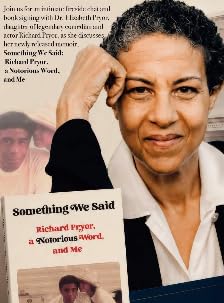
  • Episode 363 with Elizabeth Stordeur Pryor, Author of Something We Said: Richard Pryor, a Notorious Word, and Me, and Vulnerable and Keen-Eyed Writer of the Personal Made Societal
    2026/10/16
    Notes and Links to Elizabeth Stordeur Pryor’s Work Elizabeth Stordeur Pryor is a professor of history at Smith College where she teaches courses on race, slavery and her father, comedic legend Richard Pryor. She is the award-winning author of the article “The Etymology of [N-Word]: Resistance, Language, and the Politics of Freedom in the Antebellum North” and a 2016 book Colored Travelers: Mobility and the Fight for Citizenship before the Civil War. Her viral TED talk on why it's hard to talk about the n-word has been viewed over two million times. Something We Said, Richard Pryor, a Notorious Word, and Me is Professor Pryor’s latest book (37 Ink an imprint of Simon & Schuster, 2026). The book is a braided narrative that seamlessly integrates the history of the n-word with her own story of growing up half Black, half Jewish and all Pryor. It peels back the curtain on the life of the iconic comedian and interrogates the most perplexing word in the American lexicon, a word he helped popularize. Elizabeth lives in Massachusetts with her husband Jerry Stordeur and loves to go hiking and watch movies with their two grown kids, Lilli and Henry. Buy Something We Said: Richard Pryor, a Notorious Word, and Me Elizabeth Stordeur Pryor's Wikipedia Page People Magazine Article about Elizabeth Stordeur Pryor and Her Father’s Identity At about 1:40, Elizabeth talks about edifying feedback she’s gotten since publishing of Something We Said… At about 3:25, Elizabeth recounts a special gift received from her father, comedic legend Richard Pryor At about 5:25, Pete shouts out Traci Thomas’ analysis of Shakespeare and he and Eliaabth At about 6:45, Elizabeth reflects on her early reading life and highlights Pardon Me, You’re Stepping on My Eyeball At about 8:30, Pete and Elizabeth get a laugh out of an awkward father-daughter movie date At about 10:40, Elizabeth cites books and writers that she read that were more “connected to [her] experience” as she got into high school and college At about 11:40, the two talk about literature connected to Elizabeth’s high school and San Fernando Valley upbringing At about 13:40, Elizabeth talks about the opening up of perspectives and ideas in learning about much of Black history through her mature high school and college reading At about 15:30, Elizabeth talks about reading works that spoke to her and about sometimes “translating” texts At about 17:15, Elizabeth traces the seeds for the book-an event from 2010 in a college classroom involving Richard Pryor’s Blazing Saddles At about 19:40, Elizabeth traces the ways in which she has taught and said and written about the racial slur that informs much of the memoir At about 21:50, The two reflect on and share stories about discussion in the classroom At about 23:05, The two discuss Elizabeth’s connecting of her father’s standup to his unusual funeral At about 24:55, Pete charts the book’s structure, including Interludes that trace the ugly history of the racial slur At about 25:45, Elizabeth tells the story of the first time meeting her father At about 28:15, Elizabeth talks about a famous “epiphany” in 1967 for her father, and his evolving subject matter for his comedy At about 32:00, The two discuss a history and present of racism and segregation in Peoria, Illinois, Richard Pryor’s hometown At about 33:20, Elizabeth reflects on a pivotal incident and advice from her father after she was a victim of racist taunts-she refers to the "generational pain” she felt at that young age At about 34:50, Elizabeth responds to Pete asking about family parallels and tough conversations about racism in the Pryor family and beyond At about 38:00, Pete asks Elizabeth about her father’s private and public personas At about 39:40, Elizabeth refers to a “revelation hangover” in further explaining her father’s private and professional lives At about 40:15, Elizabeth talks her father “turning into a robot” when he was “resigned” to following his mother’s orders At about 41:50, Elizabeth talks about her dad as an “artist” with “intentional[ity]” and a top-notch work ethic At about 44:40, Elizabeth details conversation with Cecil Brown and others and Richard Pryor as he “curated” his work and thought critically about fame and art and creativity At about 46:05, The two discuss Elizabeth’s vulnerability in the book, and Elizabeth responds to Pete’s question about the experience in bearing her soul At about 48:50, Elizabeth and Pete reflect on the younger generations and their views and actions regarding race and racism You can now subscribe to the podcast on Apple Podcasts, and leave me a five-star review. You can also ask for the podcast by name using Alexa, and find the pod on Stitcher, Spotify, and on Amazon Music. Follow Pete on IG, where he is @chillsatwillpodcast, or on Twitter, where he is @chillsatwillpo1. You ...
    続きを読む 一部表示
    55 分