• The Hidden Link Between Patient Safety, Staff Joy, and Hospital Costs
    2026/07/20

    What if patient safety, staff wellbeing, and hospital financial performance are not separate problems to balance, but one connected system?

    In this episode of the Chief Healthcare Officer Podcast, Dr. Fatih Mehmet Gül sits down with Ken Segel, co-founder and former CEO of Value Capture, and Shana Padgett, Value Capture’s current CEO, to explore the philosophy and practice of Zero Harm in healthcare.

    Together, they unpack how hospitals can move beyond safety campaigns and improvement projects to build an operating system where harm prevention, psychological safety, frontline problem-solving, staff engagement, cost discipline, and technology all work together.

    Ken shares lessons from working alongside the late Paul O’Neill, whose leadership thinking helped bring Zero Harm from high-reliability industries into healthcare. Shana reflects on her own journey from frontline healthcare operations to improvement science, and why she first came to Value Capture partly to challenge the idea that Zero Harm was truly possible.

    The conversation also explores why safety cannot be treated as a nursing initiative alone, why hospital leaders must leave their offices and observe real work, how mistakes should become learning rather than punishment, and how AI and digital tools must earn their place by solving real problems at the bedside.

    In this episode, you’ll hear about:

    • What Zero Harm really means in healthcare
    • Why safety should be the way hospitals run the business, not an extra initiative
    • How patient safety, staff joy, quality, flow, and cost are deeply connected
    • Why punitive cultures prevent true improvement
    • How psychological safety helps frontline teams speak the truth
    • Why many Lean and improvement projects fail to sustain progress
    • How hospital CEOs can better understand daily work by going to the frontline
    • The role of technology, EHRs, and AI in harm-free care
    • The leadership legacy of Paul O’Neill and the future of Value Capture

    This is a conversation for healthcare executives, hospital CEOs, clinical leaders, quality and safety teams, and anyone interested in building safer, more humane, and more reliable healthcare systems.

    Check out Dr. Fatih's Connected Care Book on Amazon:
    https://www.amazon.com/Connected-Care-Transformation-Human-Centred-Healthcare/dp/9699797118

    Listen to the episode and let us know what you think using the contact form on our website: https://www.chiefhealthcareofficer.com.

    Follow Dr Fatih Mehmet Gül on LinkedIn - https://www.linkedin.com/in/drfameg/
    Visit Dr Fatih's Website - https://www.fatihmehmetgul.com/

    Subscribe to the CHO LinkedIn Newsletter - https://www.linkedin.com/newsletters/the-chief-healthcare-officer-6939938177927241728/

    続きを読む 一部表示
    1 時間 1 分
  • If We Know How to Stop Patient Harm, Why Is It Still Rising?
    2026/06/22

    In this episode of the Chief Healthcare Officer Podcast, Dr. Fatih Mehmet Gül speaks with Dr. Nicholas Testa, Chief Clinical Officer at Sentact, emergency physician, healthcare executive, and educator at the University of Southern California.

    The conversation begins with a difficult question: after decades of patient safety work, protocols, root cause analyses, high-reliability frameworks, and major investment in quality programs, why is preventable harm in hospitals still rising?

    Dr. Testa argues that the answer is rarely just another protocol. Even the best checklist can fail when a clinician feels it is safer to stay silent. Real patient safety depends on trust, psychological safety, accountability, leadership behaviour, and the daily culture inside hospitals.

    Drawing on his experience as an emergency physician, hospital CMO, regional clinical leader across 29 hospitals in California, and now Chief Clinical Officer at Sentact, Dr. Testa explains why healthy safety cultures often report more harm events, not fewer, because people feel safe enough to surface problems.

    The episode explores how healthcare leaders can build trust, manage incident reporting without creating fear, balance psychological safety with accountability, use data more intelligently, and make rounding and safety huddles part of the operating rhythm of the hospital.

    Topics discussed include:

    • Why preventable harm remains a major challenge in hospitals
    • Why “zero harm” can become dangerous if it discourages honest reporting
    • The difference between safety and quality
    • Why trust is the operating system of healthcare
    • How leaders unintentionally erode trust under pressure
    • Why psychological safety does not mean avoiding difficult conversations
    • How to balance accountability and vulnerability as a clinical leader
    • Why CMOs must question their data, not just review dashboards
    • The role of patient safety organizations and shared learning across hospitals
    • Why rounding is one of the most powerful leadership behaviours
    • How daily safety huddles can change hospital culture
    • What boards and senior leaders need to understand about preventable harm

    If this conversation resonates with you, share it with one healthcare colleague who needs to hear it. Patient safety does not improve through quiet agreement. It improves through louder conversations in the right rooms.

    Check out Dr. Fatih's Connected Care Book on Amazon:
    https://www.amazon.com/Connected-Care-Transformation-Human-Centred-Healthcare/dp/9699797118

    Listen to the episode and let us know what you think using the contact form on our website: https://www.chiefhealthcareofficer.com.

    Follow Dr Fatih Mehmet Gül on LinkedIn - https://www.linkedin.com/in/drfameg/
    Visit Dr Fatih's Website - https://www.fatihmehmetgul.com/

    Subscribe to the CHO LinkedIn Newsletter - https://www.linkedin.com/newsletters/the-chief-healthcare-officer-6939938177927241728/

    続きを読む 一部表示
    1 時間 5 分
  • The Healthcare Technology Trap Leaders Must Avoid
    2026/05/23

    In this episode of The Chief Healthcare Officer, Dr. Fatih Mehmet Gül speaks with Nancy Wright, VP of Commercial Services and Digital Platforms at GE HealthCare, about what it really takes to make healthcare technology work for people.

    Nancy brings a unique operations-led perspective to commercial healthcare transformation, helping health systems think beyond equipment and technology procurement. Together, Dr. Fatih and Nancy explore why the future of healthcare is not simply about buying better technology, but about redesigning care around clinicians, patients, workflows, safety and long-term system resilience.

    The conversation covers some of the most urgent questions facing healthcare leaders today: workforce shortages, digital transformation, cybersecurity, predictive maintenance, AI-enabled asset management, rural and ambulatory care, cultural safety, and the future role of hospitals.

    A key theme runs throughout the discussion: technology must not become another layer of complexity. It should amplify empathy, extend human capacity and make care delivery smoother, safer and more sustainable.

    Nancy also explains why healthcare leaders must stop treating digital transformation as a project and start seeing it as a cultural shift. Successful transformation, she argues, requires leaders to “lead from the centre,” create psychological safety, involve clinicians early, understand community needs, and avoid the costly trap of buying technology before defining the problem.

    The episode also explores cybersecurity as a patient safety issue, not just an IT concern. Nancy shares why health systems must embed cybersecurity into every technology decision and treat system resilience as part of care quality.

    The conversation closes with a powerful look ahead to the future of hospitals, digital twins, and the possibility that every patient may one day have a data-backed “digital carbon copy” that helps healthcare teams deliver more proactive, personalised care.

    Key topics covered

    Healthcare digital transformation
    Human-centred technology
    GE HealthCare advanced services
    Workforce shortages in healthcare
    Cybersecurity as a patient safety issue
    Predictive maintenance and medical equipment
    AI in biomedical engineering and asset management
    Rural healthcare and remote patient monitoring
    Ambulatory care and hospital capacity
    Cultural safety in digital transformation
    The future of hospitals
    Digital twins in healthcare
    Connected Care and healthcare leadership

    Check out Dr. Fatih's Connected Care Book on Amazon:
    https://www.amazon.com/Connected-Care-Transformation-Human-Centred-Healthcare/dp/9699797118

    Listen to the episode and let us know what you think using the contact form on our website: https://www.chiefhealthcareofficer.com.

    Follow Dr Fatih Mehmet Gül on LinkedIn - https://www.linkedin.com/in/drfameg/
    Visit Dr Fatih's Website - https://www.fatihmehmetgul.com/

    Subscribe to the CHO LinkedIn Newsletter - https://www.linkedin.com/newsletters/the-chief-healthcare-officer-6939938177927241728/

    続きを読む 一部表示
    58 分
  • The Burnout Cure: Why Transparency is More Profitable Than Efficiency
    2026/04/14

    In a healthcare landscape increasingly dominated by administrative load and systemic pressure, physicians often feel like the "last thought" in the design of the systems they work within.

    Dr. Graham Walker and Jake Horowitz, the minds behind Offcall, join Dr. Fatih Mehmet Gul in this episode to discuss their mission to build "for and by physicians". The conversation explores the "invisible load" of modern medicine; the cognitive and moral weight of providing individualized care within a system optimized for scale. They share how Offcall provides a first-of-its-kind transparency tool, allowing doctors to anonymously benchmark their contracts and salaries to ensure they are being treated fairly. Finally, the guests offer a "cautious optimist" view of AI, arguing that technology must be deployed as a partner to clinical judgment rather than an administrative burden.

    Key Takeaways

    - Systemic Abuse of Dedication: Physician dedication and ownership have been exploited by health systems and insurers, leading to a significant loss of autonomy and agency.
    - The "Invisible Load": Doctors face a crushing weight of emotional, cognitive, and moral pressures while trying to provide individualized care within a system optimized for scale.
    - Contractual Information Asymmetry: There is a lack of standardization in physician contracts, often leaving doctors unaware if their pay, hours, or patient loads are fair compared to their peers.
    - The Transparency Solution: Offcall provides a tool for physicians to anonymously benchmark their contracts and salaries against real-time data to restore their negotiating power.
    - Failure of Surface-Level Wellness: Traditional "wellness" initiatives, such as pizza parties or yoga sessions, fail to address the core structural issues that cause burnout.
    - The AI Participation Gap: While most physicians use AI and find it helpful, over 80% are dissatisfied with how their organizations deploy it because they are denied a seat at the leadership table.
    - A Shift Toward Independence: Due to exploitation and lack of autonomy in large systems, there is a growing trend of physicians looking to return to independent practice models.
    - The "Win-Win" of Engagement: Transparent compensation and active listening are more effective for retention than simple perks, as it is extremely expensive for a hospital to replace a disgruntled physician.

    Check out Dr. Fatih's Connected Care Book on Amazon:
    https://www.amazon.com/Connected-Care-Transformation-Human-Centred-Healthcare/dp/9699797118

    Listen to the episode and let us know what you think using the contact form on our website: https://www.chiefhealthcareofficer.com.

    Follow Dr Fatih Mehmet Gül on LinkedIn - https://www.linkedin.com/in/drfameg/
    Visit Dr Fatih's Website - https://www.fatihmehmetgul.com/

    Subscribe to the CHO LinkedIn Newsletter - https://www.linkedin.com/newsletters/the-chief-healthcare-officer-6939938177927241728/

    続きを読む 一部表示
    51 分
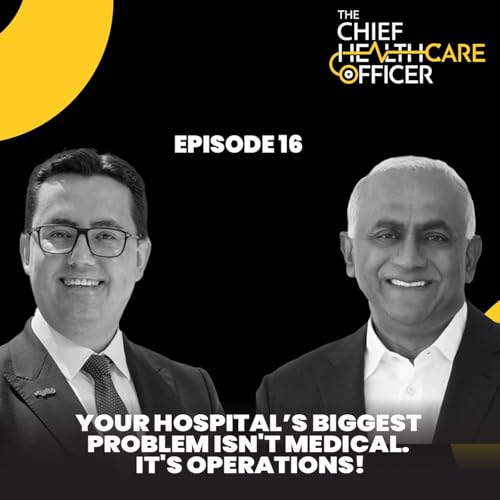
  • Your Hospital’s Biggest Problem Isn't Medical. It's Operations!
    2026/02/27

    This episode of the Chief Healthcare Officer Podcast features Mohan Giridharadas, founder and CEO of LeanTaaS and author of Better Healthcare Through Math. Host Dr. Fatih Mehmet Gül discusses with Mohan how applying sophisticated mathematical algorithms and "lean" principles can solve the operational "chaos" often found in hospitals.

    The conversation explores the massive gap between healthcare’s clinical brilliance (e.g., robotic surgery) and its operational antiquity (e.g., scheduling via spreadsheets and faxes). Mohan explains how "level loading" and predictive analytics can reduce patient wait times, increase capacity, and alleviate staff burnout by automating mundane tasks.

    Key Takeaways

    • The Airline Comparison: Just as airlines moved from manual gate assignments to sophisticated network optimization to handle thousands of flights, hospitals must adopt mathematical modeling to manage patient flow.
    • Predictive Orchestration: Instead of reacting to a "bed crunch" when it happens, hospitals can use data to predict discharges and incoming volume hours in advance, fixing bottlenecks before they affect patients.
    • Combating Burnout: By using AI to automate mundane tasks—like copying numbers or making routine screening calls—nurses are freed to work at the "top of their license," focusing on actual patient care.
    • The "Level Loading" Solution: Most "rush hour" chaos in clinics is caused by scheduling peaks that exceed capacity. Spreading the burden mathematically (level loading) reduces chaos without requiring more staff or chairs.

    Check out Dr. Fatih's Connected Care Book on Amazon:
    https://www.amazon.com/Connected-Care-Transformation-Human-Centred-Healthcare/dp/9699797118

    Listen to the episode and let us know what you think using the contact form on our website: https://www.chiefhealthcareofficer.com.

    Follow Dr Fatih Mehmet Gül on LinkedIn - https://www.linkedin.com/in/drfameg/
    Visit Dr Fatih's Website - https://www.fatihmehmetgul.com/

    Subscribe to the CHO LinkedIn Newsletter - https://www.linkedin.com/newsletters/the-chief-healthcare-officer-6939938177927241728/

    続きを読む 一部表示
    41 分
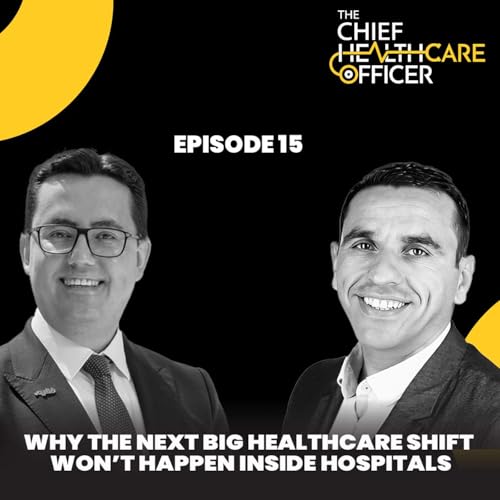
  • Why the Next Big Healthcare Shift Won’t Happen Inside Hospitals
    2026/01/25

    In this episode of the Chief Healthcare Officer Podcast, host Dr. Fatih engages with João Bocas, CEO of Digital Salutem and a digital health influencer, to explore the evolution and future of wearable technology in healthcare. They discuss João's journey from sports to corporate wellness, highlighting the early days of pedometers and the transition to more sophisticated wearables like smartwatches and fitness trackers. The conversation delves into the various types of wearables available today, including smart rings, patches, and even smart clothing, emphasizing their potential to revolutionize patient monitoring and engagement in healthcare settings.

    Key Takeaways:

    • Wearables are evolving from consumer fitness devices into clinically relevant health tools
    • The main barrier to adoption is healthcare systems and workflows, not the technology itself
    • Continuous, real-world health data offers far more insight than occasional clinical check-ups
    • Data integration with existing hospital and EHR systems remains the biggest bottleneck
    • Clinician trust and validation are essential for wearables to be used in medical decision-making
    • Regulation and reimbursement models must adapt for large-scale adoption to happen
    • Wearables are especially powerful for chronic disease management and preventive care
    • AI plays a critical role in turning raw wearable data into actionable clinical insights
    • Patient engagement improves when individuals can see and understand their own health data
    • The future of healthcare will increasingly move from hospitals to homes through connected devices


    Check out Dr. Fatih's Connected Care Book on Amazon:
    https://www.amazon.com/Connected-Care-Transformation-Human-Centred-Healthcare/dp/9699797118

    Listen to the episode and let us know what you think using the contact form on our website: https://www.chiefhealthcareofficer.com.

    Follow Dr Fatih Mehmet Gül on LinkedIn - https://www.linkedin.com/in/drfameg/
    Visit Dr Fatih's Website - https://www.fatihmehmetgul.com/

    Subscribe to the CHO LinkedIn Newsletter - https://www.linkedin.com/newsletters/the-chief-healthcare-officer-6939938177927241728/

    続きを読む 一部表示
    33 分
  • Inside Becker’s Healthcare: How a Small Newsletter Became a Global Authority
    2025/12/08

    In this episode of the Chief Healthcare Officer Podcast, Dr. Fatih Mehmet Gül speaks with Scott Becker, Founder and Publisher of Becker’s Healthcare, about the evolution of healthcare media, the central role of people in healthcare, the global workforce shortage, the future of healthcare technology—especially AI—and the qualities modern leaders must develop to navigate a rapidly shifting landscape.

    Scott reflects on his 32-year journey from Harvard-trained attorney to one of the most influential healthcare thought leaders in the United States. He discusses how Becker’s Healthcare grew from a small legal newsletter into a nationally recognised platform producing major conferences, digital content, and executive rankings that support and celebrate healthcare leadership.

    The conversation dives deeply into people management, workforce dynamics, technology adoption, using AI in content and operations, and the importance of building multi-generational teams. Scott also offers practical leadership wisdom drawn from decades of meeting healthcare CEOs, building teams, and scaling a media company.

    Key takeaways

    • Healthcare’s core will always be people, supported—not replaced—by technology
    • Workforce shortages are a global structural issue requiring long-term solutions
    • Fair compensation, adequate staffing, and strong culture are essential for retention
    • Leaders must “love their 90%ers” and avoid obsessing over minor shortcomings
    • AI is promising but must be easy, quick to adopt, and relieve burden—not add to it
    • Multigenerational teams demand new leadership styles emphasizing “liked AND respected”
    • Authentic human connection will remain vital despite increasing digital automation


    Check out Dr. Fatih's Connected Care Book on Amazon:
    https://www.amazon.com/Connected-Care-Transformation-Human-Centred-Healthcare/dp/9699797118

    Listen to the episode and let us know what you think using the contact form on our website: https://www.chiefhealthcareofficer.com.

    Follow Dr Fatih Mehmet Gül on LinkedIn - https://www.linkedin.com/in/drfameg/
    Visit Dr Fatih's Website - https://www.fatihmehmetgul.com/

    Subscribe to the CHO LinkedIn Newsletter - https://www.linkedin.com/newsletters/the-chief-healthcare-officer-6939938177927241728/

    続きを読む 一部表示
    35 分
  • Culture Beats EBIDTA: Why Purpose Defines Successful Executive Hires
    2025/11/01

    In this episode of the Chief Healthcare Officer Podcast, Dr. Fatih Mehmet Gul is joined by Gordon Andersen, Founding Partner at AGL Executive Search, for a deep conversation about the evolving nature of leadership in healthcare.

    Drawing on more than two decades of global executive search experience, Gordon shares how the post-pandemic world has fundamentally changed what organisations look for in their leaders and how authenticity has become the rarest, yet most valuable, trait in the talent market. Together, they explore how today’s CEOs must navigate ambiguity, balance empathy with execution, and build cultures that prioritise people and patients over profit.


    Key takeaways

    • Lead through ambiguity. Post-COVID, boards value leaders who unite teams amid rapid change, AI disruption, and competing worldviews.
    • Authenticity on both sides. Mis-hires happen when candidates or employers sell a version that is not real. Name the challenges early.
    • Culture and patients over pure EBITDA. Commercial aggression without a patient-centred culture can erode trust and outcomes.
    • Cross-industry hires need caution. Consumer-grade speed and UX help, but stakes in healthcare are higher than tech.
    • AI is a tool, not a replacement. Automation can process volume, but cannot assess integrity or empathy at leadership level.
    • Retention follows clarity. Unclear board mission and equity hopping undermine tenure and impact.
    • Plan ahead. Avoid desperation hires with succession and purpose-led searches.

    Check out Dr. Fatih's Connected Care Book on Amazon:
    https://www.amazon.com/Connected-Care-Transformation-Human-Centred-Healthcare/dp/9699797118

    Listen to the episode and let us know what you think using the contact form on our website: https://www.chiefhealthcareofficer.com.

    Follow Dr Fatih Mehmet Gül on LinkedIn - https://www.linkedin.com/in/drfameg/
    Visit Dr Fatih's Website - https://www.fatihmehmetgul.com/

    Subscribe to the CHO LinkedIn Newsletter - https://www.linkedin.com/newsletters/the-chief-healthcare-officer-6939938177927241728/

    続きを読む 一部表示
    30 分