エピソード

  • Fran Visco tells the story of NBCC: “Women have declared war on breast cancer”
    2026/08/24

    Fran Visco, president of The National Breast Cancer Coalition, sat down with Paul Goldberg, editor and publisher of The Cancer Letter for a special armchair discussion at the NBCC Advocate Leadership Summit in 2022.

    They discuss the history of NBCC and breast cancer activism, including one of the organization’s top accomplishments: the Department of Defense Breast Cancer Research Program. This came after the “$300 Million More” campaign in 1992, which drew in advocates from all across the country.

    “We need to do for breast cancer what the AIDS activists are doing for AIDS. Maybe we should all take out our prosthesis and march topless to Congress,” Fran Visco recalled co-founder Susan Love saying in the early days of creating NBCC. “We were really inspired by the AIDS activists.”

    In the eyes of Visco and her fellow activists, NBCC had waged “war” against breast cancer.

    “When this administration decided to wage a war, you found $7.5 billion to fund it,” Visco said in a 1992 address to Congress. “Women have declared war on breast cancer and you had better find a way to fund that war.

    “We will no longer be passive. We will no longer be polite. We can no longer afford to wait while Congress gets around to significant decent funding for breast cancer. We implore you. You must find a way to appropriate the additional $300 million for breast cancer research now. We can accept no less.”

    The Cancer History Project Podcast is sponsored by City of Hope, the American Society of Clinical Oncology, the Sidney Kimmel Comprehensive Cancer Center at Johns Hopkins, and the University of Texas MD Anderson Cancer Center.

    A transcript of this conversation, along with an archive of related content, is available on the Cancer History Project: https://cancerhistoryproject.com/article/fran-visco-tells-the-story-of-nbcc/

    続きを読む 一部表示
    51 分
  • Joseph F. Fraumeni Jr. was the father of modern epidemiology
    2026/07/31

    If a Mount Rushmore of Epidemiology were to exist, Joseph F. Fraumeni Jr. would be etched into the face of the mountain, former NCI Director Ned Sharpless once told Stephen J. Chanock.

    Of the hundreds of scientists Fraumeni mentored, perhaps one of the closest was Stephen J. Chanock, his successor as director of the NCI Division of Cancer Epidemiology and Genetics, who worked with Fraumeni for 25 years.

    Fraumeni died on June 22. He was 93.

    Otis Brawley, co-editor of the Cancer History Project and the Bloomberg Distinguished Professor of Oncology and Epidemiology at Sidney Kimmel Comprehensive Cancer Center at Johns Hopkins University, interviewed Chanock on the most recent episode of the Cancer History Project podcast.

    Brawley and Chanock looked back on Fraumeni’s 50-year long career. His contributions to science included co-discovering the Li-Fraumeni syndrome and developing cancer maps, which visualize cancer rate data from every county in the U.S. His work served as a backbone for other major discoveries, such as the two-hit hypothesis by Alfred Knudson and BRCA genes.

    Fraumeni developed theories around how cancer works and tested them.

    “The mission statement of DCEG has been to understand the etiology of cancer through epidemiology and genetics as a means to prevention or early intervention,” Chanock said. “That's really the wisdom of Joe Fraumeni who lived that, and really developed the tools, the capabilities, and the workforce to pursue that.”

    As a result, Fraumeni established a vision of cancer's genetic susceptibility. His observations about diethylstilbestrol raised “a very revolutionary idea” that early exposures could result in precancerous conditions and develop into cancers decades later. The cancer maps added a new attention to cancer caused by environmental exposures.

    “These patterns were very important, which led to understandings about what was going on post-World War II and [how] certain occupations are associated with select cancers,” Chanock said. “This led to the birth of a whole set of cohorts and case control studies to look at asbestos, smelters, occupational hazards and smokeless tobacco use in the South.”

    The goal was always to help patients, many of whom had no options at the start of Fraumeni’s career.

    “What Joe was envisioning was the more we understand, the more we can be honest and explain to our patients who develop cancer or may develop cancer, what we could be done to prevent or decrease that risk,” Chanock said.

    The Cancer History Project Podcast is sponsored by City of Hope, the American Society of Clinical Oncology, the Sidney Kimmel Comprehensive Cancer Center at Johns Hopkins, and the University of Texas MD Anderson Cancer Center.

    A transcript of this conversation, along with an archive of related content, is available on the Cancer History Project: https://cancerhistoryproject.com/article/joseph-f-fraumeni-jr/


    続きを読む 一部表示
    50 分
  • Robert Mayer tells us about pancreatic cancer’s hopeless past as new data shows promise
    2026/06/26

    When Robert Mayer started his career in pancreatic cancer research in the 1960s, the treatment landscape of pancreatic cancer was dismal.

    “We had no tools, say like CT scans, to even identify or diagnose these tumors at an early time,” said Mayer. “Colonoscopy was a big deal. Making a diagnosis of a pancreatic cancer often was restricted to the presence of metastatic disease because there was no scan, no blood test that showed that there was something awry in the pancreas. It was in the back of the abdomen and that didn't change for quite some time.

    “The aura developed that [pancreatic cancer] was something that just you couldn't deal with.”

    Mayer is now the faculty vice president for Academic Affairs at Dana-Farber Cancer Institute and faculty associate dean for Admissions at Harvard Medical School, and is watching this aura is begin to change:

    Daraxonrasib, a pan-RAS(on) inhibitor, was shown to double overall survival in the recent RASolute-302 trial phase III clinical trial. The results were presented at the annual American Society of Clinical Oncology annual meeting on May 31.

    “As with other conditions that we treat, when patients [with pancreatic cancer] come, we'll be able to give them options, plans, steps,” Mayer said. “It may not necessarily be that we can cure, but we can prolong survival, enhance quality of life, reduce time that they have to come to receive toxic systemic parenteral intravenous therapy. All things that really matter so that they can go and be at high school, college graduations, family celebrations, and do all the things that they otherwise would like to do. That has never been something that happened with pancreas cancer.”

    But the road to developing this drug was laden with bumps, jumps, and potholes. Mayer highlighted some of the most notable mileposts on that long journey in this episode of The Cancer History Project Podcast.

    The Cancer History Project Podcast is sponsored by City of Hope, the American Society of Clinical Oncology, the Sidney Kimmel Comprehensive Cancer Center at Johns Hopkins, and the University of Texas MD Anderson Cancer Center.


    続きを読む 一部表示
    44 分
  • Chuck Sherr and Bill Evans on writing the untold story of St. Jude Children’s Research Hospital
    2026/05/16

    “Backwater to Blockbuster,” the first de novo book published by the Cancer History Project, traces the evolution of St. Jude Children’s Research Hospital to its current status of a powerhouse of research in pediatric cancer.

    In a conversation moderated by Deborah Doroshow, the book’s co-authors Charles J. Sherr and William E. Evans discuss how their book project began, and their collaborative writing process.

    As long-time leaders, Sherr and Evans were a part of the institution’s rise and thus speak authoritatively about the institutional culture, leadership philosophy, and scientific ambition that shaped St. Jude.

    Sherr, who joined St. Jude in 1983, served as chair of Tumor Cell Biology Department and Herrick Foundation Endowed Chair at St. Jude. Evans first came to St. Jude as a student in 1972 and served in many key positions including that of St. Jude’s fifth director and CEO.

    Their book, published by the Cancer History Project, is available at no charge here: https://cancerhistoryproject.com/primary-source/backwater-to-blockbuster-st-jude-children-research-hospital/ .

    Doroshow, a medical historian and an associate professor of medicine at the Tisch Cancer Institute at the Icahn School of Medicine at Mount Sinai, guides a discussion, exploring how Sherr and Evans approached the story of the rise of St. Jude from their different professional and personal perspectives, ultimately coming together to co-author a dual memoir and institutional history.

    The Cancer History Project Podcast is sponsored by City of Hope, the American Society of Clinical Oncology, the Sidney Kimmel Comprehensive Cancer Center at Johns Hopkins, and the University of Texas MD Anderson Cancer Center.

    続きを読む 一部表示
    51 分
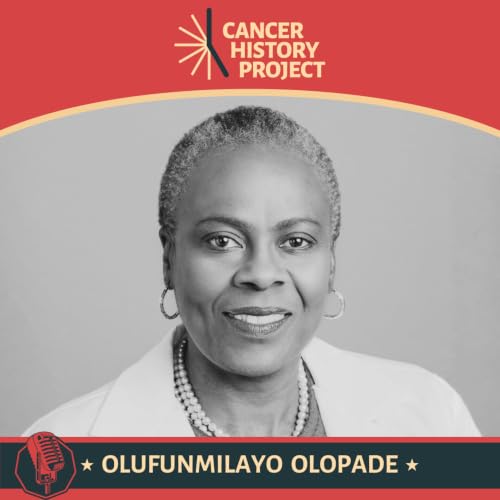
  • Funmi Olopade on how life in Nigeria and South Side Chicago inspired her career in cancer genetics
    2026/02/13

    Olufunmilayo “Funmi” Olopade, director for the Center for Clinical Cancer Genetics and Global Health at the University of Chicago, credits her Nigerian upbringing for her focus on global cancer genetics.

    “My Yoruba culture really worships our ancestors and the people before us,” Olopade said on the Cancer History Project podcast. “And so that's why I was able to really say, ‘Okay, let's lay the foundation for genetics. Let's go to Nigeria.’”

    Olopade appears on this special Black History Month episode of the Cancer History Project Podcast in conversation with Robert A. Winn, director and Lipman Chair in Oncology at VCU Massey Comprehensive Cancer Center and guest editor for The Cancer Letter for Black History Month highlighting some of the giants in the field of cancer research.

    This episode is sponsored by City of Hope, the American Society of Clinical Oncology, and the University of Texas MD Anderson Cancer Center.

    Olopade is certainly a giant in cancer genetics and global health.

    “For those of you who don't know, Dr. Olopade is not only the director of the Center for Clinical Cancer Genetics and Global Health at the University of Chicago, but she is really a giant in the field and internationally renowned in the context of her expertise in breast cancer,” Winn said on the podcast. “By the way, for those of you who thought you knew Dr. Olopade, remember that she is a really rare, not only National Academy, but in that top 1% of 1% of the 2025 MacArthur Fellowship, also known as the Genius Grant.”

    On this episode of the Cancer History Project Podcast, Olopade shares her story of immigrating to the U.S. from Nigeria to pursue medicine, and finding her way to becoming a leading expert in oncology.

    “For us to honor Black History Month, we have to honor all the people who mentored us, who were ahead of us,” Olopade said. “For me, my father was a pastor, and my parents really wanted a doctor. I had big brothers and sisters, I was number 5 of 6 children, and there was just one last chance to find a doctor in the family. Because in those days, growing up in Nigeria, you were either a teacher or a pastor, or and then in his generation he became a pastor.”

    Growing up in Nigeria, Olopade was deeply influenced by the health disparities she saw due to lack of healthcare access, which initially sparked an interest in cardiology.

    Explore related articles and read the full transcript: https://cancerhistoryproject.com/article/funmi-olopade-podcast/


    続きを読む 一部表示
    41 分
  • Bernie Lewinsky on radiation oncology giants, fifty years of progress, and the healing power of art
    2026/01/22

    When Bernie Lewinsky was a young radiotherapy resident, he studied under some of the most storied names in the field. Now, over fifty years later, he marvels at how much radiation oncology has changed.

    “You've gone from a betatron, cobalt and radium needles, and treating AP one day and PA the next, to probably treating on some sort of amazing [technology like a] TrueBeam or Elekta,” said Stacy Wentworth, a radiation oncologist at Duke University School of Medicine, who hosted this episode of the Cancer History Project Podcast.

    Lewinsky was one of the co-founders of the Endocurietherapy Society, which now exists as the American Brachytherapy Society. He has also helped develop the first group of freestanding radiation therapy clinics in Los Angeles, CA.

    Throughout the years—whether during his rotation at the Royal Marsden Hospital in London during residency or participating in tumor boards at UCLA—he has been part of many fervent debates with radiotherapy legends, arguing over whether Hodgkin's lymphoma spreads up or down the body, and the legitimacy of Intensity-Modulated Radiation Therapy in the early days.

    “Now it's so much more accurate, so much different and so precise,” Lewinsky said. “When you start talking about blocking the nodes in the heart to stop arrhythmias, we're very specific.”

    Lewinsky brings a treasure trove of artifacts to the interview—written orders of radium needles from 1948, an attachment that connected to an orthovoltage machine, a Mick applicator, and even a Bunsen burner. He plans to send some of these relics to the archives at ASTRO or the American College of Radiology.

    Beyond his practice of medicine, Lewinsky has also brought healing to his patients through his landscape photography. Some of his first photos captured an active volcano in El Salvador, where he grew up. Prints of some of his photographs can be found on the covers of academic journals and on the walls of his office.

    He distinctly remembers one patient, whose attention drifted off during an office visit. Lewinsky says the patient was struck by a photo of cherry blossoms he took in London.

    “I said, ‘Wait a minute, what is it about that picture that's got you mesmerized?’ and he says, ‘I remember when I was a little kid, my dad would take us cherry-picking. I sure wish my dad was here right now,” Lewinsky said. “It became my observation that there is a healing aspect to nature photography and putting it in the office when a patient is under tremendous stress, it not only calms the patient, but it brings back memories that they cherish.”

    The Cancer History Project Podcast is sponsored by City of Hope, the American Society of Clinical Oncology, and the University of Texas MD Anderson Cancer Center.

    A transcript of this interview is available at https://cancerhistoryproject.com/article/bernie-lewinsky-podcast/


    続きを読む 一部表示
    1 時間 7 分
  • Michael Link on advances in pediatric oncology, his term as ASCO President—and concern for the future
    2025/09/22

    To date, Michael P. Link has the unique honor of being the only pediatric oncologist to have served as president of the American Society of Clinical Oncology.

    Link, who is the Lydia J. Lee Professor in Pediatric Oncology at Stanford University, appeared on the Cancer History Project Podcast in conversation with Paul Goldberg, co-editor of the Cancer History Project and editor and publisher of The Cancer Letter.

    In honor of Childhood Cancer Awareness Month, Link revisits what drew him to pediatric oncology, his auspicious mentors, his 2011-2012 ASCO Presidential term—and his concerns about what he’s seeing in oncology today.

    Over the course of his career, Link has seen a childhood cancer cure rate increase from a mere 40% to closer to 90%. But he’s concerned about how the field of oncology is being impacted today.

    In his 2012 Presidential address, Link said:

    “There is another lesson from our children—that an ounce of prevention is worth a pound of cure. This is a lesson not just from pediatric oncology, but from pediatrics in general. Prevention strategy through immunization has proven to be one of the greatest triumphs of pediatrics and of modern medicine. Rather than diagnosing and treating diphtheria, widespread immunization simply eliminated it as a health problem in North America. The near eradication of measles, polio, and serious infections from H Influenzae is a similar triumph.”

    He expressed shock about how things have changed in 2025.

    “I'm a pediatrician, so here I am and they have measles? I mean really, measles in 2025? How is that possible?” Link said. “I never thought I'd be in a position where I have to talk to people about measles and polio and chickenpox as a threat... And measles, it's a matter of how serious your illness is going to be, and if you're immunocompromised it's life threatening.”

    Other concerns from his time as ASCO President have reemerged—or never really gone away.

    In 2012, Link said, “But all this newfound insight into these diseases and their treatment is only as good as our ability to deliver what we know. The current chemotherapy shortage is emblematic of the precarious nature of the path between the discovery and the delivery of our most exciting new findings.”

    Speaking on the podcast, Link called this an issue of “whack-a-mole”—where new drugs go into shortage on a regular basis. “Can you believe that here we are in whatever year it is, 20-whenever the next shortage is going to come and we don't have access to this?”

    A transcript of this conversation, along with an archive of related content, is available on the Cancer History Project: https://cancerhistoryproject.com/article/michael-link-podcast/

    続きを読む 一部表示
    1 時間 1 分
  • Rick and Mary Pazdur were an oncology power couple. Then Mary was diagnosed with ovarian cancer.
    2025/07/07

    As an oncology nurse practitioner at NCI’s Clinical Center and wife of FDA’s Richard Pazdur, Mary Pazdur knew cancer drug development inside and out. When she was diagnosed with ovarian cancer, she and Rick got to know “the other side of the stethoscope.”

    In his 25 year career at FDA, Rick has shaped the FDA approach to drug approval, setting forth a set of criteria accepted by drug companies, academics and NCI. And for 16 years, Mary was by his side, with compassion, intuition, and practicality. She was described by one colleague as having a “combination of efficiency and great humanity, [...] compassion and strength.”

    This interview with Rick and Mary Pazdur was recorded in 2015, a few months before she died, and was conducted by Ellen Stovall, three-time cancer survivor and pioneering patient advocate, on behalf of the National Coalition for Cancer Survivorship. Stovall also died a few months later—in January 2016—from cardiac complications due to her cancer treatments.

    This episode is accompanied by a robust archive about Rick and Mary Pazdur, as well as further reading about Ellen Stovall.

    Read more at https://cancerhistoryproject.com/article/rick-and-mary-pazdur/


    続きを読む 一部表示
    59 分