• NHS Innovation: Why Great Ideas Fail and How to Succeed with Lesley Soden
    2026/04/28

    Great conversation on the latest TechPulse Healthcare episode with Lesley Soden, Director at Succoris and former NHS innovation leader. Her background in NHS innovation and commercialisation brings a grounded perspective on what it really takes for healthtech to gain traction in the real world.

    We talked about why adoption is so hard in the NHS, what founders often get wrong, and why stakeholder engagement, evidence, procurement, and co-designed deployment matter so much. We also explored the role of AI, digital health, and innovation in improving care without losing sight of the operational realities.

    A really practical and honest discussion for anyone building, funding, or supporting healthtech.

    #TechPulseHealthcare #HealthTech #DigitalHealth #NHSInnovation #AI #Podcast #HealthcareInnovation #Commercialisation

    続きを読む 一部表示
    32 分
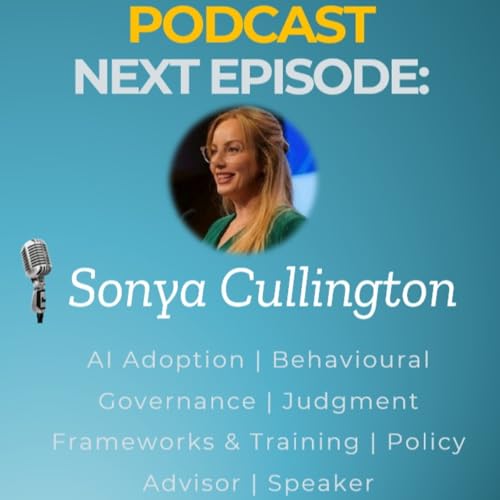
  • Sonya Cullington, AI Adoption | Behavioural Gov | Judgment Frameworks
    2026/03/24

    TechPulse Healthcare: Transforming Healthcare with XR & AI Episode with Sonya Cullington MA MSc – Cyberpsychologist, NHS Communications AI Network Co-Chair

    In our first 2026 episode, Sonya Cullington reveals why AI adoption in NHS communications is stalling – despite 230 million weekly ChatGPT health queries from patients.

    From GP receptionist (complete with filing cabinet nostalgia) to European Parliament policy lead and Number 10 COVID misinfo campaign, Sonya brings battle-tested insight to:

    • Why patients trust "confidently wrong" AI more than clinicians

    • Cyberpsychology's role in tech adoption (it's 90% human behaviour)

    • The NHS Communications AI Operating Framework – ethical principles that work • Judgment frameworks > tool hype (Copilot licenses don't magically transform)

    • "Design for the AI-powered patient" – clinicians must adapt to reality Sonya debunks myths, shares failures, and gives practical steps for health tech innovators working with the NHS.

    Hosted by Atif Nasim & Jonathan Probets

    続きを読む 一部表示
    34 分
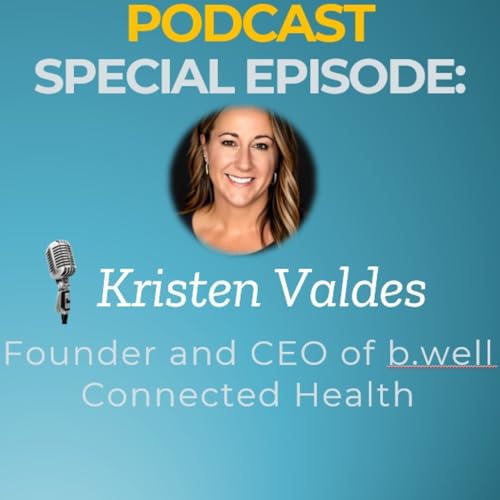
  • Kristen Valdes, Founder and CEO of b.well Connected Health
    2026/02/23

    A mother. A healthcare executive. A near-fatal medication error.

    Two hospital IT systems couldn't talk to each other — and it nearly cost Kristen Valdes her daughter's life.

    That moment changed everything.Kristen left her secure career and founded b.well Connected Health — now the company powering health data connectivity for OpenAI's ChatGPT Health.

    We had the privilege of sitting down with Kristen on the TechPulse Healthcare Podcast this week, and the conversation was extraordinary.

    Here's what stuck with me:

    🔹 Her daughter has a rare disease that costs $550,000/year to manage. The family imports one medication from another country to save $250K/year. This isn't theory — it's their daily reality.

    🔹 b.well Connected Health has connected 2.4 million providers, 340 payers, and 600+ wearables into one platform — the largest connected health data footprint in the US.

    🔹 Kristen helped change US federal law to give patients the right to access their full health record through any app of their choosing.

    🔹 Her new initiative "Kill the Clipboard" lets patients push their medical records to any doctor via QR code. No more filling in forms at reception.

    🔹 Her boldest prediction? "It will soon be negligent for doctors NOT to use AI when diagnosing and treating."

    And here's what hit home for me personally — I went with my mother to an NHS appointment last week. In one department they had her details wrong. Different data in the same hospital. I'd assumed fragmented health data was a US problem. It isn't.

    Whether you're in healthcare, tech, or just a patient navigating the system — this episode is worth 30 minutes of your time.

    続きを読む 一部表示
    29 分
  • Kez Spelman - Director of Innovation and Community Resilience at Provide Community
    2026/02/17

    Innovating in healthcare when services are already at breaking point sounds impossible – but that’s exactly what this week’s Tech Pulse Healthcare episode is about.​

    In Episode 2 of Season 2, we sit down with Kez Spelman, Director of Innovation and Community Resilience at Provide Community, an employee‑owned Community Interest Company delivering NHS and local authority services.

    We talk honestly about what it takes to bring XR and AI into frontline care when “there’s a lot to do across a large area, and not enough people to do it.”​In this conversation, you’ll hear:

    🔸 Why extreme pressure in the NHS is actually forcing new ways of working rather than killing innovation

    ​🔸 How RealWear smart glasses are used to virtually “bring another clinician into the room” and safely delegate tasks​

    🔸 A powerful case where podiatry teams doubled their throughput overnight by pairing newly qualified staff with remote experts

    ​🔸 The real blockers: connectivity, wearability, licences and recurrent investment – not just “culture”​

    🔸 Where automation and AI can genuinely free staff, from back-office bureaucracy to AI‑driven data retrieval at the point of care​

    🔸 Kez’s take on agentic AI, guardrails, and why healthcare still sits behind defence and finance in most tech roadmaps

    ​If you work in the NHS, digital health, XR, or are trying to scale innovation in complex systems, this one is for you.

    続きを読む 一部表示
    26 分
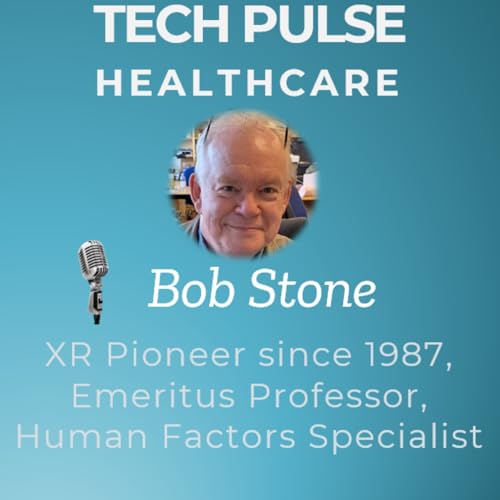
  • Professor Bob Stone - XR Pioneer since 1987
    2026/01/25

    Prof Bob Stone is an XR Pioneer since 1987, Emeritus Professor & Human Factors Specialist., "XR's loveable curmudgeon"

    In this episode of the Tech Pulse Healthcare podcast we sat down with Prof Bob Stone, an XR pioneer with nearly 40 years of experience across defence, healthcare, space, and heritage—and one of just 10 people inducted into the AWE XR Hall of Fame in 2024 (the only British/European in the inaugural class).

    What struck me most? After four decades, Bob is still saying the exact same things about XR adoption that he was saying 30 years ago. And very little has changed.

    Here's what we discussed:

    • The Human-Centred Design Difference

    Why the MIST surgical trainer became the de facto standard across Europe for 10 years (hint: no headsets, no gloves—just a screen and laparoscopic instruments)How 4 afternoons watching a surgeon work beat years of technical iteration. The critical difference between putting humans first and keeping them involved throughout

    • Why Headsets Are Killing Adoption

    Contact lenses, AR, and neural interfaces are the actual future—not fancy consumer headsets The real barrier? Getting people to wear bulky equipment they don't trust when you take VR into hospitals, care homes, hospices, full headsets are impractical and counterproductive

    • The Hype Trap (Then and Now)

    VR nearly died in the late 90s due to false promises. We're repeating the exact same cycle today the tech is good. The content can be created. The problem is implementation and people—not the technology itself.

    • What Actually Works

    The Wembury Bay project: nature-based VR for physical and mental restoration, now deployed globally (Hawaii, Arctic, UK hospitals)—started as a small project for amputees returning from the Middle EastMotomed + VR + spriometer = measurable patient outcomes. Why iterative design with real users changes everything

    • The Bottom Line

    We're leaving massive value on the table in healthcare XR adoption. The tech isn't the bottleneck. People, processes, and human-centered design are. And if we don't learn from the last 30 years, we'll keep repeating the same failures.

    If you're working in healthcare tech, XR implementation, or digital health, this is essential listening.

    Special thanks to Prof Bob Stone for 40+ years of wisdom and for calling the industry out on what actually matters.

    続きを読む 一部表示
    22 分
  • What is the biggest mistake founders selling to the NHS make?
    2026/04/28

    We speak with Lesley Soden about selling and scaling within the NHS.

    続きを読む 一部表示
    1 分
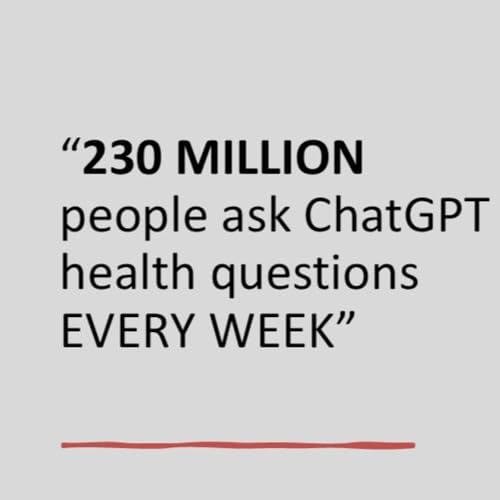
  • 230 MILLION people ask ChatGPT health questions EVERY WEEK
    2026/03/24

    Sonya Cullington on why patients feel "understood" by AI vs clinicians

    続きを読む 一部表示
    1 分
  • ChatGPT found a brain tumour that two doctors missed - Kristen Valdes
    2026/02/23

    Listen to how a patient used ChatGPT to self-diagnose a life threatening illness which doctors missed,

    続きを読む 一部表示
    1 分