エピソード

  • S3 Ep5: Can protecting neurons change the future of glaucoma care?
    2026/02/25
    Glaucoma is known as the “silent thief of sight,” often causing vision loss before people realize anything is wrong. In this episode, Stanford physician-scientist Jeffrey Goldberg shares how his work aims not just to slow damage, but to protect and strengthen the neurons that make vision possible.
    続きを読む 一部表示
    37 分
  • S3 Ep4: What if we could stop kidney stones before they start?
    2026/02/25
    Kidney stones may seem like a temporary problem, but for millions of people they are painful, recurring, and poorly understood. Stanford nephrologist Alan Pao studies how the kidneys regulate minerals and chemical balance, uncovering how a little-known molecule called citrate could help stop stones before they form.
    続きを読む 一部表示
    31 分
  • S3 Ep3: What can collaboration across disciplines unlock for the future of stroke care?
    2026/02/25

    A stroke caused by a blocked artery is one of the most time-critical emergencies in medicine. In stroke care, minutes matter — and so does precision. The difference between paralysis and recovery often comes down to how quickly, and how completely, a blood clot can be removed. At Stanford, an engineer and a physician partnered up to rethink that problem entirely.

    続きを読む 一部表示
    31 分
  • S3 Ep2: How can curiosity — and a willingness to pivot — lead to life-saving breakthroughs?
    2026/02/25
    From uncertainty to impact, Purvesh Khatri’s career path was anything but straight. In this episode, he shares how curiosity and a willingness to pivot led to a breakthrough blood test that helps doctors make faster, life-saving decisions for sepsis.
    続きを読む 一部表示
    29 分
  • S3 Ep1: How have researchers turned decades of work into real hope for families living with epidermolysis bullosa?
    2026/02/25
    Epidermolysis bullosa, often called “butterfly skin,” makes even the smallest touch painful. In this episode, we explore the courage of patients and families living with EB, and how Stanford clinician-researchers are helping turn decades of research into the first gene therapies that offer real hope.
    続きを読む 一部表示
    49 分
  • S2 Ep5: How does food change the microbiome and our overall health?
    2025/10/21
    Sean Spencer, MD, PhD, instructor of medicine, explores how he treats patients with challenging gastrointestinal issues, working with them to heal their guts and improve their microbiomes through a variety of tactics, including through introducing a variety of foods in small doses, adding more fiber and fermented foods to their diet, and giving “gut shots” of brine from fermented foods.

    Read more in Stanford Medicine magazine: https://stanmed.stanford.edu/gi-conditions-gut-brain-connections/
    続きを読む 一部表示
    42 分
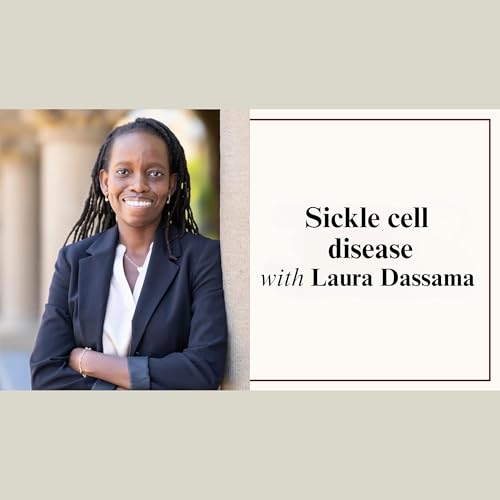
  • S2 Ep4: What can we learn from a scientist living with sickle cell?
    2025/10/14
    Laura Dassama, PhD, assistant professor of microbiology and immunology and of chemistry, is developing new a new type of therapy for patients who, like her, live with sickle cell disease, which is caused by a mutation in the gene that codes for hemoglobin, the protein responsible for the ability of red blood cells to carry oxygen. Dassama speaks to her experience with the illness and describes how her lab work takes inspiration from a form of hemoglobin active during fetal development, creating a new path of inquiry that she hopes will yield a new treatment for the condition.

    Read more in Stanford Medicine magazine: https://stanmed.stanford.edu/innovations-help-chronically-ill-thrive/#sicklecell
    続きを読む 一部表示
    30 分
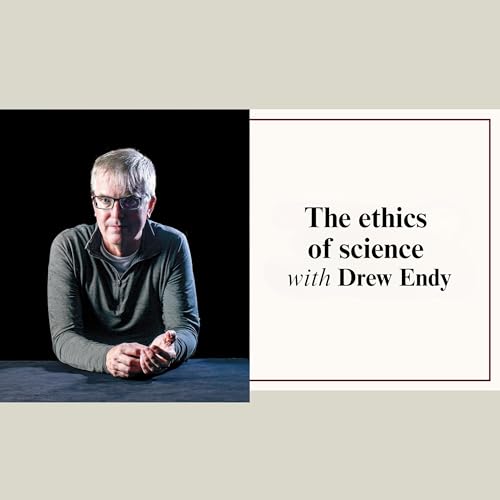
  • S2 Ep3: The ethics of science: How do we balance progress with safety?
    2025/10/07
    Drew Endy, PhD, associate professor of bioengineering, is well-versed in a wide range of ethical quandaries in science today. He’ll discuss what science’s most pressing ethical concerns are, with a focus on misuse of AI and the pros and cons of harnessing synthetic biology to create new solutions for intractable problems in health and medicine.

    Read more in Stanford Medicine magazine: https://stanmed.stanford.edu/ethical-genetic-engineering-benefit-society/
    続きを読む 一部表示
    43 分