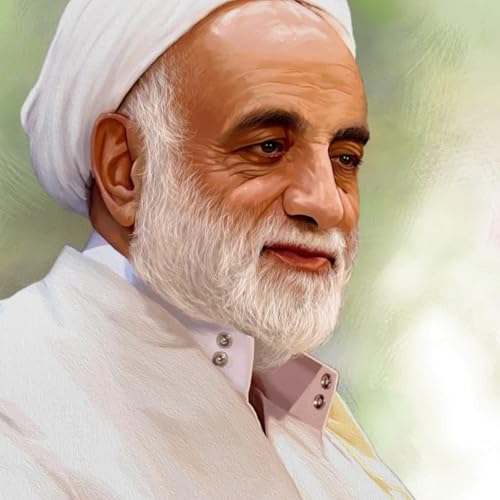
In this episode, Ayatollah Mohsen Qara'ati begins the commentary on the first verse of Surah Al-Fatiha, بِسْمِ ٱللَّهِ ٱلرَّحْمَٰنِ ٱلرَّحِيمِ (In the Name of Allah, the Most Merciful, the Especially Merciful). He explains that invoking a revered name before important endeavors is a universal custom, and for believers, there is no greater name than God's. This divine invocation is not exclusive to Islam, having been a principle for all prophets, from Noah embarking on his ark to Solomon's letter.
Ayatollah Qara'ati clarifies the widespread application of Bismillah in daily life, from eating and sleeping to starting a journey, emphasizing Islam's desire to infuse all actions with a divine character. He describes Bismillah as the "emblem of Islam," likening it to a factory's logo on all its products, signifying God's presence in every aspect of a believer's life. Beyond being a mere phrase, Bismillah represents remembrance, reliance, refuge, and success from God, embodying humility, faith, and love.
The commentary highlights Bismillah's status as a symbol of monotheism, permanence, and continuity, citing its emphasis by the Imams and its recognition as an integral part of every Surah by various scholars, including Fakhr al-Razi and Al-Alusi. The unique absence of Bismillah at the start of Surah At-Tawbah (Bara'ah) is also discussed, attributing it to the Surah's tone of disavowal. Finally, Ayatollah Qara'ati elaborates on how Bismillah bestows a divine color on actions, ensuring their endurance, unlike fleeting human endeavors, and reflecting God's unconditional mercy.


 12 分
12 分 2025/03/122 分