エピソード

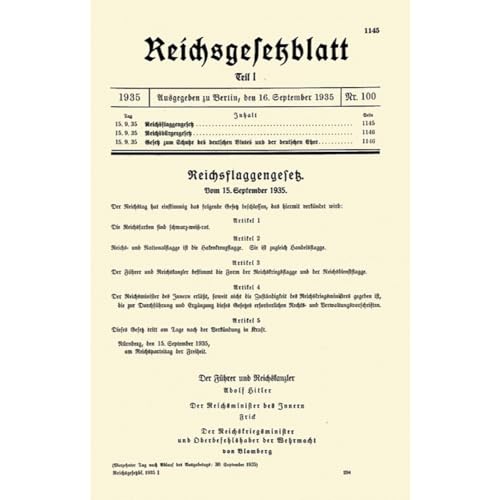
  • Who is Responsible for the Holocaust?
    2026/02/23

    In this episode, we examine the complex question of responsibility for the Holocaust, beginning with Adolf Hitler’s central role in shaping the vision, rhetoric, and authorisation for genocide, and moving through the actions of key Nazi leaders whose initiatives, rivalries, and bureaucratic efficiency turned ideology into systematic murder. We explore the varied forms of responsibility among ordinary people—those who participated, those who enabled events through silence or compliance, and those who resisted or attempted to help—while also considering the wider international context that allowed persecution and genocide to unfold with limited intervention. Finally, we highlight the many forms of resistance, from armed uprisings to acts of cultural, spiritual, and everyday defiance, revealing how choices, structures, and circumstances intersected in one of history’s darkest chapters.

    続きを読む 一部表示
    32 分
  • Evolution of the Holocaust
    2026/02/23

    In this episode, we trace the radicalisation of Nazi policy toward Europe’s Jews, beginning with early efforts to force emigration before examining the regime’s first mass‑killing programme, Aktion T4, and how its methods and personnel became a blueprint for later atrocities. We explore how the invasions of Poland, France, and the USSR each transformed Nazi strategy, expanding both opportunity and intent as occupation brought millions more Jews under German control and unleashed unprecedented violence in the east. From there, we follow the path to systematic genocide, including the coordination and bureaucratic clarity provided by the Wannsee Conference, before charting the evolving machinery of mass murder from 1942 to 1945. Join us as we uncover how war, ideology, and administrative planning converged to create the most destructive phase of the Holocaust.

    続きを読む 一部表示
    27 分
  • Hitler's Rise to Power and Nazi Jewish Laws
    2026/02/23

    In this episode, we explore Adolf Hitler’s rise to power in the early 1930s, tracing how political instability, economic crisis, and calculated propaganda enabled the Nazis to dismantle democracy and establish a dictatorship. We examine the tightening web of pre‑war Jewish legislation that steadily stripped German Jews of their rights, as well as the regime’s aggressive foreign policy that both emboldened Nazi ambitions and shaped its racial agenda. The episode also delves into the powerful role of anti‑Jewish propaganda and state‑orchestrated terror in normalising persecution, culminating in the 1938 Kristallnacht pogrom—a violent turning point that signalled the shift from discrimination to open brutality. Join us as we uncover how ideology, policy, and orchestrated violence converged to lay the foundations for the Holocaust.

    続きを読む 一部表示
    32 分
  • Foundations on the Holocaust
    2026/02/23

    In this episode, we lay the foundations for understanding the Holocaust by defining what it was, how it unfolded, and why it remains a central event in modern history. We explore some of the most common myths and misconceptions that distort public understanding, replacing them with clear, evidence‑based context. The episode also traces the long history of European antisemitism—from medieval prejudice to modern racial ideologies—and paints a vivid picture of pre‑war Jewish life as diverse, vibrant, and deeply rooted in European society. Finally, we examine the social, cultural, and political landscape of Weimar Germany, showing how instability, democratic fragility, and rising extremism created the conditions in which Nazi ideology could take hold. Join us as we build a crucial introductory framework for studying one of the darkest chapters in human history.

    続きを読む 一部表示
    41 分
  • The Early American Republic 1783-1796
    2026/02/22

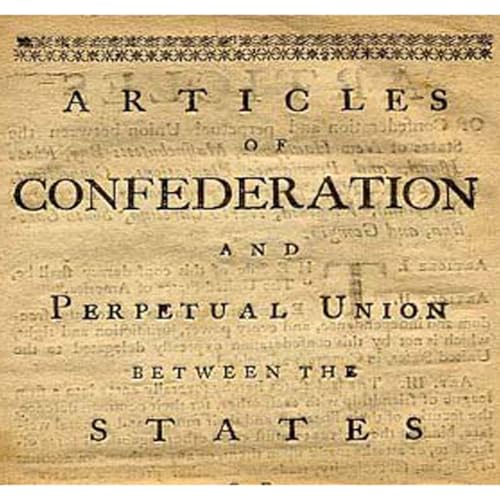
    Dive into the turbulent birth of the United States in this episode exploring the Early Republic, as we trace how a fragile new nation of three million people—“one‑sixth of whom were enslaved”—struggled to govern itself after 1783, wrestling with deep social divisions, crushing war debts, interstate rivalries and the weaknesses of the Articles of Confederation. We unpack the crises that pushed Americans toward reform, from Britain’s refusal to abandon frontier forts to Spain’s closure of the Mississippi, from economic collapse and runaway inflation to the eruption of Shays’ Rebellion in 1786–87, when “several hundred men” marched on the federal arsenal at Springfield. The episode follows the road to the 1787 Philadelphia Convention, the creation of a new Constitution balancing federal and state power, and the fierce ratification battle between Federalists and Anti‑Federalists, before turning to the challenges of launching the first government in 1789 under George Washington, the adoption of the Bill of Rights in 1791, and the political storm that made finding his successor in 1796 such a national dilemma.

    続きを読む 一部表示
    26 分
  • The Events of the American Revolution 1775-1783
    2026/02/22

    Step back into the turbulent world of the American Revolution as this episode traces how a political dispute over taxes and imperial authority erupted into full‑scale war, beginning with the gunfire at Lexington and Concord—where “sixty‑five men were dead and 180 wounded”—and accelerating through the rise of the Continental Congress, the creation of a makeshift national army, and the dramatic early battles from Bunker Hill to the failed invasion of Canada. We follow Washington’s struggle to forge discipline from “15,000 poorly trained, poorly equipped” troops, the ideological shift toward independence fuelled by Enlightenment ideas and Thomas Paine’s Common Sense, and the bold decision to declare the colonies “free and independent States” in July 1776. The episode then charts the war’s turning points—from Washington’s daring victories at Trenton and Princeton to Burgoyne’s disastrous 1777 campaign and the decisive American triumph at Saratoga, which helped bring France, Spain and the Netherlands into a global conflict that stretched Britain’s resources thin. As the fighting spreads south and west, culminating in the siege of Yorktown and the 1783 Treaty of Paris, we explore how the Revolution reshaped politics, society and international power, leaving the new United States triumphant yet burdened with debt, divided loyalties and the daunting task of building a nation from the ruins of empire.

    続きを読む 一部表示
    35 分
  • Causes of the American Revolution 1763-1775
    2026/02/22

    This episode explores how Britain’s triumph in the Seven Years’ War unexpectedly fractured its relationship with the American colonies, tracing the shift from loyalty to rebellion as new taxes, tighter imperial control, and the presence of a standing army collided with colonial expectations of liberty and self‑government. Drawing on the Proclamation Act, Sugar Act, Stamp Act, and the surge of popular protest led by figures like Patrick Henry and Samuel Adams, we unpack how fears of “despotism,” inspired by Whig thought and Locke’s ideas on natural rights, transformed local grievances into a revolutionary movement that reshaped the Atlantic world.

    続きを読む 一部表示
    38 分
  • The Development of British Hegemony up to 1763
    2026/02/22

    This episode explores how Britain rose to dominance in North America by 1763, tracing the contrasting character of British, French, and Spanish colonies, the explosive population growth that reshaped society, and the increasingly complex relationships between settlers and Native American nations. We unpack the economic diversity of the thirteen colonies, the political freedoms fostered by representative assemblies, and the cultural mix created by waves of European and African migration. From frontier conflict to imperial rivalry, and from the fur‑trading networks of New France to Britain’s expanding agricultural and commercial power, this episode reveals how demographic strength, economic dynamism, and military success—culminating in victory over France in the Seven Years’ War—laid the foundations for British hegemony across the continent.

    続きを読む 一部表示
    46 分