• Conversation #40 - David Haskell | Codependency, Addiction, and the Cost of Being Capable
    2026/10/16

    What if being capable is the very thing keeping you from dealing with what is really going on underneath? That is the question at the center of David Haskell’s story.


    David was a world class drummer who joined the Blue Devils and performed at Disney. Underneath the achievements was a boy who lost his mother at four, learned at nine that she had taken her own life, and spent years trying to earn the respect of a critical and emotionally unavailable father. Becoming the best drummer in the country was meant to prove something. It never did.


    David names codependency as his first and worst addiction, and alcohol and drugs came later. He hit rock bottom more than once over 11 years, lost his job at Disney, and became a hermit. The final turning point came when his 14 year old daughter told him he was terrible. About eight years ago he stopped drinking and using. He is now a writer and teacher, still doing inner child work, and working on an inner child book.


    Chris brings his own story, from hitting rock bottom as a police officer to learning to control his inner voices instead of being controlled by them. They compare notes on the inner critic, including how David says checking in with it every day cut its influence by 90 percent, and the question he suggests asking: why does it matter if someone is judging you?


    David joins from Japan, where he found spiritual awakening and healing after hitting rock bottom. He also talks about rebuilding his relationship with his daughter, from difficult early trips to being travel companions today, and says recovery from codependency is painful but worth it, especially for men taught to hide their emotions.


    If you have built your life on being capable, this one is for you. His closing advice for men is two words: know thyself.


    Connect with David Haskell

    Email: david@daviddeanehaskell.com
    Website: daviddeanehaskell.com


    Connect with Motivated Masculine Men

    Website: www.motivatedmasculinemen.com
    Email: brotherhood@motivatedmasculinemen.com

    If you’d like to be a guest on the podcast, or know someone who would be a great fit, we’d love to hear from you. Get in touch by email.


    What You’ll Learn

    In this conversation you’ll learn:

    • Why being capable can become a way of avoiding what is really going on underneath
    • How a critical, emotionally unavailable father and the early loss of his mother shaped David’s drive to prove himself
    • Why David calls codependency his first and worst addiction, and how it fed his need for approval
    • How rock bottom came more than once over 11 years, and what finally pushed him toward recovery
    • How inner child work addresses the trauma and low self esteem underneath addictive behavior
    • How to manage an inner critic without letting it run you, including the question David suggests asking when you feel judged
    • Why Chris believes everything happens for you, not to you, and how David came to see his hardest experiences as growth
    • How to tell friends from acquaintances, and why a small circle of trusted people can feel like family
    • What rebuilding a relationship with your child can look like after divorce and recovery
    • Why recovery from codependency is painful but worth it, especially for men taught to hide their emotions
    • How living in Japan became part of David’s healing and spiritual awakening
    • Why David’s advice for men comes down to two words: know thyself
    続きを読む 一部表示
    1 時間 5 分
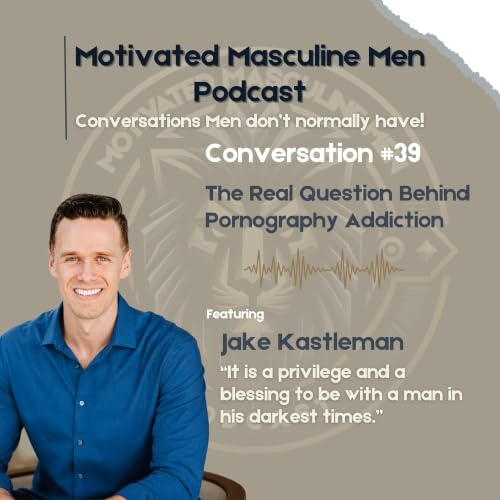
  • Conversation #39 - Jake Kastleman | Pornography Addiction, Dopamine, and What Men Are Really Escaping
    2026/10/09

    Pornography addiction is not just about the porn. For the men Jake Kastleman works with, the real question is what they have been escaping from, and what they have been trying to feel that they are not experiencing.


    Jake is a husband and father with a background in psychology, and his own story starts young. He grew up feeling the stress and anxiety in his home with no idea how to process it, so he turned to video games and food. Pseudo accomplishments and pseudo safety, in his words. Over the years that pattern escalated into pornography and substance use. Getting sober was only the beginning of the deeper work. Today he helps men build a lifestyle of recovery around emotions, neurology, biology, and relationships.


    Chris brings his own side to the conversation. He talks about chasing adrenaline as a police officer, shutting emotions down during close protection work, and learning later that they still need to be processed safely. Together they get into stoicism versus emotional mindfulness, why effortless dopamine hits from porn and social media create dopamine debt, and why the effort and connection in a real relationship work differently.


    Jake also shares practical tools, including the RAIL method, the FISH acronym, and internal family systems therapy, along with the often overlooked impact of nutrition, exercise, and sleep. The conversation lands on brotherhood, on raising kids who can handle hard emotions, and on the point Jake closes with: men support each other best by being present, not by trying to fix each other.


    If you have ever asked yourself what you are really reaching for when you scroll, or you know a man stuck in that loop, this is an honest place to start.


    Connect with Jake Kastleman

    Email: jake@nomoredesire.com
    Website: www.nomoredesire.com
    Apply for a Discovery Call/Consultation: https://www.nomoredesire.com/application


    Connect with Motivated Masculine Men

    Website: www.motivatedmasculinemen.com
    Email: brotherhood@motivatedmasculinemen.com

    If you’d like to be a guest on the podcast, or know someone who would be a great fit, we’d love to hear from you. Get in touch by email.


    What You’ll Learn

    In this conversation you’ll learn:

    • Why pornography addiction is not just about the behavior, but about what a man is escaping and what he is trying to feel
    • How early stress at home, with no way to process it, pushed Jake toward video games and food as pseudo safety
    • How that pattern escalated into pornography and substance use, and why getting sober was only the start of the deeper work
    • Why effortless dopamine hits from porn and social media create dopamine debt
    • Why real relationships, including sex within them, involve a more balanced dopamine release because they take effort and connection
    • The difference between stoic skills and emotional mindfulness, and why men need both
    • How internal family systems therapy treats cravings and hard emotions as parts of the mind to meet with curiosity, calm, and compassion
    • How trauma can disconnect first responders from feeling emotions in the body, and the practices that help, including meditation, writing, and professional support
    • How the RAIL method and the FISH acronym build self awareness and emotional regulation
    • Why nutrition, exercise, and sleep are an often overlooked part of addiction recovery
    • How to teach children to relate to and respond to their hard emotions
    • Why brotherhood matters, and why presence beats problem solving when a man is struggling
    続きを読む 一部表示
    1 時間 20 分
  • Conversation #38 - Roberto Ortiz - Mexican Police Officer: Losing Both Legs, Finding a New Mission
    2026/09/18

    Roberto Ortiz spent his career protecting people from some of the most dangerous men in Mexico. Then one night at a checkpoint, everything he built his identity around was taken from him in seconds.


    Roberto started in logistics and supply chain management, working for companies like Honeywell and Jabil, before joining the police in 2019. He rose to lead a high impact operations group, similar to a SWAT team, running raids and investigations against organized crime and cartels out of the Attorney General's office in Chihuahua, including in Ciudad Juarez. He talks honestly about what that work actually pays, often around $1,500 USD a month after several years of service, and how underpayment creates the exact conditions that leave officers vulnerable to corruption.


    In 2022, Roberto and his team were pulled back from vacation after a major drug bust involving roughly 500 kilos of fentanyl and crystal meth. A high ranking commander and an immigration officer had been kidnapped and killed, and Roberto's team set up a checkpoint on the road leading to where the attackers were believed to be hiding. While checking vehicles that night, a car rammed into him at high speed. He suffered catastrophic injuries and massive blood loss, and his partner Edgar used makeshift tourniquets to keep him alive while Roberto called his wife to say goodbye.


    What followed exposed the gaps in Mexico's medical system. A government hospital turned him away for not being in their network, and a private hospital demanded $25,000 in cash his family did not have, before he was finally admitted to a public hospital. During transport, Roberto experienced what he describes as an out of body moment, seeing his life pass in golden light, at a point when doctors gave him only a five percent chance of survival. He survived, but both legs were eventually amputated above the knee.


    Roberto speaks candidly about what came after. The confusion and fear in the early days of recovery, the strength his wife gave him just by being present, and why relearning how to live again was harder than the injury itself. Left without real support from his employer for two years, he built his own rehabilitation program, studying clinics overseas and working with a local prosthetics provider to design his own exercises. Today his mission has shifted toward intelligence work, speaking, and podcasting, using his story to help other men find purpose after everything has been taken from them.


    Connect with Roberto Ortiz

    TikTok - @revixi1

    Instagram - @robertoortiz.oficial

    Email - roberto.ortiz.puertas@gmail.com

    Support Robert with getting new prosthetics

    GOFUND ME PAGE


    Connect with Motivated Masculine Men

    Website - www.motivatedmasculinemen.com

    Email - brotherhood@motivatedmasculinemen.com

    If you'd like to be a guest on the podcast, or know someone who would be a great fit, we'd love to hear from you. Get in touch by email.


    What You'll Learn

    In this conversation you'll learn:

    • ​How Roberto transitioned from a logistics and supply chain career into becoming a police officer in 2019
    • ​What it was like leading a high impact operations group against organized crime and cartels in Mexico
    • ​The events of the 2022 checkpoint operation that led to Roberto being struck by a vehicle at high speed
    • ​How his partner used makeshift tourniquets to keep him alive after catastrophic blood loss
    • ​Why he called his wife to say goodbye during the incident, believing he would not survive
    • ​The failures in Mexico's medical system that nearly cost him his life before he reached proper care
    • ​What he experienced during a near death moment, and how doctors gave him only a five percent chance of survival
    • ​How his wife's presence gave him the strength to get through the hardest parts of recovery
    • ​Why learning to live again was harder than the physical injuries themselves
    • ​How he built his own rehabilitation program after being left without support for two years
    続きを読む 一部表示
    1 時間 23 分
  • Conversation #37 - John Walt: Every Man's Journey: The Forgotten Path to True Manhood
    2026/09/11

    John Walt spent a decade doing something most driven men never let themselves do. He stepped back from chasing financial success to intentionally shape who his two sons would become as men. That decision became the seed for his book, Every Man's Journey: The Forgotten Path to True Manhood.


    John's own transformation started with what he calls a dying experience, the process of letting go of an old identity built on ego and accomplishment so a new one could take its place. He argues that most men are working from a broken cultural definition of masculinity, one that rewards achievement while ignoring the deeper work of actually becoming a man. His book draws on the structure of the hero's journey and traditional rites of passage, both of which hinge on the same idea: ego death followed by rebirth.


    Chris brings his own experience into the conversation, including his time as a police officer in New Zealand dealing with PTSD and burnout, and the 2.5 month motorcycle trip across the US that forced him to confront how much of his identity was built on being a cop. John introduces the four male archetypes, warrior, lover, wise man, and king, and explains why balancing all four, rather than living solely as the warrior, is what leads to healthy masculinity.


    They dig into mentorship, why wisdom cannot be measured by direct return on investment, and how becoming a student with real humility is often what attracts the right guidance. John also unpacks provide, protect, and preside, pushing back on modern definitions of provision that reduce it to a paycheck, and Chris shares how that shows up in his own marriage through emotional support and physical presence, not just financial contribution.


    The conversation closes on identity beyond career, the discipline of letting go of old roles during transition, and why obstacles are often opportunities in disguise rather than problems to be solved. This is a conversation about what it actually takes to become the man you were meant to be, not just the one you were told to become.


    Connect with John Walt

    Website - JohnWalt.com

    Email - John@Johnwalt.com


    Connect with Motivated Masculine Men

    Website - www.motivatedmasculinemen.com

    Email - brotherhood@motivatedmasculinemen.com

    If you'd like to be a guest on the podcast, or know someone who would be a great fit, we'd love to hear from you. Get in touch by email.


    What You'll Learn

    In this conversation you'll learn:

    • Why John stepped back from financial ambition to intentionally shape his sons over a decade
    • What a dying experience is and why letting go of an old identity is necessary for real transformation
    • How the hero's journey and traditional rites of passage both rely on ego death followed by rebirth
    • The four male archetypes, warrior, lover, wise man, and king, and why balance between them matters more than dominance in one
    • Why wisdom cannot be measured by direct return on investment and what it actually takes to find a mentor
    • How becoming a humble student is often what attracts the right guidance into your life
    • Why modern definitions of provision that focus only on money miss the deeper role men play
    • What provide, protect, and preside actually mean when applied beyond a paycheck
    • How to answer the three fundamental identity questions: your relationship to yourself, to others, and to a larger story
    • Why letting go of an old identity during a career or life transition requires humility, not certainty
    • How to reframe obstacles as opportunities instead of problems using the idea of meaning making
    • Why stepping out of the role of hero in your own story can lead to a more meaningful kind of impact
    続きを読む 一部表示
    1 時間 39 分
  • Conversation #36 - Tre Hubbard: From the Line to the Ring: Finding Purpose After Football
    2026/09/04

    Tre Hubbard spent his whole life being an offensive lineman. Then COVID ended his college football career overnight, and he had no idea who he was without it.


    Tre is a 28 year old former NCAA Division I offensive lineman, Golden Gloves boxing champion, cybersecurity professional, and now a transformational coach. He grew up in a military family in Virginia Beach with strict household values and currently lives in San Diego. This conversation starts at his lowest point. Seven months after football ended, he had gained 60 pounds and built a diet and a mindset that were quietly wrecking him.


    He tells Chris about the moment it hit home, sitting at an all you can eat sushi restaurant and realizing how uncomfortable he had become in his own body. That discomfort led him back to his high school trainer, Tony Thompson, and eventually into a gym where a fighter named Zar convinced him to step into the ring. On December 21st, the one year anniversary of losing his close friend Clay, Tre agreed to take his first fight, inspired by something Clay had told him about following his heart.


    What happened next went viral. In under a minute, in his very first amateur bout, Tre knocked his opponent out. He walked away with a win everyone was talking about and a private uncertainty about whether he had actually earned it. He stepped away from fighting for years afterward, slipped back into old weight struggles, and eventually found his faith, which gave him a clearer sense of who he actually was.


    This conversation is about what happens when the identity you built your whole life around disappears, and how Tre found his way to a new one, not as an athlete, but as someone who helps other men do the same. Chris walks Tre through the 7 Levels process, a series of why questions built to strip away the surface answer and get to the real one underneath.


    Connect with Tre Hubbard

    Email

    trehubbardvt@gmail.com

    TikTok - @trehubbard

    Instagram - @trehubbard


    Connect with Motivated Masculine Men

    Website -www.motivatedmasculinemen.com

    Email - brotherhood@motivatedmasculinemen.com

    If you'd like to be a guest on the podcast, or know someone who would be a great fit, we'd love to hear from you. Get in touch by email.


    What You'll Learn

    In this conversation you'll learn:

    • How losing a college football career overnight due to COVID triggered a 60 pound weight gain and identity crisis
    • The moment at an all you can eat sushi restaurant that made Tre confront how much he had let himself go
    • Why reaching out to his old high school trainer became the turning point in rebuilding his body and mindset
    • How a fighter named Zar convinced him to step into boxing despite having no prior fighting background
    • Why Tre chose to take his first fight on the one year anniversary of losing his friend Clay
    • What it felt like to knock out his opponent in his very first amateur bout, and why the win left him more uncertain than confident
    • Why he stepped away from fighting for years afterward and slipped back into old patterns
    • How faith became the turning point that helped him find a clearer sense of identity
    • The shift from identifying as an athlete to identifying as a transformational coach who helps other men through his own story
    • What the 7 Levels process is and how asking why repeatedly can uncover your real purpose
    • Why Tre believes people can face their fears by recognizing they are built for it, even when they do not feel qualified
    • How Tre now uses content creation to help others going through the same struggles with weight, identity, and purpose
    続きを読む 一部表示
    1 時間 15 分
  • Conversation #35 - Dr. Furhan Qureshi: Testosterone, Energy, and the Truth About Men's Health After 40
    2026/08/28

    Summary


    Feeling tired all the time is not just part of getting older. That is the message Dr. Furhan Qureshi wants every man to hear before he shrugs off fatigue, low libido, or brain fog as something to just push through.


    Furhan grew up in a military family from Pakistan and was drawn to medicine after watching his uncle study for medical board exams. A series of injuries during medical school pushed him out of surgery and into internal medicine, and that path eventually led him into aesthetics, longevity, and men's hormone health. His focus now is helping people live longer while actually feeling good, not just adding years to a life that feels flat.


    This conversation goes deep into testosterone, why global levels and sperm counts are declining, and why so many men wait years before getting checked. Furhan explains why symptoms should carry more weight than lab numbers alone, breaks down the real risks and benefits of different testosterone administration methods, and warns against seeking treatment from profit driven clinics instead of providers who actually take a comprehensive approach.


    They also get into the bigger picture. Obesity as a structural problem rather than a personal failing, the trust gap between patients and the medical system, and why seeking help should be seen as strength, not weakness. If you have been telling yourself that feeling drained is just what happens after 40, this conversation might change your mind.


    Connect with Dr. Furhan Qureshi

    Website

    https://www.thenoormd.com/

    LinkedIn

    https://www.linkedin.com/in/furhan-qureshi-008a602b5/

    Instagram

    https://www.instagram.com/nooresthetiquewc

    Facebook

    https://www.facebook.com/TheNoorMD/


    Connect with Motivated Masculine Men

    Website

    www.motivatedmasculinemen.com

    Email

    brotherhood@motivatedmasculinemen.com

    If you'd like to be a guest on the podcast, or know someone who would be a great fit, we'd love to hear from you. Get in touch by email.


    What You'll Learn

    In this conversation you'll learn:

    • Why fatigue, low libido, and energy loss should never just be written off as normal aging
    • The global decline in testosterone levels and sperm count, and why it matters
    • Why symptoms often tell you more than lab numbers alone
    • The real risks and benefits of different testosterone administration methods, including injections and sublingual tablets
    • Why you should see a urologist or hormone specialist rather than relying on primary care alone
    • How to spot a profit driven clinic instead of a provider who takes a comprehensive approach
    • Why obesity in America is often a structural issue tied to urban planning, not just personal choice
    • How processed food culture and poor work break habits took hold decades ago and still shape health today
    • Why the trust gap between patients and the medical system needs to be addressed honestly
    • How self reflection, forgiveness, and seeking outside feedback support long term wellness
    • Why asking for help is a sign of strength, not weakness
    続きを読む 一部表示
    1 時間 11 分
  • Conversation #34 - Chief of Police Dr. Ron Camacho: Bringing Ego to the Forefront
    2026/08/21

    Anger and ego nearly ran Dr. Ron Camacho's life before he learned to lead with compassion instead of control. Now he runs a 400 person police department in North Charleston, South Carolina.


    Ron's path started in the army after high school and led him to Chief of Police. Along the way, unresolved trauma from his father fueled a temper that could have derailed everything. Therapy changed that, and Ron says it saved his life.


    This conversation is about what happens when you actually do the work. Daily introspection before hard conversations. Understanding the pressure someone else is under instead of reacting to it personally. Ron has built those same principles into his department through mandatory mental health checkups and coaching programs, and complaints have dropped even as officer activity has gone up.


    He also opens up about his marriage and his upcoming book, Bringing Ego to the Forefront, which tackles the ego issues that quietly sabotage good leaders.


    Connect with Dr. Ron Camacho


    Website
    https://www.camachoconsulting.net/about


    Services
    https://www.camachoconsulting.net/services


    LinkedIn
    https://www.linkedin.com/in/dr-ron-camacho-6787b512/


    Connect with Motivated Masculine Men


    Website
    www.motivatedmasculinemen.com


    Email
    brotherhood@motivatedmasculinemen.com


    If you'd like to be a guest on the podcast, or know someone who would be a great fit, we'd love to hear from you. Get in touch by email.


    What You'll Learn

    In this conversation you'll learn:

    • How unresolved childhood trauma shaped Ron's anger and ego early in his career
    • Why therapy became the turning point that saved his life and his leadership
    • How daily introspection helps prepare for difficult conversations before they happen
    • A real example of navigating an unfair boss by understanding pressure instead of reacting to it
    • Why seeking help is one of the hardest but most necessary steps for men in high stress careers
    • How elite military personnel still struggle to grasp the daily realities faced by police officers
    • The mental health initiatives Ron introduced at his department, including mandatory checkups and coaching
    • Why complaints dropped even as officer activity increased under his leadership
    • What Ron's upcoming book, Bringing Ego to the Forefront, aims to teach current and future leaders
    • Why servant leadership starts with confronting your own ego first
    続きを読む 一部表示
    1 時間 6 分
  • Conversation #33 - Stephen Paul Edwards: Hartism, Generational Trauma, and Learning to Value Yourself
    2026/07/25

    Stephen Paul Edwards returns for a third conversation, and this one goes deeper into the work of healing than either of the last two. Stephen grew up in Blackpool, England, and spent time in an asylum at sixteen before eventually rebuilding his life in America. He has come to see adversity as something that happens for you rather than to you, a shift in perspective that shapes everything else he teaches.


    Much of this conversation centers on generational trauma, and whether the patterns we inherit from our families are destiny or simply tendency. Stephen shares a story about two brothers who lost their father the same way and grew into completely different men, proof that genetics load the gun but choice pulls the trigger.


    Chris opens up about his own struggle with balance, chasing new opportunities while fearing he will let his wife down, and not knowing how to value the work he does outside of law enforcement. Stephen walks him through identifying his own worth, tracing fear back to its root, and introduces his new philosophy called Hartism, built around reconnecting with the heart instead of only trusting the mind. The conversation also touches on AI, privacy, and how different cultures approach rehabilitation instead of punishment.


    This is a conversation about self-worth, generational patterns, and what it looks like to lead from the heart instead of just the head.


    Connect with Stephen Paul Edwards

    Website

    https://vft23.com/

    Instagram

    https://www.instagram.com/stephen_sapereaude/

    TikTok

    https://www.tiktok.com/@vft23_official?lang=en

    Facebook

    https://www.facebook.com/profile.php?id=61575468609762

    LinkedIn

    https://www.linkedin.com/in/seemiracles/

    X

    https://x.com/Stephen_Edwardz


    Connect with Motivated Masculine Men

    Website

    www.motivatedmasculinemen.com

    Email

    brotherhood@motivatedmasculinemen.com

    If you'd like to be a guest on the podcast, or know someone who would be a great fit, we'd love to hear from you. Get in touch by email.


    What You'll Learn

    In this conversation you'll learn:

    • Why Stephen views adversity as something that happens for you rather than to you
    • Whether generational trauma is destiny or simply a tendency you can break
    • The story of two brothers who experienced the same tragedy and chose different paths
    • Why readiness matters before real healing or change can happen
    • How to identify and document your own value when self-worth feels shaky
    • The three universal fears behind most self-worth struggles: abandonment, trust, and self-worth itself
    • A simple relationship exercise for sharing honest feedback with your partner
    • What Hartism is and why it emphasizes the heart over the mind
    • The DARE method, Daily Active Remembering Experience, for reconnecting with who you already are
    • Why the answer to self-discovery is not found by traveling but by looking within
    • How different cultures approach criminal rehabilitation instead of punishment
    • The tension between logic and intuition in making better decisions
    続きを読む 一部表示
    1 時間 4 分