エピソード

  • Community Based Midwives are the Anchor with Martha Redpath
    2026/09/02

    Martha Redpath, a CNM turned burnout and boundaries coach, joins Augustine to talk about what happens when the people who hold space for everyone else run out of space for themselves. Martha traces her path from home birth CNM in Vermont to founder of Provider Space Coaching — a pivot that came out of her own reckoning with alcohol, burnout, and eventually grief after losing her husband.

    The conversation moves through the state of community-based midwifery today (closures, legal exposure, the pressure CPMs face that CNMs often don't), the martyrdom culture baked into midwifery training, and what it actually looks like to teach boundaries as a clinical skill rather than a personality trait. Martha and Augustine also get into nervous system regulation, the difference between CNM and CPM entry points into boundary-setting, and why the ability to disappoint people — kindly and clearly — might be the most underrated skill in this profession.

    Key Topics

    • Martha's path: nursing → home birth CNM in Vermont → 10 years in a small hospital birthing center → burnout, alcohol, and the pivot to coaching
    • The current landscape for community-based midwives: closures, lawsuits, board investigations, and the Texas trend of using public social media posts as testimony against midwives
    • Historical spikes in home birth rates (Ricki Lake's documentary, the ACA, COVID) and where rates stand now
    • CNM vs. CPM pathways into professional boundary-setting — and why CPMs often enter the field less boundaried
    • The martyrdom/"lone cowboy" culture in community-based midwifery, and generational shifts around it
    • Martha's coaching framework: strengths-based reflection across eight life domains, nervous system regulation, "tiny habits," and discomfort resilience
    • Grief as a parallel thread to birth work, following the loss of Martha's husband
    • The value of one truly safe confidant ("marble jar friends") for midwives carrying constant on-call stress

    Resources Mentioned:

    Martha's coaching practice: providerspacecoaching.com — sliding scale fees, one-off debrief calls, and a six-week burnout package built around The Big Life Journal

    Student Midwife's Keepsake Journal — the HIPAA-appropriate documentation journal mentioned in the mid-episode ad, with space for 100 birth records and built-in compliance guidance

    続きを読む 一部表示
    40 分
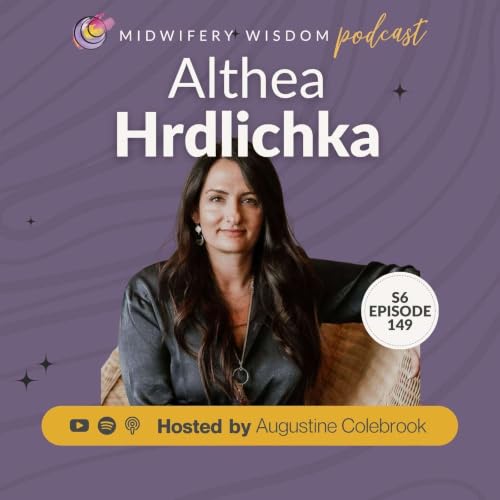
  • Building Against All Odds & the Cost of Calling with Althea Hrdlichka, CPM
    2026/09/02

    Editor's note (09/04/2026): This episode was recorded in July 2026, before criminal charges were filed against Althea Hrdlichka in September 2026 related to her Fort Collins birth center. She has not been convicted of any crime. We're leaving this conversation up as recorded; you can find current reporting on the case through local Colorado news outlets.

    Show notes:
    Althea Hrdlichka opened a birth center in Colorado in 2020 — a state where CPMs were not legally allowed to practice in birth centers. She then changed the law. She opened a second location in 2026. She has attended over 1,000 births and she's far from done.


    In this episode Augustine sits down with Althea for one of the most unfiltered conversations this podcast has had about what it actually takes to build midwifery infrastructure in a hostile system — the legislation, the license battles, the EMS protocols that she believes are being used deliberately against out-of-hospital providers, the rivals who tried to bring her down, and the moment she almost didn't keep going.

    And why she kept going anyway.

    In this episode:

    • Four births that led her to midwifery — and the one that changed everything
    • Opening a birth center she couldn't legally practice in — and changing the law
    • A two-year license battle, $70,000 out of pocket, and what pulled her back from the edge
    • The EMS "stay and stabilize" protocol and what it means for out-of-hospital birth
    • Why she pays herself zero and what her sustainability plan actually looks like
    • The homegrown midwife model — and why it's the only one that works
    • What midwives eating each other is costing the profession

    • Subscribe to our YouTube Channel: https://www.youtube.com/@MidwiferyWisdom
    • Birth Center Incubator: https://www.skool.com/birth-center-incubator-4343/about
    • Guest Contact: https://tendergiftsmidwiferyandbirthcenter.com/about-us/

    続きを読む 一部表示
    43 分
  • Rerun: Understanding Postpartum Psychosis (Beyond The Lindsay Clancy Headlines) with Aaisha Alvi
    2026/08/19

    When high-profile cases like Lindsay Clancy hit the news, public fear and sensationalism surrounding Postpartum Psychosis (PPP) spike—making clinical clarity and lived experience more vital than ever.

    In this special re-released episode, we sit down with Aaisha Alvi, author of "A Mom Like That: A Memoir of Postpartum Psychosis." Aaisha is a two-time PPP survivor who navigated severe hallucinations, delusions, and several medical dismissals before finally receiving life-saving psychiatric treatment.

    Community birth workers, midwives, and doulas are often the primary line of defense in the first 14 days postpartum. In this conversation, we break down:

    * The clinical differences between Postpartum Depression (1 in 5) and Postpartum Psychosis (1-2 per 1,000).
    * What hallucinations and delusions actually look and feel like from the inside.
    * Why calling PPP "rare" leads to dangerous medical dismissals in emergency rooms and clinics.
    * Exact red flags, key phrases, and emergency protocols birth workers must use when advocating for a client in crisis.

    CONTENT WARNING: This conversation includes discussion of severe perinatal mental health crises, intrusive thoughts, and psychiatric emergencies.

    RESOURCES & LINKS:
    • Learn more about Aaisha Alvi & grab her memoir: https://www.aaishaalvi.com
    • Follow Aaisha on Instagram: @AaishaAlviWrites
    • Postpartum Support International (PSI): Call or text 1-800-944-4773 | https://www.postpartum.net
    • National Suicide & Crisis Lifeline: Call or text 988
    • Explore Midwifery Wisdom courses & resources: https://www.midwiferywisdom.com

    続きを読む 一部表示
    42 分
  • From The Farm to Motherfly with Corina Fitch
    2026/08/05

    Corina was literally born into midwifery. She came into the world in an old school bus on The Farm — the legendary intentional community in Tennessee founded by Stephen Gaskin and Ina May Gaskin — and grew up surrounded by communal living, the absence of money, and birth as an ordinary, community experience. After years of practicing midwifery across six countries, raising three daughters as a single mother, navigating a nine-year mental health journey, and returning to The Farm as part of a new generation of midwives, she has arrived at something extraordinary: a framework for motherhood that she believes could change everything.

    This episode is for every midwife who has ever burned out, every mother who has lost herself, and everyone who believes birth work is about so much more than catching babies.

    In this episode we cover:

    • Growing up on The Farm — communal living, kid herds, no money, and birth as a normal community event
    • Leaving The Farm at 10, landing in Hollywood Florida, and the culture shock of the "real world"
    • Her first birth on her 21st birthday — and three months apprenticing with Ina May and the Farm midwives that summer
    • Getting licensed in 1999, practicing in Florida, taking students to Honduras, and attending births across six countries
    • Becoming a mother as a midwife — and how her first postpartum experience shattered every expectation she had
    • A nine-year mental health journey including depression, anxiety, and eventually a bipolar diagnosis — and the shame of suffering in silence as "the one who knows"
    • The vision for Motherfly — a new archetype for motherhood rooted in self-compassion, creativity, and community rather than martyrdom and supermom mythology
    • What matrescence is, why it matters, and why it should be a household word
    • Returning to The Farm in 2020 — driving through the Confederate-flag South with her Black daughters, the financial relief, and the racial reckoning of arriving in a predominantly white community
    • The onboarding meeting that became a confrontation — and the "Midwives for Black Lives" sign that nobody would respond to
    • Holding Ina May's legacy with nuance — the good, the harm, and the missed opportunity
    • Founding Community Birth and Wellness with three other midwives — and the spontaneous passing of the torch at the Sanctuary Summit
    • The Motherfly nine-month group coaching container, the Matrescent Circle, and what's coming next
    • Why our culture does a so-so job birthing babies and a terrible job birthing mothers

    Resources & Links:

    🦋 Learn more about Motherfly: motherflymom.com
    📱 Instagram: @motherfly.tribe
    🎙️ Corina's podcast: Mother Tongue — Reclaiming Motherhood from the Patriarchy
    🏡 Join our Skool community: skool.com/midwiferywisdom
    🌿 Birth Center Incubator: https://www.skool.com/birth-center-incubator-4343/about

    続きを読む 一部表示
    54 分
  • Mother-Assisted Cesarean: Reclaiming Choice with Dr. Koen Deurloo
    2026/07/29

    In this episode, Augustine sits down with Dr. Koen Deurloo, a Dutch gynecologist at the Diakonessenhuis in Utrecht and the first physician in the Netherlands to perform a maternal-assisted cesarean (MAC) — a technique that lets the birthing parent help lift their own baby from the incision during a planned cesarean. What began as a single patient's request in 2018 has grown into a practice Dr. Deurloo has now performed more than 200 times, and one he freely shares with hospitals around the world.

    This conversation goes far beyond the surgical technique. Dr. Deurloo talks candidly about the home births of his own two daughters and how that experience shaped his respect for the midwifery model of care, learning to ask "why" instead of overriding a patient's choice, and building one of the most collaborative OB-midwife relationships in the Netherlands — a country where roughly 90% of pregnancies start with midwifery-led care. He shares research on women who request care outside standard guidelines, why the "dead baby card" says more about a provider's own trauma than about safety, and how he trains residents, midwives, and doulas to work from a shared goal instead of competing silos.

    Dr. Deurloo is also the author of Door de ogen van een gynaecoloog ("Through the Eyes of a Gynecologist"), a collection of 35 stories from his clinical life.

    Whether you're a physician, midwife, doula, or student, this episode offers a rare, first-hand look at what it looks like when a high-risk hospital system chooses trust and autonomy over rigid protocol — and how that shift actually happened, person by person.

    In this episode we cover:

    • The story behind the first maternal-assisted cesarean in the Netherlands and how the procedure has evolved since 2018
    • What selection criteria Dr. Deurloo uses for MAC, and why he doesn't offer it routinely to every patient
    • How the Dutch maternity system integrates first- and second-degree midwives with hospital-based obstetric care
    • Dr. Deurloo's research on women who request birth outside clinical guidelines — and what happened to their outcomes
    • Reframing the "dead baby card" as a signal of provider trauma, not patient risk
    • How to build trust between physicians, midwives, and doulas without changing the actual clinical care
    • Practical advice for starting pilot programs and finding your "pioneers" when introducing new practices into a hospital system

    Resources & Links:
    🔗 Follow Koen on Instagram for MAC photo series and behind-the-scenes footage: www.instagram.com/kldloo

    続きを読む 一部表示
    50 分
  • One Fellow's Journey Through Burnout, Betrayal, and Rebuilding with Emmelia Cappelletti
    2026/07/22

    In this episode, Augustine shares a real one-on-one consult from the very first Midwifery Wisdom Fellowship cohort — a conversation with Emmelia.

    Emmelia is navigating a question many apprentice and student midwives face: what does a sustainable path in this work actually look like? She's processing betrayal by a preceptor who left her stranded without signed-off skills, wrestling with whether solo practice or a birth center model fits her life, and trying to figure out if she can be both a hands-on provider and a business owner without losing herself — or her family — in the process.

    Augustine and Emmelia talk through the Dunning-Kruger effect and why that crash in confidence after early competence is actually a sign of real growth. They talk about processing trauma from an unsupportive preceptor relationship, the difference between scarcity and abundance mindset in a competitive field, and why so many birth centers close within a few years while others last for decades. It's an honest look at the tension between calling and capacity — and a reminder that building something sustainable is its own form of midwifery.

    Emmelia generously gave us permission to share this consult, believing other students and apprentices working through similar struggles might find something useful in it.

    To learn more about the next cohort of the Midwifery Wisdom Fellowship starting September 1, 2026, visit our website https://www.midwiferywisdomcollective.com/midwifery-wisdom-fellowship-2

    続きを読む 一部表示
    50 分
  • Pink is for Midwife: Birth Work in Bangladesh with Rafia Islam
    2026/07/15

    In this episode, Augustine sits down with Rafia Islam, a midwife from Bangladesh with eight years of experience spanning refugee camps, mentorship roles, and one of Dhaka's busiest labor wards. Rafia walks us through her training, her path from data collector to midwife, and what a 12-hour night shift with 13 deliveries actually looks like.

    The conversation turns to the realities shaping birth in Bangladesh: a cesarean rate as high as 80% in some private hospitals, the financial incentives driving unnecessary surgery, and the coercion many families face in the delivery room. Rafia also shares why midwives are legally barred from home birth in Bangladesh, how the country's neonatal mortality rate has dropped dramatically since 2000, and a harrowing memory of delivering a baby during a hospital fire.

    This is a candid look at what it means to fight for autonomous, respected midwifery care in a system still learning what a midwife is for — and a reminder that no matter where you practice, the work of holding space for birth looks remarkably the same.

    続きを読む 一部表示
    36 分
  • Seeing Birth Clearly: Birth Photography & Fighting for Women's Choices with Eva Rose
    2026/07/01

    In this beautiful and powerful episode, host Augustine sits down with Eva Rose — Norwegian birth photographer, doula, advocate, documentarian, and creator of Birth Mood — for a conversation that spans birth rooms, operating theatres, Ethiopian hospitals, and the fragile future of midwifery-led care across the globe.

    Eva has been attending births for nearly 30 years, building one of the most extraordinary visual archives of physiological birth in the world — and along the way becoming an unstoppable voice for women's birth rights and informed consent.

    In this episode we cover:

    • How witnessing her baby sister's home birth at age seven — and growing up in a family of photographers — set Eva on her path
    • How a midwife told Eva "you are a doula" — and what happened next
    • The closure of ABC, Norway's most beloved midwifery-led unit, and how Norway went from 70 such units to just four
    • Why Norwegian hospitals profit from over-medicalizing birth even within a free public healthcare system
    • The fetal scalp electrode post that went viral globally — and why Norwegian midwives were furious
    • How Eva's role as a doula shifted from loving birth companion to consent advocate
    • The mother-assisted cesarean in the Netherlands — and Eva's mission to bring it to Norway
    • Birth culture across countries — the stark difference between consent practices in Norway, the UK, and Switzerland
    • Birth Around the World — selling everything to document birth globally before COVID shut it down
    • Fundal pressure in Ethiopia and Eva's campaign to make it illegal worldwide
    • Burnout, her lowest two years, and what slowing down has taught her
    • Birth Mood — the visual birth preparation course now used by birthing women, midwives, and doctors worldwide

    Resources & Links:

    📸 Follow Eva: @evarosebirth on Instagram, YouTube, and Facebook
    🏡 Join our community: skool.com/midwiferywisdom
    🌿 Midwifery Wisdom Collective: midwiferywisdomcollective.com

    続きを読む 一部表示
    51 分