エピソード

  • Episode 39: Channagiri, 2026: What Hangs Beneath the Bell?
    2026/10/21
    In this original fiction set in Channagiri, Karnataka, India, in 2026, what hangs beneath the temple bell? At 12:47 a.m., watchman Devanna sees a white-clad shape beneath a temple bell whose rope lies coiled. Meera waits by the gate with a brass lantern. Beyond the neem wall, anklets chime. A second shadow stretches across the courtyard, and something made of cloth appears beside the well, its edges fluttering inward against the wind. Salt buys one breath of relief. Then the bell rings behind them. The gate should be their way out—but the path has other plans. An original fictional horror story. Channagiri and 2026 are the imagined setting, not a documented haunting. The official Davanagere district reference verifies the location only; it does not substantiate the story or its chosen year. https://davanagere.nic.in/en/tehsil/ Watch full story: [URL] Watch with original horror artwork on YouTube: https://youtu.be/4Yki9vk3ZFU
    続きを読む 一部表示
    1 分
  • Episode 38: The Maze Wore Her Face | Prague, 1893
    2026/10/09
    Original horror fiction set in Prague, Czech Republic, in 1893: a maze calls Lenka in her own voice. At 11:47 p.m., Lenka enters an abandoned alchemist’s maze with a brass lantern and a red thread tied to the gate. Her own voice calls from the darkness. Beyond a thorn arch, a column of soot unfolds, wearing her smile whenever she looks away. The thread should lead her outside. Then the presence touches it, and her route home becomes a trap around her wrist. Lenka has a knife, a fading light, and only minutes before midnight. Setting reference: UNESCO’s Historic Centre of Prague. This source supports the city’s architectural setting, not the fictional haunting or the chosen story year. https://whc.unesco.org/en/list/616/ Listen to this original horror story in English. Watch with original horror artwork on YouTube: https://youtu.be/PYrldcsa59M
    続きを読む 一部表示
    2 分
  • Episode 37: Busan, 2024: What Is Watching Mina Through Her Phone?
    2026/10/05
    In this original fiction set in Busan, South Korea, in 2024, why does Mina’s phone show a threat inside her own hallway? At 1:17 a.m., Mina’s phone starts a horror clip she never touched. The hallway on screen is her own, and a black shape folds smaller whenever she blinks. Holding a brass desk lamp, she retreats toward the kitchen. Then the screen shows the shape beside her. As the corridor stretches and the exit slips away, a hollow knot of smoke begins pushing through the glass. What happens if she breaks the screen that brought it here? The Signal Beneath the Screen is original horror fiction. Busan and 2024 are its imagined setting, not the place and date of a documented haunting. The story transforms the watched-apparition tension of The Turn of the Screw into a new screen-bound threat; it does not present an unverified online trend as fact. Setting reference: Busan Metropolitan City, “Introduction”. This source verifies the place, not the fictional events or the story’s setting year. https://www.busan.go.kr/eng/introduction Listen with headphones. Follow the show for more original horror stories. Watch with original horror artwork on YouTube: https://youtu.be/S8KZlBnxKjE
    続きを読む 一部表示
    2 分
  • Episode 36: Darwin, 1929: What Moves When Mara Looks Away?
    2026/10/04
    In this original fiction set in Darwin, Australia, in 1929, what crosses the doorway whenever Mara looks away? At 12:17 a.m., Mara unlocks a coastal radio hut for a haunted property showing. A red thread reveals a doorway that should not exist. Through it comes the Ribbon Doll: cracked wood, one black ribbon eye, and a larger, inhuman silhouette of smoke. Every time Mara looks away, it crosses exactly one doorway, leaving a wet print where there is no water. By the third bell, her mapped exit is blocked. Can she close the threshold before the catalogue claims another item? The Red Thread in Darwin is an original fictional horror story. Darwin and 1929 are its imagined setting, not the location and date of a documented haunting. The story draws on Jiangshi-inspired warning logic and an unverified haunted-property-viewing trend; it does not present that online claim as fact. Setting reference: Australian War Memorial, “Darwin”. This source verifies the place, not the fictional events or their setting year. https://www.awm.gov.au/collection/PL2155 Listen with headphones. Follow the show for more original horror stories. Watch with original horror artwork on YouTube: https://youtu.be/YpucZ1_oqIM
    続きを読む 一部表示
    1 分
  • Episode 35: Kuldhara, 1825: Why Did the Shadows Leave Last?
    2026/08/04
    Why did a surveyor at Kuldhara near Jaisalmer, Rajasthan, India, count one extra shadow after the village's legendary 1825 abandonment? Before Meera reaches the abandoned village, she hears a pencil moving inside her locked survey case. She has until dawn to finish the map her late father could not complete, and she refuses to leave the same grid unfinished. At Kuldhara’s gate, an old keeper gives her the field ledger and one instruction: count walls, not shadows. The episode turns a routine night survey into an acoustic maze. Rafiq’s lantern hisses out. Wind drops away from the roofless houses. A pencil adds a forty-second line to a map that contains only forty-one buildings. Then moonlight reaches the lane from two directions, placing three shadows beneath two living people. Meera says the number aloud, and the extra shadow rises. Listen closely as chalk numbers disappear from the doors and the iron gate becomes a featureless wall. The field ledger carries her father’s last message: a false mark is an empty house asking for a name. Meera can restore the exit, but Kuldhara will not open it for free. The final moments leave the horror behind in an ordinary survey office, where every chair casts a shadow except hers. A restrained voice performance, scratching graphite, brittle paper, dying lantern flame, desert wind, shifting stone acoustics, and an original score build the episode’s dread for headphones. The tension comes from counting, silence, and the distance between a person and the shadow that should belong to her. This story is fiction inspired by the legend of Kuldhara’s abandonment in 1825. Meera, Rafiq, the old keeper, the survey, House Forty-Two, and all supernatural events are invented. Historical reference: Rajasthan Tourism, “Kuldhara Village History: A Haunted Village near Jaisalmer.” Content note: bereavement, supernatural threat, minor non-graphic injury, entrapment, and loss of identity. Best experienced with headphones in a dark room. Follow, rate, and review Midnight Whisperer in your podcast app. Written and produced by Midnight Whisperer. Watch with original horror artwork on YouTube: https://youtu.be/hhSaOAXQ7z4
    続きを読む 一部表示
    3 分
  • Episode 34: Dumas Beach, 2026: Who Whispered from the Black Sand? | Immersive Horror Audio Drama
    2026/07/23
    Why did a 2026 report from Dumas Beach near Surat, Gujarat, India, describe whispers rising from its black sand after sunset? At 11:47 p.m., Nirali hears her missing brother calling from beneath the beach—even though Dev's phone is ringing in her hand. A tea seller has given her one rule: when the tide turns, never answer the sand. She answers anyway, and the voice below learns how to call Dev toward the Arabian Sea. Listen with headphones for surf, dry coastal wind, footsteps in wet sand, a ringing phone, and a stolen voice closing in from behind. Content note: supernatural threat, drowning peril, loss of voice, and non-graphic distress. Watch with original horror artwork on YouTube: https://youtu.be/irPfgG5F5aM
    続きを読む 一部表示
    3 分
  • Episode 33: Paraná, 1947: Why Did the Grave Give Him Back?
    2026/07/14
    Why did a 1947 folklore geography place the earth-rejected Corpo-Seco in Paraná, Brazil, where even death refused him? First comes the sound of disturbed earth. Then a coffin strikes the surface for the third time, and the villagers stop digging. Bento, keeper of the burial road, is handed a mule cart, a tin lantern, and one rule: whatever voice the thing inside steals, never answer it with a name. The road is supposed to carry Joaquim Vale’s rejected body until dawn. Bento’s feverish daughter Rosa, however, is waiting at home for the medicine in his coat. This headphone-first folk-horror drama follows Bento through a chain of impossible refusals. A chapel bell rings while its rope hangs still. Coals die beneath cold ash. The cemetery itself shoves the coffin back onto the cart. When the mule bolts and the wheels continue in silence, a voice from behind the coffin lid calls him Father—while Rosa’s real cough answers from her window. Every sound pulls Bento closer to the one word the road needs. Close voice performances, an unmoving bell, wooden wheels, coffin scratches, pine wind, black-dust textures, and an original score turn the burial road into an intimate acoustic trap. Listen for the contrast between the stolen voice inside the coffin and the fragile signs of Rosa beyond it; that distance carries the episode’s dread. The story is fiction inspired by Brazilian Corpo-Seco traditions associated with Paraná through Luís da Câmara Cascudo’s folklore geography, first published in 1947. Joaquim Vale, Bento, Rosa, the burial road, the name trap, and all events in this episode are fictional. Content note: death, a coffin, illness involving a child, supernatural threat, non-graphic transformation, and disappearance. Best experienced with headphones in a dark room. Subscribe, rate, and review Midnight Whisperer in your podcast app. Written and produced by Midnight Whisperer. Watch with original horror artwork on YouTube: https://youtu.be/_OSBOeRIqkI
    続きを読む 一部表示
    3 分
  • Episode 32: Punjab, 1894: Why Did the Roadside Bride Hide Her Feet?
    2026/07/08
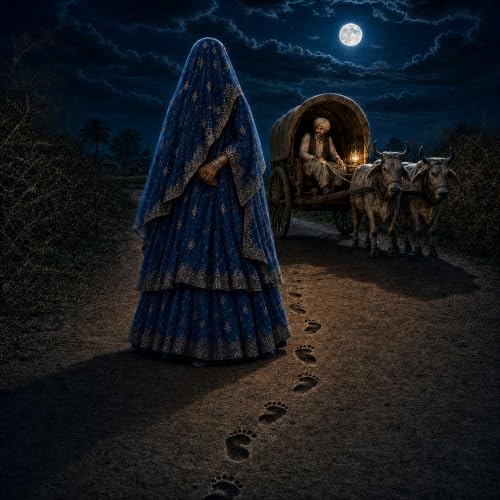
    Why does a folklore collection from Punjab, British India, published in 1894 say backward feet expose a beautiful churel—and what happens on Arjan’s road? On an empty road in Punjab, Arjan lets a veiled bride approach his bullock cart. Her footprints face the wrong direction, a silver anklet catches beneath the axle, and one compassionate mistake gives the road permission to turn him around. This original folk-horror audio drama transforms the backward-foot churel motif recorded in the 1894 collection Tales of the Punjab into a fictional roadside nightmare. Arjan, the bride, and every supernatural event in the episode are fictional. Fully voiced narration, creaking cart wood, dry footsteps, a ringing anklet, night wind, and an original score create an immersive headphone listen. Content warning: supernatural pursuit, distorted feet, entrapment, and non-graphic peril. Best experienced with headphones in a dark room. Subscribe and leave a review to help others find Midnight Whisperer. Watch with original horror artwork on YouTube: https://youtu.be/fA7ykuOz01w
    続きを読む 一部表示
    3 分