エピソード

  • The Past Meeting the Present
    2026/10/25
    Chef Matthew Raiford, a familiar voice from the Lowcountry Gullah Podcast, came back to share his recent exploration into the vital connections between food, land, and heritage. Join us for a powerful conversation as we they delve into the significance of knowing one’s roots and the importance of preserving Gullah culture.
    続きを読む 一部表示
    1 時間 6 分
  • Gullah Geechee In Crisis
    2026/10/18
    When we talk about the Gullah Geechee culture, it's often about the language and sweetgrass baskets and such. But what about the culture's pain points? Like being a closed community and what about the growing misinformation about slavery that's out there on social media? There's lots of issues. So, let's talk about it.
    続きを読む 一部表示
    46 分
  • The Gullah Geechee Corridor
    2026/10/11
    Did you know that the Gullah Geechee Corridor was federally designated in 2006? It's not just the area that runs from Wilmington, NC to St. Augustine, FL. It's where the core of the culture originated from. It's the living, breathing place where the culture and several active communities are thriving. Join me for a fascinating conversation on too many topics to mention here, with it's newest Executive Director, Djuanna Brockington.
    続きを読む 一部表示
    1 時間 2 分
  • Discovering Root Stories
    2026/10/04
    In the DNA and ancestry.com world, just the thought of searching for your ancestors can be an exciting journey of discovery, as well as daunting, especially if your a Black American. Frustration and hitting the 1870s Slave Wall might be what happens, but it is very possible that you can build a tree well into the early 1800s. Finding documents are fabulous, but the importance of discovering the stories that bridge the paper trail can be just as powerful. So, how do you start and grow your family's branches into a blooming tree? Join in on a fascinating conversation with the Barbara Cantaloni, Executive Director of the Heritage Library with step by step guidance on how to get started.
    続きを読む 一部表示
    35 分
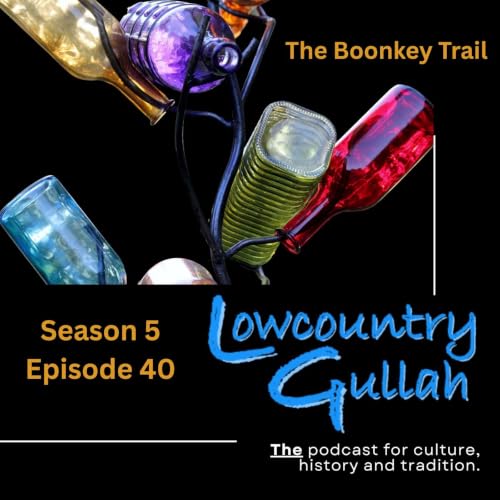
  • The Boonkey Trail
    2026/09/28
    What happens when a young filmmaker puts Gullah Geechee culture at the center of a horror story? On this episode of *Low Country Gullah*, Luana Graves Sellars talks with filmmaker Daunte Brown about *The Boonkey Trail*, a film he is developing in Charleston. Daunte shares why he wants to see more stories from his community on screen and how he is weaving language, spirituality, humor, and respect for the ancestors into the film. Luana and Daunte also talk shop: the work of bringing a story to life, the challenges of funding a production, and why preserving culture matters as Lowcountry communities face displacement. Find more shows like this on the Mean Ole Lion app. Follow, rate, comment, and share.
    続きを読む 一部表示
    28 分
  • Historic Gullah Settlements
    2026/09/20
    The history of the Gullah Geechee people is not merely a collection of dates, geographic coordinates, or static museum exhibits; it is an ongoing epic of absolute resilience. The culture however, is not isolated solely along the eastern coastline. From the trail of tears to the search for freedom to the great migration, the culture moved, yet remains anchored by the people who live it everyday. Historic Gullah settlements are all over North America, which is another reason why you can never break the spirit of a people determined to keep our heritage alive.
    続きを読む 一部表示
    30 分
  • The Gullah Geechee Subculture
    2026/09/13
    For generations, depending on where you came from, the thoughts of enslaved people and / or Black Americans tended to be lumped into "traditionally, it's all the same." But, is it? The question should be, why are the Gullah Geechee so different?
    続きを読む 一部表示
    59 分
  • The Slave Brokers
    2026/09/06
    America was a slave society and its involvement from the Trans Atlantic Slave Trade to the Domestic Slave Trade might be known, but the details are often overlooked. The Slave Traders or Brokers were the core and very foundation of the economic engine that kept slavery going. But, how was it done? Who were the Brokers? What type of people were they?
    続きを読む 一部表示
    1 時間 8 分