エピソード

  • How to Make Peace with the Changing Face in the Mirror (86)
    2026/10/13

    Have you ever looked in the mirror and wondered when your face started looking so different from the woman you still feel like inside?

    Aging is a natural part of life, but making peace with the physical changes of midlife isn't always easy. In a culture that equates youth with beauty and desirability, it's easy to begin tying our appearance to our self-worth.

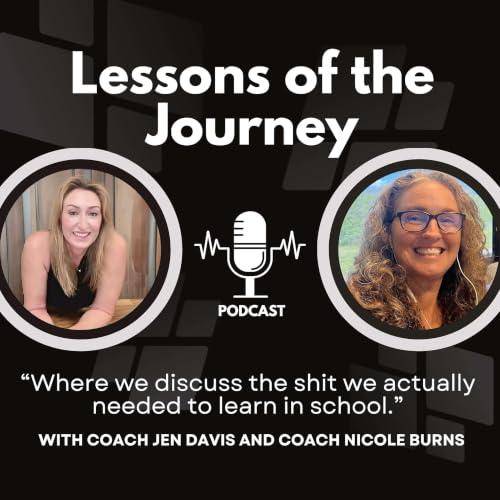
    In this episode of Lessons of the Journey: The Real Life Playbook, we're having an honest, science-informed conversation about aging, body image, self-esteem, and the connection between appearance and self-worth.

    You'll discover why self-compassion may be more helpful than forcing yourself to love every wrinkle, how to separate what you see in the mirror from the judgments you've learned to attach to it, and how to make choices about your appearance without making your worth depend on the outcome.

    In this episode, we discuss:
    ● Midlife, women, and aging gracefully
    ● Body image, body confidence, and self-esteem
    ● Ageism and beauty standards
    ● Social media, body image, and appearance comparison
    ● Self-compassion
    ● Self-care vs. self-rejection
    ● Practical strategies for improving your relationship with your appearance

    You don't have to love every change. You don't have to stop caring about how you look. And you don't have to follow anyone else's rules about how to age. The goal is to recognize that your face can change without your worth changing.

    #MidlifeWomen #BodyImage #selfcompassion

    続きを読む 一部表示
    35 分
  • Manifestation Isn't Magic: How to Turn Your Goals Into Action (85)
    2026/10/06

    What if manifestation isn't about attracting what you want—but about taking action toward it?


    In this episode of Lessons of the Journey, we move beyond manifestation, the law of attraction, positive thinking, and visualization to explore what actually helps us achieve our goals.


    We'll talk about goal setting, motivation, habits, behavior change, implementation intentions, overcoming obstacles, and bridge actions—small, meaningful steps that connect where you are today to where you want to be.

    Because dreaming about a different life can give you direction. But your behavior is what moves you there. You'll learn how to:
    ● Turn a big dream into actionable goals
    ● Identify the behaviors that create the outcomes you want
    ● Plan for obstacles instead of relying on motivation
    ● Use your environment to make behavior change easier
    ● Create bridge actions that make intimidating goals feel achievable
    ● Build evidence that changes how you see yourself

    You don't have to manifest the entire future today.

    You just have to figure out what you're going to do next.

    #Manifestation #Psychology #GoalSetting #Mindset

    続きを読む 一部表示
    33 分
  • Does Manifestation Actually Work? The Science Behind The Law of Attraction (84)
    2026/09/29

    Manifestation - What Does the Science Actually Say? Does manifestation actually work? Can your thoughts really attract the life you want, or has social media turned psychology into a promise that the universe will deliver whatever you visualize?

    In this episode of Lessons of the Journey, we take a science-based look at manifestation, the law of attraction, positive thinking, visualization, self-fulfilling prophecies, and the psychology of goal setting.

    We'll explore what research actually supports—and where manifestation culture goes beyond the evidence. Why can visualization help sometimes but hurt motivation in other situations? What's the difference between imagining the outcome and imagining the process? And what can psychologist Gabriele Oettingen's WOOP method—Wish, Outcome, Obstacle, Plan—teach us about turning dreams into action?

    Because your thoughts may influence your attention, expectations, and behavior—but thinking about a Corvette isn't going to make one magically appear in your driveway.

    The real power may be less about attracting what you want and more about changing what you do.

    This is manifestation without the magical thinking—and with the psychology.

    #Manifestation #Psychology #GoalSetting #Mindset

    続きを読む 一部表示
    30 分
  • Assertive vs. Aggressive: How to Set Boundaries Without Being Mean or Rude (83)
    2026/09/22

    What’s the difference between being assertive and being aggressive? And why can standing up for yourself sometimes feel like aggression—especially if you’re used to being passive, accommodating, or afraid of conflict?

    In this episode of Lessons of the Journey, we take a closer look at assertive communication, aggressive communication, passive communication, healthy boundaries, and how to speak up for yourself without becoming confrontational or disrespectful.

    We break down what passive, assertive, and aggressive communication actually sound like using real-life examples, including how to say no, disagree with someone, respond when someone interrupts you, and handle disrespect. We also explore the differences in assertive vs. aggressive body language, tone of voice, volume, eye contact, posture, and personal space.

    And if you’ve ever finally stood up for yourself and then spent hours wondering, “Was I rude? Did I sound mean? Should I apologize?”—we talk about that too. There’s a reason for this: When you’re used to being passive, assertiveness can feel like aggression.

    If you’ve spent years people-pleasing, avoiding conflict, keeping everyone comfortable, apologizing, over-explaining, or putting your own needs last, learning to communicate assertively can feel incredibly uncomfortable. But discomfort doesn’t necessarily mean you’ve done something wrong. Sometimes it simply means you’re doing something unfamiliar.

    We also talk about the assertiveness hangover—that second-guessing that can happen after you set a boundary or finally say what you really think. Because learning to be assertive doesn’t mean you’ll always get it right. Sometimes you will communicate too aggressively, and it’s important to take responsibility when that happens. But other times, you’re simply experiencing the unfamiliar feeling of taking yourself seriously.

    You can be kind and assertive.
    You can be compassionate and say no.
    You can be angry and still communicate respectfully.
    You can have boundaries without becoming aggressive.

    Assertiveness isn't about getting your way. It's about respecting yourself without disrespecting someone else. If you’re learning how to set boundaries, communicate more confidently, stop people-pleasing, say no without guilt, or stand up for yourself without feeling like a “difficult” person, this episode is for you.

    #Assertiveness #Boundaries #CommunicationSkills

    続きを読む 一部表示
    30 分
  • Are You Living Your Life Or Your Image? (82)
    2026/09/15

    How much of the life you're living is actually for you—and how much is shaped by the person you want other people to believe you are?

    In this episode of Lessons of the Journey, we explore the often-hidden connection between self-worth, external validation, people pleasing, and the need to be seen a certain way. You may think you're simply pursuing success, staying productive, taking care of everyone, maintaining your appearance, or trying to have it all together.

    But sometimes, beneath those choices is a deeper question: Who am I trying to prove I am? We talk about what happens when your sense of worth becomes tied to achievement, appearance, approval, independence, or other people's perceptions—and how that can slowly pull you away from the life that actually feels meaningful and fulfilling.

    Using self-discrepancy theory, contingent self-worth, values, and psychological research on external validation, we unpack the difference between your actual self, ideal self, and “should” self. Your ideal self can inspire you toward a life you genuinely want. Your “should” self can keep you chasing a life you think you're supposed to want.

    You'll learn how to recognize the subtle signs that you're living for an external image, question whether your choices are driven by your own values or by fear of judgment, and begin separating what you truly want from what you think you should want.

    Because authenticity isn't about stopping caring what other people think. It's about making sure other people's opinions aren't the foundation of your self-worth.

    If you've ever looked at your life and thought, “I have so much to be grateful for, so why doesn't this feel like my life?”—this conversation is for you.

    It's time to stop asking, “How does my life look?” and start asking, “Does the life I'm living actually nourish me?”

    #SelfWorth #PeoplePleasing #Authenticity

    続きを読む 一部表示
    35 分
  • When Losing Independence Changed Identity: What a Broken Wrist Taught Jen About Asking Help (81)
    2026/09/08

    What happens when you suddenly can't do the things you've always done for yourself?

    When Coach Jen broke her wrist on vacation, she expected the biggest challenge to be the pain, surgery, and physical recovery. What she didn't expect was how deeply losing her independence would challenge her identity, self-worth, and beliefs about needing other people.


    In this episode of Lessons of the Journey: The Real Life Playbook, Jen and Nicole explore the unexpected lessons that came from injury, dependence, and having to ask for help with everyday things—from washing her hair and getting dressed to cooking and even putting her hair in a ponytail.

    A broken wrist became a deeper conversation about:
    • Why losing independence can affect our identity and self-worth
    • Why asking for help can feel harder than giving it
    • The difference between being capable and feeling responsible for everything
    • How difficult experiences expose patterns we didn't realize we were living • The stories we create about being a burden or slowing others down
    • How changing the meaning we make of an experience can change how we move
    through it
    • Why receiving help can actually strengthen relationships
    • How life interruptions can break us out of autopilot and create greater self-awareness

    Jen's biggest realization?
    “I wasn't just healing a wrist. I was uncovering beliefs I didn't even know I had.”


    This isn't about pretending a difficult experience is positive. It's about asking a more powerful question: What meaning am I making of what I'm going through—and do I still want to believe that story?


    Sometimes life doesn't just interrupt our plans. Sometimes it interrupts our patterns. And sometimes that's where the real growth begins.

    If this episode makes you think differently about something you're experiencing, like, follow, subscribe, and share it with someone who might need to hear it.

    #LessonsOfTheJourney #PersonalGrowth #SelfWorth #AskingForHelp #Independence #SelfAwareness #EmotionalResilience #LifeLessons #PersonalDevelopment #Identity #HealingJourney #WomenOver40
    #EmotionalResilience #PersonalGrowth #SelfWorth

    続きを読む 一部表示
    37 分
  • Co-Regulation: How to Calm Your Nervous System Through Connection & Emotional Regulation (80)
    2026/09/01

    What if learning to regulate your emotions doesn't mean doing it all by yourself?

    In this episode of Lessons of the Journey, Coach Jen and Coach Nicole explore the power of co-regulation—how safe, supportive relationships can help calm your nervous system, regulate difficult emotions, and help you feel more grounded.

    We often talk about self-regulation, but humans are wired for connection. Sometimes another person's calm presence, voice, attention, or reassurance can help our nervous system settle when we're overwhelmed. But co-regulation isn't simply having someone to complain to. There's an important difference between healthy emotional support, co-regulation, venting, and emotional dumping.

    In this episode, we break down what co-regulation actually is and give you practical tools for both receiving and providing emotional support.

    You'll learn:
    • What co-regulation is and why it matters
    • How relationships can influence your nervous system
    • Why humans are wired to regulate emotions through connection
    • How to let other people help you without feeling like a burden
    • How to ask for the kind of emotional support you actually need
    • The difference between co-regulation and simply venting or complaining
    • How to help someone else regulate without trying to fix them
    • What to say when someone is emotionally overwhelmed
    • How to listen, validate, and create emotional safety
    • How to protect yourself when someone else's emotions dysregulated you
    • The difference between supporting someone and becoming responsible for their
    emotions
    • How to maintain healthy emotional boundaries while still being compassionate

    One of the most important lessons in this episode is that you can care about someone without carrying their emotions for them. Healthy co-regulation isn't dependence. It's a connection. Sometimes we regulate ourselves. Sometimes we allow someone safe to help us regulate. And sometimes the most loving thing we can do is simply sit beside someone while they find their way back to themselves.

    If you've ever felt like you have to handle everything on your own, or wondered how to support someone you love without taking on their emotional burden, this conversation is for you.

    Lessons of the Journey — real conversations about emotions, relationships, personal growth, and the psychology behind the way we live our lives.

    If this episode resonates with you, like, subscribe, and share it with someone who could benefit from learning that they don't have to do everything alone.

    #CoRegulation #NervousSystemRegulation #EmotionalRegulation

    続きを読む 一部表示
    29 分
  • How to Control Your Emotions Without Suppressing Them: Self-Regulation Explained (79)
    2026/08/25

    Have you ever wondered, "Why did I react like that?" Or found yourself saying something you immediately regretted, shutting down during a difficult conversation, or feeling like your emotions completely took over?

    The truth is, you're not "too emotional." Your brain and nervous system are doing exactly what they were designed to do—protect you.

    In this episode of Lessons of the Journey, Coach Nicole and Coach Jen explain emotional regulation (also known as self-regulation) in simple, practical terms that anyone can understand. You'll learn what's happening inside your brain and body when emotions become overwhelming, why it's so difficult to think clearly in stressful moments, and how to regulate your emotions without suppressing or ignoring them.


    We also share practical, science-backed techniques you can use to calm your nervous system, reduce emotional reactivity, and respond with intention instead of impulse.

    In this episode, you'll learn:
    • What emotional regulation (self-regulation) really means
    • Why your brain reacts to emotional stress like physical danger
    • The difference between regulating emotions and suppressing them
    • How your nervous system influences your thoughts and behavior
    • Simple grounding techniques to calm your body
    • Breathing exercises that help regulate your nervous system
    • How to recognize when you're emotionally dysregulated
    • Practical strategies to respond instead of react
    • Why emotional awareness is the foundation of emotional intelligence

    Whether you're struggling with anxiety, stress, conflict, overwhelm, or simply want healthier relationships, these tools will help you understand your emotions and build greater emotional resilience.

    If you enjoyed this episode, don't forget to Like, Subscribe, and Share with someone who could benefit from learning how to navigate difficult emotions with greater confidence.

    New episodes every week on Lessons of the Journey, where we turn psychology into practical tools you can use every day.


    #EmotionalRegulation
    #MentalHealth
    #SelfImprovement

    続きを読む 一部表示
    32 分