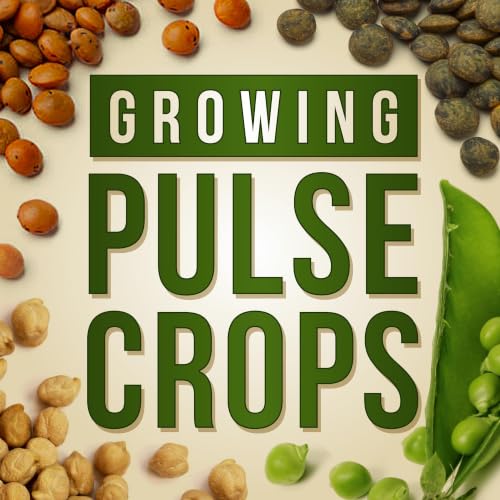
『Growing Pulse Crops』のカバーアート

Growing Pulse Crops

Growing Pulse Crops

著者: Pulse Crops Working Group
無料で聴く

This show features the latest in research, agronomy, and economics of pulse crops (peas, chickpeas, lentils, etc.). Demand for these nutrient-dense, high-protein foods continues to grow. There is also interest from farmers to include more pulses into diverse rotations for benefits like nitrogen fixation and soil health. But the industry continues to face challenges, and we are eager to address these head on. So if you’re a pulse grower or in any way interested in these important crops, hit subscribe and stay tuned for future episodes. We’ll be back with plenty of information about challenges pulse farmers are facing throughout the U.S. and what solutions are working. Brought to you by the Pulse Crops Working Group with support from the Northern Pulse Growers AssociationCopyright 2026 Pulse Crops Working Group 博物学 生物科学 科学 自然・生態学
エピソード
  • Building a Pulse Processing Business
    2026/07/06

    Kevin Haas is a 3rd generation farmer based on his family farm near Jamestown, North Dakota. He’s been planting pulses since the early 1990’s, and currently grows peas, lentils, edible beans, corn, soybeans, wheat, barley and oats. Haas has been a strong advocate for the pulse industry for many years, having served in leadership roles for the Northern Pulse Growers Association, the North Dakota Dry Pea and Lentil Council, and USA Pulses. In 2004, he broke ground to start the construction of a processing plant specifically for pulse crops in Jamestown, ND. In this episode, Haas shares his experiences both growing pulse crops as a farmer and handling them as a processor and marketer with Legume Matrix.

    “ I think we need to recognize that the consumer is a very important part of the equation. If the consumer is saying, "Hey, I want this, I'm willing to buy this," we need to pay attention to what they're telling us. And I think we need to educate ourselves in the standpoint of whoever your processor is, your elevator, or whoever you're working with, talk to them. See what markets you are finding success going into and then try to adapt what they're able to be successful at to fit your program in a sense, if it can. You know, I mean that middle ground where you can maintain those things that are really important and still at the end of the day, be able to supply that market with an acceptable product, but still on your own farm, being able to pay your bills and being profitable.” - Kevin Haas

    This Week on Growing Pulse Crops:

    • Meet Kevin Haas, a processor and marketer with Legume Matrix and 3rd generation farmer in North Dakota
    • Discover the journey taken in creating Legume Matrix processing and the scope of product they manage
    • Understand the pulse industry impact from policy changes within government programs
    • Explore what Haas sees for the future of the pulse crop industry for producers

    Growing Pulse Crops is produced by Dr. Audrey Kalil and hosted by Tim Hammerich of the Future of Agriculture Podcast.

    続きを読む 一部表示
    37 分
  • Risks and Rewards with Adjuvant Selection
    2026/06/22

    Codee Lee is a technical specialist for CHS. Half of his job is research of their proprietary products like fertility products, biologicals, crop protection and adjuvants. The other half of his job is communicating about that research with customers and growers in general. Lee shares the purpose of adjuvants and the advantage they provide producers especially when facing adverse environmental factors. Dr. Audrey Kalil joins this episode as co-host. A plant pathologist by training and background, Kalil is currently an Agronomist and Outreach Coordinator at Horizon Resources and producer of this podcast.

    “ I've been doing small plot research for 15 years already, and how these products perform and how much benefit these adjuvants will give you is very, very dependent on our environment. The more adversity in the environment, the more benefit you get out of these adjuvants. I'm not going to sit here and say that they're a silver bullet, but for us, specifically up here in adverse environments, they can be really a handy tool in the toolbox to help kind of plateau that performance across our different spraying conditions.” - Codee Lee

    This Week on Growing Pulse Crops:

    • Meet Codee Lee, a technical specialist for CHS
    • Discover the purpose, method and impact in adding adjuvants to in-puts
    • Explore how factors including crop variety, risk of crop injury, environmental factors and type of herbicide available can help determine what best steps a producer can take to optimize their weed management

    Growing Pulse Crops is produced by Dr. Audrey Kalil and hosted by Tim Hammerich of the Future of Agriculture Podcast.

    続きを読む 一部表示
    41 分
  • Selecting Pulse Genetics to Build New Markets
    2026/06/15

    Kurt Braunwart is the managing owner of Progene Plant Research, a genetic research-based company bringing new innovations and old uses to current varieties in the market. The company is known for their spring and winter pea program, as well as their work in oats and triticale. Braunwart discusses his career in this industry, how he started and built Progene, how he identifies oddball traits that can have mainstream applications, some of the differences and similarities between spring and winter peas, and his hopes for the future as he transitions the company over to new ownership. He began his career as a fieldman for Rogers Seed Company in 1974 in Twin Falls, Idaho. In 1980, he moved to Colfax, Washington, as Plant Manager and later to Othello, Washington, as Operations Manager. In 1995, he purchased and carried forward a dry pea breeding program from Rogers Seed Company. This business became ProGene Plant Research in 1996.

    “ What we were finding through the whole team was that we've got ways to improve the roots of those peas, to contribute back to soil health. And that yes, we can do that with spring peas, but we can do it way better with winter peas because their ratio of roots to top growth is more roots than in spring peas.” - Kurt Braunwart

    This Week on Growing Pulse Crops:

    • Meet Kurt Braunwart, the managing owner of Progene Plant Research
    • Discover the creation and mission of Progene
    • Explore the differences and similarities between spring and winter peas
    • Learn where he sees the future of crop development

    Growing Pulse Crops is produced by Dr. Audrey Kalil and hosted by Tim Hammerich of the Future of Agriculture Podcast.

    続きを読む 一部表示
    27 分
adbl_web_anon_alc_button_suppression_t1
まだレビューはありません