エピソード

  • Nobuo Uematsu Broke His Own Rule (Cosmo Canyon · FFVII)
    2026/08/23

    Nobuo Uematsu said he deliberately avoided big, game-defining melodies for Final Fantasy VII — he wanted realism, not spectacle. So why is Cosmo Canyon one of the most unforgettable themes he ever wrote? I pull the score apart to find out: how a single drone and an unchanging groove build a whole atmosphere, why a pentatonic melody on a shakuhachi sounds so specifically ancient and Japanese, and where that "ancient" feeling really comes from.

    Freelance composing & scoring → emigiaquinta.com/contact
    A Book To Call Home: The Music of Final Fantasy IX → emigiaquinta.com


    続きを読む 一部表示
    21 分
  • Aerith’s Theme — The Saddest Song in Gaming Was Never Written to Make You Cry
    2026/07/18

    Everybody knows this melody, and almost everybody knows what it means. But when Nobuo Uematsu wrote Aerith's Theme, he had no idea Aerith was going to die.This episode goes bar by bar through the full orchestral score: the added ninth that makes the opening ache, the borrowed minor chords hiding under a bright major melody, the "D Mixolydian" myth (busted, with the score to prove it), and the 30-year story connecting Uematsu, a fan who gave Aerith her only lyrics, and the song he finally wrote to say goodbye to her in 2023.Hosted by Emi Giaquinta — video game composer, author of A Book To Call Home: The Music of Final Fantasy IX, Berklee graduate, Summa Cum Laude.🎮 youtube.com/@emigiaquinta | emigiaquinta.com

    続きを読む 一部表示
    25 分
  • One-Winged Angel Part 2: The PS1 Trick, Stravinsky, and the Leitmotif You Missed
    2026/06/21

    Part 2 of our One-Winged Angel deep dive — and this one goes behind the sound itself.

    How did Square fit a full Latin choir into 512 kilobytes of RAM? The answer is one of the most ingenious pieces of audio engineering in gaming history: Square's proprietary AKAO engine stored the choir samples at a full octave above their intended pitch, then let the PS1's sound chip slow them back down. The formants dropped. The voices became denser, warmer, heavier. A hardware limitation became the most iconic choir sound in gaming.

    Then we follow the classical DNA — the Stravinsky string ostinato borrowed for the brass punches, the Orff-style choral block writing — and the leitmotif most people have been missing for 28 years: the "Sors immanis" choir melody is a direct quote of Sephiroth's character theme, hidden in the shadows of Nibelheim for 40 hours before Uematsu exploded it.

    Hosted by Emi Giaquinta — video game composer, author of A Book To Call Home: The Music of Final Fantasy IX, Berklee graduate, Summa Cum Laude.

    🎮 youtube.com/@emigiaquinta | emigiaquinta.com

    続きを読む 一部表示
    16 分
  • One-Winged Angel — The Theme That Ends the Trilogy
    2026/06/08

    29 years ago, Nobuo Uematsu did something no video game composer had ever done — and with Final Fantasy VII Revelation just announced, this theme is about to close one of gaming's greatest musical arcs.

    In this episode I take One-Winged Angel apart completely: why the Latin choir works, what those medieval lyrics actually mean, the harmonic analysis behind the most evil chord in gaming, and the unusual composition method Uematsu used to write it — three phrases a day, no plan, no resolution.

    This is villain music as a craft. Here's how it was built.

    Emi Giaquinta is a Berklee-trained game composer based in Germany and the author of A Book To Call Home: The Music of Final Fantasy IX.

    続きを読む 一部表示
    28 分
  • Garnet’s Theme: The Heart of Final Fantasy IX (Final Fantasy IX Analysis)
    2026/05/17

    This episode is best experienced on YouTube where you can follow the score analysis and audio examples — youtube.com/@emigiaquinta

    How do you compose the musical heart of a story about a Princess's journey to becoming a devoted Queen?

    In this episode of our Final Fantasy IX music analysis series, we open up the score for the emotional and melodic cornerstone of the entire game: Garnet's Theme. We explore how Nobuo Uematsu used beautiful, lush orchestration to score a character defined by the Japanese keyword Kenshin (Devotion).

    We break down how the gentle, human woodwinds represent her thoughtful personality , while the magical celeste, triangle, and harp reflect her powerful Eidolons and royal magic. We also dive into the brilliant compositional trick where simple, persistent flute arpeggios naturally generate complex add9 and maj7 chords against the moving bassline!

    Finally, we uncover the genius PlayStation 1 audio engineering trick the sound team used to fit her actual acapella singing into the game's memory.

    Let me know in the comments: Did you watch Ark’s animation fully every time… or you went to grab some food in the meantime?


    📌 CHAPTERS:

    0:00 - The Musical Heart of FFIX

    1:25 - Kenshin: The Meaning of Devotion

    2:52 - Introduction Analysis and the "Fake" meter perception.

    6:40 - Section A: The "Iconic" Melody

    11:05 - Section B: The pre-chorus of "Melodies of Life"

    15:17 - The PS1 Audio Engineering Secret

    16:20 - Conclusion: The Voice of the Queen


    🎮 FOR GAME DEVELOPERS & PRODUCERS:

    Are you an indie dev or studio looking for a dedicated composer? I am currently available for freelance work and would love to collaborate! Coming from a rock band background as a frontman/guitarist, I blend the raw energy of rock with the immersive scale of orchestral scoring. Whether your project needs an epic JRPG battle theme, a moody cinematic score, or a delicate, emotional character theme like this one, I craft music to hit the exact emotional beats your story requires.


    📩 Let's connect: • Instagram: @emigiaquinta

    • Website: emigiaquinta.com/contact

    🎧 SUBSCRIBE for more Original Game Music, Covers, and OST Breakdowns!

    #FinalFantasyIX #NobuoUematsu #GameAudio #VideoGameMusic #MusicTheory #PrincessGarnet #FFIX #JRPG #VGM #Composer #GameDev



    続きを読む 一部表示
    19 分
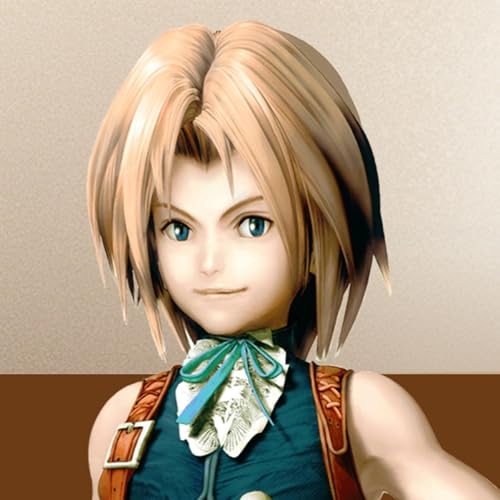
  • Why Zidane's Theme Sounds NOTHING Like a Thief | FFIX Music Theory
    2026/05/03

    This episode is best experienced on YouTube where you can follow the score analysis and audio examples — youtube.com/@emigiaquinta


    How do you compose music for a Thief who is hiding a heart of pure gold? In this episode of our Final Fantasy IX music analysis series, we dive into the upbeat, adventurous anthem of our protagonist, Zidane Tribal! We explore how Nobuo Uematsu used an ABAC musical structure to score a character defined by the Japanese keyword Shintei (Virtue).From the military snare drum swagger of his public persona, to the darker, complex chords hinting at his hidden origins, we break down every layer of this track. We even uncover a legendary classical music secret hidden inside the beautiful flute solo—Pachelbel's Canon!If you love video game music theory and OST deep dives, let me know in the comments: Do you consider this track to be Zidane's true theme, or does "A Place to Call Home" fit him better?📌 CHAPTERS: 0:00 - How do you score a Thief? 1:30 - Shintei: The Meaning of Virtue 2:44 - Song Structure & Intro5:20 - Section A: The Adventurous Swagger 6:50 - Section B: Dark Chords & Inner Turmoil 11:00 - Section C: The Classical Flute Solo 14:25 - The Hidden Pachelbel's Canon 19:50 - Wrap up

    🎮 FOR GAME DEVELOPERS & PRODUCERS: Are you an indie dev or studio looking for a dedicated composer? I am currently available for freelance work and would love to collaborate! Coming from a rock band background as a frontman/guitarist, I blend the raw energy of rock with the immersive scale of orchestral scoring. Whether your project needs an epic JRPG battle theme, a moody cinematic score, or an adventurous character anthem like this one, I craft music to hit the exact emotional beats your story requires.

    📩 Let's connect: • Instagram: @emigiaquinta • Website: emigiaquinta.com/contact

    🎧 SUBSCRIBE for more Original Game Music, Covers, and OST Breakdowns!#FinalFantasyIX #NobuoUematsu #GameAudio #VideoGameMusic #MusicTheory #ZidaneTribal #FFIX #JRPG #VGM #Composer #GameDev

    続きを読む 一部表示
    20 分
  • Why Quina’s Theme Sounds So WEIRD (Final Fantasy IX Analysis)
    2026/04/13

    This episode is best experienced on YouTube where you can follow the score analysis and audio examples — youtube.com/@emigiaquinta


    How do you compose music for a Blue Mage whose entire philosophy revolves around eating?

    In this episode, we explore the strange, playful, and deceptively complex theme of Quina Quen from Final Fantasy IX. Composer Nobuo Uematsu abandons traditional orchestral expectations to create something entirely different—music built around the idea of Shokudou (“the way of food”), Quina’s defining concept.

    We break down the track’s layered percussion, synth textures, and unexpected choral elements to understand why it feels like a chaotic, living “kitchen.” Along the way, we look at how these musical choices reflect Quina’s personality—and whether there’s more going on beneath the surface.

    Could the primal choir hint at a deeper connection between the Qu clan, Terra, and the Genomes? We explore how this seemingly comedic theme might contribute to the broader worldbuilding of the game.

    If you enjoy video game music analysis, composition insights, and soundtrack deep dives, this episode will give you a new perspective on one of the series’ most unusual character themes.

    続きを読む 一部表示
    16 分
  • How Amarant’s Theme shows his Arrogance (Final Fantasy IX)
    2026/03/29

    This episode is best experienced on YouTube where you can follow the score analysis and audio examples — youtube.com/@emigiaquinta


    Ever wondered why Amarant’s theme feels so out of place in Final Fantasy IX—almost like a modern electronic track in a medieval world?

    In this episode, we break down “Arrogance,” the theme of Amarant Coral, and explore how Nobuo Uematsu uses groove, texture, and harmony to set the “lone wolf” apart. From the funky electric bass and jazzy drum patterns to the dense layered synth writing, we unpack how the music reflects Amarant’s defining trait: Shousou (impatience/arrogance).

    We connect these musical ideas directly to his character arc, showing how the rigid, driving feel of the track mirrors his stubborn independence—and what changes as his story unfolds.

    If you’re into video game music analysis, composition, or deep dives into iconic soundtracks, this episode is for you.

    続きを読む 一部表示
    13 分