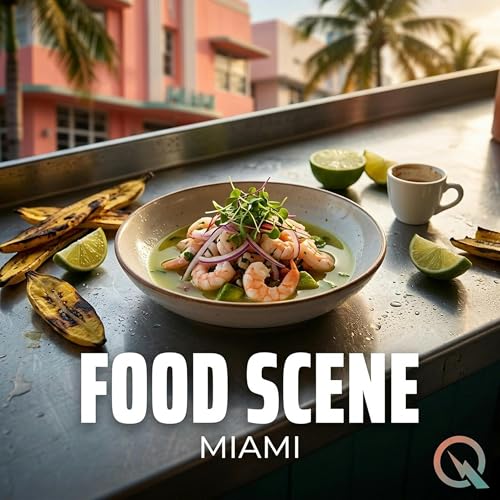
『Food Scene Miami』のカバーアート

Food Scene Miami

Food Scene Miami

著者: Inception Point AI
無料で聴く

Explore the vibrant culinary landscape of Miami with "Food Scene Miami," your ultimate guide to the city's diverse food culture. Uncover hidden gems, meet top chefs, and dive into delectable dishes that define Miami's rich gastronomic heritage. Whether you're a local foodie or a curious traveler, tune in for insider tips, restaurant reviews, and delicious stories that celebrate Miami's unique flavors. Discover why Miami is a top destination for food lovers with every episode of "Food Scene Miami." For more info go to https://www.quietplease.ai Check out these deals https://amzn.to/48MZPjs This content was created in partnership and with the help of Artificial Intelligence AI.Copyright 2026 Inception Point AI アート クッキング 旅行記・解説 社会科学 食品・ワイン
エピソード
  • Miami's Getting Spicy: Why Everyone's Suddenly Obsessed With Magic City Dining
    2026/06/06
    Food Scene Miami Miami’s New Taste Wave: Why the Magic City Matters More Than Ever In Miami, dinner no longer starts with a menu; it starts with a mood. Across the city, a new generation of restaurants is turning the tropical metropolis into one of the most compelling culinary playgrounds in the United States, powered by Latin, Caribbean, and coastal influences that feel distinctly, irresistibly Miami. In neighborhoods like Wynwood and the Design District, listeners will find tasting menus that flirt with fine art. Chefs are plating crudos that taste like the Atlantic in high definition, pairing local snapper and grouper with citrus so bright it almost hums, and dressing them with chile oils that nod to both Peruvian cevicherías and Mexican marisquerías. At ambitious new spots along Biscayne Boulevard and in Brickell, wood-fired parrillas send up curls of smoke scented with mojo, guava, and sugarcane, transforming traditional asado into something sultrier and more tropical. The hottest openings lean into mash‑ups that could only make sense in Miami. Modern Cuban‑inspired bistros rework ropa vieja into delicate stuffed pastas, or press lechón into crisp croquetas showered with shaved Manchego and local honey. New Caribbean‑driven counters are turning out jerk‑spiced fried chicken sandwiches nestled in soft Cuban bread, the heat cooled with tangy key lime slaw. Even sushi bars are going Miami‑style, crowning nigiri with thin slices of sweet Florida stone crab when it’s in season. What truly sets the city apart is its relationship with ingredients. Florida avocados, local citrus, fresh corn, and just‑caught fish from nearby waters anchor menus, while plantains appear everywhere: twice‑fried into golden tostones, caramelized into silky maduros, or transformed into crisp “buns” for messy, glorious sandwiches. Cafecito culture bleeds into dessert programs, where pastelito flavors show up in ice creams and tres leches becomes a canvas for tropical fruits like guava and mango. The festival circuit reinforces Miami’s status as a culinary stage. Large‑scale food and wine events draw marquee chefs from around the world to cook alongside local talent, while smaller neighborhood festivals celebrate everything from croquetas to arepas, turning whole streets into open‑air tasting rooms where salsa, smoke, and the scent of grilled corn mingle in the humid night air. What makes Miami’s culinary scene unique is its fearless hybridity and its refusal to treat tradition as a museum piece. The city cooks like it lives: loud, sunny, a little decadent, and wildly cosmopolitan. For food lovers paying attention, Miami isn’t just a vacation town anymore; it’s one of the most exciting places to taste where American dining is headed next. Get the best deals https://amzn.to/3ODvOta
    続きを読む 一部表示
    3 分
  • Miami's Late-Night Glamour Revolution: Stone Crab Drama, Pasta Theater and Why Every Chef Wants In on the Heat
    2026/06/04
    Food Scene Miami Miami’s dining scene is in a thrilling rush of heat, color, and invention, where the city’s kitchens are turning local flavor into high-stakes theater. From buzzy openings to chef-driven concepts, the common thread is a fearless blend of Latin, Caribbean, and coastal influences that keeps Miami one step ahead of the usual restaurant script. One of the city’s most talked-about arrivals is Carbone Vino in Coconut Grove, a stylish offshoot of the Major Food Group universe that leans into big-city glamour while serving Miami’s appetite for late-night energy and polished indulgence. In the Design District, Pasta e Basta keeps the conversation lively with an open-kitchen, pasta-forward format that feels playful, fast-moving, and tailor-made for a crowd that likes dinner with a bit of spectacle. Meanwhile, Sunny’s Steakhouse in Little River has become a destination for diners chasing a smoke-kissed, old-school-meets-new-school steakhouse experience, where the mood is sultry and the plates arrive with confident simplicity. Miami’s most innovative spots are also embracing the city’s ingredients with sharper intent. Chefs are drawing on stone crab, Florida citrus, tropical fruit, and seafood from nearby waters, then pairing them with Cuban, Haitian, Colombian, Peruvian, and Venezuelan traditions that give the city its unmistakable culinary rhythm. That cultural mix is what makes a dish in Miami feel layered and alive: bright acidity, deep spice, and a little sun-soaked swagger. The city’s event calendar keeps that energy moving. The South Beach Wine & Food Festival remains the headline spectacle, bringing celebrity chefs, tastings, and late-night parties that turn the whole city into a stage for hospitality. It is the kind of scene where a perfect ceviche, a crisp croqueta, or a just-charred whole fish can feel like the most natural thing in the world. What makes Miami unique is not just novelty, but momentum. Its restaurants rarely settle for one identity, and that constant reinvention is exactly why food listeners should keep paying attention: in Miami, the future of dining tastes vivid, multicultural, and impossible to ignore. Get the best deals https://amzn.to/3ODvOta
    続きを読む 一部表示
    3 分
  • Miami's Eating Everyone's Lunch: Caviar Guac, Drag Brunch, and Why Every Chef Wants a 305 Address Right Now
    2026/05/19
    Food Scene Miami Miami’s dining scene isn’t just having a moment; it’s in full-on, technicolor bloom. The city has turned into a culinary arrivals terminal, with big‑name imports touching down alongside fiercely local projects that feel as Miami as a traffic jam on the MacArthur at sunset. Start in the Design District, where Karyu has quietly become the city’s most talked‑about 12 seats. According to Time Out and the Miami Herald, this Tokyo-born, Michelin-starred wagyu counter builds a $350 kaiseki experience around Tajimaguro cattle, the lineage behind Kobe beef. Picture feather‑marbled slices of beef slipping into a tableside sukiyaki, perfuming the air with soy, sugar, and rendered fat, followed by a precise katsu sando so delicate it feels like edible architecture. Across the bay on Brickell Key, The Mexican Miami brings a Dallas showpiece to 601 Brickell Key Drive. UNESCO has praised the original The Mexican as one of the world’s most beautiful restaurants, and the Miami outpost follows suit: more than 10,000 square feet of indoor‑outdoor theatrics, caviar-topped guacamole, and tequila flights that turn dinner into a telenovela. In Wynwood, Wayan trades SoHo cobblestones for street art, serving French‑Indonesian plates like turmeric-slicked grilled prawns and coconut‑rich curries that feel right at home amid murals and mezcal. The real tell that Miami has matured is what’s happening in the neighborhoods. The Infatuation notes spots like Eos, turning a lush little pondside patio into a Mediterranean escape with wood‑fired sea bream and grilled octopus, while 1986 in Coconut Grove channels Argentina through serious steakhouse energy. Coral Gables gets Mottai, a contemporary Japanese import at The Plaza Coral Gables, and Frankie & Wally’s, which Fine Dining Lovers flags as a new local darling, adds old‑school Italian warmth to Palermo Avenue with red sauce, martinis, and a side of nostalgia. Local institutions are doubling down. Greater Miami & Miami Beach’s tourism board highlights Ariete in Coconut Grove, now a decade into rewriting Cuban‑American fine dining with dishes that might pair foie gras with pastelito flavors or reimagine lechón as tasting‑menu art. Kitchen + Kocktails by Kevin Kelley brings Black Southern soul to Wynwood with towering fried chicken, lobster-inflected mac and cheese, and a party‑forward soundtrack that makes brunch feel like a block party. All of this is layered over Miami’s pantry: local spiny lobster, Florida sweet corn, Islamorada yellowtail, Homestead tropicals like mango, guava, and mamey, plus plantains and yuca woven in from Caribbean and Latin kitchens. Chefs treat the city as a crossroads: Japanese beef technique kissing Peruvian ají, French sauces wrapping Haitian epis, Mexican chiles flirting with Cuban citrus. Then there’s the performance aspect. R House Wynwood’s nationally known drag brunch, spotlighted by Greater Miami & Miami Beach and even RuPaul’s Drag Race, turns shareable plates and bottomless cocktails into a full‑throttle cultural event. At Fontainebleau’s Prime 54 Chef Counter, just six diners sit inches from the line, watching steaks sear and sauces mount in a theater of sizzling pans and shouted “behind.” What makes Miami unique isn’t just that world-famous restaurants are planting flags here. It’s that those flags are being rewoven into the city’s own wild tapestry of Cuban ventanitas, Haitian griot stands, Nicaraguan fritangas, and chic Nikkei counters. For food lovers, Miami isn’t a copy of New York or LA—it’s a frontline city where ocean, diaspora, and sheer ambition meet on the plate, and where “what’s new” often feels like a sneak peek at where American dining is heading next. Get the best deals https://amzn.to/3ODvOta
    続きを読む 一部表示
    5 分
adbl_web_anon_alc_button_suppression_t1
まだレビューはありません