エピソード

  • How to Actually Read Your Sleep Data (Beyond Accuracy) + 7 Scientific "Cumulative Biomarkers" for Longevity (Fit For Science Episode 10)
    2026/02/09
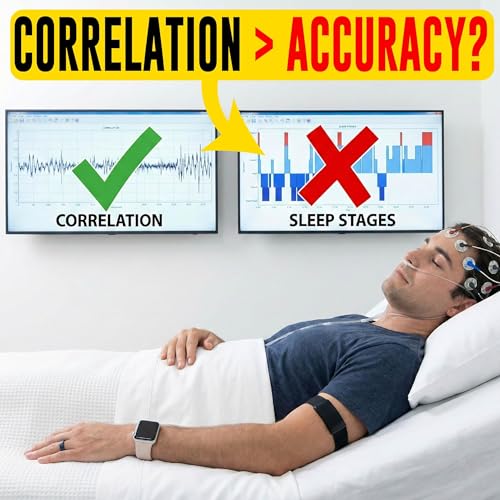
    Rob and Stephan discuss why sleep stage trends matter more than absolute accuracy, review Oura's latest metrics, and define seven essential cumulative biomarkers for long-term health.📝SummaryIn this episode, biological data scientists Rob and Stephan challenge the standard approach to sleep tracking validation, proposing that detecting deviations from an individual's baseline is often more valuable for the user than absolute agreement with polysomnography. The hosts shortly brainstorm the creation of an independent, crowd-funded wearable testing institute to provide unbiased data for the quantified self community and research. Then they analyze the utility of Oura’s new Sleep Debt and Cumulative Stress features, discussing how these metrics align with subjective experiences of recovery after social events like the Viennese ball season. The conversation expands into a deep dive on "cumulative biomarkers," where Stephan outlines a suite of stable, long-term health indicators, including HbA1c, VO2 max, Grip Strength, and the Omega-3 Index, that serve as superior proxies for longevity compared to transient measurements.⏳Chapters00:00:00 Sleep Study Analysis: User centric comparisons00:10:39 Testing Philosophy: Why "more or less than usual" matters most00:16:13 The Vision: A crowd-funded independent wearable testing lab00:24:37 Oura's Trend Features: Analyzing Sleep Debt and recovery timelines00:34:43 Cumulative Stress: Physiological stress vs “Distress” vs "Eustress"00:41:51 Hardware Woes: The decline of Fitbit and device longevity00:45:15 Feature Disparity: Oura Health Panels and US vs. EU regulations00:51:22 Cumulative Biomarkers: Stable markers vs. transient snapshots00:52:23 Metabolic Health: Why HbA1c trumps fasting glucose00:57:55 Fitness Markers: VO2 Max and the utility of Grip Strength01:01:31 Nutritional Status: The Omega-3 Index and cell membrane saturation01:05:22 Organ Health: Cystatin C for kidney function and DXA for body composition01:09:47 Cardiovascular Risk: The Coronary Artery Calcium (CAC) score01:12:25 Smart Scales: Bio-impedance limitations and the need for handles📚ResourcesIn the episode we call the discussed biomarkers “integrative”, but “cumulative” better captures the intended meaning.Rob's sleep studyPolysomnography Cohen's Kappa (Statistic)Sensitivity and specificity Oura's Sleep Debt FeatureOura's Cumulative Stress FeatureOura's Resilience FeatureOura's Daytime (Physiological) Stress featureDistress vs EustressElectrodermal activity as proxy for stressFitBit Sense 2 (with cEDA sensor) Oura's Health Panel featureRed blood cellGlycated hemoglobin (HbA1c) HbA1c > 6.5% is used for diabetes diagnosisVO2 max Grip strength as a mortality predictorOmega-3 Index (Dr. Rhonda Patrick)Cystatin C (Kidney Function)DXA Scan Radiation comparison (DXA ~0.001mSv, US coast-to-coast round-trip flight ~0.03mSv)Coronary Artery Calcium (CAC) ScoreThe limits of coronary calcium Visceral FatPreprint introducing "Peakspan"Nature Medicine paper "Shared and specific blood biomarkers for multimorbidity"🎙️AboutFit For Science is a deep-dive podcast hosted by two biological data scientists, Rob and Stephan, exploring the intersection of research, health tech, and data-driven lifestyle design. The hosts provide evidence-based systems, layered with practical "N=2" personal experimentation, to cut through the noise in the health and fitness industry.Learn more and subscribe on your favorite platforms:YouTubeSpotifyApple PodcastsAmazon MusicCollection of all show notes⚠️Disclaimer: This podcast represents our own opinions and is for informational purposes only. It does not constitute medical or financial advice or a professional relationship.
    続きを読む 一部表示
    1 時間 18 分
  • The “Dark Side” of Tracking & VO2 Max as Longevity Predictor: Testing, Training & Our Results (Fit For Science Episode 9)
    2026/02/02
    In this episode, Rob and Stephan explore the psychological risks of self-quantification, the science of aerobic capacity, and the physiological nuances of lactate thresholds.📝SummaryBiological data scientists Rob and Stephan discuss the "dark side" of the quantified self, specifically focusing on orthosomnia, a condition where sleep tracking leads to increased anxiety and worsened sleep quality. They reflect on the importance of using technology as a tool for a specific purpose rather than making the tracking itself the goal. The conversation transitions into a deep dive on VO2 max, explaining its critical role as a longevity predictor and the varying results obtained from different exercise modalities like cycling and running. Finally, the hosts break down the science of lactate thresholds, explaining how the body's metabolic shift from aerobic to anaerobic states serves as a vital biomarker for training optimization.⏳Chapters00:00:00 Introduction: The dark side of tracking and VO2 max00:00:55 Orthosomnia: When sleep tracking causes insomnia00:05:09 The psychological impact of metrics and obsession00:13:13 Tracking with purpose: Avoiding the identity trap00:25:59 Oura Ring experiences: “Injuries” and data accuracy00:30:50 Strength training and basal metabolic rate00:36:47 VO2 Max: The ultimate longevity marker?00:38:26 Hazard Ratios: Comparing fitness to smoking00:44:39 The U-shaped curve of exercise volume00:49:37 Gold Standard: VO2 max lab testing protocols01:04:25 Training for capacity: The Norwegian 4x4 protocol01:07:51 Lactate thresholds and metabolic switching01:16:09 Wearable estimations: Garmin vs. Apple vs. Oura01:21:47 VO2 Max Records: Oskar Svendsen (97.5) and Tadej Pogačar (96)01:23:42 Teaser: Biological age and integrative biomarkers📚ResourcesOrthosomniaThe Molecular Precision Medicine Master’s Programme at Medical University of Vienna (where Rob and Stephan teach)Quote for purposeful tracking: "I shall not waste my days in trying to prolong them" - Jack LondonNatural language processing (NLP)Semantic analysisDevelopment of a scale for measuring orthosomnia: the Bergen Orthosomnia Scale (BOS)Sleep tracker use nears 50%, AASM survey findsPrevalence of Orthosomnia in a General Population Sample Dark triad (Personality Traits)Basal metabolic rate (BMR)BMR Calculator Lean body mass was found to be the single predictor of BMRPhelps supposedly consumed 8,000-10,000 kcal per training day before the Olympic GamesVO2 maxHazard ratioHow does VO2 max correlate with longevity? - Peter Attia Physical activity types, variety, and mortality: results from two prospective cohort studies Peak oxygen uptake was strongly correlated to total heart volumeRob's VO2 max results: 58 for cycling, 54 for runningStephan's VO2 max results: 42 for cycling, 49 for runningVO2 max percentile calculatorVO2 Max ChartAerobic high-intensity intervals improve VO2max more than moderate training (Norwegian 4x4) How to Improve Your Cardio Capacity (VO2 Max)Lactate threshold for aerobic to anaerobic switch at 2mmol/litreLactate shuttle hypothesis Maximum heart rate formula: 220 - age in yearsCooper test for VO2max estimationWalking test for VO2max estimation🎙️AboutFit For Science is a deep-dive podcast hosted by two biological data scientists, Rob and Stephan, exploring the intersection of research, health tech, and data-driven lifestyle design. The hosts provide evidence-based systems, layered with practical "N=2" personal experimentation, to cut through the noise in the health and fitness industry.Learn more and subscribe on your favorite platforms:YouTubeSpotifyApple PodcastsAmazon Music⚠️Disclaimer: This podcast represents our own opinions and is for informational purposes only. It does not constitute medical or financial advice or a professional relationship.
    続きを読む 一部表示
    1 時間 25 分
  • AI is Changing Wearables in 2026(?) and Predicts 130 Diseases from Sleep! (Fit For Science Episode 8)
    2026/01/26
    Rob and Stephan evaluate current AI features in wearables, break down a revolutionary paper predicting diseases from a single night of sleep, and discuss the future of medical integration into wearables.📝SummaryIn this episode, biological data scientists Rob and Stephan critically assess the current use of AI in the wearable market, ranging from the practical limitations of Oura and Whoop coaches to the potential of Google’s Gemini and Withings’ biomarker-tracking devices. The central scientific discussion focuses on "SleepFM," a groundbreaking foundation model published in Nature Medicine that utilizes self-supervised learning on polysomnography data to predict over 130 diseases, biological age, and mortality risk from a single night of sleep with unprecedented accuracy. The hosts speculate on how this technology could bridge the gap between clinical sleep labs and consumer wearables, potentially transforming preventive medicine through longitudinal tracking and non-invasive sensors.⏳Chapters00:00:00 AI in wearables and their current capabilities00:01:21 AI Coaches: Testing the limits of Oura, Whoop, and Garmin 00:12:24 The Smart Toilet: Withings U-Scan and the value of waste biomarkers 00:23:00 Environmental Health: PVC off-gassing and vinyl records 00:28:15 Generative AI: ChatGPT Health and Claude for Life Sciences 00:37:17 SleepFM: A multimodal sleep foundation model for disease prediction 00:43:00 Self-Supervised Learning: How foundation models learn from sleep data 00:51:00 Disease Prediction: Predicting 130 conditions with unseen accuracy00:59:46 The Future: Translating clinical models to consumer wearables 01:19:25 Community Feedback📚ResourcesIntroducing Oura Advisor (not Coach)WHOOP Coach Powered by OpenAIActive Intelligence With Garmin Connect+U-Scan NutrioNews: Withings latest smart scale (‘longevity station’)Withings IntelligenceBody ScanKetone bodiesKetosis: Definition, Benefits & Side EffectsKeto Breath (“dragon breath”)Air Quality Measurement DeviceVINYL: Maybe it's time we had an intervention.Introducing ChatGPT HealthSegment about AI in health(care)Claude in healthcare and the life sciencesClarification: Anthropic's product is called Claude with three differently sized models named Haiku, Sonnet, and Opus.ICD-10 and ICD-11 Codes: International Classification of Diseases (ICD)Understanding ICD-10 | Johns Hopkins MedicineHealthcare Spending - Our World in DataFederated learningSwarm LearningSleepFM - Nature Medicine paperCodeStanford Sleep Bench v1.0Foundation modelAttention Is All You Need (Transformers)Self-supervised learningImageNetFine-tuningReinforcement learning from human feedback (RLHF)PolysomnographyRecurrent neural network (LSTM)Long short-term memory (RNN)C-index: Evaluating Survival ModelsBest Wearables for Sleep: Scientific Rankings (2024-05)Best Wearables for Sleep: Scientific Rankings (2025-10)Philips Somnolyzer 24x7 for automated sleep stagingWhoop listened(?) and is looking for a VP for Foundation AIAUROC of blood pressure to predict ASCVD ~0.80Podcast Recommendation: Drug Story Atorvastatin (Lipitor)Life expectancy: Netherlands (82.2) vs Austria (82.0)Diagnostic and Statistical Manual of Mental Illnesses (DSM-5)Mechanism does not imply outcome. Outcome implies mechanism. - Layne NortonNo Biological Free Lunches🎙️AboutFit For Science is a deep-dive podcast hosted by two biological data scientists, Rob and Stephan, exploring the intersection of research, health tech, and data-driven lifestyle design. The hosts provide evidence-based systems, layered with practical "N=2" personal experimentation, to cut through the noise in the health and fitness industry.Learn more and subscribe on your favorite platforms:YouTubeSpotifyApple PodcastsAmazon Music⚠️Disclaimer: This podcast represents our own opinions and is for informational purposes only. It does not constitute medical or financial advice or a professional relationship.
    続きを読む 一部表示
    1 時間 25 分
  • The 4 Types of Wearables! Epigenetic Aging & Peakspan vs Healthspan? (+ Enhanced Games) (Fit For Science Episode 7)
    2026/01/19
    Rob and Stephan categorize the modern wearable landscape, explain the shift from epigenetic to proteomic aging clocks, and debate the ethical implications of the upcoming 2026 Enhanced Games.📝SummaryIn this episode, biological data scientists Rob and Stephan provide a systematic framework for navigating the wearable market by defining four distinct device categories: Sleep, Sports, Smartwatches, and Health, while highlighting the technical trade-offs between battery life, GPS robustness, and algorithmic precision. The discussion transitions into the cutting-edge science of biological aging, contrasting traditional epigenetic methylation clocks with emerging organ-specific proteomic models that offer greater interpretability and more actionable insights for disease prevention. They introduce the concept of Peakspan, a proposed metric for maintaining 90% of optimal physiological performance throughout life, and conclude with a deep dive into the 2026 Enhanced Games, exploring the transhumanist debate over the supervised use of performance-enhancing drugs in professional sports.⏳Chapters00:00:00 The Four Wearable Archetypes: Sleep, Sports, Smartwatch, and Health 00:11:53 Software vs. Hardware: Why Tech Giants Lead in Heart Rate Accuracy 00:24:54 Decoding Biological Age: Epigenetic Clocks and Methylation Patterns 00:40:59 The Proteomic Shift: Using Organ-Specific Clocks to Predict Morbidity 00:51:09 Beyond Healthspan: Defining Peakspan at the 90% Performance Threshold 01:03:14 Cognitive Aging: Fluid vs. Crystallized Intelligence 01:12:22 Enhanced Games 2026: The Transhumanist Future of Competitive Sports 📚ResourcesEpigenetics - Wikipedia Unfolded, the DNA in a single human cell is about 2 meters (6.5 feet) long, containing roughly 3 billion base pairs.Steve Horvath's Epigenetic clock - WikipediaThe first/original clock was actually based on DNA methylation levels in saliva, not blood.An unbiased comparison of 14 epigenetic clocks in relation to 174 incident disease outcomes | Nature Communications DNA methylation GrimAge strongly predicts lifespan and healthspan - PMC CeMM: Landsteiner LecturesProtein-based organ aging clock research Tony Wyss-Coray, PhDAmino acid - WikipediaDunedinPACE, a DNA methylation biomarker of the pace of aging - PMC Amazing TIME article about biological age (published after recording 16.01.2026) The Race to Measure How We Age | TIME -omics: Proteomics & GenomicsMayo Clinic Q and A: Lifespan vs. healthspan Peakspan preprint paperFluid and crystallized intelligence - WikipediaTranshumanism - Wikipedia Enhanced Games 2026🎙️AboutFit For Science is a deep-dive podcast hosted by two biological data scientists, Rob and Stephan, exploring the intersection of research, health tech, and data-driven lifestyle design. The hosts provide evidence-based systems, layered with practical "N=2" personal experimentation, to cut through the noise in the health and fitness industry.Learn more and subscribe on your favorite platforms:YouTubeSpotifyApple PodcastsAmazon Music⚠️Disclaimer: This podcast represents our own opinions and is for informational purposes only. It does not constitute medical or financial advice or a professional relationship.
    続きを読む 一部表示
    1 時間 30 分
  • Is “Biological Age” Useful According to Science? Systematic 2026 Outlook & 2025 Year Review (Fit For Science Episode 6)
    2026/01/14
    Rob and Stephan analyze their 2025 health data, discuss the validity of "biological age" metrics, and set systems-based goals for the coming year.📝SummaryIn this episode, biological data scientists Rob and Stephan explore how to use wearable data to review the past year and plan for a better future. They critique the "year in review" features of popular apps, debating whether these metrics provide actionable insights or merely gamified motivation. The discussion moves into the science of cardiovascular age and pulse wave velocity, highlighting how short-term exercise interventions might alter arterial stiffness markers. Reflecting on personal growth, Rob shares his transition from manual to more automated tracking for perceived happiness, while Stephan outlines a systematic "Past Year Review" framework to replace traditional New Year’s resolutions. The episode concludes with a look at 2026 technological trends, including the potential for better batteries, screenless GPS wearables, and new FDA regulatory pathways that could integrate consumer health tech into clinical practice.⏳Chapters00:00:00 Year in Review: Discussing App Recaps and Comparisons 00:07:47 Feedback Loops: How to Use Data Trends for Behavioral Change 00:24:48 Biological Age: Decoupling Marketing from Physiological Truth 00:35:15 Cardiovascular Age: Pulse Wave Velocity and Arterial Adaptation 00:48:57 The Importance of Controls: Lessons from a Cold Exposure Study 01:03:17 Nerve Health: Tracking Impact and Recovery via Smart Scales 01:06:54 Quitter’s Day vs. Systems: Why New Year’s Resolutions Fail 01:08:15 The Past Year Review: A Data-Driven Framework for Lifestyle Design01:12:26 2026 Goals: Marathons, Biking Rivalries, and Life Balance 01:21:10 Professional Focus: Cutting Out Distractions to Finish Projects01:23:54 One-Bag Travel: Reflections on Minimalist Gear and Efficiency 01:27:03 Future Wearables: GPS, Battery Tech, and FDA Regulation📚ResourcesOura 2025 year in reviewWhoop 2025 year in review"Comparison is the death of joy." - Mark TwainArthur C. Brooks Personality Types QuizDoctor Mike confronting Dr. Amen“Imperfect data can still have value” - Joe Barnard (from https://bps.space/)Heroic dose"Long-term consistency trumps short-term intensity." - Bruce LeeWhoop biological ageVO2max and longevityLancet Public Health: “7,000 steps/day linked to clinically meaningful health improvements.”: https://www.thelancet.com/journals/lanpub/article/PIIS2468-2667(25)00164-1/ Pulse Wave Velocity (PWV): https://en.wikipedia.org/wiki/Pulse_wave_velocity PWV relationship to blood pressure: https://www.pnas.org/doi/10.1073/pnas.1814392115 Arteries: https://my.clevelandclinic.org/health/body/22896-arteries Muscle memory in strength trainingEndurance memory exists and is driven by persistent structural adaptations (capillary density and cardiac remodeling) and epigenetic priming.“Quitter's day” is the second Friday in January.Stephan's Past Year Review instructionsStephan's backpack and packing listThe Greek philosopher Plato proposed the Theory of Forms, asserting that the physical world consists of imperfect copies of eternal, perfect, and abstract "master" templates existing in a higher realm of reality.Oura executives (CEO and CMO) on new regulatory pathway for wearables🎙️AboutFit For Science is a deep-dive podcast hosted by two biological data scientists, Rob and Stephan, exploring the intersection of research, health tech, and data-driven lifestyle design. The hosts provide evidence-based systems, layered with practical "N=2" personal experimentation, to cut through the noise in the health and fitness industry.Learn moreSubscribe on your favorite platformsYouTubeSpotifyApple PodcastsAmazon Music⚠️Disclaimer: This podcast represents our own opinions and is for informational purposes only. It does not constitute medical or financial advice or a professional relationship.
    続きを読む 一部表示
    1 時間 42 分
  • Apple Sleep Updates, Wearable Subscriptions & The Philosophy of Self-Tracking (Fit For Science Episode 5)
    2026/01/09
    Data scientists Rob and Stephan discuss Apple's latest sleep algorithm improvements, the evolving landscape of wearable subscriptions, and three reasons for personal (health) tracking.📝SummaryIn this episode, the hosts examine the rapid iteration cycles of health technology, starting with Apple’s recent algorithmic improvements to sleep stage detection. They explore the "subscriptionification" of the wearable industry, comparing business models from Whoop, Oura, and Eight Sleep while debating the value of AI-driven health coaching and gamification metrics like "biological age". The discussion transitions into nutritional tracking, covering the medical origin of continuous glucose monitors (CGMs) and the practical challenges of picture-based food logging. Finally, they dive into three reasons behind self-quantification, highlighting for example how the Hawthorne effect, where the act of observation itself alters behavior, can be a powerful tool for behavior change.⏳Chapters00:00:00 Apple Sleep Algorithm: Improved deep sleep and awake detection 00:09:00 Continuous Sleep: Moving beyond 30-second epoch sleep stages 00:13:20 Data Repositories: The lack of centralized sleep data compared to genomics 00:17:20 Subscription Models: The industry shift from ownership to service licenses 00:35:00 AI Coaching: The utility and hype of AI advisors in wearables 00:44:00 Eight Sleep: Thermal regulation, bed tracking, and high-tier costs 01:13:50 CGM Deep Dive: Continuous glucose monitoring and individual responses 01:29:30 Nutrition Tracking: From barcodes to picture-based food logging 01:35:20 The Hawthorne Effect: Using observation as a tool for behavior change 01:42:00 Management Philosophy: Drucker and Kelvin on the necessity of measurement01:47:40 Technological Optimism: Staying healthy to witness the future📚ResourcesApple sleep staging paper with updated appendix: https://www.apple.com/health/pdf/Estimating_Sleep_Stages_from_Apple_Watch_Oct_2025.pdf The Quantified Scientist - Can Wearables Predict How You Feel?: https://youtu.be/iwZrtb6tlUo Apple Health uses SDNN (Standard Deviation of Normal-to-Normal intervals) as its metric for Heart Rate Variability, while others (such as Oura, Garmin, and Fitbit) use RMSSD.Eight Sleep: https://www.eightsleep.com/ Dexcom G7 & Stelo: https://www.dexcom.com/ FreeStyle Libre by Abbott: https://www.freestyle.abbott/ Levels Health App: https://framer.levels.com/ A glucose spike is a rapid rise in blood sugar, defined generally as above 140 mg/dL.Nature Medicine paper on individual variations in glycemic responses: https://www.nature.com/articles/s41591-025-03719-2Clarification: Not Ultrahuman (https://www.ultrahuman.com/) but Supersapiens (https://www.supersapiens.com/) use CGMs for optimal metabolic fueling/efficiency.rTracker app by Robert Miller: https://apps.apple.com/us/app/rtracker-track-it-your-way/id486541371Star Trek Qs (immortal species): https://en.wikipedia.org/wiki/Q_(Star_Trek) Isaac Asimov's Foundation as TV series: https://en.wikipedia.org/wiki/Foundation_(TV_series) Three Body Problem as TV series: https://en.wikipedia.org/wiki/3_Body_Problem_(TV_series) 🎙️AboutFit For Science is a deep-dive podcast hosted by two biological data scientists, Rob and Stephan, exploring the intersection of research, health tech, and data-driven lifestyle design. Learn more: https://www.fitforscience.com/ Subscribe on your favorite platformsYouTube: https://www.youtube.com/@FitForScience Spotify: https://open.spotify.com/show/56TjUxuMsPETb0kGEJ7nwf Apple Podcasts: https://podcasts.apple.com/us/podcast/fit-for-science/id1863479802Amazon Music: https://music.amazon.de/podcasts/c3e54ee7-4a2c-442e-a59f-553fbfb02b11/fit-for-science ⚠️Disclaimer: This podcast represents our own opinions and is for informational purposes only. It does not constitute medical or financial advice or a professional relationship.
    続きを読む 一部表示
    1 時間 55 分
  • Blood Pressure Wearables, Light Therapy & Nicotine Supplementation (Fit For Science Episode 4)
    2026/01/06
    Rob and Stephan discuss the efficacy of blood pressure wearables, morning activation protocols like light therapy, and the use of nicotine as a cognitive stimulant.📝SummaryIn this episode, biological data scientists Rob and Stephan examine the evolution of wearable technology, focusing on Garmin’s Firstbeat sleep staging and the current limitations of wrist-based blood pressure monitoring. They contrast Apple’s cautious notification-based approach to hypertension with the calibration-heavy methods of competitors, while discussing why continuous monitoring might be superior to traditional resting spot checks. The conversation shifts to personal morning "activation" rituals, featuring a deep dive into light therapy for circadian rhythm alignment and the controversy surrounding cyclic hyperventilation. Finally, they explore the potential cognitive benefits and physiological risks of nicotine supplementation, alongside Stephan’s "Minimal Effective Dosage" daily strength exercise for long-term health maintenance.⏳Chapters00:00:00 Wearable Evolution: Firstbeat Sleep Staging and Incremental Innovation00:09:12 Scientific Standards: Peer Review vs. Corporate White Papers 00:13:12 Blood Pressure: Cardiovascular Risk and Genetic Predisposition 00:15:07 Gold Standards: Manual Cuffs vs. Wrist-Based Sensors 00:21:18 Apple's Approach: Hypertension Notifications and Data Integrity 00:30:00 Future Research: Continuous Monitoring vs. Resting Spot Checks 00:37:39 Morning Activation: Overcoming Sleep Inertia with Light Therapy 00:42:21 Morning Routines: Caffeine, Cold Showers, and Cognitive Performance 00:50:49 Coffee and Cholesterol: The Impact of Paper Filters on Serum LDL-C00:52:37 Beyond Wim Hof: Cyclic Hyperventilation and Acupuncture Mats 01:00:33 Nicotine as a Nootropic: Misconceptions, Risks, and Half-Life 01:13:39 Minimal Effective Dosage: Non-Negotiable Daily Exercise Habits 📚Resources2019 Firstbeat (now Garmin) sleep analysis paper: https://assets.firstbeat.com/firstbeat/uploads/2019/11/Firstbeat-Sleep-Solution_white-paper_short.pdf ASCVD: Atherosclerotic Cardiovascular DiseaseMACE: Major Adverse Cardiovascular EventsBlood pressure (BP) & ASCVD risk: https://jamanetwork.com/journals/jamacardiology/fullarticle/2766469 Blood pressure at night: 10%–20% decreaseSleep inertia: https://en.wikipedia.org/wiki/Sleep_inertiaLuminette glasses: https://myluminette.com/ Light as major zeitgeber: https://pubmed.ncbi.nlm.nih.gov/19708721/ Stephan's morning: morning.polytechnist.me Use paper filters for coffee to reduce LDL-C: https://www.ahajournals.org/doi/10.1161/01.ATV.11.3.586 Cyclic hyperventilation (Bhastrika Pranayama) for sympathetic activation: https://pubmed.ncbi.nlm.nih.gov/24799686/ Stephan's nicotine page: https://stephanreichl.notion.site/Nicotine-2d0301f67e4c80faa34ec6c032a35bd5Stephan's “minimal effective dose” strength training: https://stephanreichl.notion.site/MED-Resistance-Training-7ecf3c212aa248838903dbfbfcb7230eHot Baths as exercise: https://journals.physiology.org/doi/epdf/10.1152/ajpregu.00012.2025🎙️AboutFit For Science is a deep-dive podcast hosted by two biological data scientists, Rob and Stephan, exploring the intersection of research, health tech, and data-driven lifestyle design. The hosts provide evidence-based systems, layered with practical "N=2" personal experimentation, to cut through the noise in the health and fitness industry.Learn more: https://www.fitforscience.com/ Subscribe on your favorite platformsYouTube: https://www.youtube.com/@FitForScience Spotify: https://open.spotify.com/show/56TjUxuMsPETb0kGEJ7nwf Apple Podcasts: https://podcasts.apple.com/us/podcast/fit-for-science/id1863479802Amazon Music: https://music.amazon.de/podcasts/c3e54ee7-4a2c-442e-a59f-553fbfb02b11/fit-for-science ⚠️Disclaimer: This podcast represents our own opinions and is for informational purposes only. It does not constitute medical or financial advice or a professional relationship.
    続きを読む 一部表示
    1 時間 29 分
  • Apple Watch Sleep Myths, Why We Quantify & Is Creatine Safe? (Fit For Science Episode 3)
    2026/01/03
    Rob and Stephan dive into the "deep sleep problem" of the Apple Watch, share their personal motivations for long-term self-quantification, and provide a science-heavy look at why creatine is one of the most underappreciated supplements in medicine.📝SummaryIn this episode, Rob addresses the controversy surrounding Apple Watch sleep staging based on a recent study comparing wearables to polysomnography, explaining why the device often underestimates deep sleep stages while remaining a top-tier consumer tool. The hosts explore the "why" behind their data-driven lifestyles, with Rob detailing his unique multi-year deep-phenotyping research and Stephan describing the psychological benefits of leveraging the Hawthorne effect for behavioral change. Finally, they provide a comprehensive breakdown of creatine supplementation, addressing medical misconceptions about kidney health, while also highlighting emerging research on creatine’s cognitive benefits.⏳Chapters00:02:00 The Sleep Study: Comparing Apple Watch to the Gold Standard00:12:41 Staging Accuracy: Pattern Recognition and Consistency Preferences00:17:15 Battery vs. Precision: Why Apple Limits Sensor Input00:24:20 Evolving Models: Firstbeat, Garmin, and Machine Learning on the Edge00:29:48 Why We Track: Rob’s Multi-Year Deep Phenotyping Research00:38:29 Finding the Niche: From Science Communication to YouTube00:44:17 Daily Routines: When and How to Check Your Data00:50:52 Healthy Limits: Preventing Tracking-Induced Anxiety00:56:48 Creatine and Kidney Health: Addressing Doctor Concerns00:57:50 Informed Discussions: How to Present Data to Medical Professionals01:08:18 Cellular Energy: Creatine’s Role in ATP Production01:13:04 Brain Health: Creatine for Sleep Deprivation and Neuroprotection01:19:32 Personal Risk Analysis: Hair Loss, Finasteride, and Trade-offs01:28:03 Soleus Muscle Correction and Smartwatch Histories📚ResourcesRob's sleep study preprint: https://osf.io/preprints/psyarxiv/27wun_v1 Apple sleep staging paper: https://www.apple.com/health/pdf/Estimating_Sleep_Stages_from_Apple_Watch_Oct_2025.pdf Quantization in AI: https://arxiv.org/abs/2106.08295 Oura technical support confirmed that Oura's sleep staging is processed offline by the Oura App, which runs the complete sleep staging pipeline using the physiological signals shared by the ring, regardless of internet connection.Simon Sinek's Start with Why: https://youtu.be/u4ZoJKF_VuA EXG Glossary: EEG (Electroencephalogram), EOG (Electrooculogram), ECG (Electrocardiogram), EMG (Electromyogram)Supplement research database: https://examine.com Goodhart's Law: When a measure becomes a target, it ceases to be a good measure.Kidney physiology: https://youtu.be/l128tW1H5a8 Stephan's Creatine page: https://stephanreichl.notion.site/Creatine-117301f67e4c80fcbce8e9f489aad9c9 Hypertrophy (size) vs hyperplasia (numbers): https://pubmed.ncbi.nlm.nih.gov/5917072/ Fidgeting (NEAT) study: https://pubmed.ncbi.nlm.nih.gov/11101470/ 🎙️AboutFit For Science is a deep-dive podcast hosted by two biological data scientists, Rob and Stephan, exploring the intersection of research, health tech, and data-driven lifestyle design. The hosts provide evidence-based systems, layered with practical "N=2" personal experimentation, to cut through the noise in the health and fitness industry.Learn more: https://www.fitforscience.com/ Subscribe on your favorite platformsYouTube: https://www.youtube.com/@FitForScience Spotify: https://open.spotify.com/show/56TjUxuMsPETb0kGEJ7nwf Apple Podcasts: https://podcasts.apple.com/us/podcast/fit-for-science/id1863479802Amazon Music: https://music.amazon.de/podcasts/c3e54ee7-4a2c-442e-a59f-553fbfb02b11/fit-for-science ⚠️Disclaimer: This podcast represents our own opinions and is for informational purposes only. It does not constitute medical or financial advice or a professional relationship.
    続きを読む 一部表示
    1 時間 36 分