エピソード

  • Ready to talk turkey? Tips for tackling tough holiday conversations when politics shows up before the pie
    2025/11/20

    Kathrine Nero

    In this episode, Kathrine Nero and Lauryn Howery discuss ways to talk turkey, not politics, this Thanksgiving!

    There’s a chill in the air, a pie in the oven, and an uncle somewhere warming up his favorite political rant. Welcome to misinformation season.

    It’s that time of year when your cousin’s cranberry sauce might come with a side of controversy, and as we gather in gratitude, the real goal isn’t steering the conversation — it’s staying at the table.

    If you’ve ever found yourself sitting at the family table wondering how the conversation went from mashed potatoes to misinformation, you’re not alone. The holidays are basically democracy in the dining room: everyone has a voice, everyone’s talking at once, and occasionally someone walks away mid-sentence.

    Journalists deal with this every day - separating opinion from evidence, listening to people they disagree with, and trying to get to the truth without losing their cool. Borrowing a few of their habits might make this year’s gathering a little more bearable.

    Start with curiosity, not combat. The best reporters don’t start with an agenda; they start with questions. Instead of jumping in with “That’s not true,” try, “Where did you hear that?” or “Can you tell me more about that?” Or “What makes you say that?” You’re not trying to win an argument (yet!) - you’re trying to understand a perspective. And sometimes, just asking how someone knows what they know, or why they believe certain things reveals that they’re not entirely sure themselves.

    Verify before you amplify. Journalists are trained skeptics. Before they publish, they confirm. Before you forward that post, do the same. Look up the original source. Check whether it’s been reported elsewhere. Read past the headline. Some reliable, quick fact-checkers include PolitiFact, Snopes, and AP Fact Check. Or just check against other similar outlets. If a meme, video, or “breaking news” update seems too wild to be true, there’s a good chance it is.

    Find common ground — and if you can’t, find common values. Most people agree that communities should be safe, schools should work and the truth should matter. Find a way to get back to those greatest hits. When you start from what unites rather than what divides, conversations tend to soften. The goal isn’t to change someone’s mind in one meal; it’s to remind each other that respectful disagreement still exists.

    Know when to take a pass the potatoes. Even journalists hit “pause” when an interview turns unproductive. You can, too. Not every debate has to end in resolution. Sometimes the best choice is to move on - or to shift the topic back to football, dessert, or literally anything less heated. Democracy thrives on engagement, but it also depends on civility.

    The church I went to for years had a saying that still sticks with me: “We agree to disagree - agreeably.” The dinner table, or the football game that follows, isn’t the place to change every mind or solve every problem. But taking time to understand another person’s perspective might be the start of something better - a little empathy, a little patience, maybe even a little peace.

    続きを読む 一部表示
    1分未満
  • The Constitution: Rights, Responsibilities, and Why It Still Matters
    2025/09/16

    The Cincinnatus Association

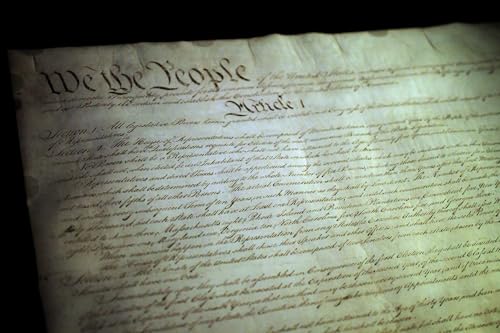
    You may have heard people say “I know my rights.” But how often do we hear, “I know my responsibilities”? Constitution Day — officially Constitution and Citizenship Day — is about both. It’s a reminder that the freedoms we enjoy come with duties, too.

    And that’s what this episode of Democracy & Z is all about.

    What Even Is Constitution Day?

    Quick history lesson. On September 17, 1787, delegates signed the U.S. Constitution in Philadelphia. Fast forward more than 200 years, and Congress decided we should mark that day every year. Not just to celebrate the signing, but to think about what citizenship really means.

    In 2004, Senator Robert Byrd of West Virginia led the effort to create a law requiring all federally funded schools to hold programs on the Constitution every September 17. That’s why, if you’re in school, you might get a lesson, assembly, or activity tied to the day.

    It’s not just a history class footnote. It’s about making sure every generation understands the framework of our government — and the role we play in it.

    Why This Conversation, and Why Now?

    For Constitution Day, special, we brought together a panel to discuss the importance of this founding document in our lives today:

    • Angela, Aiken New Tech High School student in the Agriculture Career Tech Pathways program.
    • Dr. David Childs, historian, educator, filmmaker, and longtime friend of Democracy and Me.
    • Alice Schneider, civic leader and President of The Cincinnatus Association, a local civic organization working to improve the quality of life for all citizens

    They talked about rights, responsibilities, and the question every citizen should ask: What does democracy need from me?

    The Role of the Public: Don’t Just Celebrate — Participate

    Here’s the catch: The Constitution doesn’t work if only a few people take part.

    So ask yourself:

    • What do you think is the most important thing about democracy?
    • What can we do as citizens to get involved?
    • What might happen to a democracy if only a few people participate?
    • How can we make people comfortable approaching leaders and making change?

    Democracy isn’t just about what’s fair or unfair. It’s about whether enough of us care enough to keep it going.

    Bottom Line

    The Constitution gave us the blueprint. It’s up to us to build on it.

    Celebrate Constitution Day with more than just a history lesson. Think about what kind of citizen you want to be, because that’s the real legacy of September 17.

    続きを読む 一部表示
    1分未満
  • Deepfakes and AI are rewriting the rules of truth
    2025/05/28

    Kathrine Nero

    Chances are within the last few days you’ve seen an image or a video you weren’t quite sure was real. Is it artificial intelligence? A deepfake? Asking those questions is the first step.

    We’ve entered the era of synthetic truth, where deepfakes and AI-generated content are muddying the waters between fact and fiction. And while this may sound like the plot of a Black Mirror episode, it’s a very real, very current problem.

    The question now is: Can journalism — especially local journalism — keep up?

    What Is a Deepfake, anyway?

    Let’s back up. A deepfake is video or audio that has been digitally manipulated to make someone appear to say or do something they didn’t. Thanks to powerful AI tools, creating these fakes no longer requires Hollywood-level tech or expertise. Anyone with the right app and enough motivation can generate a convincing fake in minutes.

    In January 2024, a deepfake robocall impersonating Joe Biden made national news. It urged voters in New Hampshire to “stay home” from the primary. The voice sounded like him. The timing was perfect. The goal? Suppress votes through confusion. That wasn’t a fringe stunt. It was a glimpse of what’s coming.

    Now imagine that kind of tactic at a local level — a fake video of aCincinnati mayoral candidate making a controversial statement days before an election. Or a doctored news clip suggesting a city council member said something offensive. Without careful scrutiny and fast correction, damage like that could spread before anyone knows it’s fake.

    Journalism vs. Generative Chaos

    Here’s the good news: Journalists are adapting.

    Some are learning forensic media skills, using tools to spot the tiny glitches and metadata trails that expose a deepfake. Others are working with AI in a responsible way, using it to transcribe meetings faster or analyze public records more efficiently, so they can spend more time investigating.

    But the real power lies in journalistic skepticism. The best reporters question everything. They verify, re-verify, and then explain what they’ve found in clear, plain language. This is especially true for local journalists, who know their communities and can spot when something doesn’t add up. They’re the ones who know how a council member speaks, or whether a certain policy proposal sounds like something a candidate would say. That context is everything.

    The Role of the Public: Don’t Just Consume — Think

    But this isn’t just the responsibility of journalists alone. Healthy skepticism can stop misinformation from spreading, and that’s on all of us. As traditional media has morphed into social media, our consumption can’t be blind any more. We need to ask questions and verify if something doesn’t quite feel right. Bottom line: we have to take responsibility as consumers of information.

    Don’t assume a video is real because it looks real. Don’t trust a screenshot just because it came from a friend. Do you know where they got it? Is it being reported anywhere else? If not, why?

    Journalists can’t fight this alone. Democracy, after all, depends on a well-informed public. We have the tools right there in the palm of our hand. The very device that brings us sometimes questionable information is also the solution to figuring out if that information is truthful.

    And if we don’t support reporters — by reading, subscribing, sharing, and holding them accountable — the deepfakes will win. Not because they’re perfect. But because we stopped asking whether they were real in the first place.

    So the next time you see something shocking, ask, “Has anyone credible reported this?”

    If not, stop before you share. The truth - and our democracy - might just depend on it.

    続きを読む 一部表示
    1分未満
  • Aiken New Tech High School Students Discuss Justice
    2024/09/12
    Mr. Aaron Parker Listen below to hear Aiken high school students discuss justice and their jobs in environmental justice from this part summer. When we consider what “Democracy and Me” can mean, we must consider the idea of justice. Over the next few weeks, the Agriculture Career Tech Pathway Students and Community Partners of Aiken New Tech High School in the Cincinnati Public Schools will be contributing their perspective and voice on how they are taking action on issues of social justice, environmental justice, heath justice, financial justice, and food justice (sovereignty). Aiken New Tech High School is a grades 7-12 college and career preparatory high school. The Agriculture Career Tech Pathway is a vocational series of classes focusing on Agribusiness and Production that includes: Agriculture, Food, and Natural Resources; Animal and Plant Science; Greenhouse and Nursery Management; and Global Economics and Food Markets. Students take part in the 3-Circle Model of Agriculture that is: 1. classroom as an interactive laboratory,, 2. Supervised Agricultural Experiences / Work-Based Learning, 3. Participation in Future Farmers of America. Situated on 61 acres of land, our Agriculture Campus includes a production farm of 35-raised beds, mushroom growing lab, coffee roasterie, 2 high tunnels, a greenhouse, orchard, 4 alpacas, 6 goats, 1 Zebu steer, and a collection of rabbits, quail, ducks, chickens, and Guinea fowl. Completing the Agriculture Campus are an on-campus forest and prairie as well as the adjoining Cincinnati Parks Preserve of Greeno Woods that supports habitat for wildlife. It is within Aiken’s agriculture program that students are provided opportunities to take action on issues of social, environmental, health, financial, and food justice. The food we grow is to provide food security for the students and community members needing local, fresh, and nutritious food. Students source seed, plant, care for, harvest, and distribute food that is culturally valued by our community, so it is valued. Eggs hatched by students of quail, chicken, duck, and Guinea fowl are a source of protein so frequently missing from growing and active adolescent diets. The expertise and resources of the Civic Garden Center of Greater Cincinnati, La Soupe, and the Society of St. Andrew - Ohio helps ensure food sovereignty for all. Financial security is achieved through students who perform and get paid for work-based learning during and after school as well as during the summer. Good paying Green jobs that are centered around sustainability and technical skill attainment provide resume building, employment skills, and income that is essential for both students and the families that money assists. Work-based learning occurs with the interest and support of Groundwork Ohio River Valley, Co-op Cincy, Cancer Justice Network, La Terza Artisan Coffee Roasterie, and Hamilton County Youth Employment. Health is improved through the mental wellness of having an outdoor classroom as well as access to the healthy food from our Aiken Farm and the Health Fairs and Vaccination Clinics organized by our FFA Chapter. Taking care of one's health requires eating well, practicing mindfulness, being active, and knowing how to navigate a complex and sometimes difficult health care system which our FFA students help educate as Health Navigators with Cancer Justice Network. Care for the air we breathe, water we drink, and land we occupy is monitored for sustainability through stewardship and engagement of community partners for environmental justice with Green Teams of Groundwork Ohio River Valley, Environmental Protection Agency and Green Umbrella as a Regional Climate Collaborative. Social justice is the diversity, equity, and inclusion we seek through an urban agriculture pathway that is in need of capitalizing on resources as well as being able to give back the community through service and value through the telling of our stories at Maketank Inc. and the dedication to inclusivity in our Cincinnati Public Schools. Through a series of blog posts and podcasts we aim to draw your attention to the selfless action of care that is embodied in justice that is layered throughout our Aiken New Tech High School Agriculture Career Tech Pathway. Students sharing their perspectives and voices will raise awareness and ignite a fire of action in you in which they are the spark. For a preview of what you can expect to read, hear, and see on “Democracy and Me,” we encourage you to visit a few resources: Aiken New Tech High School: https://aikennewtech.cps-k12.org Aiken Agriculture Weekly Newsletters: https://drive.google.com/drive/folders/1pxceKYPKjjrHt6OkiBKM7UF3FbNhKDXA?usp=drive_link Aiken Agriculture Facebook Page: https://www.facebook.com/AikenStudentGarden Ohio Department of Education and Workforce: Agriculture and Environmental Systems: https://education.ohio.gov/Topics/Career-Tech/...
    続きを読む 一部表示
    1分未満
  • Pilgrimage: An American Religious Experience?
    2024/06/26
    Dr. Nathan S. French A school field trip to Washington, D.C. is a formative rite of passage shared by many U.S. school students across the nation. Often, these are framed as “field trips.” Students may visit the White House, the U.S. Capitol Building, the Supreme Court, the Library of Congress, Declaration of Independence (housed in the National Archive), the National Museum of the American Indian, the National Museum of African American History and Culture, the Jefferson Memorial, Arlington National Cemetery, or the Smithsonian Museum – among others. For many students, this is the first time they will connect the histories of their textbooks to items, artifacts, and buildings that they can see and feel. For those arriving to Washington, D.C. by airplane or bus, the field trip might also seem like a road trip. Road trips, often involving movement across the U.S. from city-to-city and state-to-state are often framed as quintessential American experiences. Americans have taken road trips to follow their favorite bands, to move to universities and new jobs, to visit the hall of fame of their favorite professional or collegiate sport, or sites of family history. As Dr. Andrew Offenberger observes in our interview, road trips have helped American authors, like Kiowa poet N. Scott Momaday, make sense of their identities as Americans. What if, however, these field trips to Washington, D.C. and road trips across the country might amount to something else? What if we considered them to be pilgrimages? Would that change our understanding of them? For many Americans, the first word that comes to mind when they hear the word, “pilgrimage,” involves the pilgrims of Plymouth, a community of English Puritans who colonized territory in Massachusetts, at first through a treaty with the Wampanoag peoples, but eventually through their dispossession. For many American communities, the nature of pilgrimage remains a reminder of forced displacement, dispossession, and a loss of home and homeland. Pilgrimage, as a term, might also suggest a religious experience. There are multiple podcasts, blogs, and videos discussing the Camino de Santiago, a number of pilgrimage paths through northern Spain. Others might think of making a pilgrimage to the Christian, Jewish, or Muslim sacred spaces in Israel and Palestine often referred to as the “Holy Land” collectively – including the Temple Mount, the Dome of the Rock, and the Church of the Holy Sepulchre (among others). Mark Twain’s Innocents Abroad, is a classic example of this experience. Some make pilgrimage to Salem, Massachusetts each October. Others even debate whether the Crusades were a holy war or pilgrimage. American experiences of pilgrimage have led to substantial transformations in our national history and to our constitutional rights. Pilgrimage, as a movement across state, national, or cultural boundaries, has often been used by Americans to help them make sense of who they are, where they came from, and what it means, to them, to be “an American.” The word, “pilgrimage,” traces its etymology from the French, pèlerinage and from the Latin, pelegrines, with a general meaning of going through the fields or across lands as a foreigner. As a category used by anthropologists and sociologists in the study of religion, “pilgrimage” is often used as a much broader term, studying anything ranging from visits to Japanese Shinto shrines, the Islamic pilgrimage of Hajj, “birthright” trips to Israel by American Jewish youth, and, yes, even trips to Graceland in Memphis, Tennessee – the home of Elvis Presley. Arnold van Gennep (1873-1957) defined pilgrimage as one of a number of rites of passage (i.e., a rite du passage) that involves pilgrims separating themselves from broader society, moving themselves into a place of transition, and then re-incorporating their transformed bodies and minds back into their home societies. That moment of transition, which van Gennep called “liminality,” was the moment when one would become something new – perhaps through initiation, ritual observation, or by pushing one’s personal boundaries outside of one’s ordinary experience. Clifford Geertz (1926-2006), a contemporary of Turner, argued that a pilgrimage helps us to provide a story within which we are able to orient ourselves in the world. Consider, for example, the role that a trip to Arlington National Cemetery or the Tomb of the Unknown Soldier plays in a visit by a high school class to Washington, D.C. If framed and studied as a pilgrimage, Geertz’s theory would suggest that a visit to these sites can be formative to an American’s understanding of national history and, perhaps just as importantly, the visit will reinforce for Americans the importance of national service and remembrance of those who died in service to the defense of the United States. When we return from those school field trips to Washington, D.C., then, we do so with a new ...
    続きを読む 一部表示
    1分未満
  • Episode 62: Women’s History Month Part 1
    2023/03/27

    The return of Democracy & Z!

    Democracy and Me intern, Yoshie, was joined by Clark Montessori Senior, Nevaeh in a discussion on Women's History Month, Black History Month, and women of color who made a difference. Be sure to catch the 2nd half of the conversation next week!

    続きを読む 一部表示
    1分未満
  • Episode 60: Digging Into Earth Day
    2022/04/13

    With Earth Day on the horizon (April 22), we go deep into our own connections with nature, health and the environment. We consider the past—Earth Day itself goes all the way back to 1970—and the present, with the Biden Administration’s once-ambitious ecology agenda currently on ice*, while scientists’ climate-change projections only heating up. For many of us in Gen Z, the future is scary: “It’s like a time limit on our lives,” says Walnut Hills High Schooler Nola Stowe. But by learning more about the hows and whys of the climate crisis, environmental injustice, endangered species, pollution, drought and other problems, local and global, we plant seeds of solutions. And that helps us stay hopeful.

    The podcasters:

    Harnoor Mann (host), University of Cincinnati

    Nola Stowe, Walnut Hills H.S.

    A.J. Jones, recent graduate, University of Cincinnati

    *The New York Times Daily podcast just had a good episode about this.

    Click here for NPR’s climate coverage.

    Click here for details on the Greater Cincinnati Earth Day Festival on April 23; we’ll share info on other local events on the D&Me blog.

    Here’s a Cincinnati & Hamilton County Public Library link for the book Braiding Sweetgrass, by Robin Wall Kimmerer, referenced by Nola during this episode. And here’s California Governor Gavin Newsom’s executive order to phase out gas-powered cars, mentioned by A.J.

    And click here to access a vintage D&Z episode from September 2020, talking about Gen Z’s environmental activism with two young brothers from the Navajo Nation. It’s still one of our favorites.

    Conversation recorded on Zoom April 10, 2022

    Seedling photo illustration by Freedomz/Shutterstock

    続きを読む 一部表示
    1分未満
  • Episode 59: Do We See Ourselves in the Oscars?
    2022/03/24

    The producers of the 94th Academy Awards—airing at 8 p.m. this Sunday on ABC—hope a new “Fan Favorite” award, celebrating popular hits like Cinderella and Spider-Man: No Way Home, will entice Gen Z to tune into the three-hour trophy show. Maybe? Can you give Encanto some love while you’re at it? But we really wish Hollywood took teens, especially Black and Brown teens, more seriously: we’re smart, we’re globally aware, we carry our entertainment with us wherever we go, and we’re not satisfied with most of what you’re marketing to us. Do better, and we might keep watching. Joining us for this special movie-themed episode is our good friend TT Stern-Enzi, film critic for Fox 19 and artistic director of the Over-the-Rhine Film Festival.

    The podcasters:

    Robert Thikkurissy (host), University of Cincinnati, Transition & Access Program

    Pawan Rai, Aiken New Tech H.S.

    Joyeuse Muhorakeye, Aiken H.S.

    Lael Ingram, Walnut Hills H.S.

    with guest film critic TT Stern-Enzi

    Conversation recorded on Zoom March 13, 2022

    Oscars smartphone illustration by Jimmy Tudeschi/Shutterstock

    続きを読む 一部表示
    1分未満