『Democracy and Z』のカバーアート

Democracy and Z

Democracy and Z

著者: Democracy and Me
無料で聴く

このコンテンツについて

An educational outreach project of 91.7 WVXU© 2020 Democracy and Me 社会科学
エピソード
  • Ready to talk turkey? Tips for tackling tough holiday conversations when politics shows up before the pie
    2025/11/20

    Kathrine Nero

    In this episode, Kathrine Nero and Lauryn Howery discuss ways to talk turkey, not politics, this Thanksgiving!

    There’s a chill in the air, a pie in the oven, and an uncle somewhere warming up his favorite political rant. Welcome to misinformation season.

    It’s that time of year when your cousin’s cranberry sauce might come with a side of controversy, and as we gather in gratitude, the real goal isn’t steering the conversation — it’s staying at the table.

    If you’ve ever found yourself sitting at the family table wondering how the conversation went from mashed potatoes to misinformation, you’re not alone. The holidays are basically democracy in the dining room: everyone has a voice, everyone’s talking at once, and occasionally someone walks away mid-sentence.

    Journalists deal with this every day - separating opinion from evidence, listening to people they disagree with, and trying to get to the truth without losing their cool. Borrowing a few of their habits might make this year’s gathering a little more bearable.

    Start with curiosity, not combat. The best reporters don’t start with an agenda; they start with questions. Instead of jumping in with “That’s not true,” try, “Where did you hear that?” or “Can you tell me more about that?” Or “What makes you say that?” You’re not trying to win an argument (yet!) - you’re trying to understand a perspective. And sometimes, just asking how someone knows what they know, or why they believe certain things reveals that they’re not entirely sure themselves.

    Verify before you amplify. Journalists are trained skeptics. Before they publish, they confirm. Before you forward that post, do the same. Look up the original source. Check whether it’s been reported elsewhere. Read past the headline. Some reliable, quick fact-checkers include PolitiFact, Snopes, and AP Fact Check. Or just check against other similar outlets. If a meme, video, or “breaking news” update seems too wild to be true, there’s a good chance it is.

    Find common ground — and if you can’t, find common values. Most people agree that communities should be safe, schools should work and the truth should matter. Find a way to get back to those greatest hits. When you start from what unites rather than what divides, conversations tend to soften. The goal isn’t to change someone’s mind in one meal; it’s to remind each other that respectful disagreement still exists.

    Know when to take a pass the potatoes. Even journalists hit “pause” when an interview turns unproductive. You can, too. Not every debate has to end in resolution. Sometimes the best choice is to move on - or to shift the topic back to football, dessert, or literally anything less heated. Democracy thrives on engagement, but it also depends on civility.

    The church I went to for years had a saying that still sticks with me: “We agree to disagree - agreeably.” The dinner table, or the football game that follows, isn’t the place to change every mind or solve every problem. But taking time to understand another person’s perspective might be the start of something better - a little empathy, a little patience, maybe even a little peace.

    続きを読む 一部表示
    1分未満
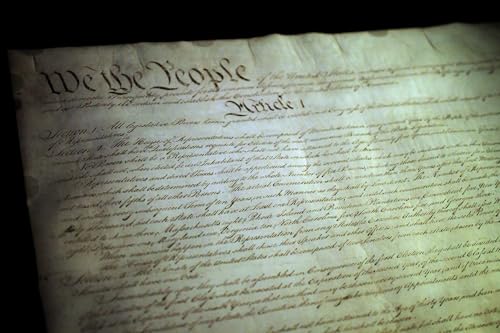
  • The Constitution: Rights, Responsibilities, and Why It Still Matters
    2025/09/16

    The Cincinnatus Association

    You may have heard people say “I know my rights.” But how often do we hear, “I know my responsibilities”? Constitution Day — officially Constitution and Citizenship Day — is about both. It’s a reminder that the freedoms we enjoy come with duties, too.

    And that’s what this episode of Democracy & Z is all about.

    What Even Is Constitution Day?

    Quick history lesson. On September 17, 1787, delegates signed the U.S. Constitution in Philadelphia. Fast forward more than 200 years, and Congress decided we should mark that day every year. Not just to celebrate the signing, but to think about what citizenship really means.

    In 2004, Senator Robert Byrd of West Virginia led the effort to create a law requiring all federally funded schools to hold programs on the Constitution every September 17. That’s why, if you’re in school, you might get a lesson, assembly, or activity tied to the day.

    It’s not just a history class footnote. It’s about making sure every generation understands the framework of our government — and the role we play in it.

    Why This Conversation, and Why Now?

    For Constitution Day, special, we brought together a panel to discuss the importance of this founding document in our lives today:

    • Angela, Aiken New Tech High School student in the Agriculture Career Tech Pathways program.
    • Dr. David Childs, historian, educator, filmmaker, and longtime friend of Democracy and Me.
    • Alice Schneider, civic leader and President of The Cincinnatus Association, a local civic organization working to improve the quality of life for all citizens

    They talked about rights, responsibilities, and the question every citizen should ask: What does democracy need from me?

    The Role of the Public: Don’t Just Celebrate — Participate

    Here’s the catch: The Constitution doesn’t work if only a few people take part.

    So ask yourself:

    • What do you think is the most important thing about democracy?
    • What can we do as citizens to get involved?
    • What might happen to a democracy if only a few people participate?
    • How can we make people comfortable approaching leaders and making change?

    Democracy isn’t just about what’s fair or unfair. It’s about whether enough of us care enough to keep it going.

    Bottom Line

    The Constitution gave us the blueprint. It’s up to us to build on it.

    Celebrate Constitution Day with more than just a history lesson. Think about what kind of citizen you want to be, because that’s the real legacy of September 17.

    続きを読む 一部表示
    1分未満
  • Deepfakes and AI are rewriting the rules of truth
    2025/05/28

    Kathrine Nero

    Chances are within the last few days you’ve seen an image or a video you weren’t quite sure was real. Is it artificial intelligence? A deepfake? Asking those questions is the first step.

    We’ve entered the era of synthetic truth, where deepfakes and AI-generated content are muddying the waters between fact and fiction. And while this may sound like the plot of a Black Mirror episode, it’s a very real, very current problem.

    The question now is: Can journalism — especially local journalism — keep up?

    What Is a Deepfake, anyway?

    Let’s back up. A deepfake is video or audio that has been digitally manipulated to make someone appear to say or do something they didn’t. Thanks to powerful AI tools, creating these fakes no longer requires Hollywood-level tech or expertise. Anyone with the right app and enough motivation can generate a convincing fake in minutes.

    In January 2024, a deepfake robocall impersonating Joe Biden made national news. It urged voters in New Hampshire to “stay home” from the primary. The voice sounded like him. The timing was perfect. The goal? Suppress votes through confusion. That wasn’t a fringe stunt. It was a glimpse of what’s coming.

    Now imagine that kind of tactic at a local level — a fake video of aCincinnati mayoral candidate making a controversial statement days before an election. Or a doctored news clip suggesting a city council member said something offensive. Without careful scrutiny and fast correction, damage like that could spread before anyone knows it’s fake.

    Journalism vs. Generative Chaos

    Here’s the good news: Journalists are adapting.

    Some are learning forensic media skills, using tools to spot the tiny glitches and metadata trails that expose a deepfake. Others are working with AI in a responsible way, using it to transcribe meetings faster or analyze public records more efficiently, so they can spend more time investigating.

    But the real power lies in journalistic skepticism. The best reporters question everything. They verify, re-verify, and then explain what they’ve found in clear, plain language. This is especially true for local journalists, who know their communities and can spot when something doesn’t add up. They’re the ones who know how a council member speaks, or whether a certain policy proposal sounds like something a candidate would say. That context is everything.

    The Role of the Public: Don’t Just Consume — Think

    But this isn’t just the responsibility of journalists alone. Healthy skepticism can stop misinformation from spreading, and that’s on all of us. As traditional media has morphed into social media, our consumption can’t be blind any more. We need to ask questions and verify if something doesn’t quite feel right. Bottom line: we have to take responsibility as consumers of information.

    Don’t assume a video is real because it looks real. Don’t trust a screenshot just because it came from a friend. Do you know where they got it? Is it being reported anywhere else? If not, why?

    Journalists can’t fight this alone. Democracy, after all, depends on a well-informed public. We have the tools right there in the palm of our hand. The very device that brings us sometimes questionable information is also the solution to figuring out if that information is truthful.

    And if we don’t support reporters — by reading, subscribing, sharing, and holding them accountable — the deepfakes will win. Not because they’re perfect. But because we stopped asking whether they were real in the first place.

    So the next time you see something shocking, ask, “Has anyone credible reported this?”

    If not, stop before you share. The truth - and our democracy - might just depend on it.

    続きを読む 一部表示
    1分未満
まだレビューはありません