『DNA Today: A Genetics Podcast』のカバーアート

DNA Today: A Genetics Podcast

DNA Today: A Genetics Podcast

著者: Kira Dineen Gene Pool Media
無料で聴く

【Amazonプライム会員限定】今ならプレミアムプランが4か月 月額99円。

10月19日まで。※適用条件あり

Discover New Advances in the world of genetics, from technology like CRISPR to rare diseases to new research. For 14 years, multi-award winning podcast ”DNA Today” has brought you the voices of leaders in genetics. Host Kira Dineen brings her genetics expertise to interview geneticists, genetic counselors, patient advocates, biotech leaders, researchers, and more.

***Best Science and Medicine Podcast Award Winner (2020, 2021 and 2022)***

Learn more (and stream all 400+ episodes) at DNAtoday.com. You can contact the show at info@DNAtoday.com.


This show is part of "Gene Pool Media: The Science Podcast Network" head to GenePoolMedia.com to explore all our science themed shows.

DNA Today, LLC 2012-2026
生物科学 科学
エピソード
  • #412 How Prenatal cfDNA Can Uncover Undiagnosed Maternal Cancer
    2026/09/18
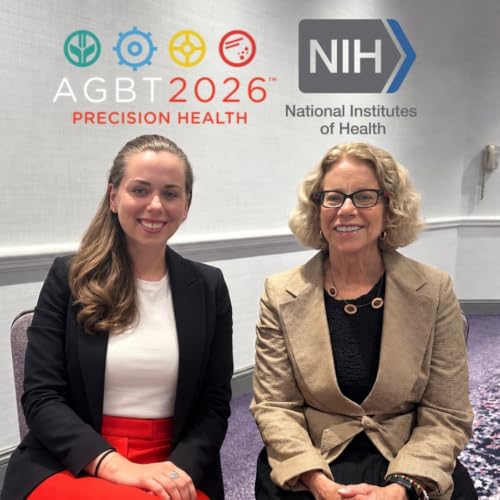
    Prenatal cell-free DNA screening is designed to assess a pregnancy for chromosome conditions; but in rare cases, it can reveal something entirely unexpected about the pregnant patient’s own health. In this episode, Kira Dineen is joined in-person by Dr. Diana Bianchi to explore how unusual or non-reportable cfDNA screening results can sometimes be a signal of an undiagnosed maternal cancer. Dr. Bianchi shares findings from the NIH’s ongoing IDENTIFY study, which is investigating why these unexpected cfDNA patterns occur, how clinicians can distinguish potential malignancy from other explanations, and what should happen next when a prenatal screening result raises concern about maternal cancer. We recorded this episode in person at AGBT Precision Health, one of our favorite conferences of the year. The conference wrapped this past Wednesday and brought together leaders across genomics, precision medicine, research, and clinical care in an intimate setting that makes it easy to connect, learn, and have thoughtful conversations. The conference is also hosted at a beautiful resort in the San Diego area, which makes the experience especially memorable. We highly recommend attending next year’s AGBT Precision Health meeting, taking place September 13–15, 2027, at the same gorgeous location. We already put it on our calendars! In This Episode, We Discuss: What “non-reportable” or “uninterpretable” cfDNA results actually meanHow unusual cfDNA results differ from typical test failuresDetermining whether an unexpected cfDNA signal originates from the fetus, placenta, or pregnant patientMaternal causes of discordant cfDNA results, including fibroids, clonal hematopoiesis, a demised twin, and malignancyWhy tumors can release DNA into the bloodstream that is detected during prenatal screeningWhy Dr. Bianchi and her colleagues launched the prospective IDENTIFY study in 2019What participants undergo when they travel to the NIH Clinical Center for evaluationResults from the first 107 IDENTIFY participants, including the 52 participants diagnosed with cancerWhy lymphoma is frequently identified through these unusual cfDNA patternsChromosomal patterns that are particularly suspicious for malignancyWhy gains and losses involving three or more chromosomes can be an important warning signWhy symptoms, physical examinations, and routine bloodwork may not reliably identify patients with occult cancerThe role of rapid whole-body MRI in evaluating patients for malignancyApproaches clinicians can consider when whole-body MRI is not readily availableDiagnosing and treating cancer during pregnancyWhat researchers have learned from participants whose evaluation does not identify cancerHow the IDENTIFY study has expanded since its original published cohortHow laboratories should report cfDNA patterns that may suggest maternal malignancyThe need for professional society guidelines for clinicians receiving these unusual resultsWhat genetic counselors, OB/GYNs, and maternal-fetal medicine specialists should do when they receive a concerning non-reportable NIPS result About Dr. Diana Bianchi Diana W. Bianchi, MD, is a physician-scientist and a pioneer in noninvasive prenatal genetic testing and fetal cell microchimerism research. She previously served as Director of the Eunice Kennedy Shriver National Institute of Child Health and Human Development at the National Institutes of Health and was a senior investigator in the Center for Precision Health Research at the National Human Genome Research Institute. Her research has helped define how prenatal cell-free DNA sequencing can unexpectedly identify genomic patterns associated with maternal malignancy. In 2019, Dr. Bianchi and colleagues launched the IDENTIFY Study — Incidental Detection of Maternal Neoplasia Through Non-Invasive Cell-Free DNA Analysis — to investigate the biological causes of unusual or non-reportable prenatal cfDNA results and develop evidence-based approaches for identifying patients who may need evaluation for cancer. IDENTIFY Study The IDENTIFY study is an ongoing prospective study at the NIH Clinical Center evaluating pregnant and postpartum individuals who received unusual or non-reportable prenatal cfDNA sequencing results (also known as non-invasive prenatal screening or testing, NIPS or NIPT). The first major results from IDENTIFY were published in The New England Journal of Medicine in December 2024. Among the first 107 participants evaluated, 52 (48.6%) were diagnosed with cancer. Researchers also found: Rapid whole-body MRI had 98% sensitivity and 88.5% specificity for detecting occult cancer.Physical examination and routine laboratory testing had limited ability to distinguish participants with cancer.Among participants whose research cfDNA sequencing showed both copy-number gains and losses involving three or more chromosomes, 47 of 49 (95.9%) had cancer.Other unusual cfDNA patterns can have nonmalignant explanations, ...
    続きを読む 一部表示
    37 分
  • #411 Mock Cancer Genetic Counseling Session: Colon Cancer and Lynch Syndrome
    2026/09/11
    What happens during genetic counseling after someone develops colon cancer at a young age and their tumor testing raises concern for Lynch syndrome? This is the eighth installment in our Mock Genetic Counseling Session Series! In this episode, cancer genetic counselor Connor Linehan and genetic counseling student Edith Atwerebour perform a mock cancer genetic counseling session. Edith plays Patricia, a 42-year-old woman recently diagnosed with Stage I colon cancer whose tumor showed loss of the MSH2 and MSH6 proteins. Although this tumor result raises suspicion for Lynch syndrome, it does not confirm that Patricia has an inherited cancer predisposition. Through this simulated session, Connor explains the difference between tumor and germline testing, reviews the pattern of cancer in Patricia’s family, and discusses how genetic testing could inform her future medical care and clarify cancer risks for her relatives. Patricia is particularly concerned about her kids. The session demonstrates how genetic counselors address the emotional impact of a possible hereditary cancer condition while explaining why testing and cancer screening are generally not recommended for children when the associated risks begin in adulthood. Previous installments of this series have explored prenatal, pediatric, cardiovascular, cancer, and teratogen genetic counseling. We hope these sessions help prospective and current genetic counseling students, and the general public, better understand what happens during a genetic counseling appointment. The Actors Connor Linehan, MS, LCGC is a board-certified genetic counselor in Connecticut specializing in cancer. He helps patients and families understand inherited cancer risks, genetic testing options, and how test results may affect medical management and relatives. He is also a Clinical Instructor at a genetic counseling graduate program. Connor is the President of The Connecticut Genetic Counselor Association. (Fun fact, our host Kira Dineen designed this new website!) Edith Atwerebour, MPH is currently a student in the Human Genetics Program at Sarah Lawrence College training to become a genetic counselor. In this mock session, she plays Patricia, a 42-year-old woman recently diagnosed with Stage I colon cancer whose abnormal tumor testing raises concern for Lynch syndrome. The premise of this mock case was developed as part of Atwerebour’s internship with DNA Today. Edith also appeared in the previous installment of this series, #406 Mock Teratogen Genetic Counseling Session: Ozempic, Zoloft, Xanax, and Metformin, in which she played Denise, a pregnant patient seeking information about several medication exposures. Mock Session Overview Establishing the purpose and structure of a cancer genetic counseling appointmentReviewing Patricia’s colon cancer diagnosis, treatment, and current healthAddressing Patricia’s concerns about her children early in the sessionConstructing and evaluating a three-generation cancer family historyIdentifying features that raise concern for hereditary cancer, including colon cancer before age 50 and multiple Lynch-associated cancersExplaining how genes normally help protect the body from developing cancerSporadic, familial, and hereditary explanations for cancerThe function of the mismatch repair genes MLH1, MSH2, MSH6, and PMS2How immunohistochemistry evaluates mismatch repair protein expression in a tumorWhy loss of MSH2 and MSH6 raises concern for mutations (pathogenic variants) in cancer genesThe difference between tumor testing and germline genetic testingWhy abnormal tumor testing does not independently establish a Lynch syndrome diagnosisHow genetic changes confined to a tumor differ from inherited germline variantsWhy Patricia is the most informative person in her family to test firstThe option of using a multigene hereditary cancer panelPossible genetic testing results: positive, negative, and a variant of uncertain significanceWhat each potential result could mean for Patricia and her relativesWhy inheriting a pathogenic variant increases cancer risk but does not guarantee cancerWhy Patricia’s children would generally wait until adulthood for genetic testingHow a positive result could affect Patricia’s colon cancer surveillanceOther Lynch-associated cancer risks, including endometrial, ovarian, gastric, pancreatic, urinary tract, and additional cancersHow screening and risk-reducing options vary by the gene involvedCascade testing for Patricia’s mother, children, and other relatives if a familial variant is identifiedGenetic testing through a blood or saliva sampleThe expected turnaround time and how results would be reviewedPatricia’s decision about whether to proceed with germline genetic testing Lynch Syndrome Resources About Lynch Syndrome—Centers for Disease Control and PreventionGenetic Testing for Lynch Syndrome—Centers for Disease Control and PreventionManaging Cancer Risks Associated With Lynch Syndrome—Centers ...
    続きを読む 一部表示
    31 分
  • #410 Gypsy Rose Blanchard’s 1q21.1 Microdeletion: What Does It Explain?
    2026/09/04
    This episode drop from the PRETEND podcast series “The Gypsy Rose Obsession” features Kira Dineen explaining what Gypsy Rose Blanchard’s genetic test result may, and may not, mean. Gypsy Rose Blanchard’s medical history has been scrutinized for years. Throughout her childhood, her mother, Dee Dee Blanchard, presented her as having numerous serious medical conditions, resulting in medications, procedures, mobility aids, and countless medical appointments. In 2015, Dee Dee was murdered by Gypsy’s then-boyfriend in a crime Gypsy helped plan. The case has since inspired documentaries, television series, podcasts, and an enormous amount of online speculation. But one part of Gypsy’s medical history has received relatively little attention: a chromosomal microdeletion identified through genetic testing. In this special episode drop, we are sharing the fifth installment of “The Gypsy Rose Obsession,” an investigative series from the PRETEND podcast hosted by Javier Leiva. The first four episodes explore the online community that continues to investigate, debate, and develop competing theories about nearly every aspect of Gypsy’s life. We recommend listening to those episodes first for the full context behind the people, records, and claims discussed in this installment. Episode five turns its attention to Gypsy’s reported 1q21.1 microdeletion. DNA Today host and certified genetic counselor Kira Dineen joins Javier as a genetics expert to examine the available records and explain the complexities of interpreting this finding. Kira breaks down chromosomes using a genomic-library analogy, explains how a chromosomal “address” such as 1q21.1 is read, and puts the reported deletion size into perspective. She also compares a traditional karyotype with a chromosomal microarray and explains how a deletion can be too small to detect through one form of testing but identifiable through another. What can the microdeletion tell us about Gypsy’s health? Why might her earlier clinical notes and a later laboratory report describe the finding differently? Could the deletion explain claims involving paralysis, leukemia, or the need for a feeding tube? Most importantly, how do we distinguish a possible genetic association from evidence that a particular finding caused someone’s medical, psychiatric, or behavioral features? This episode discusses medical child abuse, violence, and murder. Please take care while listening. Episode Discussion Topics What genetic counselors do and how they help patients understand genetic testingChromosomes, genes, and microdeletions explained through a genomic-library analogyHow to interpret the chromosomal address “1q21.1”What it means to have a piece of chromosome 1 missingPutting the size of the deletion into perspectiveWhy the size of a genetic change does not always predict its medical impactThe wide spectrum associated with 1q21.1 microdeletions, ranging from no apparent features to developmental and congenital differencesHow two people with the same or similar deletion can be affected very differentlyWhy identifying the deletion does not mean someone will develop every associated conditionPossible developmental, neurological, physical, and behavioral features reported with 1q21.1 microdeletionsThe difference between a genetic risk factor and a diagnosis or predictionWhether paralysis, leukemia, or feeding-tube use are associated with this deletionWhy a genetic finding should not automatically be used to explain every aspect of someone’s medical or behavioral historyThe limitations of interpreting genetic information without a complete medical evaluation and family history The information presented in this episode is intended for education and discussion and should not be considered individualized medical advice. Genetic test results should be interpreted by a qualified healthcare professional in the context of the individual’s complete medical and family history. Resources & Links Listen to PRETEND on Apple PodcastsListen to PRETEND on SpotifyLearn more at the PRETEND podcast website1q21.1 Microdeletion—MedlinePlus Genetics1q21.1 Recurrent Deletion—GeneReviews1q21.1 Microdeletions—Unique, Understanding Rare Chromosome and Gene Disorders Relevant DNA Today Podcast Episodes True Crime and Forensic Genetics #402 How Genetic Genealogy Caught the Golden State Killer — Retired cold-case investigator Paul Holes explains how investigative genetic genealogy identified Joseph DeAngelo and discusses DNA evidence in the Golden State Killer, Zodiac Killer, and other major cases.#326 How DNA Solves Crimes: The Forensic Science Behind True Crime — DNA-analysis pioneer Dr. Henry Erlich explores PCR, forensic DNA databases, exonerations, the O.J. Simpson case, and the scientific and ethical complexities of DNA evidence.#131 Libby Copeland on Law Enforcement Use of Genetic Databases — Journalist and author Libby Copeland examines how law enforcement uses ...
    続きを読む 一部表示
    44 分
adbl_web_anon_alc_button_suppression_t1
まだレビューはありません