エピソード

  • New Episode Coming Soon!
    2026/06/26

    Are you overwhelmed by complex compliance codes and shifting regulatory standards? Do you worry that your quality management systems are just checking boxes instead of truly safeguarding your operations?

    You don't have to navigate the high-stakes landscape of sterile compounding and personalized medicine alone.

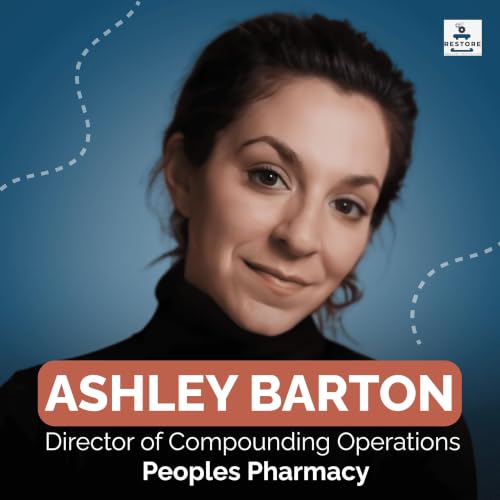
    Introducing Compounding Interest: The Business of Personalized Medicine! Brought to you by Amy Summers - a nationally recognized authority in 503A and 503B operations - and the expert team at Restore Health Consulting. Backed by proven playbooks and a nationwide consulting network, they help businesses build, scale, and restore their infrastructure to maximum capacity.

    In each episode, you will gain executive-level insights, field-tested risk mitigation strategies , and inspection-ready solutions that help organizations move past minimum standards and achieve true operational excellence. If you are a pharmacy operator, life sciences executive, or medical spa innovator, this is your essential guide.

    Compounding Interest is coming soon to your favorite podcast platform. Subscribe now so you don't miss the very first episode!

    続きを読む 一部表示
    1 分
  • The Peptide Therapy Crisis for Patients Losing Access to Life-Changing Treatments with Melissa Stefko
    2026/07/03
    The future of peptide compounding is at a critical crossroads. As the FDA prepares for its upcoming Pharmacy Compounding Advisory Committee (PCAC) meeting, compounders, prescribers, patients, and industry advocates are facing important decisions that could shape access to peptide therapies for years to come. In this episode, Amy Summers sits down with Melissa Stefko of Wells Pharmacy Network to discuss why these regulatory decisions matter. Together they explore the intersection of personalized medicine, patient access, regulatory oversight, and public safety.Melissa Stefko is the senior VP of regulatory affairs at Wells Pharmacy Network with extensive experience in pharmacy compounding and FDA policy. She has been actively involved in peptide nominations for FDA review and works closely with industry organizations advocating for safe, regulated access to compounded therapies. Melissa brings a practical perspective on how evolving regulations impact pharmacies, physicians, and patients seeking personalized medicine.Key TakeawaysWhy the upcoming FDA PCAC meeting could significantly impact peptide compounding.How peptide therapy fits into the growing movement toward personalized medicine.The safety concerns surrounding the expanding gray market for peptides.The difference between FDA enforcement discretion and state board pharmacy regulations.How pharmacists, physicians, and patients can contribute meaningful comments before FDA review.Timestamps[00:00] - Introduction to the episode[04:07] - Why peptides have become a major healthcare and regulatory topic[08:08] - Clinical uses for peptides and the original FDA nominations[11:05] - FDA's preliminary recommendations and industry concerns[15:16] - Gray market peptides versus regulated pharmacy compounding[18:35] - Understanding FDA oversight and state board enforcement[22:24] - How pharmacies, physicians, and patients can support the FDA review process[26:08] - What meaningful FDA docket comments should include[28:19] - Possible outcomes after the PCAC meeting[33:10] - Final recommendations and how stakeholders can get involvedFollow Melissa Stefko:LinkedIn: https://www.linkedin.com/in/melissa-stefko-70234415/Website (Company): https://wellsrx.com/LinkedIn (Company): https://www.linkedin.com/company/wellspharmacynetwork/Facebook (Company): https://www.facebook.com/wellsrxInstagram (Company): https://www.instagram.com/wellspharmacynetwork/X (Company): https://x.com/wellsrxTikTok (Company): https://www.tiktok.com/@wellspharmacynetworkFollow the Host:Amy Summers: https://www.linkedin.com/in/amy-summers-pharmd-bcscp-fapc-20b04a93/Restore Health Consulting: https://www.restorehealthconsulting.com/Follow The Podcast:YouTube: https://www.youtube.com/@RestoreHealthConsultingSpotify: https://open.spotify.com/show/033F4FRUbjSrN1oNbfozhD?si=caf30ccfd2ba49b6Apple Podcasts: https://podcasts.apple.com/in/podcast/compounding-interest/id6784679391
    続きを読む 一部表示
    34 分
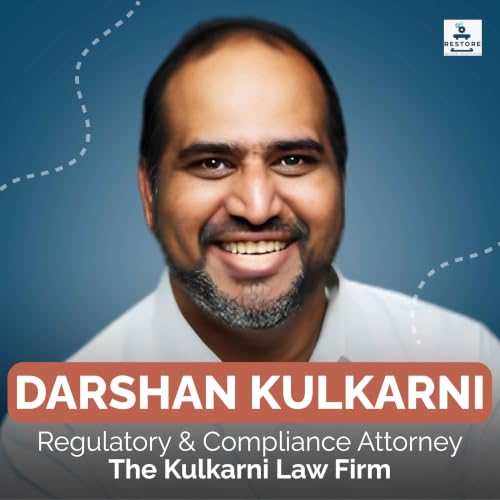
  • What Compounding Pharmacies Cannot Say About Safety & Effectiveness in Medicine – Darshan Kulkarni
    2026/07/21
    The personalized medicine and compounding pharmacy industry is evolving rapidly as patient demand, regulatory scrutiny, and technological innovation continue to collide. In this episode of Compounding Interest: The Business of Personalized Medicine, host Amy Summers sits down with Darshan Kulkarni to explore the legal and ethical challenges facing compounding pharmacies today. From FDA advertising rules and promotional claims to USP 797, 503A vs. 503B pharmacies, peptides, and the future of personalized medicine, this conversation examines where innovation meets regulation and where the industry's biggest gray areas remain.Darshan Kulkarni, PharmD, MS, Esq., is a pharmacist, attorney, educator, author, and founder of Kulkarni Law Firm, where he advises FDA-regulated industries on complex regulatory and compliance matters for the Life Sciences. His expertise spans pharmacy compounding, medical devices, advertising compliance, clinical research, and FDA law. His multidisciplinary background provides a unique perspective on balancing patient access, innovation, and regulatory responsibility.Key TakeawaysWhy patient safety, efficacy, affordability, and access must all be balanced in personalized medicine.The legal boundaries surrounding advertising and promotional claims for compounding pharmacies.How FDA regulations, USP 797, and 503A/503B distinctions impact pharmacy operations.The regulatory challenges surrounding peptides, compounded medications, and personalized therapies.Practical guidance for pharmacies navigating compliance while continuing to serve patients effectively.Timestamps[00:00:00] - Introduction to Darshan Kulkarni and Personalized Medicine: Amy introduces Darshan and discusses how his pharmacy and legal background shapes his perspective.[00:05:15] - The Purpose and Evolution of Pharmacy Compounding: A discussion on FDA oversight, drug shortages, the NECC tragedy, and the growth of modern compounding.[00:09:53] - Common Compliance Mistakes in FDA-Regulated Industries: Darshan explains the regulatory issues he sees most often across healthcare companies.[00:14:09] - Marketing Rules for Compounding Pharmacies: Which advertising claims pharmacies should avoid and how they can market responsibly.[00:21:59] - Why Disclaimers Cannot Replace Regulatory Compliance: Understanding the limits of disclaimers in pharmaceutical advertising.[00:26:01] - Peptides and the Ongoing Regulatory Debate: A discussion on safety, efficacy, patient access, and the legal concerns surrounding peptide products.[00:31:13] - Buying a Compounding Pharmacy: Darshan shares advice on finding acquisition opportunities through networking, brokers, and industry relationships.[00:32:55] - Closing Thoughts and Final Takeaways: Amy wraps up the conversation by reflecting on the importance of thoughtful debate in personalized medicine.Follow Darshan Kulkarni:LinkedIn: https://www.linkedin.com/in/darshankulkarni/Website (Company): https://kulkarnilawfirm.com/LinkedIn (Company): https://www.linkedin.com/company/kulkarnilaw/ X (Company): https://x.com/kulkarnilawfirmYouTube: www.youtube.com/@DarshanTalksFollow the Host:Amy Summers: https://www.linkedin.com/in/amy-summers-pharmd-bcscp-fapc-20b04a93/Restore Health Consulting: https://www.restorehealthconsulting.com/Follow The Podcast:YouTube: https://www.youtube.com/@RestoreHealthConsultingSpotify: https://open.spotify.com/show/033F4FRUbjSrN1oNbfozhD?si=caf30ccfd2ba49b6Apple Podcasts: https://podcasts.apple.com/in/podcast/compounding-interest/id6784679391
    続きを読む 一部表示
    33 分
  • The Future of Personalized Medicine for Patients to Improve Healthcare Access with Jesse Vidrine
    2026/07/31

    Compounding pharmacies have rapidly moved from a niche corner of healthcare into the national spotlight, driven largely by the demand for GLP-1 medications and growing interest in personalized medicine. In this episode of Compounding Interest: The Business of Personalized Medicine, host Amy Summers sits down with Jesse Vidrine, President of Boudreaux's New Drugstore and Vidrine Pharmaceutical Group, to discuss how compounding is evolving, the regulatory landscape, the future of hormones, peptides, telehealth, AI, and what it will take to make personalized medicine more accessible for patients.

    Jesse Vidrine is the President of Vidrine Pharmaceutical Group, the parent company of Boudreaux's New Drugstore, a nationally licensed 503A compounding pharmacy based in South Louisiana. With decades of experience in hormone replacement therapy and personalized medicine, Jesse is focused on expanding patient access to customized therapies while advancing quality, compliance, automation, and innovation within the compounding pharmacy industry.

    Key Takeaways

    • Why compounding pharmacies have become significantly more visible over the past few years.
    • What the GLP-1 movement revealed about drug pricing, access, and the broader healthcare system.
    • How hormones, peptides, telehealth, and testing are shaping the future of personalized medicine.
    • The regulatory challenges facing compounding pharmacies and why compliance is becoming more important than ever.
    • How AI, automation, and technology can improve patient care while maintaining clinical quality.

    Timestamps

    [00:00] – Episode Preview

    [01:35] – Meet Jesse Vidrine

    [02:35] – How Compounding Went Mainstream

    [05:48] – What GLP-1s Revealed About Healthcare

    [13:09] – The Future of Personalized Medicine

    [17:46] – Hormones, Individualized Care & Clinical Need

    [20:01] – Customization vs. Commercial Medicine

    [27:16] – Peptides, Regulation & Industry Responsibility

    [33:30] – Telehealth, AI & Pharmacy Innovation

    [39:27] – Testing, Long-Term Vision & Closing Thoughts

    Follow Jesse Vidrine:

    • LinkedIn: https://www.linkedin.com/in/jesse-vidrine-377a4b6b/
    • Website (Company): https://vpgrx.com/

    Follow the Host:

    • Amy Summers: https://www.linkedin.com/in/amy-summers-pharmd-bcscp-fapc-20b04a93/
    • Restore Health Consulting: https://www.restorehealthconsulting.com/

    Follow The Podcast:

    • YouTube: https://www.youtube.com/@RestoreHealthConsulting
    • Spotify: https://open.spotify.com/show/033F4FRUbjSrN1oNbfozhD?si=caf30ccfd2ba49b6
    • Apple Podcasts: https://podcasts.apple.com/in/podcast/compounding-interest/id6784679391

    続きを読む 一部表示
    44 分
  • Personalized Medicine Cannot Scale Without Automation for Pharmacies with Adam P. Crandall
    2026/08/07
    As personalized medicine continues to expand; from GLP-1 therapies and peptides to hormone replacement therapy, the demand placed on compounding pharmacies has never been greater. While personalized care has traditionally relied on manual sterile compounding, increasing regulatory expectations, workforce shortages, and production demands are driving a major shift toward automation. In this episode of Compounding Interest: The Business of Personalized Medicine, host Amy Summers sits down with Adam P. Crandall to discuss how automation is transforming sterile compounding, why both 503A and 503B facilities are beginning to adopt automated filling technologies, and what pharmacy owners should consider when evaluating automation solutions.Adam P. Crandall is the Chief Revenue Officer at Addtronics, where he leads sales, marketing, and business development across multiple healthcare technology companies. One of those companies, Körber Pharma (formerly Cozzoli/Körber compounding solutions discussed in the episode), develops automated fill-finish equipment for pharmaceutical manufacturers and compounding pharmacies. Adam works closely with 503A and 503B facilities to help implement automation technologies that improve efficiency, product quality, regulatory compliance, and patient safety.Key TakeawaysWhy automation is rapidly becoming essential for both 503A and 503B compounding pharmacies.How automation helps reduce contamination risk while improving consistency and quality.The differences between semi-automated tabletop systems and larger pharmaceutical filling lines.How pharmacies can evaluate the ROI of automation beyond simple labor savings.What pharmacy owners should consider before investing in automated filling equipment.Timestamps[00:00] – Episode Preview[02:59] – Why Compounding Pharmacies Are Embracing Automation[05:06] – Labor Challenges & The Need for Automation[10:47] – Solving Real Pharmacy Bottlenecks[13:48] – Choosing the Right Level of Automation[21:49] – ROI Beyond Labor Savings[26:45] – Regulations, Compliance & Preparing for Future Growth[32:19] – Facility Planning & Cleanroom Requirements[44:46] – Measuring Return on Investment[48:20] – The Future of Personalized MedicineFollow Adam P. Crandall:LinkedIn: https://www.linkedin.com/in/adampcrandall/Website (Company): https://addtronics.com/LinkedIn (Company): https://www.linkedin.com/company/addtronics/YouTube (Company): www.youtube.com/@addtronicsroboticsFollow the Host:Amy Summers: https://www.linkedin.com/in/amy-summers-pharmd-bcscp-fapc-20b04a93/Restore Health Consulting: https://www.restorehealthconsulting.com/Follow The Podcast:YouTube: https://www.youtube.com/@RestoreHealthConsultingSpotify: https://open.spotify.com/show/033F4FRUbjSrN1oNbfozhD?si=caf30ccfd2ba49b6Apple Podcasts: https://podcasts.apple.com/in/podcast/compounding-interest/id6784679391"Disclosure: Portions of this episode (such as the introduction or promotional segments) use AI-generated voice narration produced under human editorial review."
    続きを読む 一部表示
    53 分