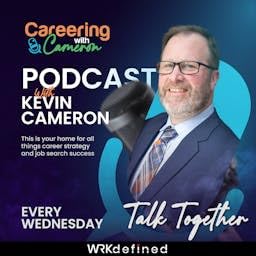
エピソード

  • Why Your Workplace Is Failing Neurodivergent Employees | with Shea Belsky
    2026/06/17
    What does it actually take to create a fair hiring process for neurodivergent candidates and why does it matter for everyone, not just a few? In this episode, Kevin Cameron sits down with Shea Belsky, an autistic software engineer and neurodiversity advocate, to talk about the parts of hiring and onboarding that most companies are quietly getting wrong. Shea brings a direct, no-fluff perspective on when and how to disclose a diagnosis, why accommodations are an investment not an expense, and what onboarding looks like when it actually works. If you manage people, hire people, or are neurodivergent yourself — this conversation will shift how you think. Key Takeaways When disclosing a neurodivergent diagnosis, always frame it around a specific need — not just the label. The return on investment is a more capable, more confident employee. One in seven people worldwide are neurodivergent — far more than most workplaces acknowledge. Dropping someone into a new role with no ramp-up hurts everybody, but hits neurodivergent employees hardest. Workplace tools like AI note-taking and quiet rooms benefit the whole team — not just one person. Framing your needs to a hiring manager is not a warning. It is a map to your best work. Episode Highlights Why disclosing a diagnosis without context can backfire — and how to frame it effectively. The honest case for why accommodations pay for themselves. How one in seven people around you may be neurodivergent without either of you knowing it. The onboarding mistake that sets people up to fail from day one. Shea's vision for a tool that helps every employee cut through the masking and communicate what they actually need. Timestamps 00:00 — Introduction 02:28 — What neurodivergent candidates face in interviews 04:39 — When and how to disclose: framing it as a need 06:00 — What to tell a hiring manager vs a recruiter 07:21 — Why hiring managers fear getting it wrong 09:28 — Accommodations as investment, not expense 13:27 — Most common accommodations in interviews and on the job 15:11 — AI tools and cultural shifts that benefit everyone 17:29 — How many people around you are neurodivergent 23:43 — The onboarding mistakes companies keep making 29:08 — What Shea wishes existed for every employee 33:35 — Framing your needs as your superpower 35:12 — Shea's why Connect With Shea LinkedIn: linkedin.com/in/sheabelskyWebsite: https://www.sheabelsky.com/ If you found this advice valuable, please hit subscribe, leave us a review. Visit Talent Connect: Website: www.talent-connect.net LinkedIn: Talent-Connect Kevin's LinkedIn: Kevin Cameron PCC Production Credit: Edited and produced by @the32collective_ / https://www.the32collective.co/
    続きを読む 一部表示
    37 分
  • The Mental Health Side of Job Searching Nobody Talks About | Steph Gillies
    2026/06/10
    What happens to your mental health when your job disappears or when you're too burnt out to stay? In this episode, Kevin Cameron sits down with Steph Gillies, resume writer, interview coach, and career development speaker, who brings a rare combination of lived experience and professional expertise to the conversation. With 37 jobs in 15 years and a background in social work, Steph has seen it all and she's not afraid to talk about the parts of career transition that most people are too ashamed to name. From grieving a layoff to protecting your mental health through a long job search, Steph shares the practical frameworks and honest truths that her clients wish they'd heard sooner. This one is for anyone who has ever stayed in the wrong job too long or felt guilty for wanting something better. Key Takeaways Give yourself permission to grieve a job loss, even if you're relieved it's over. The response rate for online applications is 3 to 6% — knowing the numbers protects your confidence. Track where you're dropping off in the process: that's where to focus your energy. Apply to five to ten jobs and network with three to five people per week — consistency beats volume. Informational interviews are the most underused tool in a career pivot. You don't owe a company loyalty it hasn't earned — accept the offer and keep interviewing. Self-care during a job search means sleep, food and movement, not just bubble baths. Episode Highlights Why people stay in jobs they hate — and what it actually takes to admit it. The three stages where mental health takes a hit: toxic employment, layoff shock, and the long search. How Steph helped a banking director land a nonprofit director role in three months by rewriting her entire resume around volunteering. The startup horror story: two people quit their jobs three days before joining a startup that then ran out of money. Why the people closest to you are sometimes the worst advocates in your job search. How to talk about a layoff professionally — and why "restructuring" is always the right word. Timestamps 00:00 — Introduction and Steph's background 02:24 — The link between career and mental health 03:50 — Three stages where mental health suffers 05:19 — Admitting you're unhappy: the hardest first step 06:18 — Why people undervalue themselves and apply below their level 08:44 — The fear of making a change — and how to face it 09:40 — Informational interviews: the most underused career tool 11:09 — How informational interviews can turn into referrals 12:59 — Why you need to grieve before you apply 15:25 — What to say when people ask what happened 16:22 — Mental health through the job search 17:18 — The 3 to 6% response rate explained 18:15 — Building a fuller job search strategy 19:32 — Tracking where you drop off in the process 21:33 — Making space for yourself during transition 22:30 — Not everyone needs a dream job — and that's fine 24:17 — Structure: how to run a targeted, time-condensed search 27:27 — When you get an offer but a better role is still in play 28:25 — How to handle competing offers tactfully 29:23 — The startup story and why you must look out for yourself 31:51 — The wellness pillars that actually matter 32:39 — Steph's why Connect With Steph LinkedIn: https://www.linkedin.com/in/stephgillies/ Website: stephgillies.com If you found this advice valuable, please hit subscribe, leave us a review. Visit Talent Connect: Website: www.talent-connect.net LinkedIn: Talent-Connect Kevin's LinkedIn: Kevin Cameron PCC Production Credit: Edited and produced by @the32collective_ / https://www.the32collective.co/
    続きを読む 一部表示
    38 分
  • The Job Search Is Rigged Against You | with Jeremy Schifeling
    2026/06/03
    If you're a recent grad staring down a job market that feels like it has the rug pulled out from under it, this episode is exactly what you need. Kevin Cameron sits down with Jeremy Schifeling of The Job Insiders - a former kindergarten teacher turned LinkedIn insider turned career strategist, to talk about what's actually holding the next generation back, and more importantly, what to do about it. From using AI to uncover jobs you didn't know existed, to why reaching out to senior alumni is your biggest untapped advantage, Jeremy brings practical, no-fluff advice for students, recent grads, and the parents trying to help them. He also makes the case for why your first job doesn't have to be your forever job and why that's actually great news. Key Takeaways Use AI to discover job titles that match your strengths and passions — upload your performance reviews and letters of recommendation and ask it what others see in you. Reach out to alumni with curiosity, not a transaction. Ask about their career, not for a job. Don't let a blue chip brand be the goal — small and mid-sized companies build better skills faster. Your first job is a stepping stone, not a life sentence. Notice when work feels like flow — that's your signal. Grad school used to hide from the job market is an expensive mistake. Episode Highlights Jeremy's pivot from kindergarten teacher to LinkedIn and Khan Academy. Why 70% of Gen Z say they want to be influencers — and what that actually reveals. The alumni outreach mistake that kills your chances before you've even started. Why senior leaders get almost no outreach — and why that's your opportunity. The "brand creep" trap: chasing logos over meaning. Why small companies are hiring while big names are laying off. How to do a background check on your future boss using LinkedIn. Timestamps 00:00 — Introduction 00:42 — Meet Jeremy Schifeling and The Job Insiders 03:49 — What grads are feeling right now 04:57 — Using AI to find jobs you didn't know existed 05:33 — A word to the parents 06:51 — What Gen Z actually wants (it's not what you think) 09:48 — Location as a career strategy 12:19 — The cheat sheet for structuring your search 14:30 — The alumni outreach mistake everyone makes 17:05 — Why senior leaders never get messaged (and why you should) 19:17 — Let your kid do the outreach themselves 21:07 — Building confidence through discomfort 21:48 — How The Job Insiders works 23:45 — Your first job is a stepping stone, not forever 25:41 — Should you go to grad school? 27:35 — What to look for in that first role 28:42 — The concept of flow and your career 30:29 — The brand creep trap 32:55 — Small companies vs big names: the truth 35:28 — How to background check your future boss 36:57 — Jeremy's why Connect With Jeremy Website: https://www.thejobinsiders.com/ LinkedIn: https://www.linkedin.com/in/schifeling/ If you found this advice valuable, please hit subscribe, leave us a review. Visit Talent Connect: Website: www.talent-connect.net LinkedIn: Talent-Connect Kevin's LinkedIn: Kevin Cameron PCC Production Credit: Edited and produced by @the32collective_ / https://www.the32collective.co/
    続きを読む 一部表示
    39 分
  • She Got Rejected by the Algorithm — Then Got the Job Anyway | with Christine Avedissian
    2026/05/27
    What does a real career transition actually look like from the inside? In this episode, Kevin Cameron sits down with Christine Avedissian, a Talent - Connect coaching client and in-house attorney who navigated a layoff in one of the most competitive job markets in recent memory. Christine opens up about what caught her off guard, what finally clicked, and the practical habits that got her across the finish line. From the "dartboard" networking approach to colour-coded interview cheat sheets, Christine shares the tools and mindset shifts that made the difference - including how she managed her mental health, set boundaries with her support circle, and stayed organised when everything felt out of her control. If you're in career transition right now, this one is for you. Key Takeaways Network before you apply — find a connection at the company first, then submit your application. Don't let a rejection from an ATS system be the final word. A system said no; a person may still say yes. Treat your job search like a job — build a routine, track everything in a spreadsheet, and protect your mental health. Use remote interviews to your advantage with cheat sheets, post-its, and visual reminders. Apply even if you don't tick every box — job descriptions are often wish lists. Visualise what you actually want and come back to it when the process feels overwhelming. Episode Highlights Christine's surprising discovery that her resume wasn't reaching human eyes. The moment she realised she needed a new strategy — and what she did about it. Why the people closest to you might not be your best advocates in a job search. Her layered interview prep method: company research, interviewer research, and personal tie-backs. How she managed anxiety by setting clear expectations with family and friends. The turning point when six or seven active interviews gave her confidence the process was working. Timestamps 00:00 — Introduction 00:40 — Meet Christine Avedissian 01:38 — Christine's career background 03:15 — The biggest surprise: resumes not reaching people 04:22 — The turning point and new strategy 05:44 — Mass outreach and unexpected helpers 08:04 — Why people outside your close circle often help more 11:36 — Building a daily routine and protecting mental health 14:55 — Preparing for remote interviews 16:21 — The cheat sheet system 18:10 — What interviewers are really looking for: fit 19:07 — The turning point in Christine's search 20:09 — Visualisation as a daily tool 22:08 — Final advice: don't let job descriptions scare you off 24:22 — Outreach cadence: once a week 25:16 — Christine's why Connect With Christine LinkedIn: linkedin.com/in/christine-avedissian-5b457115 If you found this advice valuable, please hit subscribe, leave us a review. Visit Talent Connect: Website: www.talent-connect.net LinkedIn: Talent-Connect Kevin's LinkedIn: linkedin.com/in/kevinmcameron Production Credit: Edited and produced by @the32collective_ / https://www.the32collective.co/
    続きを読む 一部表示
    28 分
  • AI Won't Find Your Job - But This Will
    2026/05/20
    In this solo episode, Kevin Cameron cuts through the noise around AI and job searching to share what's actually been working. Drawing from recent coaching sessions, Kevin breaks down the real "cheat code" to landing a job - and it's not a new app or an AI tool. It's strategy. If you've been sending out applications and hearing nothing back, this episode is for you. Kevin Cameron explains why applying and walking away is costing candidates 70% of their chances, how to use AI as a resource (not a shortcut), and why your resume needs to be tailored every single time. More importantly, he maps out a practical networking framework - the "dartboard method" - that has helped the majority of his recent clients land roles within two months. Key Takeaways Use AI to identify gaps between your resume and a job description — but keep your own voice in the final version. Networking consistently outperforms applying alone. Use the dartboard method: start with people you know well, then expand outward. Lead with help, not with asks. Track every conversation in a spreadsheet. Follow up more than once and through more than one channel. Episode Highlights Why applying alone is like shooting a flare in the middle of the ocean. The dartboard networking method explained. How to write a message that gets a response. Why it doesn't matter if they liked you or even remember you. The networking "yard sale" - and how to avoid it. Timestamps 00:43 — AI as a resource, not a solution 02:07 — Why the application process is overwhelmed 03:14 — Tailoring your resume to every job 04:21 — How to use AI to find resume gaps 06:48 — The dartboard networking method 09:19 — Alumni, colleagues, and volunteers: your inner circle 12:39 — Applying vs. networking: the flare analogy 14:57 — Lead with help, not with asks 15:09 — Track your network like a pro 17:27 — Does it matter if they remember you? 19:19 — Follow up more than once If you found this advice valuable, please hit subscribe, leave us a review. Visit Talent Connect: Talent-Connect Website Talent-Connect LinkedIn Kevin's LinkedIn Join our Join our FREE Talent-Connect Community Space Job searching takes more out of you than most people expect. It can feel isolating, and it's easy to lose your footing when you're navigating it without support. That's exactly why we built this space. Inside you'll find podcast episodes from Careering with Cameron, practical tips on job searching, interviewing, and negotiating, networking advice you can actually use, and a library of free resources we add to regularly. Join here! Production Credit: Edited and produced by @the32collective_ / https://www.the32collective.co/
    続きを読む 一部表示
    25 分
  • The Camera Confidence Secret Recruiters Notice Immediately
    2026/05/13
    Your camera is on. Are you ready? In this episode, Kevin Cameron is joined again by photographer and on-camera coach Rebecca Sanabria for a practical, no-fluff conversation about how to show up with confidence on video - whether you're interviewing, networking, or casting for your next opportunity. Rebecca brings expert insight from behind and in front of the lens, and the result is a must-listen for anyone whose next big career moment is happening on Zoom. From lighting hacks to "main character energy," this episode covers everything you need to make a strong first impression before you even say a word. As Rebecca puts it: "All these little tweaks add up to a big first impression." Key Takeaways Decisions are made in seconds — your lighting, posture, background and energy all signal professionalism before you open your mouth. Face a window or set your light to 5,600 Kelvin to mimic natural light and look your best on camera. Do a test call, download your software early, and shake out nervous energy before you sit down. Keep your background clean and simple — you want the focus on you, not what's behind you. Show up with "main character energy" — confident, present and authentically yourself. Make sure your LinkedIn headshot still looks like you. Refresh it every two years, and think twice before using AI-generated versions. Episode Highlights 00:47 — Welcome back Rebecca Sanabria 01:29 — Why camera presence matters as much as your headshot 03:29 — Dressing for the job you want 04:00 — How to energise yourself before you sit down for a Zoom 04:27 — Testing your setup and downloading software in advance 05:18 — Lighting tips: windows, LED lights and the Kelvin setting explained 07:33 — Background guidance: virtual, blank wall or clean space 08:44 — Posture, smiling and showing up with the right energy 10:19 — Why turning your video off is a red flag 11:10 — Camera distance and framing yourself correctly 12:00 — Outfit tips (including the borrow-and-return trick) 13:01 — Main character energy: owning the interview with confidence 21:32 — Audio: wired vs Bluetooth headsets 23:18 — Final checklist: teeth, grooming, headshots and consistency 24:00 — The risk of AI headshots and being mistaken for a bot 28:43 — Where to find Rebecca Connect With Rebecca Instagram: @howrebeccaseesit Website: rebeccasanabria.com If you found this advice valuable, please hit subscribe, leave us a review. Visit Talent Connect: Website: www.talent-connect.net LinkedIn: Talent-Connect Kevin's LinkedIn: Kevin Cameron PCC Production Credit: Edited and produced by @the32collective_ / https://www.the32collective.co/
    続きを読む 一部表示
    30 分
  • Why 80% of Jobs Are Never Posted (And How to Land Them)
    2026/05/06
    70–80% of jobs are never posted - filled through networking. We break down how to reach out without triggering the "I need a job" response that shuts contacts down. Three outreach templates, the psychology behind them, and the mistakes costing job seekers replies. Join our FREE Talent-Connect Community Space Job searching takes more out of you than most people expect. It can feel isolating, and it's easy to lose your footing when you're navigating it without support. That's exactly why we built this space. Join here - https://www.talent-connect.net/freecirclesignup Key Takeaways Be specific - broad messaging makes it harder for people to help. Ask for 15 minutes, not a job. Remove pressure and make saying yes easy. Your subject line must signal the connection in five seconds. Three referrals beat one - multiple touchpoints is your cheat code around ATS. Episode Highlights The Alumni Connection — shared experiences build trust faster than a cold message. The Ben Franklin Effect — asking an expert for advice positions you as curious, not desperate. The Direct Referral — why one isn't enough and how three makes hiring managers take notice. Do's and Don'ts — follow-up timing and why reaching business leads over HR changes everything. Timestamps 00:00 Why most jobs are never posted 01:48 "I need a job" email vs. real connection 07:31 Template 1: The Alumni Connection 16:47 Template 2: The Ben Franklin Effect 21:30 Template 3: The Direct Referral 25:36 Bypassing ATS with referrals 26:42 Do's and Don'ts If you found this advice valuable, please hit subscribe, leave us a review or follow @careeringwithcameron_ so you don't miss our next episode! Share this episode with a friend currently navigating the job market! Production Credit: Edited and produced by @the32collective_ / https://www.the32collective.co/
    続きを読む 一部表示
    39 分
  • How To Land Your First Job (Or Internship)
    2026/04/29
    Is your student stuck at the start line of their career? In this episode, Kevin Cameron sits down with Steven Rothberg, founder of CollegeRecruiter.com — a job search platform helping over a million students and recent grads find great careers every month. Steven shares why your first boss matters more than your job title, how AI is reshaping the student job search, and the one framework that helps you figure out what you actually want to do. Whether you're a student, a parent of one, or someone starting fresh — this one is packed with practical, honest advice you won't find in a classroom. Key Takeaways Your first boss matters more than your first company. A great manager will develop you faster than any prestigious job title. Use AI in your job search — employers are now seeing it as a feature, not a cheat. It helps you communicate your value more clearly. Try CIV Analysis: map out your Competencies, Interests and Values. The overlap points you toward the right career path. Stop asking "what do I want to do for the rest of my life." Ask: where do I want to be at 25? Think in steps, not decades. Build your LinkedIn early. Employers are watching — so are you. Research your future manager before you accept. Episode Highlights 00:00 – Kevin Cameron introduces Steven Rothberg and CollegeRecruiter.com 01:37 – How College Recruiter works and who it serves 03:08 – Why employers care more about critical thinking than your major or GPA 05:14 – How AI has transformed the student job search in just 5 years 07:21 – Why using AI is now a hiring signal, not a red flag 12:49 – How to find your first internship or job when you don't know where to start 14:10 – Why your first boss is the most important career decision you'll make 16:30 – How to use LinkedIn to research your future manager before accepting a job 20:55 – Resources for students with criminal records navigating the job market 24:55 – The CIV framework: Competencies, Interests and Values explained 27:40 – Stop planning your whole career — just plan the next 3 years 29:11 – Steven shares his "why" and what drives College Recruiter's mission Connect With Steven Rothberg Website: www.collegerecruiter.com LinkedIn: linkedin.com/in/stevenrothberg Email: steven@collegerecruiter.com If you found this advice valuable, please hit subscribe, leave us a review. Visit Talent Connect: Website: www.talent-connect.net LinkedIn: Talent-Connect Kevin's LinkedIn: Kevin Cameron PCC Production Credit: Edited and produced by @the32collective_ / https://www.the32collective.co/ 601425
    続きを読む 一部表示
    34 分