エピソード

  • S2 E4: Learning in the Age of AI: Adapt, Upskill, or Get Left Behind
    2026/02/26

    Summary

    In this engaging conversation, Cam Brewer shares his journey in the Learning and Development (L&D) space, discussing the evolution of training methods, the impact of AI on learning, and the importance of maintaining a human connection in an increasingly digital world. He emphasizes the need for personalized learning experiences, the role of micro learning, and the common pitfalls organizations face in their training strategies. The discussion also touches on the future of learning, the significance of continuous education, and the challenges of measuring ROI in training initiatives.

    • Camron Brewer
    • Key Learning Studios

    Takeaways

    • Cam Brewer's journey into L&D began at a young age.
    • The importance of human connection in learning is paramount.
    • AI is transforming the way training is delivered and experienced.
    • Micro learning can be effective but is often overused.
    • Organizations often underestimate the value of instructional design.
    • Continuous learning is essential for employee growth and development.
    • Training should be integrated into the business strategy from the start.
    • Measuring ROI in training remains a challenge for many organizations.
    • The future of learning will involve more personalized experiences.
    • AI tools can enhance training but should not replace human interaction.

    Chapters

    • 00:00 Introduction to Cam's Journey
    • 02:57 The Evolution of Learning and Development
    • 05:55 AI's Impact on Instructional Design
    • 08:45 Navigating the Human Element in AI
    • 11:47 Training Needs in the Age of AI
    • 14:52 The Future of Learning Plans
    • 17:47 Micro Learning: Pros and Cons
    • 20:49 Common Mistakes in Training Engagement
    • 32:17 Reframing Learning and Technology
    • 35:52 Understanding ROI in Training
    • 39:35 The Human Element in Learning
    • 45:35 AI and the Future of Training
    • 50:55 Rapid Fire Insights
    Chapters
    • (00:00:00) - Business Uncomplicated: The Future of Learning
    • (00:01:09) - Business Uncomplicated
    • (00:01:43) - Inclusive Design: The Creativity of Learning
    • (00:05:01) - What is the Mission of Your Company?
    • (00:05:46) - In the Elevator With Elon Musk
    • (00:06:39) - Human in the Learning Process
    • (00:07:20) - How to grow your business in the age of AI
    • (00:10:33) - WSJD Live: The Need for Human Talent in the AI Era
    • (00:13:34) - Have Businesses Needed More Training on AI?
    • (00:16:32) - Learning Plan for the Future
    • (00:21:22) - What is Micro Learning?
    • (00:22:51) - Steve Jobs on Experiential Training
    • (00:24:29) - What is the number one mistake people make in training?
    • (00:28:01) - Training and the Budget
    • (00:30:01) - How Much of the Training ROI Conversation Comes Up During the Sales
    • (00:35:21) - How Much Training Should Companies Pay for?
    • (00:38:57) - Teaching With Robots
    • (00:43:26) - AI Training: Biggest Mistake
    • (00:44:12) - What's Your One Prediction about Learning in the Year 2030
    続きを読む 一部表示
    45 分
  • Business Problems Are People Problems in Disguise with Kristy Morgan
    2026/02/13

    In this conversation, Kristy discusses the evolving landscape of leadership, emphasizing the need for leaders to adapt their styles to the unique needs of their team members. She highlights the importance of curiosity, communication, and vulnerability in effective leadership. Kristy also shares insights on the significance of understanding individual motivations and the role of change management in organizational success. The discussion touches on the measurable ROI of leadership training and the broader impact of leadership skills on personal and professional relationships.

    Contact Kristy at:

    https://thekristymorgan.com/
    https://www.linkedin.com/in/kristy-morgan-pmp/

    Takeaways

    • Leaders often confuse being good at their job with being good leaders.
    • Motivating people requires understanding their unique needs.
    • Curiosity is essential for effective leadership.
    • One-on-ones should prioritize employee input.
    • Vulnerability in leadership fosters open communication.
    • Change management is crucial for successful projects.
    • Investing in people leads to long-term success.
    • Effective communication is a two-way process.
    • Asking 'why' helps uncover individual motivations.
    • Leadership skills improve personal relationships as well.
    Chapters
    • (00:00:00) - What's Wrong With Leadership?
    • (00:01:42) - What's Wrong With Leadership?
    • (00:02:05) - What's Missing in Leadership?
    • (00:05:44) - Exploring the uniqueness of your team
    • (00:07:23) - Leadership Development: Why Are We Talking to Employees?
    • (00:13:43) - How to Coach Leaders on Time With Their Teams
    • (00:20:57) - CIO Network: The Project Management Challenges
    • (00:25:05) - How to Coach People Through Long Term Thinking
    • (00:28:51) - What Makes a Well-Well-Oiled Machine?
    • (00:31:52) - What Made Me Make the Shift
    • (00:36:01) - What Does a Leadership Skills Engagement Look Like?
    • (00:41:06) - What are the most common gaps in leadership?
    • (00:47:27) - The One Thing I Wish I'd Been Told About My Career
    • (00:52:19) - PMI Mile High Symposium and TED Talk
    • (00:55:02) - Senators on the Issues
    続きを読む 一部表示
    55 分
  • AI Is About to Expose Every Dysfunction You've Been Hiding
    2026/01/30

    In this episode of Business Uncomplicated, Rich Nazzaro discusses the importance of breaking down organizational silos and fostering collaboration across departments. He emphasizes the human element in business, the challenges of cross-functional work, and the role of leadership in creating a connected organization. The conversation also explores how AI can serve as a catalyst for change, enhancing data connectivity and improving customer experiences. Rich encourages leaders to rethink their approach to collaboration and data management to drive organizational success.

    takeaways

    • The human element of business is crucial and often overlooked.
    • Silos exist for accountability but can hinder collaboration.
    • Leadership must actively work to break down silos.
    • AI can expose organizational inefficiencies and data silos.
    • Data should be treated as a shared asset across departments.
    • Cross-functional collaboration is essential for success.
    • Understanding other departments' roles can enhance teamwork.
    • Leaders need to model collaborative behavior.
    • Customer experience should drive organizational strategies.
    • Rethinking leadership development is necessary in the AI era.
    Chapters
    • (00:00:02) - Business Uncomplicated: The Human Element of Learning
    • (00:01:25) - Building Bridges within the Silo
    • (00:10:19) - Breaking Down the Silo
    • (00:18:11) - Bradley: Building the AI Bridge
    • (00:22:15) - What's the Path Forward for the Customer Experience?
    • (00:25:58) - Looking beyond silos: Connecting Organizations
    • (00:27:12) - Leadership: Breaking Down the Silos
    続きを読む 一部表示
    30 分
  • Up and to the Right: The Four-Box CS Framework for Predictable Growth
    2026/01/15

    In this conversation, Reena Bhatia discusses the importance of a structured framework for customer success, emphasizing the need to balance company goals with customer needs. She introduces the 'Up and to the Right' framework, which helps organizations identify necessary versus unnecessary tasks, and highlights the role of customer feedback in shaping these frameworks. The discussion also touches on the integration of AI in customer success, the significance of health scores, and the operationalization of these frameworks to drive meaningful change within organizations.

    • AI is dominating discussions, but frameworks are essential for success.
    • Customer success should focus on value creation for customers.
    • The journey of customer success begins after the sale is made.
    • Understanding the 'Up and to the Right' framework is crucial.
    • Identifying necessary versus unnecessary tasks can streamline processes.
    • Customer feedback is vital in developing effective frameworks.
    • Balancing company goals with customer needs is a complex challenge.
    • Health scores should reflect the customer's viewpoint, not just internal metrics.
    • AI can enhance customer success but should not replace human interaction.
    • Structured change leads to more effective and less painful transformations.
    Chapters
    • (00:00:00) - Business Uncomplicated: The 4-Box Framework
    • (00:01:39) - An AI Framework for Business Uncomplicated
    • (00:02:38) - Reena Bhatia on Customer Success
    • (00:05:44) - The 4-quadrant framework
    • (00:11:25) - Separation of Requirement and Unnecessary Tasks
    • (00:14:27) - What's the most surprising thing do you think that comes out of
    • (00:16:34) - How to Balance Company Goal with Customer Success
    • (00:19:49) - Does Customer Success Matter to CEOs?
    • (00:22:40) - Microsoft Customer Success: The 4-Box
    • (00:27:51) - Customer segmentation and its impact on health
    • (00:30:15) - WSJDLive: Digital to Enterprise Segmentation
    • (00:31:48) - What is the Business Process of AI?
    • (00:35:25) - How Do We Elevate the CSM?
    • (00:42:02) - On Operationalizing the Strategic Framework
    • (00:47:23) - How to Build a Six-Point PowerPoint
    • (00:48:34) - What's the First Step towards a Digital Transformation?
    • (00:52:43) - AI Is Bigger Than You Think
    • (00:53:15) - What, what resources out there do you find most valuable right now
    続きを読む 一部表示
    56 分
  • Stop Pitching. Start Connecting: Beth Mastre’s Cold Email Method
    2025/12/11
    Episode Summary

    Rich Nazzaro sits down with Beth Mastre, a 30-year sales veteran, to discuss why email marketing isn't dead—it's just being done wrong. Beth shares her framework for transforming sales outreach from pitchy, self-centered messages into relationship-building conversations that actually get meetings.

    Guest

    Beth Mastre — Sales strategist and creator of an AI-powered email tool that helps sales teams craft effective outreach. With three decades of sales experience, she specializes in teaching teams how to lower barriers and create genuine connections with prospects.

    Key Takeaways
    1. Email isn't for selling—it's for getting meetings. The only metric that matters is whether your outreach results in a conversation.
    2. Stop pitching, start teaching. Instead of leading with "here's who we are and what we do," share insights about industry challenges, common mistakes, or questions prospects should be asking.
    3. Create FOMO (Fear of Missing Out). Frame your outreach around what prospects don't know rather than what you offer.
    4. Make relationship deposits. Every touchpoint should add value to the prospect, not extract it.
    5. Sales teams don't have a prospecting problem—they have a fear problem. Fear of rejection, fear of saying the wrong thing, and fear of not hitting quota all contribute to ineffective outreach.
    6. The "HVAC Guy" approach: The best salesperson doesn't just quote a price—they walk through your situation, identify problems you didn't know existed, and educate you before ever discussing solutions.
    Memorable Quotes
    • "People are happy to be unhappy. They have containment around their unhappiness."
    • "Email's not for selling. Your email is about getting a meeting."
    • "You don't have a prospecting problem, you have a fear problem."
    • "Your first meeting is kind of free. If you get the meeting but then you pitched, you might not get your second meeting."
    The Three Responses Framework

    When you reach out with insights about industry challenges, you'll get one of three answers:

    • "We didn't know, so we don't have a plan" (easy opportunity)
    • "We know, but don't have a plan" (they need help)
    • "We already have a plan" (rare—ask what else they're working on)
    Beth's Email Rules
    • Never say "us," "me," "we," "our," or "they"—use "in the industry" or "other organizations" instead
    • Subject lines matter more than you think (her best performer: "requesting discount")
    • Keep it short and focused on one relationship deposit
    • Always end with a simple ask: "When do you have 20 minutes?"
    AI in Sales: Beth's Perspective

    AI tools can help, but only when built on solid frameworks. Generic AI-written emails will "burn people so hard and so fast." The key is feeding AI with proven methodology and intellectual property—not just asking it to write cold emails.

    Chapters
    • (00:00:00) - Business Uncomplicated: Email Is Dead
    • (00:01:33) - Beth Mastry on Business Uncomplicated
    • (00:02:44) - In the Elevator With Beth Mastry
    • (00:04:13) - How to Build a Sales Team with AI
    • (00:04:57) - Are You Ready to Make a Sales Decision?
    • (00:07:18) - How to Sell to a Large Company
    • (00:12:05) - How to Lead with Empathetic Focus
    • (00:17:00) - Onboarding: The 3 Things We Don't Know
    • (00:19:09) - How to Build a Strategic Plan in 2020
    • (00:24:14) - How to Build a Successful Sales Email
    • (00:28:36) - How to Coach Your Clients Through the Talk
    • (00:29:40) - How to Get Your Pitch Heard
    • (00:32:45) - How to Coach People on Authenticity
    • (00:35:53) - How AI is Affecting Sales Communication
    • (00:39:28) - What is the Importance of Frameworks in AI?
    • (00:40:36) - The Inbox: The Framework
    • (00:42:10) - Sales Whisperer: Poor Enabling and Training
    • (00:47:40) - Onboarding With AI: From Onboarding to Sales
    続きを読む 一部表示
    50 分
  • The AI Revolution in Customer Success
    2025/12/05

    In this engaging conversation, industry leaders discuss the transformative impact of AI on customer success. They explore strategic priorities, the importance of data management, and the evolving roles within customer success teams. The discussion emphasizes the need for collaboration across departments and the significance of building trust in customer relationships. As organizations navigate the integration of AI, they highlight the importance of AI literacy and the potential for new roles that blend traditional account management with AI capabilities.

    Guest:

    John Durocher: https://www.linkedin.com/in/johndurocher/

    Shane Hughes: https://www.linkedin.com/in/shanehughes/

    Cesar Sanchez: https://www.linkedin.com/in/thebigc/

    Takeaways

    • AI is transforming customer success roles and strategies.
    • Adoption of AI tools is crucial for enhancing productivity.
    • Data management is foundational for effective AI implementation.
    • Customer success must focus on relationship building and trust.
    • Organizational silos hinder effective AI integration.
    • The role of customer success managers is evolving with AI.
    • AI can automate routine tasks but won't replace human interaction.
    • Companies need to prioritize AI literacy across teams.
    • Collaboration between departments is essential for AI success.
    • Future roles in customer success will blend traditional account management with AI capabilities.
    続きを読む 一部表示
    53 分
  • Why AI initiatives are Falling Flat and the Biology Lessons that can save them with Steve Wunker
    2025/11/20

    In this episode of Business Uncomplicated, Rich Nazzaro sits down with innovation strategist and author Steve Wunker, Managing Director at New Markets Advisors and author of AI and the Octopus Organization: Building the Super Intelligent Firm.

    They explore how AI can do far more than automate tasks—it can fundamentally reshape how your organization thinks, decides, and acts. Using the octopus as a metaphor (nine brains, eight tentacles, three hearts), Steve explains what it really means to build a firm that’s fast, adaptive, and intelligent at every node, not just at the top.

    Together, Rich, Steve, and co-host Andy Worobel dig into why so many AI efforts stall at “pilot theater,” how to move from tools to true transformation, and what this means for leaders, middle managers, and frontline teams.

    Get your copy of: AI and the Octopus Organization: Building the Superintelligent Firm

    In this episode, we cover:
    • The Octopus Organization metaphor
      How nine brains and eight tentacles map to AI-enabled decision-making at the edge of your business.

    • Why most AI initiatives fall flat
      Pilot overload, narrow thinking, and the trap of sprinkling AI across 17 steps instead of redesigning the process.

    • Transformation vs. technology
      Why “buying the tool” (Salesforce, AI platforms, etc.) without a clear why leads to shallow change and wasted spend.

    • Starting with the customer, not the model
      How reimagining growth, customer value, and competitive strategy should precede any AI deployment.

    • Bottom-up autonomy and the new frontline
      How AI finally makes it possible to devolve authority—with real context, guardrails, and feedback loops.

    • The reinvention of the middle manager
      Moving from admin and coordination to steward of the model, coach, and day-to-day change manager.

    • Breaking silos without becoming a micromanager
      How AI-driven transparency can unite marketing, sales, ops, and IT—without turning leadership into “radio-era admirals” meddling in everything.

    • The CIO’s once-in-a-generation moment
      Why this may be the best time in history for IT to lead organizational transformation—and what that partnership with the business should look like.

    • Energy, infrastructure, and the real constraints on AI
      Why the current path of hyperscale models is unsustainable and how leaner, purpose-built models may shape the future.

    • Democratizing data and tools
      From “everyone build a GPT” chaos to intentional productization and access to the right data sources with the right guardrails.

    • Why most companies are terrible at experimentation
      Zombie projects, poor learning loops, and how to design AI experiments that actually move the needle.

    If you’re an executive, CIO, or operator trying to move past AI hype and into real, structural change, this conversation gives you both the language and the lenses to start redesigning your organization.

    Chapters
    • (00:00:00) - Business Uncomplicated: AI and the Octopus Organization
    • (00:01:59) - Steve Wunkur on The AI Origins of Business Uncomplicated
    • (00:02:32) - Disruptive Innovation: Rich Sulzanski
    • (00:05:06) - AI and the Octopus Organization
    • (00:06:44) - The Decoding of the Octopus
    • (00:08:29) - Does AI Need a Transformative Impact?
    • (00:10:56) - Reimagining Growth with AI: The Transformation
    • (00:13:53) - Middle Manager: The End of the Boss
    • (00:14:35) - In the Elevating the Marketing Job
    • (00:15:24) - WSJDLive: Devolving Authority in the AI Era
    • (00:17:17) - Re-Educating the Skills of the Future
    • (00:19:42) - AI and the Breaking of the Silo
    • (00:21:28) - Does AI Change the Middle Manager Role?
    • (00:24:13) - Why are so many AI Projects Failing?
    • (00:26:18) - Projects and the Future of AI
    • (00:27:46) - Energy and the AI Race
    • (00:30:57) - Does Data Decentralization Enhance Business?
    • (00:37:18) - CIO Network: Who Owns the Transformation in a Company?
    • (00:38:44) - Confirmating the Burning Platform for Change
    • (00:42:09) - Steve Jobs on Becoming an Octopus Organization
    続きを読む 一部表示
    44 分
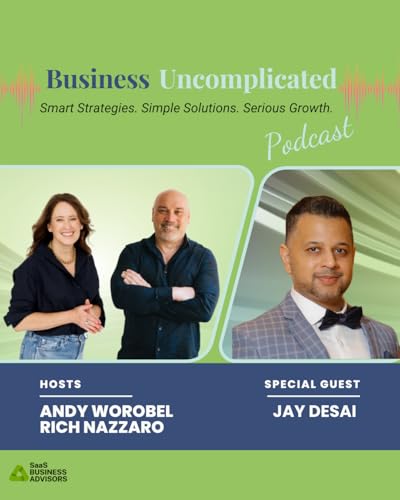
  • Leading Salesforce's Most Ambitious Transformation Yet with Jay Desai
    2025/11/07
    The conversation explores the integration of agentic AI into Salesforce's business operations, focusing on its impact on seller productivity, customer experience, and overall enterprise outcomes. Jay discusses the importance of implementing production-grade systems that go beyond mere demonstrations, highlighting measurable improvements in various business metrics.
    takeaways
    • Jay is at the forefront of Salesforce's AI initiatives.
    • The focus is on integrating AI into real business operations.
    • Production-grade systems are essential for measurable improvements.
    • AI can significantly enhance seller productivity.
    • Customer experience is transformed through AI integration.
    • Enterprise outcomes can be positively impacted by AI.
    • The conversation emphasizes practical applications of AI.
    • Innovative approaches are necessary to tackle enterprise challenges.
    • Measurable metrics are crucial for assessing AI effectiveness.
    • AI is not just a demo; it's a tool for real business success.
    Chapters
    • (00:00:00) - Meet Jay Desai
    • (00:02:19) - Interview With Rich Desai
    • (00:02:53) - The Scariest Thing About AI
    • (00:06:22) - What's The Future of Original Content?
    • (00:07:14) - Talking About the Dot-Com
    • (00:07:59) - Is AI Going to Replace Human Work?
    • (00:12:54) - WSJD Live: What's My Role at Salesforce?
    • (00:14:53) - WSJD Live: Starting with SMB and Moving Up
    • (00:16:27) - Agents on the Company's Goals
    • (00:17:45) - How to Build a Real-World Agent with Agentix
    • (00:19:55) - Salesforce: Data is the fuel for AI
    • (00:22:17) - What's the Challenge to Content Management?
    • (00:24:32) - What are the big pillars for anybody's AI or agentic strategy
    • (00:25:08) - WSJD Live: The People Factor in AI
    • (00:29:35) - Salesforce Agents on the Human In the Loop
    • (00:35:01) - What Should Your Agent Be Looking For in AI?
    • (00:41:46) - Informatica Data Cloud: End-to-End Solution
    • (00:43:46) - AI Agents: The Overhyped vs Underhyped
    • (00:45:58) - Williams Sonoma CEO on E-Commerce
    • (00:47:05) - Is AI Driving Salesforce's Transformation?
    • (00:48:38) - Dissecting the Process of Technology
    • (00:49:37) - In the Elevating the AI Challenge
    • (00:50:41) - Punishment
    続きを読む 一部表示
    51 分