『Born This Weird』のカバーアート

Born This Weird

Born This Weird

著者: Jasper Mejia
無料で聴く

【Amazonプライム会員限定】今ならプレミアムプランが4か月 月額99円。

10月19日まで。※適用条件あり

Welcome to Born This Weird, a space dedicated to the beautiful, messy, and deeply rewarding journey of human growth. I’m your host, Jasper, and I am so glad you stumbled upon this corner of the audio world.

This podcast isn’t about forcing yourself to do more, achieve more, or constantly hustle to become a 'perfect' version of yourself. In fact, it’s quite the opposite. This is a space where we explore how to grow by subtracting—by learning the sacred art of detachment, releasing the things we cling to, and finding true internal peace.

Together, we’re going to dive into what it really means to practice unconditional self-love, how to navigate life's transitions without losing our footing, and how to unlearn the expectations we’ve been carrying for far too long.

John Mejia
個人的成功 心理学 心理学・心の健康 自己啓発 衛生・健康的な生活
エピソード
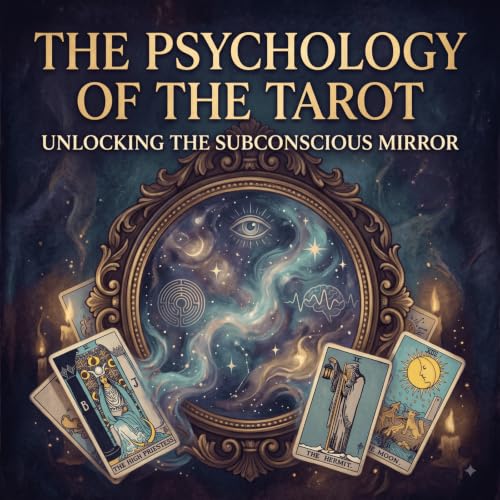
  • The Psychology of the Tarot: Unlocking the Subconscious Mirror
    2026/08/11

    Welcome back to BORN THIS WEIRD. I’m your host, Jasper. Today, we are diving into a topic that usually gets put into a box. When most people hear the words 'Tarot Card Reading,' their minds instantly go to dark rooms, crystal balls, and mysterious fortune-tellers predicting the future. We've been conditioned to look at Tarot as a supernatural trick or a party game.

    But if we strip away the Hollywood clichés and look at it through the lens of cognitive psychology, we discover something profoundly different. The legendary psychologist Carl Jung spent years studying how the human mind processes symbols. He discovered that our subconscious minds communicate not through words or analytical logic, but through universal symbols and 'archetypes'—like the Hero, the Fool, the Shadow, or the Nurturer.

    When you look at a Tarot card, you aren't looking at a magic spell; you are looking at a psychological mirror. The cards act as a visual prompt that completely bypasses your logical brain's defenses. It allows you to project your hidden anxieties, desires, and blind spots onto the imagery, bringing what is buried deep in your subconscious up to the surface. It doesn't tell you the future; it tells you exactly who you are right now.

    続きを読む 一部表示
    42 分
  • The 2027 Energetic Shift: Why the Modern Career Machine is Breaking Down
    2026/07/18

    Have you ever looked around your workplace and thought, 'Why does everyone seem so exhausted?'

    Not just tired after a bad Monday—but deeply burnt out. Like they're constantly questioning their job, their career, or whether they should just quit altogether.

    There's actually a term for this: doomjobbing. It's the growing trend of people panic-applying to hundreds of jobs just to escape their current one, only to discover the same frustration waiting for them somewhere else.

    From a psychology perspective, we often explain this through Person-Environment Fit Theory—the idea that burnout doesn't necessarily happen because people are lazy or unmotivated. Sometimes it's the result of a mismatch between who we are and the environment we're trying to fit into.

    But what if there's another way to look at it?

    What if burnout isn't just about workload or workplace culture? What if it's also about how we're wired as individuals, the stories we've been taught about success, and the expectations we've placed on ourselves?

    Today, we're bringing together a few different perspectives to unpack that question.

    Joining me once again is Candice Reyes, who's back to share how Human Design has influenced the way she approaches work, decision-making, and self-understanding.

    We're also joined by Soc Cubelo, who was both Candice's and my former team leader—and who some of you might remember Candice briefly mentioning in Episode 1. She's someone who's always been fascinated by psychology, workplace behavior, and understanding what brings out the best in people.

    And completing our panel is our current team leader, Ton Vecino. Ton's coming into this conversation with a fresh perspective since Human Design is still pretty new to him, so it'll be interesting to see which ideas click, which ones he challenges, and where the discussion takes us.

    続きを読む 一部表示
    1 時間 42 分
  • The Architecture of Self-Reliance: Overcoming Adversity, Identity, and Family Dynamics ft. Izzy Mango
    2026/07/15

    Welcome to Episode 2 of Born this weird, where we sit down with Izzy Mango to explore the intersection of the LGBTQ+ experience, family breakdown, and the fierce development of self-reliance. When you grow up in a broken family, survival often dictates that you become your own anchor. But navigating a world that isn't always built for your identity forces an even deeper kind of psychological resilience.

    In this episode, Izzy shares his raw human experience of overcoming childhood adversity, stepping into his authentic identity, and learning how to build security from the inside out. Tune in as we dissect the psychological blueprint of hyper-independence, the courage it takes to heal from relational trauma, and what it truly means to define family on your own terms.

    続きを読む 一部表示
    25 分
adbl_web_anon_alc_button_suppression_t1
まだレビューはありません