

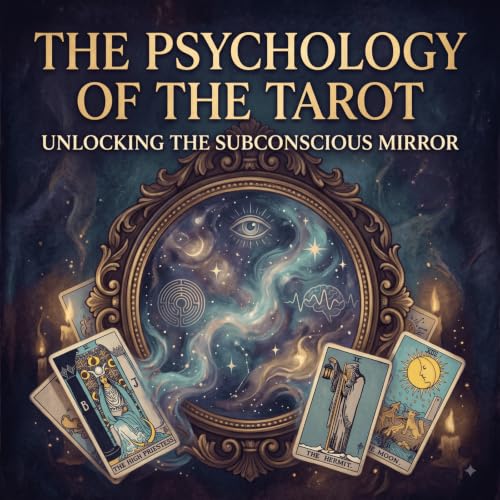
The Psychology of the Tarot: Unlocking the Subconscious Mirror
カートのアイテムが多すぎます
カートに追加できませんでした。
ウィッシュリストに追加できませんでした。
ほしい物リストの削除に失敗しました。
ポッドキャストのフォローに失敗しました
ポッドキャストのフォロー解除に失敗しました

The Psychology of the Tarot: Unlocking the Subconscious Mirror
-
ナレーター:
-
著者:
Welcome back to BORN THIS WEIRD. I’m your host, Jasper. Today, we are diving into a topic that usually gets put into a box. When most people hear the words 'Tarot Card Reading,' their minds instantly go to dark rooms, crystal balls, and mysterious fortune-tellers predicting the future. We've been conditioned to look at Tarot as a supernatural trick or a party game.
But if we strip away the Hollywood clichés and look at it through the lens of cognitive psychology, we discover something profoundly different. The legendary psychologist Carl Jung spent years studying how the human mind processes symbols. He discovered that our subconscious minds communicate not through words or analytical logic, but through universal symbols and 'archetypes'—like the Hero, the Fool, the Shadow, or the Nurturer.
When you look at a Tarot card, you aren't looking at a magic spell; you are looking at a psychological mirror. The cards act as a visual prompt that completely bypasses your logical brain's defenses. It allows you to project your hidden anxieties, desires, and blind spots onto the imagery, bringing what is buried deep in your subconscious up to the surface. It doesn't tell you the future; it tells you exactly who you are right now.