

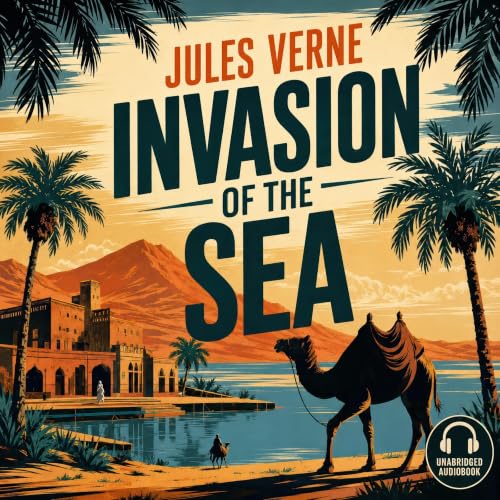
Invasion of the Sea
カートのアイテムが多すぎます
ご購入は五十タイトルがカートに入っている場合のみです。
カートに追加できませんでした。
しばらく経ってから再度お試しください。
ウィッシュリストに追加できませんでした。
しばらく経ってから再度お試しください。
ほしい物リストの削除に失敗しました。
しばらく経ってから再度お試しください。
ポッドキャストのフォローに失敗しました
ポッドキャストのフォロー解除に失敗しました
30日間の無料体験を試す
Amazonプライム会員限定
プレミアムプラン4か月 月額99円キャンペーン開催中
期間限定:2026年10月19日(日本時間)に終了
2026年10月19日まで対象者限定でプレミアムプランが4か月 月額99円キャンペーン開催中。詳細はこちら。
オーディオブック・ポッドキャスト・オリジナル作品など数十万以上の対象作品が聴き放題。
オーディオブックをお得な会員価格で購入できます。
会員登録は5か月目以降は月額¥1,500で自動更新します。いつでも退会できます。
オーディオブック・ポッドキャスト・オリジナル作品など数十万以上の対象作品が聴き放題。
オーディオブックをお得な会員価格で購入できます。
30日間の無料体験後は月額¥1500で自動更新します。いつでも退会できます。

Invasion of the Sea
ナレーター:
AI Voice Charles Owen
¥600 で購入
-
ナレーター:
-
AI Voice Charles Owen
-
著者:
-
Jules Verne

この作品は、デジタルボイスによる朗読を使用しています。
デジタルボイスは、オーディオブック用にコンピューター生成された朗読です。
The plan is audacious: dig a canal from the Mediterranean to the salt depressions of Tunisia and Algeria, creating an inland sea that will transform worthless desert into fertile, navigable territory. French colonial engineers promise prosperity. Progress. Civilization.
Captain Hardigan oversees the work. But as construction advances, Tuareg tribes whose lands will be destroyed mount increasingly desperate resistance. The desert they've inhabited for centuries will vanish beneath French ambition. Their oases will flood. Their way of life will end.
Then an earthquake breaches the canal. Water rushes in catastrophically. The Sahara Sea is born—not through human decision but through nature's intervention. The French claim victory. The Tuareg lose everything. And the question of whether such transformation was ever justified disappears beneath the flood.
Jules Verne's final novel, published posthumously in 1905, anticipates modern debates about geoengineering and massive environmental projects decades before they became reality. Yet it cannot escape its colonial framework: indigenous resistance is portrayed sympathetically but dismissed as futile, and the novel's resolution conveniently sidesteps who had the right to reshape Africa.
From the author of Twenty Thousand Leagues Under the Sea—a prescient warning about playing god with geography, told from an empire's perspective.
adbl_web_anon_alc_button_suppression_t1
まだレビューはありません